| |
|
Scroll
down to browse through some archived SPA and Hot Tub
questions and answers. Please click the Spa
Problems
Link, on top of every page, to access a complete listing
of Spa and Hot Tub Problem subjects, an alphabetized
Website Table of Contents, Spa and Hot Tub Equipment
Information, About Alan Biographic Material and a Spa
and Hot Tub Glossary. Use
the other links to access additional subject
information. More information about some new and unique
products, for Spas and Hot Tubs, can be found by visiting
The Website Store.
You'll never know what you'll find and that's always
fun. Be better prepared and avoid costly problems!
|
|
 |
Shipping is FREE* . . . within
the Continental U.S.
A $9.99
handling charge will apply
to Continental U.S. Orders,
under $75.00. Orders
outside of the Continental
U.S. may require some
additional charge, based on
quantity and destination.
Most products can be
shipped World-Wide. International
and orders outside of
Continental U.S. - see
comments on the ordering
pages. |
|
 |

Major
Credit Cards and PayPal are accepted. |
|
On-line
shopping since 2002 - Safe and Secure!!! |
|
Managing the sanitizer level, of spa or
swim-spa
water!!! |
|
Sanitizing
is a must, for proper spa water
management.
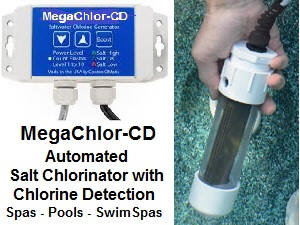
Salt Chlorine generators are a
better way to utilize chlorine, producing
more controllable results. They
eliminate the need to handle, measure or
store chlorine products, while reducing
buildup problems. An
Electronic
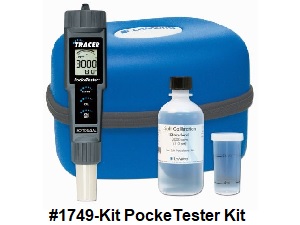
PockeTester Kit is a convenient
way to monitor the salt level. |
|
Salt Chlorine Generators - 4
Models |
Testing The Salt Level |
Salt Chlorine Generators - 4
Models |
 |
 |
 |
|
Product and Ordering Information |
Product and Ordering Information |
Product and Ordering Information |
If you have a pool or spa water
testing need, we should have the
product.
►
Scroll down to read through some
Question & Answer information.
◄ |
|
A
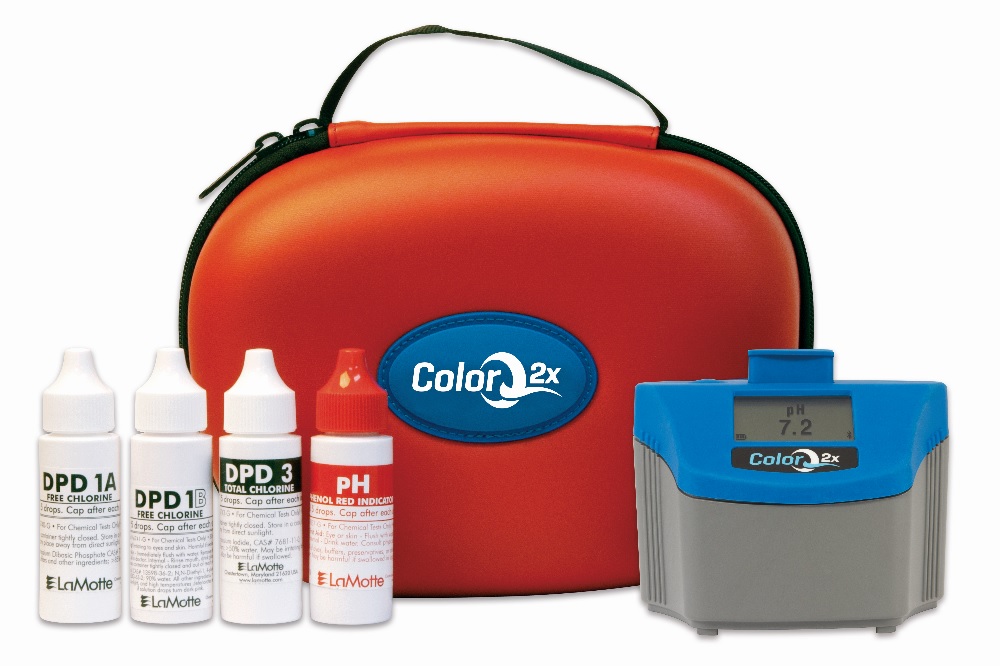
ColorQ 2X is a 2nd generation,
Bluetooth, Waterproof, all-digital tester,
that can
measure all the common test factors. There is a model, for every sanitizing
need.
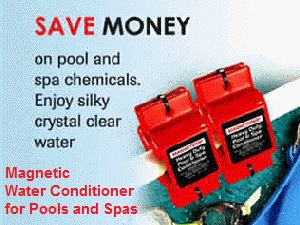
Magnetic Water Conditioners
help solve scaling problems, due
to high levels of calcium
hardness and are available in 4
models.
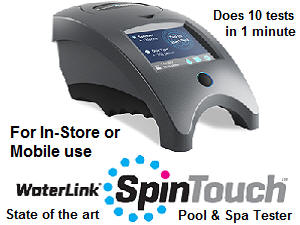
The
WaterLink SpinTouch Labs
are the ultimate, doing up to 10
different water test factors, in
just 1 minute. |
|
ColorQ All-Digital Water Testers |
Magnetic Water Conditioners |
WaterLink SpinTouch Labs |
 |
 |
 |
|
Product and Ordering Information |
Product and Ordering Information |
Product and Ordering Information |
If you have a pool or spa water
testing need, we should have the
product.
►
Scroll down to read through some
Question & Answer information.
◄
|
|
|
How to choose an Alternative Spa, Swim
Spa or Hot Tub Sanitizer? |
The phrase "Alternative Sanitizer" usually refers to
something other than conventional forms of
chlorine: the most popular sanitizing product.
Alternative Spa Sanitizers include:
salt
chlorine generators, ionization-oxidation,
ionizers, mineral sanitizers, ozone generators,
ultraviolet sterilizers, hydrogen peroxide, biguanide (Trades names
such as Baquacil, Baqua-Spa, Soft-Swim and
Revacil) and bromine. Some alternatives perform
best by being used in combination, while others
can be stand alone. Some alternatives are other
chemicals and others are generating or releasing
devices. The quest for perfect spa, hot tub
or swim spa sanitizing is ongoing. The goal is better
sanitizing, more convenience, less chemical
sensations and safety. What is right for any spa, hot tub
or swim spa will depend on how it is used, by
whom it is used, bather demand, importance of
convenience and cost considerations. No matter
which sanitizer is used, it is a good practice
to shock the unit, at least once a week,
especially after
periods of heavy usage and at distinct signs of
a loss of water quality. This will help to rid
the water of organic buildups and prevent the
development of resistant microorganisms. If
problems arise, refer to the
Spa Problems
Page, as a source of problem-solving
information, broken down into various
categories. Scroll down the page and click on the linked
keywords,
catch phrases
or images, in the archived answers below, to access additional information, on that topic or product.
 |
Join our E-Letter Mailing List.
You'll receive 1-3 E-Letters a
month, featuring helpful pool
and spa advice, new product
information and sale
announcements. All we
require is your e-mail address
and you can opt out anytime you
wish.
Your information
will never be shared or sold. |
|
▼
Helpful,
Problem-Solving Information, in a question and
answer format.
▼ |
► The Right Tester
And
Sanitizer?
I have invested in nearly a year's
supply of biguanide chemistry with the purchase of my new
spa. My wife has sensitive skin and I thought biguanide
would be the answer, I hope I have not just fallen for the
biguanide hype. I spoke to the manufacturer about clarity,
slippery walls and foaming and they suggested that I have
the water analyzed at a professional pool store. They said
that the slipperiness was probably caused by the hardness
not being high enough and the foaming could be cause by the
water not being hard enough or too much chemistry in the
water. I have been chasing this for a while so there is a
lot of chemistry in the water even though it is only a
couple weeks old. I took both spa water and unaltered supply
water in for analysis and they used the same test strips I
have at home, but put them into a computerized reader and it
printed out the results. I have a 485 gallon spa. The
analysis showed the pH was 8.1 and they recommended 2 oz. pH
Down; the Biguanide was 25 and they suggested 2 oz. of
biguanide sanitizer and the hardness was 160, the dealer did
not recommend hardening the water, but I added the
recommended 10 oz of Hardness Increaser because biguanide
manufacturer said this could be part of the foaming problem.
I added the chemistry last night and this morning my spa is
still slightly cloudy and is still foaming. I added some
Foam Disperser and that helped a lot. I also added some
biguanide water clarifier to see if this might help by
tomorrow. I got the analysis of the supply water and if the
spa does not sparkle up and the foaming go down I may drain,
clean the filter and start over. I didn't use to have a
foaming problem so it may be a build up of chemistry. The
water is not that old but I have been chasing this problem
for a couple weeks now and have tried a lot of different
things. My question is, would it be a worthwhile investment
to purchase your ColorQ Biguanide PRO 5 Water Analyzer so I
could hopefully dial in the biguanide chemistry or should I
abandon biguanide and a couple hundred dollars of chemistry
to try another system? I would hate to buy the analyzer,
then abandon biguanide, that would cost a lot of money. Can
this analyzer be used for other systems too if I change
systems? I like the idea of biguanide being non-irritating
and we have been very happy with the results so far. except
for the clarity and foaming issues. I don't mind putting in
effort and expense to get the biguanide balanced and
effective, but if the time and money are wasted and I will
never get the results I want I might as well bite the bullet
and switch to another system. Should I buy the analyzer? Is
it accurate enough to get my spa dialed in with biguanide or
is it a losing battle?
Jim H. Temecula, CA, 4/4/2019
I wasn't planning on answering letters today, but yours hit
a chord. Although I do sell a
tester for biguanide, I
suggest that you not purchase it, even if it is a better
tester than what the dealer is using. The reason being, that
I suggest you permanently switch to another sanitizer. Test
strips, even the best, are not precise. In my opinion, using
a scanner and computer to read them, doesn't increase the
precision and may actually provide less reliable results.
Have them run the same sample twice and see what happens.
The slimy walls are a positive sign of inadequate
sanitation. It is not uncommon, for biguanide users to
develop sanitizer resistant microorganisms. Some dealers do
everything that they can, to keep you using the product, not
because it is chlorine free, but because it is profitable.
Foaming and biguanide go hand in hand, as the material is
known to foam, when agitated or aerated. Foam presents
another sanitizing issue, as proper sanitation demands that
the foam be eliminated, at some point. Otherwise, the
ecology of the foam will be different, from that of the spa
water. The problems you are experiencing will only get worse
and will continue to be a wasteful expense. I suggest that
you drain and clean the spa and prepare to use another
sanitizer. I realize that your wife has chemical sensitivity
issues, which drove you to biguanide, in the first place. I
agree that chlorine, as used in a spa, can be both odorous
and irritating and can detract from the experience. Bromine
would be a better choice in terms of both odor and
irritation. Instead of simply using bromine at the suggested
3-5 PPM, I suggest that you consider using alternative
sanitizers, that can be chemical-free or add only minimal
amounts of innocuous metallic ions. If this is done, the
bromine usage will be minimized, to the point that its
presence will go unnoticed. With the right equipment, almost
any measurable amount will be enough. You can use a
Mineral Sanitizer and an
add a
UV Sterilizer, which adds
no chemicals at all and kills virtually all microorganisms
passing through the cell. It isn't used alone, but can be
combined with other alternative sanitizers, to help reduce
the chemical presence and afford real backup sanitizing. A
salt chlorine generator works very well. by itself, or in
combination with these alternative spa sanitizers. It is the
better way to do chlorine. I hope that this information
will prove helpful. Have a happy July 4th. biguanide users to
develop sanitizer resistant microorganisms. Some dealers do
everything that they can, to keep you using the product, not
because it is chlorine free, but because it is profitable.
Foaming and biguanide go hand in hand, as the material is
known to foam, when agitated or aerated. Foam presents
another sanitizing issue, as proper sanitation demands that
the foam be eliminated, at some point. Otherwise, the
ecology of the foam will be different, from that of the spa
water. The problems you are experiencing will only get worse
and will continue to be a wasteful expense. I suggest that
you drain and clean the spa and prepare to use another
sanitizer. I realize that your wife has chemical sensitivity
issues, which drove you to biguanide, in the first place. I
agree that chlorine, as used in a spa, can be both odorous
and irritating and can detract from the experience. Bromine
would be a better choice in terms of both odor and
irritation. Instead of simply using bromine at the suggested
3-5 PPM, I suggest that you consider using alternative
sanitizers, that can be chemical-free or add only minimal
amounts of innocuous metallic ions. If this is done, the
bromine usage will be minimized, to the point that its
presence will go unnoticed. With the right equipment, almost
any measurable amount will be enough. You can use a
Mineral Sanitizer and an
add a
UV Sterilizer, which adds
no chemicals at all and kills virtually all microorganisms
passing through the cell. It isn't used alone, but can be
combined with other alternative sanitizers, to help reduce
the chemical presence and afford real backup sanitizing. A
salt chlorine generator works very well. by itself, or in
combination with these alternative spa sanitizers. It is the
better way to do chlorine. I hope that this information
will prove helpful. Have a happy July 4th.
Sincerely. Alan Schuster, 4/4/2019
► Can't Use
Chlorine Or Bromine?
I'll bet that this one will stump you.
My wife and I cannot use chlorine or bromine without
affecting our Iodine levels and our thyroid. Our doctor
suggested using Iodine as a sanitizer since it is a member
of the Halogen family (fluorine, chlorine, bromine, iodine).
I searched the web and found many sites referencing the use
of Iodine, but only one briefly mentioned the PPM of 7-10
for a wading pool. Do you know what the PPM should be and
what would be the best oxidizer to use. One site mentioned
Hypochlorite which reintroduces chlorine back into our spa.
We are currently using a non chlorine shock. The water is
reasonably clear; algae and odor free, and has the slight
greenish tinge that the web sites described for Iodine
sanitized spas. We do get foam, shortly after adding the
Iodine which de-foaming products easily take care of. pH is
7.8, when I add pH minus it comes down for a while then
creeps back up. Total alkalinity is about 120. Any advice or
tips for using Iodine would be appreciated. Of all the
information sites I have found yours is the best. Thank you.
Bruce M., 9/28/2020
Close but no prize. Unless this is an EPA registered
sanitizer, I don't feel that this is an area that I want to
venture into or
that you should pursue. Instead,
let's help you maintain a spa
without non-chlorine shock, chlorine
or bromine and with fewer chemicals.
Add a, Ultraviolet (UV) Sanitizer.
It will kill virtually all of the
microorganisms in the return flow,
without any chemicals. UV sanitizers
require that an oxidizer be added to
the water, to destroy organic wastes
and accumulations. Instead of using
non-chlorine shock, chlorine or
bromine, you can use an ozone
generator. It only adds a form of
oxygen to the water. Because ozone
does not remain in the water for
prolonged periods of time, you
should have a persistent sanitizer,
that will prevent growth in the spa
water and on the underwater
surfaces. Add a Mineral Sanitizer and all that you will be adding is a
trace amount of silver ions. Fewer chemicals will be
required and the water quality will be better. This regimen
will be easier to maintain and halogen free! I hope that
this information will prove helpful.
Sincerely. Alan Schuster, 9/28/2020
► Natural
Sanitizing?
Alan,
We're just about ready to have our hot tub installed. I've
been looking at the various ways to keep the water clean. I
came across this a natural enzyme based product. Is this for
real, what would be the shortfall using this method to keep
the hot tub water clean? Thanks for all your ideas, they are
very informative.
Rick B., Rochester, NY 4/8/2011

If you don't control infectious bacteria, such as
pseudomonas and e. coli, you can end up with a rash or
worse. This product is not a recognized sanitizer. I have
heard it described as being like lake water. Check the
label. Does it have the EPA Registration number that a
sanitizer must have? Evidently, this product, can under
certain circumstances, work. I suspect that it can be
overwhelmed due to high bather usage and that can lead to
problems. I would rather use a product that I can measure
and test and that works under virtually all properly
maintained conditions. I suggest that you consider a more
traditional spa water sanitizer. Bromine, Chlorine,
Salt
Chlorine Generators and a Mineral Sanitizer in
conjunction with an Ozonator will afford much
greater protection. I'm glad that you found the website
helpful. Good luck and enjoy the spa.
Sincerely. Alan Schuster, 4/8/2011
|
How to
get better results using alternative sanitizers. |
|
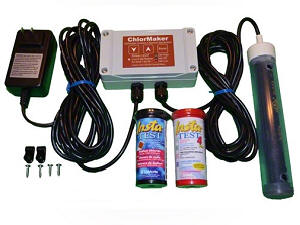
Use a Salt Chlorine Generator for more consistent
control of chlorine levels. |
|
Monitor the salt
level, with an all-digital, electronic PockeTester. |
|
A Salt Chlorine
Generator can eliminate the handling, measuring and
storing, of chlorine products. |
|
An all-digital ColorQ
Tester is easy to use and provides reliable results. |
|
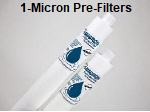
Using a Pre-Filter, for all new water additions,
help keep contaminants and metals out of the spa. |
|
|
|
 |
 |
 |
 |
|
No Installation required. Salt Chlorinator, with Chlorine
Detection. |
Maintaining an optimum salt level
helps assure proper performance. |
A Salt Chlorine Generator a better
and easier way to utilize chlorine. |
ColorQ all-digital testers provide
reliable results, with all sanitizers. |
Use
a Pre-Filter, when adding new water, to keep minerals-metals
out. |
|
Click on any image
for complete product and ordering information. |
► An
Algaecide In A Spa?
We have a spa that is located outside
and is used all year. In the summer, we don't use the heater
and more or less use it as a pool for the kids. Should I be
adding algaecide - like they do in pools?
T. S., Sarasota, FL, 12/6/2008
Most spas do not use an algaecide. Inasmuch as spas are
usually heated and, therefore, are covered when not in use,
the normal spa sanitizers are able to control algae. In your
case, especially, if the spa is left uncovered in the
summer, the addition of an algaecide might be worthwhile.
However, you cannot add just any algaecide. The only one
that I would recommend is the Polymer (polyquat) type. Other
algaecides could cause excessive foaming, in a spa, and
should not be used. The polymer types are non-foaming.
Follow the label directions and use an appropriate amount! I
hope that I have been helpful.
Sincerely. Alan Schuster, 12/6/2008
► What is Spa
Ionization-Oxidation?
I recently used a pool and spa that
were being sanitized, with something called Ionization-Oxidation. I really
enjoyed not having the heavy odor of chlorine lingering
around. Is this something that I can use in my own spa?
Currently, I am using bromine, but this was better!
Chris N., Allentown, PA, 6/20/2018
Ionization-Oxidation is a hybrid method for purifying water.
The technology was actually developed for the Apollo space
program, to purify water on many manned space missions.
Electrodes release controllable amounts of copper and zinc
ions, to act as sanitizers, as another
set of electrodes produces forms of
active oxygen to destroy organic
matter, algae, bacteria and waste
products. You preferred the end
result because of the low chemical
presence. Sometimes, depending on
bather usage and actual spa
conditions, more consistent results
are gotten, by also maintaining a
very low level of chlorine. The
chlorine just helps bridge the gap
between the shutting off of the unit
and its restarting. Because of the
oxygenation, there are none of the
odorous and irritating forms of
chlorine. If you are interested in
maintaining an eco-friendlier spa
that uses a minimum of chemicals,
this is certainly something to
consider, but is has its
limitations: the active oxygen does
not last long, the copper ions must
be kept under 0.3 PPM and the pH
needs to be kept on the low end of
optimum. However, you could also
use a
salt chlorine generator and
ozonator, to achieve the same
or better results, at lower cost. No Matter what, the
copper content should be tested and monitored.
Ionization-Oxidation frequently
results in too much copper and that
leads to staining issues. The
ColorQ 2X PRO
9, ColorQ 2X PRO 9 Plus or ColorQ 2X
TesTabs PRO 9 all-digital testers are the best ways
to do that. I hope that this information proves to be
helpful.
Sincerely. Alan Schuster, 6/20/2018
► Needs More
Than Just Hydrogen Peroxide?
Our sole water supply is lake water.
In our hot tub we use only hydrogen peroxide as a sanitizer
for health reasons We are finding that we must shock it
daily with at least a cup of hydrogen peroxide to get it up
to the required ppm. You mention adding a mineral sanitizer.
Will this make it ppm hold longer? Is a "mineral sanitizer"
a natural product?
Carol G., 1/6/2010
Hydrogen peroxide is not recognized as a spa sanitizer.
You could add a mineral sanitizer, as well,
since it will provide additional,
persistent sanitizing. They are EPA
registered as a spa sanitizer.
However, it must be used with an
oxidizer. While hydrogen peroxide
will fill the oxidizer role, I am
not sure if it will suffice. In any
case, it will improve the current
situation. All a mineral
sanitizer
adds to the water are silver, copper or zinc ions. You can reduce the
hydrogen peroxide requirements, by using a
METALTRAP 1
Micron Pre-Filter to treat all new water. It simply attracts
to a garden hose. You can also use it, with a small
submersible pump, to recirculate the hot tub water. This
will remove organic contaminants and even many
microorganisms, that have built up, due to bather usage. I hope that this
information proves helpful.
Sincerely. Alan Schuster, 1/6/2010
►
Copper-Containing Product?
Thank you for taking a question! I
have read on your site that it is not recommended to use
copper sulfate primarily in a pool. Of course, our pool
installer is really pushing a copper sulfate product to use
instead of chlorine. I am guessing that this is a new
product that is not dangerous in large quantities. as normal
copper sulfate would be. Are you familiar with this new way
of keeping a spa clean? Any advice would be greatly
appreciated. Thanks.
Catherine, 3/19/2008
Copper sulfate cannot replace chlorine! Chlorine is a
sanitizer and an oxidizing agent. Copper acts, primarily, as
an algaecide. Copper can be useful as part of an overall
pool maintenance program, in conjunction with other
products. Copper sulfate must be used only at very low and
controlled levels: otherwise, staining and discoloration can
result. Virtually all of the copper containing products are
based on some chelated (stabilized) form of copper. Copper
is rarely used in spas. What spas need are active sanitizing
and oxidation: something best provided by the use of
ozonators,
mineral sanitizers,
salt chlorine generators,
chlorine and/or bromine. The product that you are referring
to is not copper sulfate, but is some complexed form of
copper. While it might provide some control of algae and
bacteria, it cannot be used as a stand alone water
treatment. It must be used with an oxidizer or shock. If you
want a spa that is less reliant on chemicals, consider an
ozonator! All you will need to do is maintain a low level of
a backup sanitizer, such as a mineral sanitizer chlorine,
bromine or possibly this copper product. Shock will not be
required on a regular basis, because of the ozonator. Water
maintenance will be easier and the quality will be better. I
hope that the information proves helpful.
Sincerely. Alan Schuster, 3/19/2008
► Hydrogen
Peroxide?
We have a hot tub and would like to
use hydrogen peroxide instead of the normal chemicals. My
husband is allergic to the chlorine and bromides. How much
Hydrogen peroxide do we use and what %. We were told that it
should be a 10% concentration but we can't find any hydrogen
peroxide above 3%. I thought maybe you could help us. Also
do we nee to use any kind of a shock at the first? Hope you
can help? Thanks.
Jo, 7/10/2005
I am not sure that using just hydrogen peroxide will provide
adequate sanitation. In pools and spas, it is used as a
shock treatment with biguanide. It is available in
concentrated form in many pool and spa outlets that offer
biguanide products. Have you considered the use of an
ozonator and a
mineral sanitizer or ionizer. This
combination would come close to being chlorine and bromine
free. The ozonator could negate the need for hydrogen
peroxide and a mineral sanitizer or ionizer would release
metallic ions and act as a persistent sanitizer. Hydrogen
peroxide can be used as a shock treatment, with a mineral
sanitizer or ionizer as the primary water sanitizer.
However, in most cases better results are obtained, if you
maintain a low level of chlorine or bromine, which you can
add during periods that the spa will not be used, along with
a mineral sanitizer and ozonator. I hope that I've been
helpful and given you some food for thought. Good luck with
your decision.
Sincerely. Alan Schuster, 7/10/2005
► Just
Hydrogen Peroxide?
I have started using Hydrogen Peroxide
in my hot tub and I need some help. I started with fresh
water (400 gallons) and added 1 cup of Hydrogen Peroxide.
This appeared to work great for the first couple of weeks.
Now, it has been about four days since we used our hot tub
and when I opened it up, the water was quite discolored
(greenish-brownish). What can I do? Do you use other
products in conjunction with Hydrogen Peroxide such as pH
products. My hot tub is outside. Thank you.
Shelley, 9/25/2009
Hydrogen peroxide is not recognized as a spa water
sanitizer. It has to be used in conjunction with a
persistent sanitizer and the o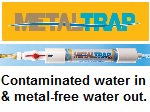 verall spa water chemistry has
to be maintained. Your description of the water proves the
point! The addition of an ozonator is something that
you should consider, as it will make maintenance easier and
produce higher quality water. It will reduce the chemical
consumption. You might add a mineral sanitizer, as
well. The combination of the two work well together. All you
should need is a very low level of bromine, as it will act
as confirmation that proper conditions are being maintained.
Instead of the ozonator you could use the hydrogen peroxide.
I believe that you better off starting with a clean slate. I
would clean the spa and start anew. Have the source water
tested for metals. If present, you should use a
METALTRAP
Filter, to remove heavy metals, which can cause staining and
discoloration. You might consider a
salt chlorine generator, which
is the better way to do chlorine.
We have several no-installation
required models are 2 of them are
"smart enough", to only produce
chlorine, when it is actually
needed. Can't do that with
peroxide. I hope that this information helps get you
off to a better start. verall spa water chemistry has
to be maintained. Your description of the water proves the
point! The addition of an ozonator is something that
you should consider, as it will make maintenance easier and
produce higher quality water. It will reduce the chemical
consumption. You might add a mineral sanitizer, as
well. The combination of the two work well together. All you
should need is a very low level of bromine, as it will act
as confirmation that proper conditions are being maintained.
Instead of the ozonator you could use the hydrogen peroxide.
I believe that you better off starting with a clean slate. I
would clean the spa and start anew. Have the source water
tested for metals. If present, you should use a
METALTRAP
Filter, to remove heavy metals, which can cause staining and
discoloration. You might consider a
salt chlorine generator, which
is the better way to do chlorine.
We have several no-installation
required models are 2 of them are
"smart enough", to only produce
chlorine, when it is actually
needed. Can't do that with
peroxide. I hope that this information helps get you
off to a better start.
Sincerely. Alan Schuster, 9/25/2009
►
Questionable Sanitizer Advice?
It looks like I have developed a skin
reaction/rash to Potassium Peroxymonosulfate that I have
been using in my hot tub. The product has 45.2% Potassium
Peroxymonosulfate that has 4.7% active oxygen). I am
wondering if I can use hydrogen peroxide (H202) instead and
what the differences are between these two compounds (eg:
will H202 cause the same skin reaction as Potassium
Peroxymonosulfate). Do you think the
H202 products that
another web site mentions are OK to use? Here is what the
relevant sections says: "Hydrogen peroxide is available at
most spa stores, under the category of oxidizers or shock
treatments. Since it is sold as a cleaning agent, most spa
stores are unaware of its value as a sanitizer. Several
brands don't even indicate the contents on the bottle. (A
Federal MSDS Report can be requested from any manufacturer
for a list of ingredients and potential health hazards.)
Three brands are certified to contain 27% hydrogen peroxide:
Another web site says to get
H202 test strips and maintain
the H202 level between 50 and 100 ppm. I am hoping that
H202
will do the trick to allow me to sanitize my hot tub and not
have to use bromine tablets, which I used to use but don't
anymore due to their (or their by products) cancer causing
properties. Thanks in advance for your help.
Brad B. in California, 1/10/2010
27% Hydrogen peroxide is dangerous
stuff. It is not registered by the
US EPA as a spa sanitizer - only as
an oxidizer. To suggest that it is a
spa sanitizer would be a violation
of federal law. I have gotten
numerous complaints about rashes,
due to excess MPS. I also have
gotten letters about bromine rashes.
Bromine tablets contain something
(dimethyl hydantoin) not found in
chlorine pools or spas, so you may
not have encountered this chemical
before. I would give them both
up and go with dichlor chlorine, a
mineral sanitizer and Ozone. Or
consider a salt chlorine generator.
It will provide more control and
better results. We have
several no-installation required
models are 2 of them are "smart
enough", to only produce chlorine,
when it is actually needed.
Salt chlorine generators are
cost effective and eliminate many
negatives issues about chlorine,
such as: odors, handling and
storage.
Chlorine has a long, safe history of
use. Free chlorine is the active
sanitizing form of chlorine and the
recommended level is 1-3 PPM.
Very much higher levels can be
irritating. As a backup to chlorine
and to allow good results, while
maintain a lower chlorine level, you
give thought to adding a Mineral
Sanitizer, which will help you maintain a free chlorine
level at 1/2 of the normal level and still maintain proper
sanitation. To further improve the water quality, an
Ozone Generator will make a big improvement and
reduce chemical usage. It will provide oxidation and reduce
chlorine usage. The ozone is short lived and adds nothing
else to the water. I hope this information will help make
the hot water experience more pleasant.
Sincerely. Alan Schuster, 1/8/2010
► Sensitive
To Chlorine?
We recently purchased a vinyl hot tub
and are running it inside in our bedroom. I just learned
about NTM and the dangers of inhaling the microorganisms
while soaking in the tub. Can you tell me if enzyme products
are effective against NTM (I am sensitive to chlorine so
that is not an option for me). We are currently using a
product, which the dealer said was approved for hot tub use.
My understanding is that it is a copper based product, which
is also used as a pesticide. Although it may be better than
chorine for me, I would prefer something more natural.
Anything we would use would have to be OK to use in this
type of tub. We look forward to your assistance.
M. M., Maine, 2/24/2017
Non Tuberculosis Mycobacteria (NTM), according to Center for
Disease Control (CDC) information, is not something unique
to spa or hot tub use. These are bacterium, that are found
in the environment, and can be opportunistic in their
growth. Bacterial growth can be the direct result of
inadequate sanitation. Although chlorine and bromine are
effective spa sanitizers, I can appreciate that you are
sensitive to chlorine (and probably
bromine, as well) and
need to find an alternative spa sanitizer. However, you are
relying on products that are NOT bactericides! Enzyme
products are not approved spa sanitizing agents. I am
not familiar or knowledgeable about the specific product,
that you are referring to, but if it does not have an E.P.A.
registration number, it is not a registered spa water
sanitizer. The other product may be approved for use in your
tub, but it is NOT a bactericide. It functions as an
algaecide and that does make it a pesticide. However, not
all pesticides are bactericides! You have several good
choices, of
alternative spa water sanitizers, including:
ozonators,
mineral sanitizers,
ionizers,
biguanide or a combination of more than one. An ozonator can
be used with either a mineral sanitizer or ionization
unit and can provide effective spa water sanitizing with a
minimum of chemicals. Biguanide can be used, in conjunction
with hydrogen peroxide, as a spa sanitizer. Please refer to
the archives on these products for information on their spa
usage. I hope that you will help this information helpful.
Sincerely. Alan Schuster, 2/24/2017
► No More
Bromine?
Over the past 12 years of enjoying my
spa, I have developed an extreme intolerance of bromine.
Even very low levels of 1 ppm or less are enough to trigger
an eczema rash. Last year, I tried switching to a copper ion
sanitizer system ,which immediately eliminated the rash
problem, but I have discovered that copper ion is banned in
Canada due to its effect on fish populations. My question:
Is there any reliable long-term sanitizer system that is
completely bromine and chlorine free? I have an ozonator,
which is an oxidizer only and must be backed up by a
sanitizer. Biguanide seems to be only a short term solution
only because of the tendency to build up resistant
organisms, and following the links to the mineral sanitizers
and UV sanitizers you mention suggest that they reduce, but
not eliminate the need for bromine.
Graeme S., British Columbia, 1/8/2008
Assuming that you're a typical person, you have been in
swimming pools that used chlorine. You may not like the
smell, but you should be able to virtually eliminate any
significant odor. The point is that you are probably not
sensitive to chlorine. Bromine tablets contain dimethyl
hydantoin. This
chemical is only found in
bromine-sanitized pools and spas.
The high spa temperatures make
development of a rash even more
likely. The first thing you should
do is drain and clean the spa. That
will get rid of the dimethyl
hydantoin. The ozonator will provide
all the oxidation the spa should
require. The problem is that it is
short-lived and a persistent
sanitizer is required. The copper
helped fill that role. It is best to
run the ozonator for periods spread
throughout the day. You still need a
persistent sanitizer and I suggest
chlorine. Keep the level at 0.5 to
1.5 PPM. Both the ozonator and
oxidation units will destroy the
odorous, irritating forms of
chlorine, resulting in little or no
odor. Because there is so much
oxidation, the chlorine will only be
needed for sanitation and not
oxidation. It should take very
little chlorine to maintain this
level, if the ozonator operating,
intermittently, throughout the day.
Biguanide sounds like a possible
choice, but my mail suggests that
you will encounter problems, within
a few years and have to make a
switch. You seem to have concluded
the same. As for the rash and this
regimen, please discuss this with
your doctor. Please let me know how this
works out.
Sincerely. Alan Schuster, 1/9/2008
► How Does A
Mineral Sanitizer Work?
I'm using a Mineral Sanitizer
Cartridge in my spa. I add some non-chlorine shock after
each use. I like it because there is very little odor, if
any. Exactly, how does this cartridge replace chlorine?
Dennis G., 2/22/2005
The cartridge contains silver, in a form that allows for
slow release into the spa water. This is done without the
use of electrical components, as is the case with Ionization
Units. The silver is released into the water in ionic form.
This is the most active form and allows the ions to function
as sanitizers, at very low concentrations. Chlorine is
normally used to provide this type of sanitizing
action. However, chlorine will also destroy and decompose
organic wastes and debris. Because metallic ions cannot
destroy the organic contamination or prevent further
buildups, it is necessary to add an oxidizer to do this job.
That is the reason for adding the non-chlorine shock.
Maintaining a free chlorine of that favors the low end of
1-3 PPM, helps assure proper sanitation, at all times. The
use of the Mineral Sanitizer should reduce the overall
chemical usage and make control of the water chemistry
easier. An ozone generator is the easiest and best way to
perform the oxidation of wastes and byproducts, without
contributing chemicals or odors. Enjoy the spa. I hope that
I have been helpful.
Sincerely. Alan Schuster, 1/15/2005
|
Visit The Website Stores . . . for
better informed shopping!!! |
|
|
Shipping is FREE* . . . within
the Continental U.S.
A $9.99
handling charge will apply
to Continental U.S. Orders,
under $75.00. Orders
outside of the Continental
U.S. may require some
additional charge, based on
quantity and destination.
Most products can be
shipped World-Wide. International
and orders outside of
Continental U.S. - see
comments on the ordering
pages. |
|
|
Major
Credit Cards and PayPal are accepted. |
|
▲
Return To Top Of Page
▲
Aqualab Systems, LLC does not
make any warranty or
representation, either expressed
or implied, regarding the
accuracy or completeness of the
information provided by this
website; nor does Aqualab
Systems., LLC. assume any
liability of any kind whatsoever
related to, or resulting from,
any use or reliance on this
information. The content of this
website should not be used, if
it is conflict with any
applicable federal, state or
local regulations or guidelines.
© Aqualab Systems, LLC. All
rights reserved
|
|