|
Scroll
down to browse through some archived SWIMMING POOL
questions and answers. Please click the Pool
Problems Link, on top of every page, to access a
complete listing of Pool Problem subjects, an
alphabetized Website Table of Contents, Pool Equipment
Information, About Alan Biographic Material and a Pool
Glossary. Use the other links to access additional
subject information. More information about some new and
unique products, for pools and spas, can be found by
visiting
The Website
Store. You'll never know what you'll find and
that's always fun. Be better prepared and avoid
costly problems!
|
|
 |
Shipping is FREE* . . . within
the Continental U.S.
A $9.99
handling charge will apply
to Continental U.S. Orders,
under $75.00. Orders
outside of the Continental
U.S. may require some
additional charge, based on
quantity and destination.
Most products can be
shipped World-Wide. International
and orders outside of
Continental U.S. - see
comments on the ordering
pages. |
|
 |

Major
Credit Cards and PayPal are accepted. |
|
On-line
shopping since 2002 - Safe and Secure!!! |
|
Optimizing chemistry, improving
circulation and eliminating
phosphates!!! |
|
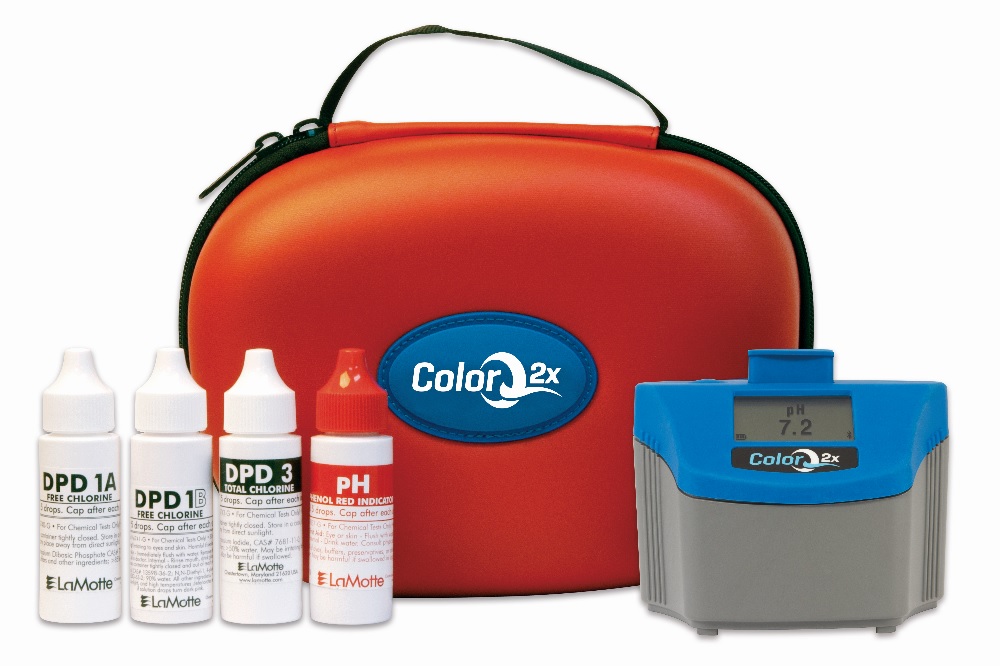
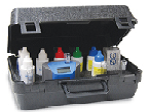
A
ColorQ, All-Digital Water Tester
can perform all of the common pool water
tests, eliminates the color-matching and
guesswork. There is a model, for
every pool testing need. Reliable
water testing will help solve and avoid problems. Better
Circulation helps make everything work
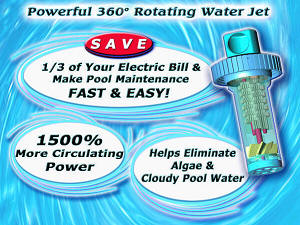
more effectively. The
Circulator is a return jet
replacement fitting, that improves
filtration, eliminates the dead zones that
promote algae growth. Phosphates and Nitrates
can increase the growth of algae and
make treatment more difficult, as both
are vital plant nutrients. Nitrate
removal is not practical, but phosphate
removal is easy enough to do.
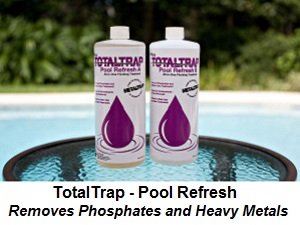
Adding Pool
Refresh Total Trap will allow
you to vacuum and filter out phosphates
and should make algae control more
effective. |
|
|
If you have a pool or spa water
testing need, we should have the
product.
►
Scroll down to read through some
Question & Answer information.
◄
|
|
Alternative Pool Water Sanitizers |
|
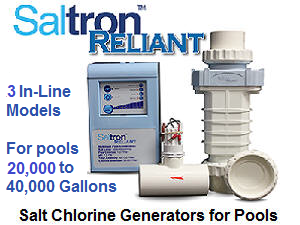
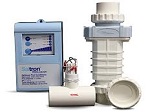
A
Salt
Chlorine Generator is definitely
a better way to do chlorine. Salt
chlorine generators are highly automated
and give you better control. The
salt level is about that found in human
tears. In-Line and
no-installation-required models are
available. Adding
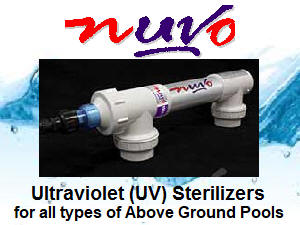
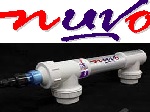
an
Ultraviolet Sterilizer
kills
virtually all microorganisms passing
through the cell. While it must be
used with a persistent sanitizer, such
as chlorine, it reduces the amount of
chlorine required, to maintain an
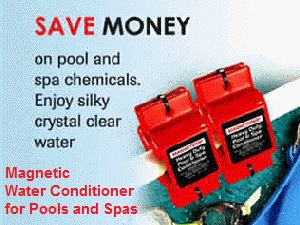
optimum level. Magnetic Water Conditioners
help solve scaling problems, due
to high levels of calcium
hardness and are available in 4
models. |
|
|
If you have a pool or spa water
testing need, we should have the
product.
►
Scroll down to read through some
Question & Answer information.
◄
|
|
How to treat the most common
pool algae? |
The most common algae found in swimming
pools is the blue-green variety. It is virtually always
present, in some minuscule amount, somewhere in the pool
environs. As soon as the pool sanitizer level drops too low
and the water conditions are right, this type of algae is
likely to start blooming and cause a green water
problem. Having an effective algaecide, already in the pool
water, will keep the algae from blooming quickly and might
avoid a visibly serious problem. Blue-green algae responds
well to shock treatment. The cloudiness that can result,
after the shock treatment, is most likely due to dead algae.
The addition of a liquid clarifier can help the filter remove the
dead algae and organic debris more quickly. In
addition to proper sanitation, good circulation
is a must to help prevent algae growth in areas
with stagnant water or dead zones. The use
of The Circulator, as a
replacement for standard return jet fittings, can
dramatically improve circulation, better distributing
sanitizer to all areas of the pool. If problems
arise, refer to the Pool
Problems Page, as a source of problem-solving
information, broken down into various categories.
Scroll down the page and click on the linked
keywords,
catch phrases
or images, in the archived answers below, to access additional information, on that topic or product.
Do you know what's in
your water? If you're having problems, with
sanitation or water clarity, testing allows you to better
understand the chemistry and determine the cause of the
problem. Once understood, you can select the best
treatment option. Understanding the nature of the
problem, should be step one. For information about
our full selection of testing options, visit our
Test Equipment Store.
 |
Join our E-Letter Mailing List.
You'll receive 1-3 E-Letters a
month, featuring helpful pool
and spa advice, new product
information and sale
announcements. All we
require is your e-mail address
and you can opt out anytime you
wish.
Your information
will never be shared or sold. |
|
▼
Helpful,
Problem-Solving Information, in a question and
answer format.
▼ |
►
Keeps Coming Back?
Every year I
seem to get problems with green algae growing, in the
corners of the deep end. My chlorine levels test out
OK and the water chemistry is good. I don't like to
use algaecides, because of past foaming problems. Any
good suggestions? Thanks
Paul L.,
Zwolle, LA, 2/25/2019
Your free
chlorine level and overall chemistry might be alright, but
it would seem that the water circulation is not up to par.
Algae will start to grow first, in areas that are stagnant or with poor circulation.
Pointing return jets towards the problem areas will help,
but you'll lose skimming action. Installing
The Pool Circulator, which is as
simple as replacing the existing return fittings, will
create a spiraling return flow. This will vastly
improve circulation and eliminate the dead zones, that
promote algae growth. Adding a
salt chlorine generator
will help you maintain a more consistent free chlorine
level, which might have to be maintained at 2-4 PPM, as
opposed to 1-3 PPM, to better control this problem.
Adding a robotic pool cleaner will improve circulation, by
traversing the whole pool and acting as a moving main drain.
The important thing is to improve circulation, so that the
sanitizers can be delivered throughout the pool.
first, in areas that are stagnant or with poor circulation.
Pointing return jets towards the problem areas will help,
but you'll lose skimming action. Installing
The Pool Circulator, which is as
simple as replacing the existing return fittings, will
create a spiraling return flow. This will vastly
improve circulation and eliminate the dead zones, that
promote algae growth. Adding a
salt chlorine generator
will help you maintain a more consistent free chlorine
level, which might have to be maintained at 2-4 PPM, as
opposed to 1-3 PPM, to better control this problem.
Adding a robotic pool cleaner will improve circulation, by
traversing the whole pool and acting as a moving main drain.
The important thing is to improve circulation, so that the
sanitizers can be delivered throughout the pool.
If this
website was helpful, in answering your question, please
consider joining our
E-Letter Mailing List. You'll receive 1-2
E-Letters a month, with helpful information, new product
updates, suggestions and sale announcements. I hope that
this
recommendation works out for you.
Sincerely.
Alan Schuster, 2/25/2019
► Green Pool Water?
Do I want to add an algaecide while
I'm shocking the pool to get rid of green water? I have
received differing opinions.
Stephen, 3/19/2015
Sounds like a pool opening? The problem of green pool water
is usually cause by the growth of algae. If this is the
case, make sure that
you vacuum out any debris, as soon as possible. It will help
reduce the amount of shock needed to clear up the
water. Always allow each chemical
to dissolve in
turn. Never mix different chemicals together. Algaecides are
commonly added before or after shocking. To get rid of the
algae it is important to maintain a Free Chlorine reading of
at least 1-3 PPM, after an overnight period. It may be
necessary to add more than 1 dose of shocking, depending
upon the condition of the pool. Test the water a few hours
after addition and add more shock, if required. The
best product would be a 60% polymer algaecide, which is
non-staining and non-foaming. I
hope that I have been helpful.
Sincerely. Alan Schuster, 3/20/2015
► Green Pool
Algae?
This is our first year of pool
ownership. The pool is an 18' round, above ground pool. We
seem to have developed some algae on one side of the pool
and the water has a green tint. I use a chlorine floating
feeder, with 3" tablets and have been very careful about the
pH, alkalinity and stabilizer. I clean the cartridge filter
weekly and run it for 8 hours a day. What went wrong? Please
help because I won't let the kids in the water.
Barbara L., E. Northport, NY, 7/14/2019
You have the most common type of swimming pool algae: the
type that causes green water problems. It does sound like
you are taking good care of the pool. Still, bad things can
happen to good pools! This is really not that bad, just an
inconvenience. Algae is always present in swimming pool
water. If the conditions are right, it will begin to grow,
resulting in visible signs of algae or problems with green
water. That means, if the chlorine level has bottomed out
because there wasn't enough in the water or the demands of
the bathers was just too high, algae can start to grow. From
your letter, I cannot determine the actual cause, but I can
make an educated, insightful guess. The chlorine floater may
not always be able to supply all the chlorine that the pool
requires, because the tablets are slow dissolving. Floaters
are popular with above ground pools, but are not necessarily
the best way to add chlorine. It may be necessary to
supplement the chlorine floater, by the addition of a quick
dissolving product: sodium dichlor, liquid chlorine, lithium
hypochlorite, non-chlorine, shock, etc. Or, you might
consider a salt
chlorine generator, instead of the floater or additions
of shock. It will provide better control and can be
used to give the chlorine a quick boost during those periods
of high bather usage: like when all the kids are in the
water for hours at a time. You are in control, by selecting
the level of chlorine output, Test the water for Free
Chlorine, several times a day, to gauge the requirements of
your pool, during these periods of peak activity. I suggest
that you use an algaecide to help prevent the growth of
algae. To get rid of the algae, add 2 pounds of shock, per
5000 gallons of water. Circulate continuously. Test the
water for Free Chlorine and keep the level at 2-3 PPM or
higher, until the algae is gone. Thereafter, resume normal
chlorination and filtration. Because the algae formed on one
side of the pool, try and direct more water to that
area. Swimming can resume, when normal chlorine levels
return. Most above ground pools do not have main drains and this
can result in poor water circulation on the bottom and in
the corners. Adding a
robotic pool cleaner will not only
help keep the pool clean, it will improve water circulation
and reduce the possibility of algae growth. I hope that this
information will help to get the kids back into the
water. Glad to be of assistance.
all the chlorine that the pool
requires, because the tablets are slow dissolving. Floaters
are popular with above ground pools, but are not necessarily
the best way to add chlorine. It may be necessary to
supplement the chlorine floater, by the addition of a quick
dissolving product: sodium dichlor, liquid chlorine, lithium
hypochlorite, non-chlorine, shock, etc. Or, you might
consider a salt
chlorine generator, instead of the floater or additions
of shock. It will provide better control and can be
used to give the chlorine a quick boost during those periods
of high bather usage: like when all the kids are in the
water for hours at a time. You are in control, by selecting
the level of chlorine output, Test the water for Free
Chlorine, several times a day, to gauge the requirements of
your pool, during these periods of peak activity. I suggest
that you use an algaecide to help prevent the growth of
algae. To get rid of the algae, add 2 pounds of shock, per
5000 gallons of water. Circulate continuously. Test the
water for Free Chlorine and keep the level at 2-3 PPM or
higher, until the algae is gone. Thereafter, resume normal
chlorination and filtration. Because the algae formed on one
side of the pool, try and direct more water to that
area. Swimming can resume, when normal chlorine levels
return. Most above ground pools do not have main drains and this
can result in poor water circulation on the bottom and in
the corners. Adding a
robotic pool cleaner will not only
help keep the pool clean, it will improve water circulation
and reduce the possibility of algae growth. I hope that this
information will help to get the kids back into the
water. Glad to be of assistance.
Sincerely. Alan
Schuster, 7/14/2019
► Blue-Green
Pool Algae?
I have a problem with what looks like
a blue-green algae bloom in my pool. It is a vinyl,
inground. I use a built-in chlorinator, with big tablets. I
have had algae and green water problems before - I think it
is because of the kids and you know what. Shocking usually
does the trick. I haven't been using algaecides. Should I
and which would you suggest? Thanks much.
Brenda R., Columbus, OH, 7/11/2020
In dealing with the blue-green algae, almost any algaecide
can be used. It is not resistant to treatment. My choice
would be a Chelated Copper Algaecide: it is effective,
cost-efficient, does not foam and because it is chelated
(stabilized) it should not cause staining. Just make sure
that you use it as directed by the label, don't add more, as
most people do. Tell the kids that you bought a new product
that detects the presence of urine - only problem is that
the product doesn't exist. Algaecide alone will not be
enough, to prevent a recurrence, of the problem. You
need better and more reliable sanitation and a
salt
chlorine generator is just about the best way to
accomplish that. You can dial up the chlorine output,
based on usage and the seasons. You will not longer
have to store, measure or handle chlorine products and
you'll avoid the relentless buildup of cyanuric acid. Hope that I've helped. Enjoy the
summer.
Sincerely. Alan Schuster, 7/11/2020
► Green Algae
In The Pool Filter?
Alan, great web site! Keep up the good
work. My problem is with recurring green algae in my
filter. I have a 14,000 gallon above ground, sand filter, a
timer, a chlorinator and very good city supplied water. I
had this problem at the end of last season, and it came back
mid-season this year requiring me to change the sand in the
filter it was so bad. The water prior to the problem was
perfect, and when I open the pool it's always crystal
clear. I routinely check pH, chlorine, and alkalinity. My
chlorine is easy, the chlorinate and timer keep that right
where I want it. The pH tends to drop after rain or heavy
use, so I add soda ash when needed to boost it back to
7.4-7.6. Alkalinity usually runs a bit high, up to
180. Normally this is all it takes. Then the water started
to slowly get cloudy despite my efforts to keep it clean.
Over a period of two weeks it went from just noticeable, to
almost cannot see the bottom. Based on an hunch I opened the
filter and sure enough the sand had so much green algae that
several washings with clean tap wouldn't clean it (in a
wheel barrow, stirring with a rake). So I changed out the
sand, added shock and algae preventative, and now it's
crystal clear. When I back-washed, naturally the sight glass
was quite green for about 90 seconds, then went clear.
My question is why is this happening and how do I prevent
it? Should I add shock and /or algaecide down the filter
basket as a preventative? I admit I don't shock the water
often because my chlorine always looks so good. I think I
should shock more often, agreed? Will the algae the filter
picked up contaminate the filter again?
Ken J.,
Trumbull, CT, 7/20/2017
There's nothing in your letter that jumps out and says fix
me! There is always algae present in the filter and in the
environs of the pool. When conditions are right, the algae
will grow. There are two bits of information missing from
your letter and that can be the clue to
 the problem. You did
not state how you are testing for chlorine or if you are
testing for Free Chlorine. If you are using OTO, you may be
giving yourself a false sense of security. OTO measures
total chlorine and is not the germicidal form of
chlorine. You should be testing for Free Chlorine, which is
the active and algae-controlling form of chlorine. Keep the
level at 1-3 PPM. The total chlorine reading should not be
more that 1 PPM higher. If it is you should shock to break
down the combined chlorine. You also failed to mention the
chlorine stabilizer level. If your level is higher that 150
PPM, it can reduce the effectiveness of the chlorine. If
that is the case, you should exchange a foot or two of
water, weekly, until a more suitable level has been
reached. The right pool water tester can spare you a
lot of problems. The
ColorQ PRO 7
is an all-digital tester than eliminates the guesswork and
all the color-matching. It would be my first choice. You might want to consider adding algaecide on a
regular basis. My first choice would be a polymer formula.
It can help with both the algae and the filtration.
Sand filter can be very inefficient. You can boost
efficiency, by replacing the sand with
a zeolite sand replacement media. I hope
that I have been helpful. Good luck and enjoy the summer.
the problem. You did
not state how you are testing for chlorine or if you are
testing for Free Chlorine. If you are using OTO, you may be
giving yourself a false sense of security. OTO measures
total chlorine and is not the germicidal form of
chlorine. You should be testing for Free Chlorine, which is
the active and algae-controlling form of chlorine. Keep the
level at 1-3 PPM. The total chlorine reading should not be
more that 1 PPM higher. If it is you should shock to break
down the combined chlorine. You also failed to mention the
chlorine stabilizer level. If your level is higher that 150
PPM, it can reduce the effectiveness of the chlorine. If
that is the case, you should exchange a foot or two of
water, weekly, until a more suitable level has been
reached. The right pool water tester can spare you a
lot of problems. The
ColorQ PRO 7
is an all-digital tester than eliminates the guesswork and
all the color-matching. It would be my first choice. You might want to consider adding algaecide on a
regular basis. My first choice would be a polymer formula.
It can help with both the algae and the filtration.
Sand filter can be very inefficient. You can boost
efficiency, by replacing the sand with
a zeolite sand replacement media. I hope
that I have been helpful. Good luck and enjoy the summer.
Sincerely. Alan Schuster, 7/20/2017
► Blue-Green
Color?
We have just set up our above ground
pool. The top of the water looks clear, but the bottom of
the pool looks bluish green in color. It is not sticking to
the pool and I have tried to vacuum it out, but of course,
it is not working. Is it algae? And how can I get it out and
filter through my pump? Also, my husband put some algaecide
in it from last year. Could this have caused the problem in
the first place?
Vicki N., 5/6/2010
It seems likely that it is algae: our old friend
cyanobacteria or blue-green algae. It probably developed
over the winter and early spring. Assuming it is algae, you
must shock the pool repeatedly, until you are able to detect
1-3 PPM of Free Chlorine, after an overnight period. That
means you should add shock to boost the Free Chlorine level
to 5-10 PPM. It may be necessary to add shock more than
once: test the water frequently to be sure. The longer this
takes - the longer the algae will grow. As the algae is
destroyed, the water may cloud up, due to the dead and
decomposing algae. Filter continuously and try adding a
liquid clarifier, to help improve the water clarity and
quality. Make sure that the pH is within the 7.2-7.6 range,
in order to maintain chlorine efficiency. Algaecide does not
cause algae to grow - it helps control algae. Why the
problem developed is probably related to how the pool was
closed and the ability of the cover to keep out
contamination. I hope that I have been helpful. Enjoy the
season.
Sincerely. Alan Schuster, 5/6/2010
► Dead Spot?
I keep getting green algae growing in
the same area. I can get rid of it by shocking, but it
returns even though my chlorine levels are good. Could it be
poor circulation? I have only one return, in a 12 x 24 free
form pool. Thanks.
Mike N., Sarasota, FL, 6/1/2007
Dead spots created by poor or inadequate circulation can
certainly favor the growth of algae. Poor circulation
probably means less chlorine and sets the stage for algae to
take hold. If you are operating the filter for long enough
periods of time, you might trying redirecting the return
flow, so as to send more water towards the affected areas.
However, this may create another dead spot. There is a
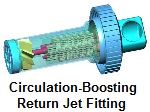
gadget called "The Pool Circulator" that can be easily installed
in the return fitting and will improve the circulation up to
15 times. If the algae problem is due to a dead spot, this
should solve the problem. I hope that this information will
prove helpful.
Sincerely. Alan Schuster, 6/1/2007
► Making
Progress?
Dear Alan, as first time home and pool
owners your website has been such a blessing! We opened our
pool about two weeks ago and it was a smelly swampy
disgusting mess. There were several holes in the cover and
we have 3 large overgrown maples that dumped all the leaves
into the pool all autumn! I had told my husband there is no
way I would swim in that water even if it did get cleaned up
and that we should just empty it and start again. Well
fortunately, I decided to surf the web and see what I could
learn. After many websites willing to sell me a book on pool
opening and maintenance, I came to your site. Thank you!
Thank you! Thank you!
After about 20 or so pounds of shock, continuous filtration
and algaecide, I can actually see half way into the pool. It
has gone from BLACK water, to a cloudy green (which probably
sounds gross but it is such an improvement I am thrilled to
see it.) I am confident now that with in a week I will have
a crystal clear sparkling pool. I know I am not there yet
but I am keeping he chlorine at about 3 and I am going to
the store today to purchase the clarifier. Believe it or not
I do have a question. I understand from my neighbors that
the former owners swam last summer with green water so I
would assume it looked bad before they closed. Is there
something I should look out for as far as that is concerned?
Could it mean there was trouble with the filter? Or is that
from poor maintenance? Besides the large filter that is
connected to the pool there is also a smaller filter that
was probably used but if it were green I would guess it
doesn't work very well. Can you recommend anything with such
small amounts of information? The pool is a 24ft round above
ground that I believe has a vinyl liner. Thank you again for
your help. I couldn't have gotten this far with it.
Jennifer V., Valparaiso, IN, 6/5/2008
Thanks for the fan mail! It does sound like you are making
progress. Getting a bit more aggressive with the chlorine
should help speed
things up. Try and boost the Free Chlorine to 5-10 PPM and
keep the pH near 7.2. Adding algaecide can help deal with the algae. Your pool
does not need 2 filters: just one that works properly and is
run for a long enough period. Filtration alone cannot
possibly control algae in a swimming pool. Swimming in a
pool that is not sanitized properly brings certain
risks. Algae may seen harmless, but infectious bacteria are
not. You want to make clear water with a proper
chlorine level for maximum pool enjoyment and safety. The
presence of phosphates and nitrates can accelerate algae
growth and increase the chlorine demand. Some dealers can
perform these tests and it can be worthwhile. I hope that I
have been helpful and that you have a good season.
Sincerely. Alan Schuster, 6/5/2008
► Not Working
Out?
My pool goes green by five days after
the pool guy has been there. My pool guy who has never been
at my pool for more than sixty consecutive minutes, says the
water's bad. He's been dropping two gallons of chlorine and
a week later its green. He also suggests a new larger
filter. Does water go bad? We fill up constantly, due to
evaporation and we get some rain... flush is okay with me
but not unless we have to. And black algae comes around soon
and we have to shock, which doesn't really work.
Eric P., 8/9/2014
You probably don't need a new filter, just a new way to add
chlorine. Adding two gallons on day one, can work for some
people, but it isn't working for you. You need to add
chlorine throughout the week and do some testing, as well.
Either get yourself an inline chlorinator or, better still,
a salt chlorine generator. It is chlorine without all the
negatives. No chlorine odor, no handling, storage or buying
chlorine and much better water quality. You'll have to buy
some salt - common, non-iodized food grade or water softener
grade - inexpensive! Thereafter, you need to add more salt
only to replace that lost through pump out, splash out,
backwashing or overflow. With a salt chlorine generator, all
you need to do is add an initial dose to stabilizer to bring
the level up to 40-60 PPM. Thereafter, more stabilizer is
needed only to replace that lost through pump outs,
backwashing and splash out. The overall water chemistry
should be maintained in the usual manner. Because salt
chlorinators destroy chloramines so effectively, you will
find the swimming conditions more pleasant and easier to
maintain. To better assure proper overall pool water
chemistry, visit a pool store that has a very reliable,
professional lab such as a
WaterLink SpinTouch Lab,
rather than a less accurate test kit or strip reader. I hope that this information will
prove to be useful.
inline chlorinator or, better still,
a salt chlorine generator. It is chlorine without all the
negatives. No chlorine odor, no handling, storage or buying
chlorine and much better water quality. You'll have to buy
some salt - common, non-iodized food grade or water softener
grade - inexpensive! Thereafter, you need to add more salt
only to replace that lost through pump out, splash out,
backwashing or overflow. With a salt chlorine generator, all
you need to do is add an initial dose to stabilizer to bring
the level up to 40-60 PPM. Thereafter, more stabilizer is
needed only to replace that lost through pump outs,
backwashing and splash out. The overall water chemistry
should be maintained in the usual manner. Because salt
chlorinators destroy chloramines so effectively, you will
find the swimming conditions more pleasant and easier to
maintain. To better assure proper overall pool water
chemistry, visit a pool store that has a very reliable,
professional lab such as a
WaterLink SpinTouch Lab,
rather than a less accurate test kit or strip reader. I hope that this information will
prove to be useful.
Sincerely. Alan Schuster,
8/10/2014
► Algae And
Bubbles?
Alan, I have had a problem for the
last year with my inground pool that is driving me nuts and
making me want to fill in my pool! There are bubbles coming
out of the returns of my pool. These bubbles adhere to the
sides of the pool which then encourage algae growth! I am
opening my pool now and the bubble problem still exists as
well as the fact that the pool was so full of algae when I
took the cover off, 4 frogs had made nests in the pool
water! Help!
Becky, 5/16/2009
It would not be uncommon for this problem to occur, after
the springtime pool opening. I suspect that there is an air
leak in the
return line - somewhere between the filter and
the return ports, as this would cause air bubbles, in the
return flow. Check all the connections. You are
associating the bubbles with the algae problem and that is
not likely to be the case. The algae problem is directly
related to the lack of chlorine at the opening of the pool.
You have to shock treat, until you establish a free chlorine
reading of 1-3 PPM that lasts through the night. Add a pound or
two per 10,000 gallons, every few hours, until the water
improves or the free chlorine level reaches 5-10 PPM. If you
want to use an algaecide avoid quats. Use either a polymer
or copper algaecide. It will probably take a lot more shock
or chlorine than you expect, given the poor condition of the
water. Be prepared - don't drag it out, as it will only
require more chlorine. If you plan ahead, the benefits of a
salt chlorine
generator will become apparent: more control,
better result and no more handling measuring and storing of
chlorine products. Good luck and I hope that the
information is helpful.
Sincerely. Alan Schuster,
5/17/2009
► Copper
Sulfate?
I was told that the above chemical was
all you needed for your swimming pool? They suggested one
tablespoon every two weeks. My pool hold 13,000 gallons of
water. So far I have had no problems. Your comments will be
appreciated. Thanks.
Ron, 8/8/2008
No company in the industry recommends copper sulfate. NONE!
At least not in the form of 100% copper sulfate. It is great
in reservoirs, but in a
swimming pool it can lead to staining, discoloration, green
hair and fingernails and more. At best it will help control
algae. But, it is not a pool water sanitizer and will not
control bacteria. If you want to use copper, as an
algaecide, there are plenty of products available. None are copper sulfate. I hope that I have
been helpful.
Sincerely. Alan Schuster, 8/8/2008
► I've
Shocked and Shocked?
My pool developed algae because it was
neglected for a week or two. I brought a water sample into a
local pool store and the only thing wrong was that there was
no chlorine. They gave me 4 pounds of shock and a bottle of
algaecide. I was told to add 2 pounds of shock and some
algaecide. The next day I was supposed to add the other two
pounds. I did all that and there is still no chlorine
reading and the pool is cloudy. There is still some algae
left. I went back and bought another two pounds and still no
chlorine. It has been 4 days now and the water is cloudy and
there is no chlorine. The algae seems to be gone. I have
backwashed the sand filter 2 or 3 times. What should I try
next?
Jim G., 8/2/2006
From your description, it does seem that you have made
progress. You didn't tell me how big the pool is, so I can't
relate to the amount of shock added. However, it is clear
that you did not add enough! The addition of two pound
increments was probably reasonable for your si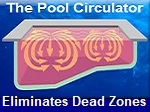 ze pool. You
must keep adding shock, at the same rate, until a 1-3 PPM
Free Chlorine Test reading is established and lasts through
the night. It is important to do this quickly. The longer
you drag it out - the more the algae will grow, increasing
the total amount of shock required. Once a stable Free
Chlorine reading is achieved, normal chlorination should be
resumed. The presence of phosphates
and nitrates can accelerate algae growth and increase the
chlorine demand. Many dealers perform these tests and it can be
important. During this period operate the filter
continuously. The practice of frequent backwashing is wrong.
Sand filters should not be backwashed daily: usually only
when the pressure is too high or at periodic intervals.
Frequent backwashing lowers the filter efficiency and could
be responsible for the cloudy water. The dead algae and
organic debris could be passing through the filter. Try
adding a liquid clarifier, to improve filter efficiency
and help remove the suspended particles that cause cloudy,
murky water. Have you considered adding
The Pool Circulator? Not only
will this gadget save you time and effort, but in
addition to getting clearer water, you will improve the
circulation on the bottom and reduce the possibility of
algae growth. It simply replaces the standard return
jet eyeball fitting and creates a spiraling return flow,
that reaches throughout the pool. Enjoy the summer. I hope that I have been
helpful.
ze pool. You
must keep adding shock, at the same rate, until a 1-3 PPM
Free Chlorine Test reading is established and lasts through
the night. It is important to do this quickly. The longer
you drag it out - the more the algae will grow, increasing
the total amount of shock required. Once a stable Free
Chlorine reading is achieved, normal chlorination should be
resumed. The presence of phosphates
and nitrates can accelerate algae growth and increase the
chlorine demand. Many dealers perform these tests and it can be
important. During this period operate the filter
continuously. The practice of frequent backwashing is wrong.
Sand filters should not be backwashed daily: usually only
when the pressure is too high or at periodic intervals.
Frequent backwashing lowers the filter efficiency and could
be responsible for the cloudy water. The dead algae and
organic debris could be passing through the filter. Try
adding a liquid clarifier, to improve filter efficiency
and help remove the suspended particles that cause cloudy,
murky water. Have you considered adding
The Pool Circulator? Not only
will this gadget save you time and effort, but in
addition to getting clearer water, you will improve the
circulation on the bottom and reduce the possibility of
algae growth. It simply replaces the standard return
jet eyeball fitting and creates a spiraling return flow,
that reaches throughout the pool. Enjoy the summer. I hope that I have been
helpful.
Sincerely. Alan Schuster, 8/2/2006
► Black
Algae: Is It Or Isn't It?
We have an above ground 30' round pool
which is about 5 years old. The first 2 years, we had no
problems with clarity and no problems with water condition.
In the 3rd year, we noticed a dark stain on the bottom which
runs about 3-4 feet in length about 1' wide in the circular
shape of the pool. We've been told repeatedly that we are
dealing with black algae. We have gone to just about every
pool shop in the area and have tried multitudes of treatment
options, including mustard & copper products, while adding
the scrubbing morning, noon, night routine. While some of
the treatments worked, they only worked temporarily…only to
wake up one morning and find the same spot re-appearing.
(Perhaps they should call this organism magic algae.) Not
only has it been an investment to make our pool clear and
stain-free, we have worked very hard to maintain its
condition. Since we live in New England, where the pool
season is only 3-4 months long, at best, we and our kids
enjoy our pool. As we have spent hundreds of dollars over
the years on chemicals that we were promised would solve the
problem, and have spent plenty of hours cleaning our pool
rather than swimming, we are contemplating replacing our
liner completely. Do you think this is a radical remedy or
do you have one last solution for us? Thanks for any advice
you may have to offer. Regards from New England
Bridgitte T., New England, 5/3/2009
My guess it that it is not "black algae." You apparently
have tried to treat this as algae, without success. The
stain is probably the result of minerals such as: copper,
iron and/or manganese. A water analysis should help to
confirm this. Let's try
this! Shut off the filter. Put 1/2 pound of pH reducer in a
white sock and drop onto a stained area. Leave in place for
5-10 minutes. Move around with a vacuum pool, afterwards. If
improvement is seen, it is positive confirmation that the
problem is mineral, most likely due to iron or copper.
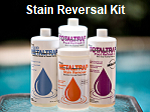
A MetalTrap Stain Reversal Kit
contains everything you need to remove the stains, eliminate
the metals from the pool water and help prevent a
recurrence, after the chlorine level is restored. Good luck
and enjoy the season.
Sincerely. Alan Schuster, 5/3/2009
► Black Pool
Algae Or Not?
Large pool facility, i.e. water park,
has an accumulation of slippery blackish-green stuff on a
wooden stair bridge walkway. There is a large pool that runs
under the bridge of stairs. The facility operations manager
says the blackish-green stuff on the stairs is black
algae. This area is an open area and traveled over
frequently, meaning that it's kept sufficiently watered from
pedestrians walking over it. Is it possible for algae, any
type of algae to grow on stairs? Also, would the same
techniques to get rid of it be that of getting rid of it
from a pool? Thanks so much for your help!
Melanie C., 5/20/2016
Unless you're a
microbiologist, it is difficult to put labels on
microorganisms. To me it sounds like mildew or fungus. Could
be it algae or something else? Probably. The easiest way to
eliminate the problem is with power washing and/or spraying
the area with liquid chlorine. It's not permanent and it
will come back. Inasmuch as people walk on the area, I would
not suggest applying algaecides to the surface, so as to
avoid creating a slippery surface. I
hope the advice helps.
Sincerely. Alan Schuster,
5/20/2016
|
Visit The Website Stores . . . for
better informed shopping!!! |
|
|
Shipping is FREE* . . . within
the Continental U.S.
A $9.99
handling charge will apply
to Continental U.S. Orders,
under $75.00. Orders
outside of the Continental
U.S. may require some
additional charge, based on
quantity and destination.
Most products can be
shipped World-Wide. International
and orders outside of
Continental U.S. - see
comments on the ordering
pages. |
|
|
Major
Credit Cards and PayPal are accepted. |
|