|
 |
Shipping is FREE* . . . within
the Continental U.S.
A $9.99
handling charge will apply
to Continental U.S. Orders,
under $75.00. Orders
outside of the Continental
U.S. may require some
additional charge, based on
quantity and destination.
Most products can be
shipped World-Wide. International
and orders outside of
Continental U.S. - see
comments on the ordering
pages. |
|
 |

Major
Credit Cards and PayPal are accepted. |
|
On-line
shopping since 2002 - Safe and Secure!!! |
|
Using Ionization, to help sanitize pool
water!!! |
|
Ionization
is the process, by which metallic ions,
such as copper, silver or zinc, are
utilized in helping to sanitize swimming
pool water. Ionization is not a
complete water treatment system, as it
lacks the oxidizing function, required
to oxidize organic wastes and
byproducts. Chlorine is typically
used to provide the oxidizing function.
Sanitizing is a must, for proper pool
water management.
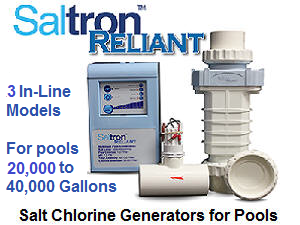
Salt Chlorine Generators are a
better way to utilize chlorine, producing
more controllable results. They
eliminate the need to handle, measure or
store chlorine products, while reducing
buildup problems. An
Electronic
PockeTester Kit is a convenient
way to monitor the salt level. |
|
Salt Chlorine Generators - 3 models |
Testing The Salt Level |
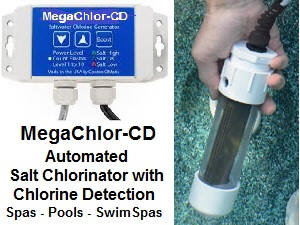
Salt Chlorine Generator - No
Installation |
 |
 |
 |
|
Product and Ordering Information |
Product and Ordering Information |
Product and Ordering Information |
If you have a pool or spa water
testing need, we should have the
product.
►
Scroll down to read through some
Question & Answer information.
◄ |
|
A
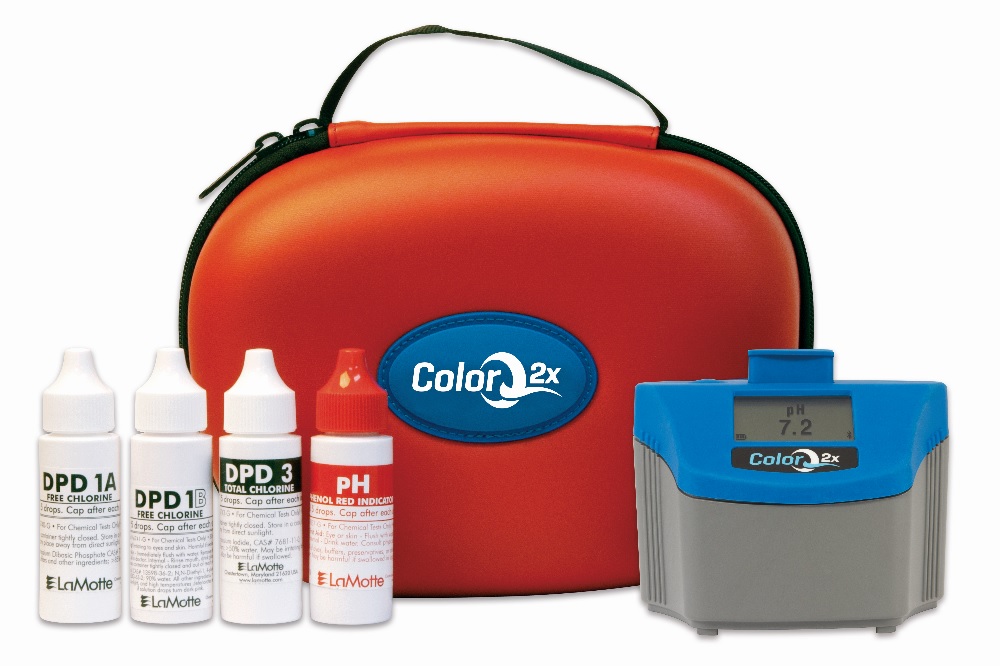
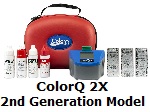
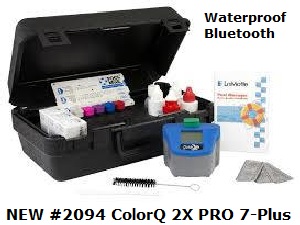
ColorQ, all digital Water Tester
can perform all of the common
tests, while eliminating the
color-matching and guesswork.
With 10 models, performing up to
11 different test factors, one
is right for every need.
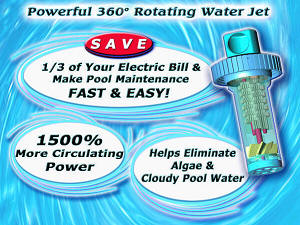
The Circulator is a
replacement return jet fitting,
that creates a spiraling return
flow, which dramatically
improves circulation. The
WaterLink SpinTouch Labs
are the ultimate tester, doing
up to 10 different water test
factors, in just 1 minute. |
|
ColorQ All-Digital Water Testers |
Circulation Boosting Return Jet
Fittings |
WaterLink SpinTouch Labs |
 |
 |
 |
|
Product and Ordering Information |
Product and Ordering Information |
Product and Ordering Information |
If you have a pool or spa water
testing need, we should have the
product.
►
Scroll down to read through some
Question & Answer information.
◄
|
|
|
How to use an Ionizer or Mineralizer, as
an alternative sanitizer? |
Ionizers and
Mineralizers are devices that supply metallic
ions to the swimming pool water. The metallic
ions function as an algaecide. Used properly,
the ions are maintained at very low levels,
avoiding the possibility of staining or
discoloration. Mineralizers and Ionizers utilize
an electrical current, to facilitate the release
of the metallic ions. Mineral Sanitizers
accomplish a similar end result without the use
of electrical circuits, by utilizing an erosion
principle. Mineralizer, Ionizers and Mineral
Sanitizers are not stand alone pool water
treatment products, but can reduce the total
amount of chemicals required for proper pool
water maintenance. Minerals alone cannot destroy
organic buildup and contamination and cannot
destroy dead microorganisms and organic debris.
The reliance on metallic ions, for aid in
sanitizing, requires pool water oxidation and
the use of products such as:
salt
chlorine generators, chlorine, bromine,
non-chlorine shock or ozone. All, oxidizers can
be used with Mineralizers and Ionizers. The
overall water chemistry should be based upon the
manufacturer's recommendations. Ionization
products that make claims about 100% chlorine
are doing this without the sanction and approval
of the US Environmental Protection Agency. In
the real world, they perform better with low
levels of chlorine, bromine or other oxidizers.
Stating "100% Chlorine-Free" helps sell the
product, but does not solve the problems caused
by lack of proper oxidation. If problems
arise, refer to the
Pool Problems
Page, as a source of problem-solving
information, broken down into various
categories. Scroll down the page and click on the linked
keywords,
catch phrases
or images, in the archived answers below, to access additional information, on that topic or product.
 |
Join our E-Letter Mailing List.
You'll receive 1-3 E-Letters a
month, featuring helpful pool
and spa advice, new product
information and sale
announcements. All we
require is your e-mail address
and you can opt out anytime you
wish.
Your information
will never be shared or sold. |
|
▼
Helpful,
Problem-Solving Information, in a question and
answer format.
▼ |
►
Ionizers Have Their Limitations?
I have a vinyl above ground pool
with a power ionizer. I have been
told conflicting advice about
chlorine. The person who sold us the
pool said don't add Chlorine and to
use a non chlorine shock, adding it
to skimmer basket. The folks at the
pool supply store says our pool has
no Chlorine and we need to add
chlorine shock, by broadcasting on
pool surface. One says don't use a
Cl floater. The other one says, yes,
use it. I'm confused! Help?
Hill T.,
6/12/2019
My guess is that you went with the
ionizer, because you didn't want to
use chlorine. Am I right? If the
dealer told you, that you still
needed to use chlorine, would you
have bought it? Telling you to add
non-chlorine shock is disguising the
fact, that you need to add ch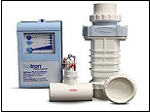 emicals
to oxidize wastes. In addition, the
ionizer is not a complete sanitizing
system. Chlorine is both an oxidizer
and a sanitizer. Your system will
work better and provide better
results, if you try and maintain 1-2
PPM level of free chlorine. Because
of the ionizer, the amount of
chlorine required, to maintain any
given level will be much less, than
if the ionizer was not there. I
suggest that you add enough quick
dissolving or liquid chlorine and
get a stable 1-2 PPM level of free
chlorine. Keep adding chlorine,
until you have a stable level. It
may take more chlorine, than you
think, berceuse of the condition of
the pool. Once there, try and keep
it there. Adding shock to the
skimmer is not a good idea.
Choose a shock that is quick
dissolving, in order to avoid liner
fading issues. Liquid chlorine
is ideal, as it disperses instantly.
A
salt chlorine generator would
have been a much better choice. It
sanitizes and oxidizes and does not
contribute to the chemical buildup
problems, associated with the use of
chlorine floaters and stabilized
chlorine. I hope that the
information provided was helpful.
emicals
to oxidize wastes. In addition, the
ionizer is not a complete sanitizing
system. Chlorine is both an oxidizer
and a sanitizer. Your system will
work better and provide better
results, if you try and maintain 1-2
PPM level of free chlorine. Because
of the ionizer, the amount of
chlorine required, to maintain any
given level will be much less, than
if the ionizer was not there. I
suggest that you add enough quick
dissolving or liquid chlorine and
get a stable 1-2 PPM level of free
chlorine. Keep adding chlorine,
until you have a stable level. It
may take more chlorine, than you
think, berceuse of the condition of
the pool. Once there, try and keep
it there. Adding shock to the
skimmer is not a good idea.
Choose a shock that is quick
dissolving, in order to avoid liner
fading issues. Liquid chlorine
is ideal, as it disperses instantly.
A
salt chlorine generator would
have been a much better choice. It
sanitizes and oxidizes and does not
contribute to the chemical buildup
problems, associated with the use of
chlorine floaters and stabilized
chlorine. I hope that the
information provided was helpful.
Sincerely. Alan Schuster,
6/12/2019
► What is
Ionization-Oxidation?
A friend has a pool that uses
something called Ionization-Oxidation. He seemed very happy
with it and I must admit there was no heavy chlorine smell.
It sounded too good to be true, but I didn't want to press
him on the details. Can you fill in the blanks?
Jerry N., Darien, GA, 6/23/2020
Ionization-Oxidation is a hybrid method for purifying water.
The technology was actually used in the space program to
purify water on many manned space missions. In the better
units, electrodes release controllable amounts of copper and
zinc ions, to act as sanitizers. In addition, other
electrodes produce forms of active oxygen to destroy organic
matter, algae and waste products. The Ionization-Oxidation
unit is operated for a preset time and carries the
sanitizing load, with a minimal chemical presence.
Frequently, it is touted as 100% chlorine free. In the real
world, better and more consistent results are gotten, by
also maintaining a very low level of chlorine. It requires
very little chlorine and there should be little or no sense
of this being a chlorine pool. However, the oxygenation
leaves the water quickly, after
turning off the unit, and many
users make the mistake of increasing
the copper level. When the
copper level goes above 0.3 PPM or
the pH too far above 7.2, copper
staining becomes a possibility. The chlorine just helps
bridge the gap between the shutting off of the unit and its
restart the next day. If you are interested in a pool that
uses a minimum of chemicals, you might consider a
salt chlorine generator.
It is the better way to do chlorine
and avoids the buildup of unwanted
byproducts and does not contribute
to the possibility of copper
staining.
I hope that this information proves to be helpful.
Sincerely. Alan Schuster, 6/24/2020
► Ionizer Needed
Chlorine To Maintain Water Quality?
I purchased this powered ionizer, for
above ground pools and I think it is time for me to replace
the cartridge in this ionizer. I am debating buying another
cartridge, because the replacement price is going to
be around $150. Can you please share your opinion and/or
suggestions about this product or any others similar to it?
What is your personal experience or advice regarding these
ionizers? Being a new above ground pool owner, I am not
able to determine if this product is worth re-investing my
money again every 2 or 3 yrs. Please advise & Thanks for all
your help.
Debbie R, Dallas, TX, 11/25/2017
Wastes must be
oxidized, with the use of chlorine, bromine, ozone,
potassium monopersulfate or hydrogen peroxide. WHAT ARE
 YOU
ADDING TO OXIDIZE BATHER WASTES? THIS PRODUCT WILL NOT DO
ANYTHING TO ELIMINATE URINE! Mineral sanitizers and
ionizers usually
suggest the use of chlorine or bromine
or some other oxidizer, at lower levels, to
destroy the wastes. In my opinion, stand alone ionizers fail
to provide proper water quality and add to the risks of
staining. In many cases, the dealer tells the pool owner
that no chlorine is needed. Just add a gallon of laundry
bleach weekly. Guess what! Most laundry bleach is
chemically identical to liquid pool chlorine, only at about
1/4 - 1/2 the strength. And if you have to add chlorine,
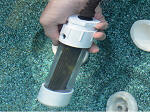
There are above ground, Salt Chlorine Generators in the same
price range, as the refill, that can work in most any type
of pool. I am really interested about what other chemicals,
you are adding. Please get back to me.
YOU
ADDING TO OXIDIZE BATHER WASTES? THIS PRODUCT WILL NOT DO
ANYTHING TO ELIMINATE URINE! Mineral sanitizers and
ionizers usually
suggest the use of chlorine or bromine
or some other oxidizer, at lower levels, to
destroy the wastes. In my opinion, stand alone ionizers fail
to provide proper water quality and add to the risks of
staining. In many cases, the dealer tells the pool owner
that no chlorine is needed. Just add a gallon of laundry
bleach weekly. Guess what! Most laundry bleach is
chemically identical to liquid pool chlorine, only at about
1/4 - 1/2 the strength. And if you have to add chlorine,
There are above ground, Salt Chlorine Generators in the same
price range, as the refill, that can work in most any type
of pool. I am really interested about what other chemicals,
you are adding. Please get back to me.
Sincerely. Alan Schuster, 11/26/2017
To be honest with you, my pool guy,
(who bailed on me in July), was treating my pool, as if the
ionizer was not there. He said, he wasn't too sure that
these ionizers were very efficient, so he just kept caring
for my pool with chlorine and shock, which of course kept my
pool clean and blue. However, I was in Florida for a month
when my pool guy quit, and when I got back, I had a green
tinted pool. Since then, I lost my job, and have had a hard
time buying the chemicals necessary to get all the algae
out. Not too mention it has been raining almost every other
day or 3rd day here in Dallas for the past several months.
When the pool supply places test my water, I have had
ELEVATED levels of both pH and alkalinity and 0 chlorine.
When we finally got the ph and
Alk level. Then I treat with
algaecide, then 5 to 6 lbs of shock
and floating 1 inch stabilized
chlorine tabs. I vacuum, and still
am unable to get my pool
totally blue. I think the rain is
killing my chlorine levels, because
I cant seem to keep it up. And those
1-lb pkgs. of shock are so
expensive, it is ridiculous. I have
been looking for pool chemicals
online, but am unsure which ones are
the best value for the money. My
vinyl is solid White, with the
exception of a 7 inch color design
around the top edge of the liner,
right about where the top of the
water level should be. I am not
concerned about bleaching any color
from my vinyl, yet the pool supply
people, keep wanting to sell me the
more expensive shock treatment made
especially for vinyl pools. Every
week, when I go to the pool supply
store, it is costing me anywhere
from $80 to $130 in chemicals. So
that is the reason I was
inquiring about the efficiency of my
power ionizer and whether or not I should invest in another
ionizer cartridge, due to the
pricing of the item. I was hoping to
save on over-all chemical costs.
And, after reading the info you
suggested a Salt Chlorine Generator, I
am a little confused. Do I have to have a salt water system
already set up on my pool, to use a salt chlorine
generator? Any
suggestions or advice you provide will be greatly
appreciated. Thanks for all your help.
Debbie R., Dallas, TX, 11/28/2014
Like I said, an ionizer cannot work without chlorine or some
form of oxidizer. At best, it can help reduce chlorine
usage. Your pool was being maintained on chlorine. When the
chlorine was stopped, that is when
algae took over. The low pH and TA
are the result of the algae and not
the cause. It seems the product did
little to deter algae and I would
not invest in a replacement
cartridge. Because this is a device,
their claims are not regulated by
the EPA. They can boast about no
chlorine, but in the real world, the
truth gets exposed. I suggest that
you add chlorine and get the free
chlorine level elevated.
Liquid pool chlorine is vinyl-liner
safe and cost effective. Or read the
labels and use a cost effective
choice, since money is a
consideration. It will probably
require a lot of chlorine.
A salt chlorine
generator is the easiest way to add chlorine and to make
use of this product, you will have
to add some salt to the pool water. This is a
much better option that just an
ionizer. Good luck with the clean up and I hope that I
have been helpful.
Sincerely. Alan Schuster, 11/28/2014
► An Ionizer
vs. A Salt Chlorinator?
I'm building a new concrete 26X42 pool
and I'm having a little difficulty deciding on the purifier
to use. One of my concerns is to eliminate as much as
possible any chemicals used (i.e. I hate the smell and feel
of chlorine). So I've looked at several chlorine generators
and Copper/Silver Ionizers. Some vendors swear by the
generators because you don't have to handle chlorine. But,
they can't answer my concern that the Chlorine content of
the pool is probably no different (i.e. regular
Chlorinators). On the other hand, Ionizers claim to use
little or no Chlorine. What can you tell me about the
relative strengths, beyond trivialities, between generators
and Ionizers? Any recommendations are appreciated.
Mike S., 8/22/2010
With an Ionizer you will still have to add chlorine, bromine
or non-chlorine shock on a regular basis. Otherwise, organic
byproducts will buildup to problem levels. The use of
chlorine or bromine will act as a backup sanitizer and help
assure better water quality. The ionization unit will reduce
the use of chemical sanitizing products - how much less will
depend on your particular usage pattern. The overall pool
chemistry must still be maintained, as with any pool. Your
concern about chlorine should be eliminated, if you add a
salt chlorine generator. Under normal conditions, it is
chloramines that prove odorous and irritating. With a
salt
chlorination system, all the water passing through the
cell will be free of odorous and
irritating chloramines and there
should be much less of a sensation
of chlorine being in the pool. My own
long-term, experience bears this out. It is the chloramines
- not the chlorine that are smelled. There are no chlorine
containers to handle or store! As with any chlorine pool,
you will have to maintain all of the other water chemistry
parameters. Test the salt level, periodically to assure that
the amount is within the proper range. Good luck with your
decision. I hope that I have been helpful.
water quality. The ionization unit will reduce
the use of chemical sanitizing products - how much less will
depend on your particular usage pattern. The overall pool
chemistry must still be maintained, as with any pool. Your
concern about chlorine should be eliminated, if you add a
salt chlorine generator. Under normal conditions, it is
chloramines that prove odorous and irritating. With a
salt
chlorination system, all the water passing through the
cell will be free of odorous and
irritating chloramines and there
should be much less of a sensation
of chlorine being in the pool. My own
long-term, experience bears this out. It is the chloramines
- not the chlorine that are smelled. There are no chlorine
containers to handle or store! As with any chlorine pool,
you will have to maintain all of the other water chemistry
parameters. Test the salt level, periodically to assure that
the amount is within the proper range. Good luck with your
decision. I hope that I have been helpful.
Sincerely. Alan Schuster, 5/13/2010
► Ionization
101?
Is there any research that proves that
ionization or mineral purifiers are effective pool treatment
options, with comparison to chlorine or bromine treated
pools?
Toby W., Christchurch, New Zealand, 5/11/2012
While I don't have any research
findings on ionization, I'm sure
that such material exists.
Ionization units
and Mineralizers have been around
for at least 30 years. The theory is
sound: metallic ions, usually
copper, zinc or silver, help provide
sanitizing and algae control. You
still have to maintain the overall
water chemistry. It will reduce
chlorine or bromine consumption, but will not eliminate the need for
shock treatment for oxidation of wastes, debris and
byproducts. If you want to completely eliminate the need to
handle all chlorine and shock treatments, you should think
in terms of a salt chlorine
generator. If an ionization unit is
used with a salt chlorine generator, it will allow the free
chlorine results to be maintain at a much lower 0.4 PPM and
still have optimum results. This lower chlorine requirement
will extend the life of the salt cell. I hope that I have
been of some assistance.
Sincerely. Alan Schuster, 5/11/2012
► An Ionizer
Is Not The Best Choice???
I have an 8400 gallon pool, vinyl
liner, variable speed pump, sand filter, Destin Florida
32541. It's a vacation rental home with heavy bather load,
lots of kids. Water temperature above 90 in the summer. Does
an ionizer need to have both copper and silver? Do they
serve separate purposes? I'm getting conflicting advice from
different websites, and am about ready to settle for an
ionizer with copper only. I would then use my chlorinator
with bromine tablets to maintain a constant 0.9 ppm bromine
instead of 0.4 ppm chlorine. [Bromine instead of chlorine so
as to avoid the stabilizer buildup in pool water that will
occur with chlorine tablets.] I'm searching. Does this sound
like a viable plan? Also, am I correct in concluding that
the mineral purifiers are more expensive to operate in that
they require the cartridges to be changed twice a year,
whereas an ionizer, powered electrically, require the
electrodes be changed every 2-3 years. Thanks for your help.
Chuck, Destin, Florida, 1/28/2011
You received some bad advice!!! An ionizer will not preclude
using chlorine or bromine. Your concern about the build up
of
cyanuric acid is well founded and
correct. Using bromine will avoid
that problem. However, bromine
cannot be protected, from the
destructive effects of the Sun's UV
rays, as can chlorine. Bromine will
prove costly to use, in the hot
Florida Sun, and is a poor choice,
for you! With
an ionizer, people would have been dialing up the copper
output, at the first sign of trouble. That would be an
unlikely solution and could result in too much copper and
green hair, fingernails and staining problems. I suggest
that you add a salt chlorine generator. It lends itself to
automation and output can be controlled, to suit the
requirements. All that you should need, after the initial
salt addition, is acid to control the pH. With chlorine or
bromine tablets, regular additions of soda ash would be
required, because of the acidic nature of the tablets.
I hope that this information will
prove helpful.
Sincerely. Alan Schuster, 1/28/2011
► Floating
Fungus?
Our pool continually gets a powdery
fungus in it…the water is clear but just light weight
fungus. I’m so tired of my husband spending every night
after working cleaning the pool with the vacuum. We have an
ionizer. What do we need to make the chore easier? He was
just out of town for a week, and the pool didn’t get it’s
daily cleaning and it’s taking him hours to vacuum to clean
the liner, sides and bottom of this fungus. Our local pool
people have been no help…and this has been going on for
years, since we had it installed, almost 10 years now. I
suggest throwing out the ionizer and going with a regular
cleaning pump. Do you have a good suggestion?
Pat F. 9/25/2018
An ionizer is not a complete sanitizing system and requires
regular additions of an oxidizer, such as chlorine. Dealers
like to down play this need for an oxidizer or chlorine, as
a means of making the ionizer seem more attractive. This
mold, algae or fungus evidently has become resistant to the
ionizer and requires increased sanitizing and oxidation.
That usually means chlorine. The easiest and best way to do
chlorine is with a salt chlorine generator. A
salt chlorine
generator is chlorine without all the negatives. No chlorine
odor, no handling, storage or buying chlorine and much
better water quality. You'll have to buy some salt - common,
non-iodized food grade or
water softener grade - inexpensive!
Thereafter, you need to add more
salt only to replace that lost
through pump out, splash out,
backwashing or overflow. With a salt
chlorine generator, all you need to
do is add an initial dose to
stabilizer to bring the level up to
40-60 PPM. Thereafter, the overall
water chemistry should be maintained
in the usual manner. Because salt
chlorinators destroy chloramines so
effectively, you will find the
swimming conditions more pleasant
and easier to maintain. You can
continue to use the ionizer, with
the salt chlorine generator, if you
choose. Proper salt level is important. Too
little and not enough chlorine will be produced. Too much
could shorten the life of the salt cell.
Salt PockeTesters are
the easy way to test the salt level. I hope that this
information has been helpful. I hope that this information
is helpful.
Sincerely. Alan Schuster, 9/25/2018
► Too Much
Copper From Ionizer?
I had my copper ionizer set too high
and I ended up with too much copper in solution. Instead of
0.3 PPM, I have 0.8 PPM. It hasn't caused a problem, because
I am keeping the pH close to 7.0. I know that adding a metal
treatment will inactivate the copper. So how can I get it
down to a safer level and still keep the copper effective?
Thanks.
Peter G., Beaufort, SC, 4/9/2012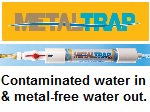
Too much copper can lead to green hair and fingernails, as
well as pool staining and discoloration. Fortunately, there
is a simple solution, other than replacing water. Turn the
ionizer off. Attach a small submersible pump (pool cover
type) and a length of garden hose to a
MetalTrap Filter.
Test the copper level. Keep recirculating the pool water
through the MetalTrap Filter, until the copper level is
below 0.3 PPM. At that point you can stop recirculating the
water through the MetalTrap Filter. When the copper level
drops to 0.2 PPM, turn the ionizer on again, but at a lower,
more appropriate setting. This should solve the problem.
Sincerely. Alan Schuster, 4/9/2012
► Sequester
Or Not To Sequester?
We have many customers that are
switching to ozone, ionization or mineral cartridges. We
live in an area that has high mineral content, and to solve
this issue we have had our customers use heavy amounts of a
sequestering agent. This has solved many of the staining and
discoloration issues. My question to you is will the use of
a sequestering agent inhibit the effects of a mineral
cartridge using silver or zinc? And if so what do you
suggest to eliminate minerals while still using the mineral
cartridges if the customer doesn't have a water softener?
Sincerely.
Justin N., 10/31/2008
Chemicals used to treat calcium and other metals can
interfere with ionizers and some Solar-Powered Mineralizers
- especially those that rely on copper and/or zinc. While
not all sequestering or chelating agents may cause problems,
I can't tell you which products will or won't. However,
there is a better way to lower the copper level. Attach
a METALTRAP Filter to a small submersible pump, with a
garden hose, and use it to recirculate the pool water. As
the water passes through, copper will be removed. Continue,
until the copper level has dropped in the safe, recommended
range. I hope that I have been helpful.
Sincerely. Alan Schuster, 10/31/2008
► Ionization
And Chlorine?
We have a 120,000 litre ionised pool
with spa to which we add 5L of liquid chlorine to weekly in
summer and about 3L in winter. The pool is always crystal
clear. I have recently started using a company to do the
pool maintenance for me and they keep telling me the
chlorine levels are too low. Should an ionised pool have a
specific chlorine reading? The pH level is always too high
after 1 week (usually needs about 1 cup acid weekly) - is
this normal or is there a better product to use than liquid
chlorine to maintain a better pH level? Sorry, being
Australian, I can only work with metric!
Wendy, Australia, 9/2/2007
Liquid chlorine is a good choice. You should maintain the
same free and total chlorine levels as any other
chlorine-sanitized pool or spa. Even though
you have an ionizer, the levels
should be the same. However, the
presence of an ionizer should allow
you to use less chlorine to maintain
any given level. Liquid chlorine has
a high pH and regular additions of
acid are required. Adding an
Ultraviolet Sterilizer will reduce the amount of chlorine used and make
pH control much less of an issue. I hope that this
information is helpful.
Alan Schuster, 9/3/2007
► How Do
Ionizers Work?
Could you explain how an Ionizer
works? Simply, if possible. Thank you very much.
Tom M., Ukiah, CA, 12/2/2010
Most Ionizers work on the principle of adding a low level of
silver and copper ions to the water. Ions are the
electrically charged soluble form of these metals. The
copper ions function as an algaecide. The silver ions
function as a bactericide. At these low levels, staining and
precipitation should be eliminated. The Ionization unit
contains a silver and copper electrode and
 the
regulation, of the current between
these electrodes, will control the
amount of copper and silver ions
released into the pool water. The
device is plumbed in line and
operates with the same cycle as the
filter. In addition to the
copper-silver Ionization, there must be oxidation. For this
purpose chlorine or a non-chlorine shock are usually used,
in order to destroy organic contamination and build up and
to destroy dead algae and debris. An ozone generator can
accomplish the oxidation, while reducing the chemical usage.
The overall water chemistry must be maintained for bather
comfort, water quality and to protect the pool surfaces and
equipment. These products will not necessarily allow you to
eliminate chlorine completely, but will allow you to get
satisfactory results, while maintaining a lower level. No
matter how you sanitize a pool, it will greatly benefit and
be more effective with better circulation. The
Pool Circulator
can be installed, in the return jets and will dramatically
improve circulation, thereby eliminating dead zones, which
promote algae growth. I hope that I have been of
assistance.
the
regulation, of the current between
these electrodes, will control the
amount of copper and silver ions
released into the pool water. The
device is plumbed in line and
operates with the same cycle as the
filter. In addition to the
copper-silver Ionization, there must be oxidation. For this
purpose chlorine or a non-chlorine shock are usually used,
in order to destroy organic contamination and build up and
to destroy dead algae and debris. An ozone generator can
accomplish the oxidation, while reducing the chemical usage.
The overall water chemistry must be maintained for bather
comfort, water quality and to protect the pool surfaces and
equipment. These products will not necessarily allow you to
eliminate chlorine completely, but will allow you to get
satisfactory results, while maintaining a lower level. No
matter how you sanitize a pool, it will greatly benefit and
be more effective with better circulation. The
Pool Circulator
can be installed, in the return jets and will dramatically
improve circulation, thereby eliminating dead zones, which
promote algae growth. I hope that I have been of
assistance.
Sincerely. Alan Schuster, 12/2/2010
► Floating
Ionizer?
You've given me valuable information
before about salt water chlorinators. I've just come across
a floating, solar-powered ionizer. How do you rate this
product compared with a salt water chlorinator?
Kevin R., United Kingdom, 4/5/2009
This product does not produce
chlorine. It is an ionizer and
probably releases copper and silver
ions into the pool water, when
there is sunlight to
power the solar cells. Ionizers do
not have to work 24/7 and this type
of unit might produce enough
sanitizing ions, even if there are
cloudy periods. It is however, not a
complete stand alone product. It
must be used with chlorine or other
oxidizers, in order to destroy
wastes and to act as a proper
sanitizer.
Salt chlorine generators
are much better choices, as they can
act as a complete, stand alone,
sanitizer. I hope that I have explained the difference.
Sincerely. Alan Schuster, 4/5/2009
► Too Much
Copper, From Ionization?
Thanks great website. I need your help
I have a pool guy coming to clean my pool every week
suddenly the pool sides are turning blue and under the pump
where it was leaking it is purple this has been going on for
a week now. He says everything is fine as far as the
chemicals are concerned. the pool is in ground 20x40 the
water looks clear but the sides and the baskets are turning
a sky blue. Can you help? Also I also have a copper ionizer,
as well.
Joe K., 5/11/2006
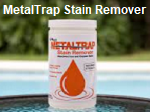
I am not sure what kind of ionizer you have, but I suspect
that your problem is too much copper. It could be set too
high.
I suggest that you have the water tested for copper
and manganese. Treatment may be necessary and that can
present a problem with an ionization unit. Try placing a few vitamin C
tablets on a stained area. If it works, the pool should be
treated, with METALTRAP STAIN Remover. You may have to lower
the pH of the pool to 7.0, discharge all of the chlorine and
add a pound of the METALTRAP Stain Remover, for each 10,000
gallons. I hope that this information proves helpful.
Sincerely. Alan Schuster, 5/11/2006
You were right it has a high content
of copper. It is recommended to unhook the ionizer, which
uses copper electrodes and empty half the water and then
treat. Would that be your recommendations? Thanks so much. I
will recommend this site to all my pool buddies.
Joe K., 5/12/2006
That would lower the copper content and make more staining
less likely, but you still have to deal with the stains.
There is a better way to lower the copper level, without
interfering with the ionizer's performance. Use a small
submersible pump and a length of garden hose and connect
this to a METALTRAP Filter. This cartridge-like device will
remove the copper , as water passes through it. Monitor the
copper levels and stop the recirculation, when the level
drops under 0.3 PPM. In the future, operate the ionizer at a
lower setting.
Sincerely. Alan Schuster, 5/12/2006
► The
Shocking Story?
I have been using an Ionizer on my
pool for several years. I was instructed to use a
non-chlorine shock, on a regular basis. I understand the
need to shock the water because the Ionizer will not destroy
organics and dead algae. I am wondering if I can use a
chlorine shock, instead of the non-chlorine shock? I like
the Ionizer, but maybe chlorine shock would be more
convenient and cheaper? Thanks.
Bill W, 6/4/2009
Most people, buying a Ionizer, do so to avoid chlorine
completely. The combination of an Ionizer and non-chlorine
shock does just that. So far as I know, ionization units can
be used with chlorine or non-chlorine shock or, better
still, an ozone generator. The presence of an ionizer will
allow you to maintain ideal conditions with less chlorine. These products will not necessarily allow you to
eliminate chlorine completely, but will allow you to get
satisfactory results, while maintaining a lower level. So
long as you're going to have to add
some chlorine, why not do it a
better way? A
salt chlorine generator provides
more control and better results and
could eliminate the need to any any
shock or use an ozonator. In
any event, I suggest that you follow the manufacturer's
recommendations, so as to assure proper functionality and
product life. I hope this information proves helpful.
Sincerely. Alan Schuster, 6/4/2009
►
Ionization-Oxidation?
Dear Alan, your fame spreads far and
wide! Another couple of questions from the other side of the
pond (U.K.) I am considering fitting an ioniser, several
manufacturers out there, some use copper electrodes, some
copper and silver, some use copper, silver and zinc. from my
own studies of bacterial research via the web it appears
that there is a synergy between copper and silver which
provides a kill rate at 4ppm which can only be matched by
copper alone at 8ppm therefore am I correct that the life of
the electrodes (copper and silver) will be longer due to the
amount of ions required and also the electricity required
will be less saving the planet a bit more not too mention
that staining should be less? Second question, You do not
seem to mention that some manufacturers include a second
pair of electrodes (titanium or platinum) that are used to
provide oxygen to burn up those impurities normally carried
out via chlorine, thus eliminating chlorine completely. What
are your thoughts? I have also found a German company that
has made diamond surfaced plates that produce 100% more
oxygen than platinum plates. Kind regards.
John W., U.K., 4/10/2015
I will always have fond memories of the UK and the pool
business, having attended a trade show in Brighton, many
years ago. Ionizers, sanitize by
releasing metallic ions: copper, silver and zinc. As far as
concentration is concerned, 4 or 8 PPM, is far too high, as
that would likely result in staining and discoloration
problems. Levels in the tenths of a PPM would be more
appropriate, in a swimming pool. While an ionizer helps
sanitize the water, it is not a complete system. Oxidation
will still be required. Towards that end, an ozonator
or ionization-oxidation unit could
be used to provide the needed oxidation. Because the
oxygenation and ozone are so
fleeting, perhaps lasting only 20
minutes, it can be
challenging to totally eliminate chlorine, as its presence
on a persistent basis provides both sanitizing and oxidizing.
This might be required, occasionally, if the bather loads
are high or conditions warrant. The maintenance of a minimal
level of chlorine or bromine, helps to confirm that the
sanitizing and oxidizing needs are being met. For those that
want to totally eliminate chlorine. adding high efficiency
filtration, The Pool Circulator for improved circulation or a
UV
Sterilizer will make success more likely. If you want to
minimize the use of chlorine, a combination of systems may
be the best answer. A
salt chlorine generator is still
chlorine, but it is the better water
to utilize chlorine. I hope that this information proves
useful.
Sincerely. Alan Schuster, 4/10/2015
► Amazing
Reappearing "Rusty-Colored" Stains?
I live in South Florida. I recently
acid washed my inground pool, which uses a copper oxidation
electrode system rather than chlorine. The surface looked
great and I refilled and balanced the pool; and then about
4-5 days later small rust stains began to appear only on the
shallow end. I was told that it may be rust leaching from
impurities in the marcite surface, but I don't know if this
is true. I can scrub them out manually with a scrubber stone
but they come back. Is there anything I can do to remove
them permanently? I was thinking of spot painting over
them because I don't want to resurface the pool. None of the
pool centers know how to handle this because of the copper
mineralizer system I have. I really need and would
appreciate your advice. Thank You!
Mike F., Florida, 5/3/2013
There are problems with dark spots on plaster finishes, but
this doesn't sound like that. It sounds like fertilizer
granules. Is it possible? The problem the dealer is having
is that if you use a metal treatment, it may compromise the
copper electrode function. The only way to treat the metals
is to add a metal treatment. That will negate the copper
algaecidal function, unless a suitable metal treatment is
used. To provide algaecidal activity, you could use a
polymer based algaecide for a few months, while the copper
becomes re-established. This is one of the limitations in
dealing with mineralizers or ionizers, that
utilize copper, and having a heavy metal problem. There are
metal treatment products that are safe to use, so be sure to
check with the dealer.
Sincerely. Alan Schuster, 5/3/2013
The algaecide treatment and shock
treatment, combined with chlorine tabs on each spot,
successfully removed the stains. I also pressure washed to
clear the top of the screen enclosure of debris. The problem
is, after the pool looked great, when I went to bed. This
morning new spots appeared, about 50 of them, in the same
areas, but not the same spots. I have no idea what's going
on, but I'm frustrated as hell. Any thoughts or suggestions?
Thanks.
Mike, 5/5/2013
The stains are not copper or another metal or else the
chlorine would not have removed them. The plaster spot
problem that has been widely reported does not respond to
chlorine. That only leaves algae or some organic type of
stain. Have you ever added a metal treatment? Is your pool
overhung by a tree, such as a live oak or black olive? If
chlorine was the solution, it seems that the oxidation
function is inadequate, on a 24-hour basis. Perhaps, you
should simply maintain the pool on a very low level of
chlorine, so that there is always some present, for those
times with active oxygen is not being produced. Using
bromine would be even better, as it seems more effective
against certain problem types of algae. It would be safe to
assume that the copper is not able to control the problem,
possibly due to the addition of metal treatments. Add a
polymer algaecide and continue for a few months. I suggest
that you shock the pool, raising the free chlorine level to
5-10 PPM. Use the brush and improvement should be
forthcoming, in a day or so. Good luck.
Alan, 5/7/2013
Yes! There is a live oak above that
area of the pool. Has that been known to cause this or
similar problems? No, I have not used a metal treatment
because the manufacturer of the copper system said not to. I
agree it must be something organic, but damned if I know
what it is, particularly since the stains show up so
quickly.
Mike, 5/8/2013
Blame it all on the tree. As far as I am concerned the best
live oak tree is a dead one. The same for black olive trees.
I have a live oak in front of my house. It makes a mess of
the lawn and stains the driveway. The state of Florida makes
it difficult to take this native tree down. Certain times of
the year the problems are worse. If you can legally take it
down, I would do it. Your problem is this. The oxidation
function produces forms of active oxygen that last only for
a short time, after the unit is shut off. Leaves, seeds and
bits of debris from that tree will leach tannins. Without an
oxidizer or chlorine present, the tannins appear as rust
colored stains. It has nothing to do with "iron rust" and it
is not a metal stain. Tannins can be destroyed by chlorine
and other oxidizers. You have several options. Get rid of
the tree. Use a very low level chlorine as a backup
sanitizer/oxidizer. Lastly, a
robotic pool cleaner can micro
filter and vacuum up the bottom. It operates
independently of the pool pump and
filter. This way there is little or
no debris to cause staining. This does explain why the
stains keep reappearing!
Alan, 5/9/2013
Alan, hi! This is great because at
least now I know what I'm dealing with. Before it was a crap
shoot. The tree is a neighbor's tree but branches hang over
my pool and (with some difficulty I fear) I'm going to find
a way to cut them back. I do use an automatic pool cleaner
already and the tannin stains did only seem to appear, in
the six hours the motor was off at night. I'm grateful that
at least we were able to diagnose the cause. Now for a
solution! Thanks again!
Mike, 5/9/2013
Hi Alan, I followed your advice and
had the tree cut back away from the screen enclosure.
Shocked the pool, and the stains disappeared permanently! I
plan on keeping a little chlorine present, just as a backup.
Thanks so much for your patience and help. You have a great
website!
Mike, 6/4/2013
Editors Note. In the final analysis it was simply a
matter of there being no chlorine or oxidizer present during
the overnight period. The problem was not attributable to
copper staining. It was simply a matter of fine particles of
live oak tree debris falling into the pool and leaching
tannins, after the pool was shut off at night. The solution:
maintain a low level of chlorine, while using this
copper-oxidation unit.
Alan, 5/10/2013
|
Visit The Website Stores . . . for
better informed shopping!!! |
|
|
Shipping is FREE* . . . within
the Continental U.S.
A $9.99
handling charge will apply
to Continental U.S. Orders,
under $75.00. Orders
outside of the Continental
U.S. may require some
additional charge, based on
quantity and destination.
Most products can be
shipped World-Wide. International
and orders outside of
Continental U.S. - see
comments on the ordering
pages. |
|
|
Major
Credit Cards and PayPal are accepted. |
|
▲
Return To Top Of Page
▲
Aqualab Systems, LLC does not
make any warranty or
representation, either expressed
or implied, regarding the
accuracy or completeness of the
information provided by this
website; nor does Aqualab
Systems., LLC. assume any
liability of any kind whatsoever
related to, or resulting from,
any use or reliance on this
information. The content of this
website should not be used, if
it is conflict with any
applicable federal, state or
local regulations or guidelines.
© Aqualab Systems, LLC. All
rights reserved