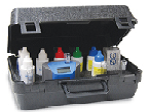
| |
|
Scroll
down to browse through some archived SWIMMING POOL
questions and answers. Please click the Pool
Problems Link, on top of every page, to access a complete
listing of Pool Problem subjects, an alphabetized
Website Table of Contents, Pool Equipment Information,
About Alan Biographic Material and a Pool Glossary. Use
the other links to access additional subject
information. More information about some new and unique
products, for pools and spas, can be found by visiting
The Website Store.
You'll never know what you'll find and that's always
fun. Be better prepared and avoid costly problems!
|
|
 |
Shipping is FREE* . . . within
the Continental U.S.
A $9.99
handling charge will apply
to Continental U.S. Orders,
under $75.00. Orders
outside of the Continental
U.S. may require some
additional charge, based on
quantity and destination.
Most products can be
shipped World-Wide. International
and orders outside of
Continental U.S. - see
comments on the ordering
pages. |
|
 |

Major
Credit Cards and PayPal are accepted. |
|
On-line
shopping since 2002 - Safe and Secure!!! |
|
Optimizing chemistry, improving circulation and eliminating
phosphates!!! |
|
When the
water contains phosphates and the chemistry is out of balance, the
likelihood of algae growth increases. Algae
is always present, to some extent,
waiting for the right opportunity.
Water chemistry and proper sanitation
are the first lines of defense. A
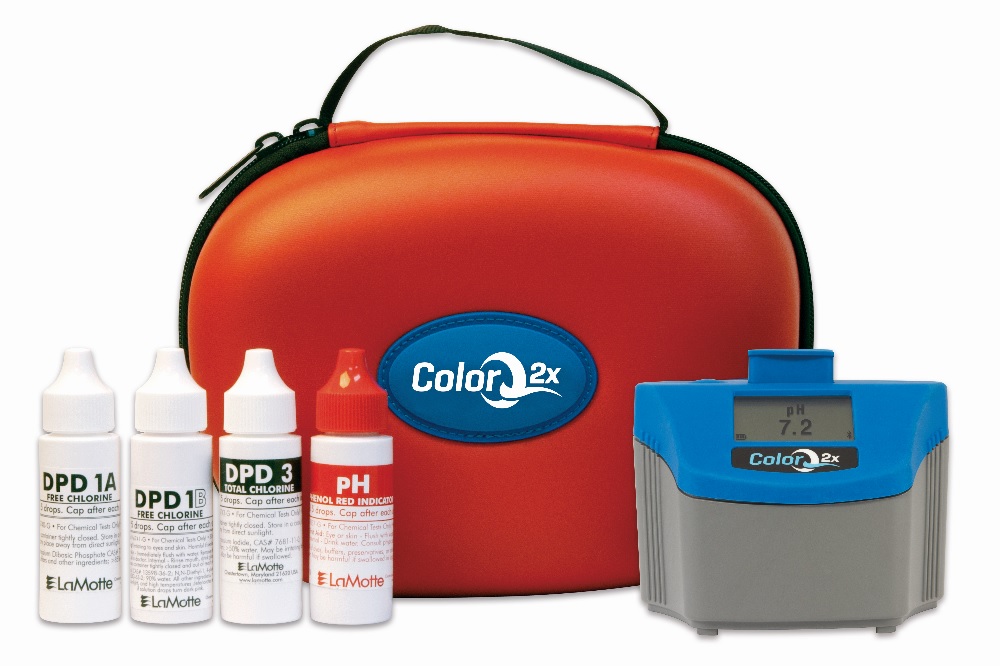
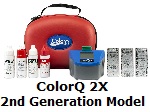
ColorQ, All-Digital Water Tester
can perform all of the common pool water
tests, eliminates the color-matching and
guesswork. There is a model, for
every pool testing need. Reliable
water testing will help solve and avoid problems. Better
Circulation helps make everything work
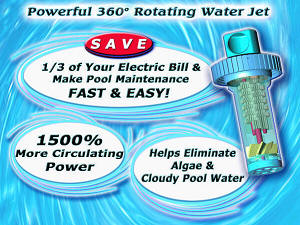
more effectively. The
Circulator is a return jet
replacement fitting, that improves
filtration, eliminates the dead zones that
promote algae growth.
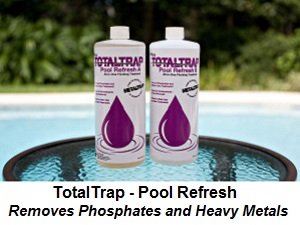
Adding TotalTrap-Pool
Refresh will allow you to vacuum
and filter out phosphates and make algae control more
effective.
Phosphates and Nitrates
can increase the growth of algae, as both
are vital plant nutrients. Nitrate
removal is not practical, but phosphate
removal is easy enough to do. |
|
|
If you have a pool or spa water testing
need, we should have the product.
►
Scroll down to read through some
Question & Answer information.
◄
|
|
Alternative Pool Water Sanitizers |
|
When
phosphates are a frequent problem, it is
imperative to maintain proper sanitation. Adding some
backup sanitizing is important, as
chlorine levels rise and fall, based on
pool usage and chemicals being added. Most pools
use some sort of chlorine. A
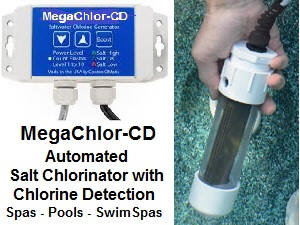
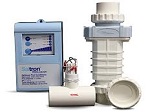
Salt
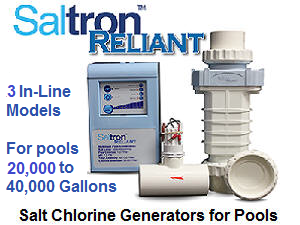
Chlorine Generator is definitely
a better way to do chlorine. Salt
chlorine generators are highly automated
and give you better control.
In-Line and no-installation-required
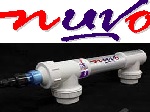
models are available. An
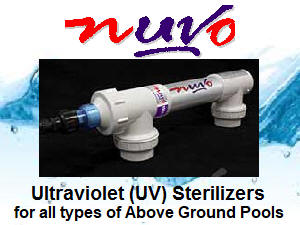
Ultraviolet Pool Sterilizer
kills 99.9% of the microorganisms,
passing through the cell. It can
kill sanitizer-resistant pathogens and
is typically used with chlorine or
bromine. |
|
|
If you have a pool or spa water testing
need, we should have the product.
►
Scroll down to read through some
Question & Answer information.
◄
|
|
How to treat
Phosphate problems, in pool water? |
Phosphates can
increase the likelihood growth of algae in
swimming pool water and can enter the water from
such sources as: decaying plant matter,
fertilizers, mineral treatment chemicals,
contaminated well water, acid rain,
contamination with soil, ground water runoff,
bird droppings, bather wastes, urine and sweat.
It is not realistic to expect phosphates to
remain very low, indefinitely. While under
0.3 PPB (330 PPM) is optimum, under 1000 PPB
(1.0 PPM) is much more practical, when normal
algae control is maintained. Phosphate is a vital plant nutrient and the
presence in swimming pool water, even at low
concentrations, can cause accelerated algae
growth in poorly maintained pools. Pools, that
are properly maintained, usually do not have
unexpected difficulty controlling algae, even in
the presence of phosphates. Higher levels of
phosphates can make algae control more difficult
and increase the amount of sanitizer required to
maintain satisfactory control of algae. It is
possible to remove modest levels of phosphates,
by treating the pool water with a phosphate
eliminating product, such as
POOL REFRESH. Very
high levels may require so much of the
precipitating compound, as to render this
approach impractical, unless there is no option
of water replacement. In order for phosphate
reducing products to work the concentration of
phosphates must be reduced to extremely low
levels: parts per billion. The benefits of such
product use is adding another layer of
protection against algae growth. Proper pool
water maintenance is always the first line of
defense. Testing for phosphates is not
universal, but in those cases where algae
control is proving difficult, despite apparently
ideal pool water conditions, testing for
phosphates and nitrates might be advantageous.
You may not be able to remove nitrates, but
removing the phosphates is the next best thing,
as both are vital plant nutrients. If problems arise, refer to the
Pool Problems
Page, as a source of problem-solving
information, broken down into various
categories. Scroll down the page and click on the linked
keywords,
catch phrases
or images, in the archived answers below, to access additional information, on that topic or product.
Do you know what's in
your water? If you're having problems, with
sanitation or water clarity, testing allows you to better
understand the chemistry and determine the cause of the
problem. Once understood, you can select the best
treatment option. Understanding the nature of the
problem, should be step one. For information about
our full selection of testing options, visit our
Test Equipment Store.
 |
Join our E-Letter Mailing List.
You'll receive 1-3 E-Letters a
month, featuring helpful pool
and spa advice, new product
information and sale
announcements. All we
require is your e-mail address
and you can opt out anytime you
wish.
Your information
will never be shared or sold. |
|
▼
Helpful,
Problem-Solving Information, in a question and
answer format.
▼ |
►
Can't Maintain A Chlorine Level?
I am having a problem with my pool.
I cannot get a free chlorine level,
and have found high phosphates in my
pool. I have used about 3 phosphate
treatments. in different strengths,
over the last 2 weeks, and still
have a high Phosphate level. I have
read up enough on the issue, but
part of the problem is that I only
can currently test to 1,000 PPB. I
have been searching far and wide,
and cannot find a test kit that will
test very high levels of Phosphate.
I purchased the house 2 years ago,
and have been having problems from
the beginning, and I assume it is
from this high phosphate level. I
will gladly continue using phosphate
removers to get it down, but I would
like a test kit that tests high
enough to show if it is working at
all, or not. Thanks for your help.
Regards,
John D., 7/23/2020
You
can have phosphates present and
still maintain a chlorine level - it
make it less forgiving, but it is
doable. I think the inability to
maintain a chlorine level, is that
the pool might have used bromine or
a sodium bromide algaecide, in the
past. If this is the case, when you
 add
chlorine, it is quickly used up, as
it converts the bromides to bromine.
The tests for both are the same, so
you see no immediate difference.
Cyanuric acid protects
chlorine from destruction, by the
Sun's UV rays. Nothing can protect
bromine and the levels drop quickly,
during daylight hours. Try adding
chlorine, after the Sun goes down
and see if that doesn't at least
allow a reading to persist, until
dawn. If the pool is showing
signs of visible algae, it might
simply be that you have not added
enough to eliminate the algae and
slime deposits, on all underwater
surfaces. There is no way to
eliminate bromides, short of water
replacement.
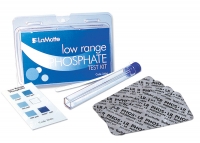
Phosphate Test Kits typically
read to 1000 PPB (1 PPM). However,
you can work around that, if levels
are higher. Mix one part of pool
water with 9 parts of DISTILLED
water and test the mixture. Multiply
the result by 10, for an accurate
reading. add
chlorine, it is quickly used up, as
it converts the bromides to bromine.
The tests for both are the same, so
you see no immediate difference.
Cyanuric acid protects
chlorine from destruction, by the
Sun's UV rays. Nothing can protect
bromine and the levels drop quickly,
during daylight hours. Try adding
chlorine, after the Sun goes down
and see if that doesn't at least
allow a reading to persist, until
dawn. If the pool is showing
signs of visible algae, it might
simply be that you have not added
enough to eliminate the algae and
slime deposits, on all underwater
surfaces. There is no way to
eliminate bromides, short of water
replacement.
Phosphate Test Kits typically
read to 1000 PPB (1 PPM). However,
you can work around that, if levels
are higher. Mix one part of pool
water with 9 parts of DISTILLED
water and test the mixture. Multiply
the result by 10, for an accurate
reading.
The phosphates just didn't get there
overnight. A level could have been
present, since the pool was filled.
Yet, there may not be a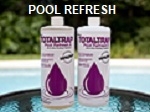 ny visible
algae growth, as the present of
phosphates doesn't make algae growth
inevitable. It does, however, make
the failure to maintain proper free
chlorine levels less forgiving.
Without a doubt, it is best to have
zero phosphates. But, that is not
always possible or practical. A
level of 100 PPB is considered to be
the best obtainable, under normal
circumstances. It is difficult to
maintain this level and even several
hundred PPB should be manageable, in
terms of algae control. You can add
a phosphate remover, such as
POOL REFRESH,
to drop a reasonably high level down
to a level that should not act as a
stimulus for algae growth. If this
website was helpful, in answering your question, please
consider joining our
E-Letter Mailing List. You'll receive E-Letters, with helpful information, new product
updates, suggestions and sale announcements. I hope that
this
recommendation works out for you. ny visible
algae growth, as the present of
phosphates doesn't make algae growth
inevitable. It does, however, make
the failure to maintain proper free
chlorine levels less forgiving.
Without a doubt, it is best to have
zero phosphates. But, that is not
always possible or practical. A
level of 100 PPB is considered to be
the best obtainable, under normal
circumstances. It is difficult to
maintain this level and even several
hundred PPB should be manageable, in
terms of algae control. You can add
a phosphate remover, such as
POOL REFRESH,
to drop a reasonably high level down
to a level that should not act as a
stimulus for algae growth. If this
website was helpful, in answering your question, please
consider joining our
E-Letter Mailing List. You'll receive E-Letters, with helpful information, new product
updates, suggestions and sale announcements. I hope that
this
recommendation works out for you.
Sincerely. Alan Schuster,
7/23/2020
► How Do
Phosphate Eliminators Work?
A local pool store suggested a
phosphate eliminator, as means of controlling algae. What
actually is a phosphate eliminator?
R. Z., Portland, OR, 6/11/2014
Phosphate eliminators are based on chemical compounds, that
cause the phosphates to precipitate from the water. These
products reduces the phosphate concentration from parts per
million to parts per billion. Phosphates are a necessary
nutrient for algae growth and their nearly total removal
from the water can impede their growth. The phosphate
eliminators can be used with chlorine, algaecides and most
pool chemicals. Used properly and in conjunction with
sanitizers, phosphate eliminators can add another layer of
algae control. They must be added periodically to keep the
phosphate levels depressed, because swimmers and their
associated wastes are a source of new phosphates. A new and
better way to remove phosphates and heavy metals, at the
same time, is with the POOL REFRESH system. Just add the
combination, of two products, to the pool and let the pool
filter and or vacuum get rid of the problem. A
Phosphate
Test can be performed occasionally to determine the need to
add additional product. To better assure proper overall
pool water chemistry, visit a pool store that has a very
reliable, professional lab such as a
WaterLink SpinTouch Lab,
rather than a less accurate test kit
or strip reader. I hope that
our website has been helpful. phosphate concentration from parts per
million to parts per billion. Phosphates are a necessary
nutrient for algae growth and their nearly total removal
from the water can impede their growth. The phosphate
eliminators can be used with chlorine, algaecides and most
pool chemicals. Used properly and in conjunction with
sanitizers, phosphate eliminators can add another layer of
algae control. They must be added periodically to keep the
phosphate levels depressed, because swimmers and their
associated wastes are a source of new phosphates. A new and
better way to remove phosphates and heavy metals, at the
same time, is with the POOL REFRESH system. Just add the
combination, of two products, to the pool and let the pool
filter and or vacuum get rid of the problem. A
Phosphate
Test can be performed occasionally to determine the need to
add additional product. To better assure proper overall
pool water chemistry, visit a pool store that has a very
reliable, professional lab such as a
WaterLink SpinTouch Lab,
rather than a less accurate test kit
or strip reader. I hope that
our website has been helpful.
Sincerely. Alan Schuster, 6/11/2014
►
Phosphate Problems With Well Water?
My well is adding phosphates to our
pool via the auto-fill. Will your Fresh Start product
capture the phosphates or just metals? If so, can I attach
it to one inch PVC line? Do you have another suggestion or
better idea if I am going down the wrong path? Thanks.
Darren B., 12/3/2020
Most likely the well water contains iron, as well. I would
use a METALTRAP Filter, to treat all new water being added
to the pool. This will remove iron, copper and other heavy
metals, from all new water additions. It won't remove
phosphates. To do that you can add the
POOL REFRESH system,
to the pool. It will precipitate the phosphates and heavy
metals, so that they can be vacuumed and or filtered out.
When the filter is cleaned, these problematic minerals are
out of the pool, permanently. Test the water periodically,
to see if any follow up treatments are necessary. I hope
this information will help solve the problem.
Sincerely. Alan Schuster, 12/2/2020
► Phosphate Eliminators And
Algaecides?
Every now and then I get a touch of a
greenish water and algae. Some algaecide and shock, is all
that it seems to take. Is there some advantage to using a
phosphate eliminator? How does it differ from algaecides?
F. T., Coral Springs, FL, 8/20/2012
Phosphate Eliminators are typically used in conjunction with
algaecide and standard swimming pool maintenance. When added
to a swimming pool, these compounds react with the
phosphates and drop their concentration from parts per
million to parts per billion. Phosphates are a vital
nutrient for all types of algae and their almost total
removal from the water interferes with the ability of algae
to grow and thrive. Literally, the algae starves to death!
No algae - no problems with green water. All this sounds
great, but as long as you have people in swimming pools,
there will be phosphates added in some quantity. For this
reason the phosphate eliminator has to be added on a
periodic basis. A new and better way to remove phosphates
and heavy metals, at the same time, is with the
POOL REFRESH system. Just add the combination, of two products, to the
pool and let the pool filter and/or vacuum get rid of the
problem. A phosphate test can be performed occasionally to
determine the need to add additional product. As additional
assurance against algae growth, it is a good idea to
maintain the normal additions of algaecide. The product is a
worthwhile addition to the anti-algae arsenal. The only
downside is that its initial addition will result in a
precipitate that has to be removed by filtration and/or
vacuuming. Subsequent product additions are much less of a
problem because of the reduced phosphate content of the
water. I hope that I have satisfactorily explained the
product. Enjoy the summer. all types of algae and their almost total
removal from the water interferes with the ability of algae
to grow and thrive. Literally, the algae starves to death!
No algae - no problems with green water. All this sounds
great, but as long as you have people in swimming pools,
there will be phosphates added in some quantity. For this
reason the phosphate eliminator has to be added on a
periodic basis. A new and better way to remove phosphates
and heavy metals, at the same time, is with the
POOL REFRESH system. Just add the combination, of two products, to the
pool and let the pool filter and/or vacuum get rid of the
problem. A phosphate test can be performed occasionally to
determine the need to add additional product. As additional
assurance against algae growth, it is a good idea to
maintain the normal additions of algaecide. The product is a
worthwhile addition to the anti-algae arsenal. The only
downside is that its initial addition will result in a
precipitate that has to be removed by filtration and/or
vacuuming. Subsequent product additions are much less of a
problem because of the reduced phosphate content of the
water. I hope that I have satisfactorily explained the
product. Enjoy the summer.
Sincerely. Alan Schuster, 8/20/2012
► High Phosphate Level?
I have looked through your website and have found very
interesting information. However, I have not found anything
that specifically addresses my question. We are located in
Virginia Beach, VA and have had our pool for 4 years (35,000
inground). Last year, we were having a nightmare trying to
deal with algae even though all the chemicals seemed to be
properly balanced. It turned out to be a high level of
phosphates. So we treated for the phosphates with 1
treatment (our initial level had been close to 10,000 PPB).
Everything seemed to be fine after that and we enjoyed the
rest of our summer in the pool. During the winter,
we converted from a chlorinator to a salt generator. Also
during this time, a road was put through very close to our
house, kicking up dirt and dust (our development is situated
on land that was farmed until about 25 years ago).
Opening our pool in the spring was awful, but after a couple
of weeks, everything seemed to be going well. We used 2
phosphate treatments during the opening. We have since used
about 5 treatments and are again having trouble keeping our
chlorine levels up. At last check, we were close to 10,000
PPB again. Construction has been completed for months on the
road, we've been in a drought situation this summer and the
bather load has not been high. I am just at a loss as to
what could be boosting the levels so quickly. We have had to
add some water this year (we are on city water). So these
are my questions - is there any way to remove the phosphates
without having to constantly vacuum to waste after
treatment? I had read some of the posts where they allowed
it to go through the filter, then backwashed (we have a DE
filter). Does this require a specific type of phosphate
remover? We haven't been able to treat for the last month
because the heat and no water movement would cause more
trouble than it would be worth. By the way, the water is
still clear, but we have had to add shock every week to keep
the chlorine levels up. Constant removal of the water
through vacuuming to waste has become cost prohibitive. In
the spring, my water bill soared to over $200 and was close
to that in the middle of the summer - that doesn't include
the $90 waste water bill that comes along with it. Is there
a product that you can recommend as part of regular
maintenance to keep the phosphates down? Thanks for your
help and all the info.
Tracey., Virginia Beach, VA, 8/24/2017
If you add the phosphate remover, to the skimmer, it might
clog your DE filter or boost the pressure too high. If not,
it should reduce the need to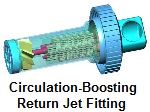 vacuum to waste. You won't know
until you try it. Other types of filter are less prone to
clogging. Add in 1/4 increments and watch the pressure: stop
if it is too high. POOL REFRESH will remove phosphates
and, at the same time, it can remove potentially,
stain-causing iron and copper. It sounds like your salt
chlorine generator is not producing enough chlorine or the
chemistry is not right. Check the salt level and make sure
it is within the desired range. Make sure that the pH is
7.2-7.8, as high pH will make chlorine less effective. Make
sure that the water circulation is good. More circulation
creates dead zones that promote algae growth.
The Circulator
is the affordable, simple and effective way to better
circulation. Make sure that the salt cell is clean, the unit
is operating properly, the water flow is strong, the salt
level is right and that it is being operated for enough
hours per day. More hours and or a higher setting = more
chlorine produced. I hope that this information will prove
helpful. vacuum to waste. You won't know
until you try it. Other types of filter are less prone to
clogging. Add in 1/4 increments and watch the pressure: stop
if it is too high. POOL REFRESH will remove phosphates
and, at the same time, it can remove potentially,
stain-causing iron and copper. It sounds like your salt
chlorine generator is not producing enough chlorine or the
chemistry is not right. Check the salt level and make sure
it is within the desired range. Make sure that the pH is
7.2-7.8, as high pH will make chlorine less effective. Make
sure that the water circulation is good. More circulation
creates dead zones that promote algae growth.
The Circulator
is the affordable, simple and effective way to better
circulation. Make sure that the salt cell is clean, the unit
is operating properly, the water flow is strong, the salt
level is right and that it is being operated for enough
hours per day. More hours and or a higher setting = more
chlorine produced. I hope that this information will prove
helpful.
Sincerely. Alan Schuster, 8/25/2017
► Phosphate
Swimming Pool Woes?
We are opening our under-ground pool
on May 3rd. Last year I dealt with a phosphate problem all
summer long. Levels would be 500ppb. I don’t remember how
many times I put in phosphate remover. Would get the level
down, then it would be back up again. My pool company just
keeps selling me phosphate remover, and saying to shock it.
My kid’s college fund went into it. I was at the point of
cementing it in, would make a great basketball court. We
have owned the pool for seven years and my in-laws had it 9
years before us. We have never had a problem with high
phosphate levels before. What has changed in the past three
years surrounding our yard. Dig pond west of pool about 100
feet, potato fields three miles to the west (plane spray
fields) and new city water treatment plant 3 blocks to the
north (which the newspaper reported last fall that it has
high phosphate). We have a sand filter, use trichlor in a
chlorinator, and shock. Any suggestion would be welcomed.
Would it be wise to totally drain the pool and start fresh.
Vinyl pool liner, and 20,000 gallon. Live in central
Minnesota. Please help!
Kathy, 4/18/2015
There were pools before there were phosphate removers.
Removing phosphates is a good thing, as it deprives algae of
a vital nutrient. People and their wastes are a source of
phosphates and as long as the pool is used, there will be
some present. 500 PPM: that's parts per billion. Not exactly
a high level. Draining the pool is a poor option. The tap
water can contain phosphates and fertilizers certainly
contain them. There was not one word in your letter about
algae. That being the case, I suggest that you add a
phosphate remover, such as POOL REFRESH, at the start of the
season and continue with good maintenance practices. At
signs of a loss of water quality, shock the pool and have
the phosphates tested. If you maintain good sanitizer
levels, there should be few problems. Good luck and enjoy
the season.
Sincerely. Alan Schuster, 4/19/2015
► White Sediment?
I added phosphate eliminator, as
suggested, on Friday night along with the liquid chlorine.
The pool water quickly went cloudy and then we left for the
weekend. We did not return until late last night, so when I
checked the pool this morning the water looked very clear.
But there were areas on the bottom that had "milky" colored
deposits on the bottom. The deposits almost seemed cloud
like. I added the "sparkling clear" and left the pump
running. I will get my wife to turn off the pump this
morning and then get to the vacuuming later today. Does all
this sound about right? We had some fairly heavy rain a
couple of weeks ago and that is when most of this started. I
have considered the passing issue in the sand filter. This
is only our 3rd season with the new pool and I thought that
I would change over the filter media when we close the pool
this fall. When we backwash the pool do we tend to break up
the channels that may develop in the sand?
Mark H., 7/10/2006
The phosphate eliminator caused the phosphates to
precipitate out. The filter may not have gotten it all.
Evidently, the white sediment is precipitated phosphates and
needs to be vacuumed up. Sand should be changed every few
years. Even better than sand would be
a zeolite sand
filter replacement media. It will clearly make an
improvement in the water quality. I hope that I have been
helpful.
Sincerely. Alan Schuster, 7/10/2006
► Mustard Algae Blues?
I discovered your website last evening
and you have an array of information. Thanks for helping to
educate us. My situation is as follows: we had an in-ground
pool built last February. The pool was installed with a salt
chlorine generator and an automatic pool vacuum to make life
easier for my husband and I. Since the completion of the
pool, we have had a problem maintaining adequate chlorine
levels. It comes in spurts. We are aware that after rain, we
may have lower chlorine levels, but the inadequate levels
are also there when there hasn't been a lot of
rain. The other chemicals (pH, calcium, stabilizer, salt,
etc.) are being maintained correctly. My husband checks the
water weekly and brushes the pool and cleans the filter
weekly. My husband has tried the approach of cleaning
the generator's cell, but the pool still doesn't
maintain adequate levels of chlorine. We are usually putting
in chlorine on a bi-monthly basis. We even had a rep for the
generator company come out and he informed us our chlorine
generator is producing chlorine. The generator has
consistently been on 100% boost. Due to the chlorine
problem, we are continually battling an yellow-orange
powdery residue on the walls and stairs of our pool. I
believe it is mustard algae from lack of chlorine (when the
readings are low). I also notice the stairs and bottom of
pool feel slippery. When the generator company rep came out,
he informed us we have a high level of phosphates in our
pool. We weren't aware we were to check for phosphates. The
pool store that checks our water does not check for
phosphates either. We later found out the store will check
for phosphates if requested. Anyway, the rep told us to use
the POOL REFRESH phosphate treatment program he provided and
this should correct our problem with phosphates, chlorine
and mustard algae and then our pool should maintain adequate
levels of chlorine that are produced by the generator. We
treated with the phosphate treatment and after re-testing,
we still had a high level of phosphates. We did a second
treatment and just re-tested yesterday and the phosphate
level is still at 500 ppb. I am losing hope with pool
maintenance. We got the salt generator so we wouldn't have
to continually have to add chlorine, but we still have to
add chlorine. We treated for phosphates, but it isn't going
away. Our pool has mustard algae. The bottom is slimy. Any
suggestions?
Sharon G., 6/18/2006
The fact that you have mustard algae and slime on the walls,
implies that the demand for chlorine is very high. Under
these circumstances, it appears that your
salt chlorine
generator is not able to produce enough chlorine to maintain
a proper Free Chlorine level. It is
a matter of playing
catch up. The phosphates are not helping the situation
either: they act as a fertilizer and promote algae growth.
Adding POOL REFRESH phosphate eliminator was a good thought.
However, 500 PPB may still be too much. To be effective you
must lower the level closer to zero. Once you level the
playing field and get rid of this backlog of algae and
slime, it should be easier for the salt chlorine generator
to keep up with the chlorine requirements of the pool. Step
one should be to treat again for phosphates. Step two,
should be to add sufficient chlorine to boost the Free
Chlorine level to 5-10 PPM and keep it there long enough to
destroy the algae and slime. It may take a lot of chlorine
to do this and the longer it drags out the more chlorine
will be required. As long as it is not dead, it will
continue to grow. Step three should be to add a treatment
for mustard algae. You can use either a copper algaecide or
a sodium bromide product. Both seem effective. Check with
the salt chlorine generator dealer, as to their preferences
for a mustard algae treatment. I hope that this information
will prove helpful. Good luck.
Sincerely. Alan Schuster, 6/18/2006
► Effects Of Winter On Phosphate
Level?
I have very high phosphates in my pool
around 2500. Will they go down in the winter or will they
stay the same?
Edith B., 11/13/2007
Winter will have little or major effect on the phosphate
content. In the spring, adding fresh water could lower the
level, depending upon the phosphate content of the
replacement water. If vegetation and debris was in the pool,
over the winter, the decaying matter could add to the
phosphate content. High phosphate levels make algae growth
more likely and poor pool water chemistry less forgiving.
You need to add a phosphate remover, such as
POOL REFRESH
and get the level down to a few hundred PPB. Otherwise, you
will be forced to maintain a higher free chlorine level and
be more disciplined about maintain a free chlorine level. I
hope that this information is helpful.
Sincerely. Alan Schuster, 11/1/3/2007
► Unexpected Rise In Phosphates?
Last week I had a phosphate level of
well under 100ppb. I have been using Phosphate Reducer all
winter. This week the phosphate level has suddenly jumped up
to 900 ppb. I've added a couple of inches of water to the
pool and we had a night of rain. All other chemistry in the
pool is good. Am I throwing money down the drain by adding
more Phosphate Reducer? I had a couple of incidents last
year with my pool tuning cloudy, but generally the pool is
OK. And for the most parts crystal clear. I did have a
Mineral Sanitizer, but was planning on dropping it this
year. What would you advise? Regards.
Max S., High Point, NC, 4/4/2009
I would not refer to it as "throwing money down the drain."
Water that is low in phosphates is less likely to support
algae growth and that is a positive! Using
POOL REFRESH will remove
phosphate, as well as a host of
other problematic heavy metals and
minerals. You need to put things in
perspective: 900 PPB or 0.9 PPM is a
trace amount. It is lawn fertilizing
time and the recent rains could have
introduced some runoff into the
pool.
I hope that this information is helpful.
Sincerely. Alan Schuster, 4/4/2009
|
Visit The Website Stores . . . for
better informed shopping!!! |
|
|
Shipping is FREE* . . . within
the Continental U.S.
A $9.99
handling charge will apply
to Continental U.S. Orders,
under $75.00. Orders
outside of the Continental
U.S. may require some
additional charge, based on
quantity and destination.
Most products can be
shipped World-Wide. International
and orders outside of
Continental U.S. - see
comments on the ordering
pages. |
|
|
Major
Credit Cards and PayPal are accepted. |
|
▲
Return To Top Of Page
▲
Aqualab Systems, LLC does not
make any warranty or
representation, either expressed
or implied, regarding the
accuracy or completeness of the
information provided by this
website; nor does Aqualab
Systems., LLC. assume any
liability of any kind whatsoever
related to, or resulting from,
any use or reliance on this
information. The content of this
website should not be used, if
it is conflict with any
applicable federal, state or
local regulations or guidelines.
© Aqualab Systems, LLC. All
rights reserved
|
|