|
 |
Shipping is FREE* . . . within
the Continental U.S.
A $9.99
handling charge will apply
to Continental U.S. Orders,
under $75.00. Orders
outside of the Continental
U.S. may require some
additional charge, based on
quantity and destination.
Most products can be
shipped World-Wide. International
and orders outside of
Continental U.S. - see
comments on the ordering
pages. |
|
 |

Major
Credit Cards and PayPal are accepted. |
|
On-line
shopping since 2002 - Safe and Secure!!! |
|
Improving The Success of a Pool Closing
or Winterizing!!! |
|
Avoid the temptation of closing a dirty pool and
putting off the clean-up, stain removal or sealing a
leak, until next spring, for
surely next season's opening will be more tedious and
expensive, Clean the pool, balance the
chemistry, remove stains and get ready to close.
If a leak is present, it must
be found and fixed. Make you own
Electrolyzed
Sanitizing Spray, on hard surfaces,
before you store than for the season.
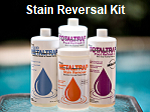
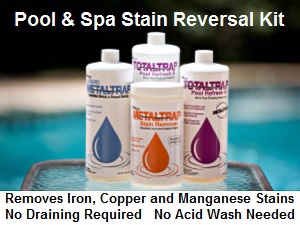
A Stain
Reversal Kit contains everything
needed, to remove stains caused by heavy
metals. An
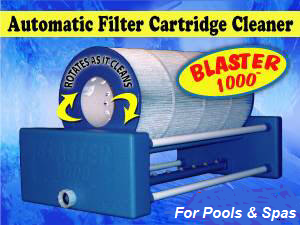
Automatic Filter
Cartridge Cleaner will clean
faster and easier. |
|
Sanitizing Spray for Hard
Surfaces |
Stain and Phosphate Removal Kit |
Automatic Filter Cartridge
Cleaners |
 |
 |
 |
|
Product
and Ordering Information |
Product and Ordering Information |
Product and Ordering Information |
If you have a pool or spa water
testing need, we should have the
product.
►
Scroll down to read through some
Question & Answer information.
◄ |
|
A
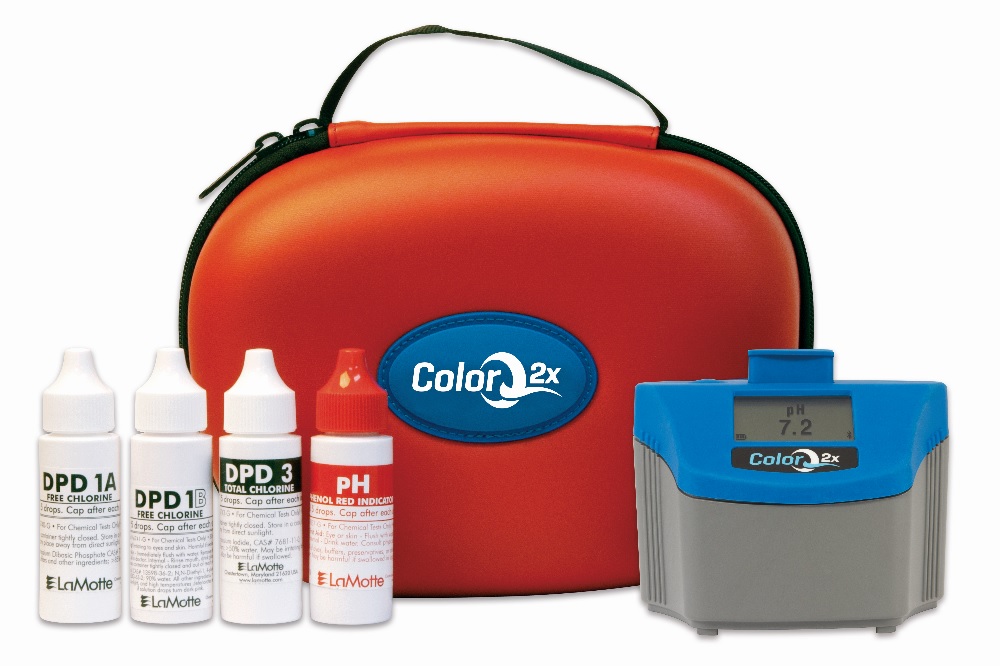
ColorQ 2X is a 2nd generation,
Bluetooth, Waterproof, all-digital tester,
that can
measure all the common test factors. There is a model, for every sanitizing
need. Proper chemistry
helps improve sanitizer
effectiveness and reduce
corrosion. A
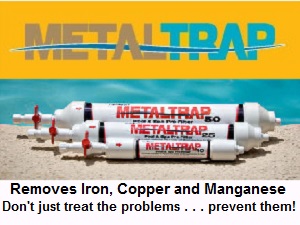
MetalTrap Filter,
available is 3 sizes, is an
effective way to remove copper,
iron or manganese, by attaching
it to the garden hose, that is
used to add new water.
The
Circulator is a
replacement return-jet fitting,
that dramatically improves
circulation and eliminates the
dead zones, that promote algae
growth. |
|
ColorQ All-Digital Water Testers |
MetalTrap Filter - 3 Sizes |
Circulation Boosting Return Jet
Fittings |
 |
|
 |
|
Product and Ordering Information |
Product and Ordering Information |
Product and Ordering Information |
If you have a pool or spa water
testing need, we should have the
product.
►
Scroll down to read through some
Question & Answer information.
◄
|
|
|
How to close or winterize a swimming
pool? |
Pool closing or winterizing refers
to the steps necessary, to chemically treat the water and
protect the pool and related equipment from the effects of
freeze-thaw damage, during the inactive winter months.
Proper winterizing protects your investment and can help
make springtime opening easier and less expensive. Time
spent doing a proper wintering job, will pay big springtime
dividends. When winter comes . . . can spring be far behind?
In some southern locations, the pools are left uncovered all
year, even though they are not in year round use.
Adding a
salt
chlorine generator can help provide better
control over the water quality, during the less
active months, provided that the water
temperature does not fall below 50F, at which point salt
chlorine generators may not perform properly. Pool closing instructions
will vary, based on pool type, equipment and the physical
location. Check with the manufacturer and/or builder,
as to what are the recommendations applicable to your pool
type and area. If
problems arise, refer to the
Pool Problems
Page, as a source of problem-solving
information, broken down into various
categories. Scroll down the page and click on the linked
keywords,
catch phrases
or images, in the archived answers below, to access additional information, on that topic or product.
 |
Join our E-Letter Mailing List.
You'll receive 1-3 E-Letters a
month, featuring helpful pool
and spa advice, new product
information and sale
announcements. All we
require is your e-mail address
and you can opt out anytime you
wish.
Your information
will never be shared or sold. |
|
▼
Helpful,
Problem-Solving Information, in a question and
answer format.
▼ |
►
Pool's Open But Not Used All Winter?
This year we plan on keeping our
pool open and uncovered all winter.
It is too cold to use, but not cold
enough to worry about freeze damage.
If it gets cold enough to freeze, we
will simply keep the pump running.
This seems easier than going through
the whole winterizing thing. We have
a salt chlorine generator and plan
on turning the setting down and
cutting back on the pump running
time. Is this anything else,
that would help us avoid problems?
Thank you.
The Maddens, Brunswick, GA,
8/18/2020
You
should be OK, if you watch out for a
forecast of hard freeze. Don't forget to test the water on
some sort of regular weekly basis.
The efficiency of
salt chlorine generators drops
along with the water temperature.
When the water temperature gets into
the lower 50's, you might have to
supplemental the salt chlorine
generator, with some standard
chlorine products. I hope that this
makes for a problem-free winter.
Sincerely. Alan Schuster,
8/18/2020
►
Leaving A Solar Cover In Place,
Under A Winter Cover?
We purchased a
solar cover this year for our 28
round above ground pool. Can we
leave the solar cover on the pool
after winterizing pool and then put
winter cover on pool? Thanks
in advance.
Judith A., Flemington, NJ,
10/11/2017
That would serve no useful purpose.
Winterizing doesn't always go as
planned. Sometimes it ends up being
a mess. Leaving the blanket on the
pool will expose it to algae and
mold growth, under the best of
conditions. You are better off
cleaning the cover and storing it
for the
winter. That will make one less
thing to clean, next spring. I hope that the
information provided was helpful.
Sincerely. Alan Schuster,
10/11/2017
►
Leaving It Empty?
Hi Alan, I am in Bakersfield Ca.
Desert, drought now but avg.
rainfall 7 ". Equipment: Fiberglass
pool, cartridge filter system and a
Salt Chlorine generator.
I have in the past covered my pool
with a strap down cover in the
winter (larger trees) and run the
filter approx. 2 hrs per day to keep
the water moving. Next spring we
will be re-surfacing the pool and
will therefore have to drain it. My
question: Should I leave water in
all winter and drain just prior to
re-surfacing, or drain it in the
fall, leaving it empty all winter?
Thanks
Bob, Bakersfield, CA, 8/26/2019
Leaving a pool empty, for long
periods, increases the risk of
structural damage. I suggest
covering the pool, as done in the
past.
Having a
Salt Chlorine Generator will be a real
plus, in helping to maintain the
water quality. For refinishing ever
consider using
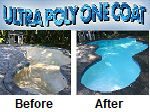
Ultra Poly One Coat? It is a
hybrid-epoxy
coating that is used in
pools ands water parks all over the
U.S. Preparation is simply a
scrubbing with a citrus-based
cleaner and a power washing. Acid
washing is NOT recommended and no
one likes to do that. I hope that
the information provided was
helpful.
Sincerely. Alan Schuster,
8/27/2019
►
Avoiding Metal Stains Next Spring?
I have an in ground fiberglass pool,
that was installed 1986. When
winterizing, what chemical can I add
to help prevent staining, after
opening the pool, next spring?
Thanks.
Bob, 8/16/2015
Some fiberglass pools can be stain
prone, due to static electrical
charges, on the walls.
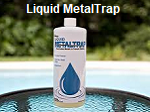
Liquid
MetalTrap is a true chelating
agent, that contains no
phosphates and works over a wide
range of pH. It complexes (chelates)
iron, copper and manganese, which
will help prevent staining, due to
dissolved metals, over the winter.
It is very stable and does not
decompose to form phosphates, like
many other products being sold.
One quart will treat up to 1.0 PPM
of dissolved metals, in 10,000
gallons of pool water. Add it
after the water level has been
lowered. If you source water
contains metals, you might want to
connect a
MetalTrap Filter, to the garden
hose, so that no new metals are
added to the pool. I hope that this
information provided was helpful.
Sincerely. Alan Schuster,
8/16/2015
►
What To Do In Houston?
I have skimmed
through many of the questions you
have answered on your website and
other websites. It is so confusing.
One will tell you one thing, while
another will tell you the complete
opposite. I live in Houston, TX. It
is rarely below freezing here.
January is typically the time of
years it is below 35 degrees at
night. So here is my question….
Do I just leave my filter pump
running the entire time, even for
days during the colder days/nights
(32 degrees or below)? Tonight it is
supposed to be 25 degrees. The rest
of the week the lows will be 32-35
degrees. OR Do I lower
my water levels below the skimmer
and drain the filter pump?
16X32 Oval above ground pool, with a
salt chlorine generator, PVC pipes
and a 1.5 H.P. pump.. Thank
you.
Lori A., Houston, TX, 1/7/2015
I
would not drain the pool. I would
operate the pump, during those times
when a hard freeze is possible. It
does not
have
to be 24/7. As the temps
move above freezing, you can just
operate for a given number of hours
each day. Just in case, put a 8'
piece of a pool foam noodle in each
skimmer. This is practical to do in
Houston, but not something you would
to in the frost belt. You
still need to maintain some
chlorine, to prevent the growth of
algae. Your
salt chlorine generator
will not be able to do the job,
while the water temperature is below
50° F. I am not sure that many pool
dealers know this or take the time
to point it out. To help
prevent algae growth, during the
less active winter months, you want
to add some traditional chlorine
products. You should also
clean the pool floor, on a regular
basis. I hope that this
will be helpful.
Sincerely. Alan Schuster,
1/7/2015
►
Ready To Close And There's A Leak?
My pool is ready to close, but I
seem to have a small leak. If
I close the pool with the leak, what
risks do I run. Any
suggestions? Thanks.
Dennis M., Lexington, KY, 9/13/2014
Closing a pool with a leak it is not
a good idea. You didn't
mention the type of pool involved,
but no matter which type, there are
major risks. Walls can collapse or
get damaged, covers can fall into
the pool and the leaking water could
cause undermining or erosion issues.
Fix A Leak might be able to seal
a small leak, as big as 1/8-inch in
diameter and under 2-inches of loss
daily. It about the easiest way to
address the problem. In order
to work, the water temperature needs
to be at least 70°F. It can't
fix every type of leak, such as
cracked pipes or popped fittings,
but is worth trying before you start
digging. The next best option is
leak detection. There are
leak detection kits. that will
help you locate the leak, using some
high tech equipment. The are
companies that specialize in
leak
detection, as well. No matter
what, do something before closing,
for best results going forward. Good
luck.
risks. Walls can collapse or
get damaged, covers can fall into
the pool and the leaking water could
cause undermining or erosion issues.
Fix A Leak might be able to seal
a small leak, as big as 1/8-inch in
diameter and under 2-inches of loss
daily. It about the easiest way to
address the problem. In order
to work, the water temperature needs
to be at least 70°F. It can't
fix every type of leak, such as
cracked pipes or popped fittings,
but is worth trying before you start
digging. The next best option is
leak detection. There are
leak detection kits. that will
help you locate the leak, using some
high tech equipment. The are
companies that specialize in
leak
detection, as well. No matter
what, do something before closing,
for best results going forward. Good
luck.
Sincerely. Alan Schuster,
9/13/2014
► To
Winterize Or Not To Winterize?
Dear Alan, Oh why didn't I run across
your website @ the beginning of the summer season? I have
been reading your archives since 9pm. It is now 12am! It
was so interesting and informative. I inherited my pool this
year, when I bought the house. It is a 25k gal, vinyl liner
with a sand filter. I didn't have a clue as to the care and
maintenance of it, but I am happy to say that I learned from
the pool dealers that installed it and I had a very
enjoyable summer w/o too much trouble. I am writing you
because I want to know about closing it for the winter. I
live in Atlanta, GA. They say I don't have to cover it, it
is up to me, as if I know what I want or what is best! What
do you say. Also, one of those solar heater pads was left,
can and is it used as a cover? As far as draining filters,
covering ports and all that, I know I am going to need them
to come and show me how as I am clueless as to where and
how! One more question, how do I decide what brand of
product to use? If I can just cross this last hurdle,
learning about opening and closing the pool, I think I may
even feel confident that I actually know what I am doing!
Smile! By the way, the pool is only 1.5 yrs young. You
really know your pool/chemical stuff and I thank you for all
the knowledge that I gained tonight and any help you can
give me concerning opening and closing it. P.S. I am
throwing away my OTO test kit and getting one of the
ColorQ 2X Testers,
that you suggested! Did I mention that it is an in ground?
Debra R., Atlanta GA, 9/26/2020
Thank you for the kind comments in your email. If I was
living in your area, I would certainly cover my pool with a
winter cover. To do otherwise, will leave you with a much
bigger cleanup problem next spring. The solar cover cannot
be used for winterizing and should be removed, cleaned and
stored indoors for the winter. So far as choosing a brand, I
suggest that you go with the brand that has your trust.
There are dedicated Winterizing Chemicals Kits that are
complete and easy to use. Proper winterizing will make
springtime opening easier, while saving time and money. Many in your
area take winterizing for granted and that is a mistake. You
should take the necessary steps to protect your investment.
The archives contain information on winterizing. If you are
unsure about anything, I'm sure that a local pool
professional will be able to help you with the finer points.
I hope that I have been helpful.
Sincerely. Alan Schuster, 9/26/2020
►
Winterizing AGP With A Floatation
Ball?
Alan, I just
discovered your web site and have been reading questions and
answers about using the inflatable air pillow under a winter
cover, for our above ground pool. Last winter we used one,
but it did not help very much, the rain water accumulated
all around the pillow and did not run off like you stated in
several answers I read on your web page. I had to keep a
submersible pump in it all winter and periodically go out
and turn it on to remove the water. Maybe there are
different size air pillows, I am not sure, but I am
considering not trying to use one this winter. What could
it really hurt? Thanks for your reply in advance.
Debbie F.,
Tennessee, 9/18/2013
The purpose of
using an
inflated ball,
underneath and
above ground
pool cover, is
to allow excess
water to run
off. Besides
all the normal
winterizing
steps, lower the
water level to
just below the
skimmer or cover
the skimmer
openings with a
winterizing
sealing plate.
You want the
ball to raise
the cover, well
above the
surface. The
cover should lie
on the water
surface and some
water should be
added, to for a
donut-shaped
ring. This will
help keep the
cover from
flapping, due to
wind.
Eventually, rain
will fill this
donut-shaped
reservoir and
the excess will
over flow.
Using a
flotation ball
should make
things easier.
In the spring,
pump out the
water and remove
the debris,
before
attempting to
remove the
cover. I
hope that this
information
proves helpful.
Sincerely.
Alan Schuster,
9/18/2013
► Is A Cover Necessary?
Alan, great site. I live in
Albuquerque, NM - our average winter is about 40 degrees,
sometimes snow, sometimes not at all. We have an in ground
plaster pool with cascades, kidney shaped pool. Solar and
gas backup heated. Is it necessary to winterize this pool by
covering - I only ask because at the model home the pool
company claims (and I remember it) that pool at the model
was never closed. Opinion?
Linda D., Albuquerque, NM, 10/3/2011
Your winter conditions are not severe and you might be able
to get away without covering the pool, especially if the
pool filter is operational. To be sure check with local
dealers or look at what other people are doing. A pool is an
inviting hazard. Leaving it uncovered can entail some risk
to children and animals. Have you ever considered a safety
winter cover? There are several types available:
automatic
or manual retractable safety covers and mesh or solid safety
winter covers. If nothing else, it will bring some piece of
mind. I hope that this information will prove to be useful.
If this website was helpful in providing information, please
tell your friends and dealers.
Sincerely. Alan Schuster, 10/4/2011
► Winter Precautions?
Alan, I am from Ontario Canada and
this is my first inground pool closing for many years since
I was a kid. I have heard and read about putting empty
chlorine bottles in the water before putting on the liner.
Is it recommended to do so? If so, why? Also, Is it
recommended to take any parts of the heater, pump, or filter
inside or are the O.K. stored and covered with a tarp for
the winter. Once drained and antifreeze is added I thought
they should be O.K. outside. The people we bought the house
from last year only brought the salt chlorine generator into
the garage, the rest was left outside and not covered. I
think your website is great, thanks for the help.
Dave H., Whitby, Ontario, 9/29/2012
Having empty bottles floating on the surface acts as ice
compensator and helps avoid freeze-thaw damage. While it is
best to drain the equipment and store indoors, it is not
always practical. Draining, adding antifreeze and covering
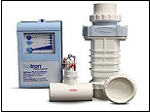
is the next best thing. Disconnecting the
salt chlorine
generator and storing the cell and the controller indoors
makes sense. If your pool has a built-in underwater light,
it should be winterized according to the manufacturer's
recommendations. Portable or add-on Underwater Pool Lighting
Systems should be removed, drained and stored indoors for
the winter. I hope that I have been helpful.
Sincerely. Alan Schuster, 9/29/2012
► Inground Closing?
Thanks for taking the time to read
this. I would like to know how to close an in ground pool
for the first time. My brother left me with the task and I
am lost. He has a vinyl liner. How do I get the antifreeze
into the lines going into the pool? Thanks.
Vickie, 9/15/2009
There are a whole list of things (and not all apply to ever
pool) that you should do including:
Thoroughly clean the pool and boost the Free Chlorine
reading to at least 3-5 PPM. Add algaecide and other winter
chemicals. If you have had problems with metals or staining,
you might consider adding a dose of Liquid METALTRAP, to
help prevent such problems, over the winter months
Make sure the pH is 7.2-7.6.
Drop the water level about 3-6" below the skimmers.
Disconnect the connections to the filter and pump and allow
the water to drain out. Use a shop vacuum or air blower to
blow out the lines. Afterwards, add some antifreeze to any
lines that might have water at a low point. Use winter plugs
on all returns.
Store the pump indoors for the winter. If the filter can be
stored indoors do so, otherwise drain and cover with tarp.
Install plugs or a Gizmo in the skimmer intakes and returns.
Seal off all exposed pipes, in order to prevent water from
entering.
Diving boards, slides, steps and ladders may have to be
removed, in order for the cover to be installed. Store the
equipment appropriately.
Place an ice compensator in the pool, to help protect
against freeze-thaw damage.
Cover the pool and secure in place with strap, if present,
if water bags.
Place a cover pump, attached to a garden hose, in the center
of the pool, if the cover is solid. This will be used to
pump off accumulations of water.
Your actual pool might require somewhat different steps.
Refer the archives for additional information. Sit back and
relax. When winter comes can spring to far behind? I hope
that I have been helpful.
Sincerely. Alan Schuster, 9/15/2009
Dear Alan, THANK YOU! My brother is
still in Iraq and I was pulling my hair out. Believe me when
I say you are a guardian angel.
Vickie, 9/15/2009
►
Leaving Pool Up And Running All Winter?
Good day Alan.
We are new to the GA area from Canada and this is our first
pool. its in ground salt water with sand filter, liner.
We want to close the pool and have no idea how to do it. The
weather here doesn't get extreme cold. We don't want to put
a cover on it but want to be able to clean it periodically
for leaves at least until they stop falling. Do we
need to keep the cell running? Like I said we have no
idea what to do. If the weather was a bit warmer, I put the
heater on and swim. Thanks.
Lenna, Georgia, 11/16/2013
Not covering the pool and leaving the filter connected will
simplify things. This is a reasonable option, in your area.
Operate the filter and the
salt chlorine generator,
for a few hours a day. This will produce some chlorine and
help distribute it throughout the pool. Otherwise, you will
get algae growing, especially in the corners. Test the water
once or twice a week. The pH will rise, due to the chlorine
product, so acid will have to be added, s needed, based on
test results. If the weather turns unexpectedly colder, to
the point where a hard freeze is possible, keep the pump
running during these below freezing periods. It will help
prevent freeze-thaw damage. You should still removes
leaves and debris, as it can lead to stains and will deplete
the chlorine level. Enjoy the holiday season.
Sincerely. Alan Schuster, 11/16/2013
► Frozen Options?
I live in Ohio, and have kept my pool
open year round for years. Even after the gas bills
prevented us from using the heater, the last few years, no
problems. Well, the pump finally quit, and something broke,
the water drained below the skimmers and then froze. Its
about 1" in the pool, but floating, but supposed to get
colder. What damage will I have If I just wait? Should I aim
a space heater on the pump, valves, filter, etc. try to thaw
the leak and repair it, replace the pump, and restart? The
pump, filter, heater and valves are below grade, and when
the leak thaws, the pool will start to gravity drain again,
which will leave the pool ice hanging. Any help will be
appreciated.
Dan, Ohio, 1/22/2005
If you do nothing, you will probably end up with freeze-thaw
damage. Where and what type is unknown. Some damage could be
in underground and inaccessible places. As long as you kept
the water moving, you were OK. I see several options, but
there could be more. If the pool is gunite and not in danger
of popping out of the ground, perhaps you could just drain
and blow out the lines and add some pool antifreeze to the
lines. You could try and heat the pump area and insulate
everything. It won't be easy! I would choose to replace the
pump and prepare everything for a quick switch. Your weather
prospects are not encouraging. Time is not your friend. In
the future, I suggest that you consider a winter pool cover.
What you were doing was costly and did not spare you from a
major spring time cleanup. Good luck and let me know how it
all works out.
Sincerely. Alan Schuster, 1/22/2005
► Chlorine Tablet Damage?
We replaced our liner last summer and
the closing kit we used last winter had a floating chlorine
canister that broke open during the winter and the tablets
fell to the bottom. The liner is now bleached where the
tablets landed. In this area the liner also looks like it is
damaged, looks like small squiggly bumps all over the area.
Is there something I can put on the liner in this area to
perhaps restore the vinyl?
Stewart Cormier, Canada, 11/14/2006

The chlorine has permanently damaged to vinyl surface and,
so far as I know, there is no solution. It is for this very
reason that chlorine floats have been falling out of favor
for thirty plus years. Vinyl liners cannot be exposed to
prolonged direct contact of chlorine. There are lots of
winterizing products and methods that do not involve
chlorine tablets in a floater. If you're lucky, the
damaged area might be able to be covered with a
Graphic Pool Mosaic Mat. These
premium weight vinyl mats really good like the real thing, but are
simply dropped into the pool and positioned, with a pole. I hope that this information
is of some help.
Sincerely. Alan Schuster/ 11/15/2006
► Biguanide Confusion?
I live in southern Texas. I have an
above ground pool approximately 13,000 gallons. I am
currently using biguanide, a non chlorine product. It is
time to winterize and close the pool. Next season I want to
switch to a chlorine product. The pool store has given me
conflicting information about closing the pool. I know the
water can not have any biguanide in it before I add the
chlorine. One suggestion was to drain the pool, change the
sand in the filter, and do a refill with chlorine. Would you
do this now and then winterize or winterize with the
biguanide and refill in the Spring? Maybe there is some
complete other way to do this. Help if you can! Confused in
Texas.
Chris. L., Texas, 11/7/2011
I don't think that draining the pool is the way to go, as it
could lead to liner shrinkage. Nor do I think adding more
biguanide makes sense.
I suggest that you add 4 pounds of non-chlorine shock or 4 gallons
of liquid chlorine, per 10,000 gallons. This will destroy the
biguanide and allow you to convert to chlorine. The water will pass
through a discolored stage, that will clear after the decomposition
is complete. More chlorine or shock may be required. Check the Free
Chlorine readings! Once the conversion is complete and a stable
chlorine level has been established, you are ready to winterize as a
chlorine pool. It would be best to replace the sand, but I would
wait until next spring. Give some thought about adding a
Salt Chlorine Generator,
next spring, as it is the better way to do chlorine. After the
initial investment, it is a lot less expensive to use, than is
biguanide, Good luck and I hope that I have been
helpful.
Sincerely. Alan Schuster, 11/7/2011
► Above Ground Pool Closing?
This is my first winter with a pool. What should be done to
prepare the pool? Thanks in advance.
Charles D., Natick, MA 9/4/2008
Proper winterizing will help protect your pool and equipment
and make the springtime opening easier. Winterizing
procedures can vary, depending upon equipment and
circumstances. If in doubt, rely on the pool manufacturer's
recommendations or consult your local dealer for assistance.
Start by cleaning up the pool and adjusting the pool water
chemistry to within the normal ranges. Remove ladders or
steps. Boost the Free Chlorine to 5-10 PPM, by the addition
of shock treatment. Lower the water level a few inches below
the skimmers. Add winterizing algaecides and other
treatments, as might be appropriate for your pool and water
quality. Remove the skimmers and cover the openings with a
skimmer plate. Drain the water from all lines and equipment.
Store the equipment indoors or cover securely. Place a
floatation ball or pillow in the pool prior to covering with
a winter cover. This ball or pillow will help keep water
from accumulating on the top of the pool and act as an ice
compensator. Make sure that the winter cover is strapped
securely in place, so as to withstand the winter winds and
weather. I hope that this information will prove helpful.
Sincerely. Alan Schuster, 9/4/2008
► Solid Or Mesh Cover And
Springtime Algae?
Hi Alan, I am in the market for a
safety cover, but am worried about the amount of sunlight
coming through the standard mesh cover causing black algae
growth in the pool. I was almost sold on getting a solid
cover until a couple different sales people told me how
heavy they are, and hard they are to put on. Do you know if
the algae growth in the pool is significant enough, to
warrant not going with a mesh cover? How hard is it to get
rid of the algae? Does the algae ever totally go away?
Thanks!
Jennifer Y., 9/16/2011
Mesh covers tend to let small particles and waste to pass on
through. It is just the nature of the product. But, it does
keep the kids and pets safe and that is very important.
However, they assure that the pool will be dirty when
opened, because of the water getting into the pool. Algae is
always present, in the environment, and will grow when
conditions permit. Solid cover don't provide the same degree
of safety, but are usually much less expensive. The solid
vinyl one can be heavy and difficult to install. In
addition, if they are put on and removed properly, you stand
a reasonable chance of having an easier cleanup. Laminated
covers are much lighter in weight and easier to install.
More safety or the chance for less work? With a bit of
effort and the right amount of chemicals, a springtime
cleanup should be done in a weekend. Every pool and season
are different. The more waste - the more chlorine will be
required. You need to get a Free Chlorine level of 1-3 PPM
established. Make sure that you end the season with a clean
pool and an elevated free chlorine level of 5-7 PPM. Next
spring take the time to remove the debris and/or liquid,
from the top, before attempting to remove the cover. I hope
that this will help you make the right decision.
Sincerely. Alan Schuster, 9/16/2011
► Freeze-Thaw Damage?
Our inground freeform pool and spa is
less than one year old. The pool company closed the pool for
us and just recently opened it. The pool and spa water was
almost to the top of the brick coping. We have a mesh cover.
All of the decorative ceramic tile going around the pool and
spa were cracked, along the level of the water line. The
opening crew indicated that the reason for the cracked tiles
is because during the closing process, which the pool
company did. The water level was not lowered enough to
overcompensate for the rainfall and snow during the winter
season. The pool company denies this claim and refuses to
help fix the problem (even though we have a 3 yr warranty on
the tile and coping in the contract). They have opted to
blame the mason who poured the surrounding concrete, saying
he did not put enough expansion joints. I have done some of
my own investigating and found out that "If you have tile,
and you do not lower the water level, then if water freezes,
it can expand outwards and actually crack the tile." I am
very upset and confused and would like some advice. What is
your professional opinion on this? Thank you!
Effie, Marlboro, NJ, 4/27/2013
The laws of chemistry and physics apply everywhere. Water,
as it drops in temperature between 39°F and 32°F (4°C - 0°C)
expands. Something has to give and it will not be the water.
It would have been better to have placed ice compensators on
the surface. An ice compensator can be most anything: foam
noodles, empty plastic jugs, inflatable, etc. Anything that
could absorb the compression forces. You can't keep the
water out with a mesh cover and either the water level is
well below expected rainfall additions or provisions have to
be made to pump out excess water. This was preventable and
you did hire "professionals." You should not have had to
think this up on your own. Good luck with the resolution.
Sincerely. Alan Schuster, 4/27/2013
► Questions About Winterizing?
I have an inground vinyl pool. After
lowering water level below the skimmer and covering both
pool and skimmer, water still gets into skimmer. How does
this water get in? Shouldn't the cover be waterproof? I live
in the northeast in freezing conditions. Will the Gizmo
expansion device prevent damage to the skimmer, if water
freezes in the skimmer? Is there any way to keep water out
of the skimmer? Thanks.
Greg, NJ, 9/2/2008
The cover is supposed to keep out the water. But, that
doesn't mean that wind can not drive water under the cover
or that some will not seep in through small leaks. A lot
depends on the individual setup, conditions and how well the
cover is secured. Winter plugs, that act as ice compensators
as well, are available and are worth looking further
investigation. I hope that I have been helpful.
Sincerely. Alan Schuster, 9/2/2008
► Salt Chlorine Generator In
Uncovered Pool During Winter?
Love your site but could not find
answer to this question. I have a 15 ft. x 4 ft. above
ground pool using salt chlorinator. I live in CA near San
Francisco, not very cold in winter. Should I run the salt
filter during the winter or use some other method or
chemicals (I'd prefer the most natural way if possible) to
winterize? Thanks!
Helene S., San Francisco CA, 10/16/2011
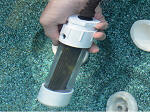
Salt chlorine generators will become less productive, as
water temperatures drops to around 50 F. When it reaches that
point, I would shut it off and rely of the use of standard
chlorine products. Monitor the free and total chlorine 1-2
times weekly, during the chlorinator off period. Adding a
dose of a 60% polymer algaecide, during this period, should
help, as well. When the water warms to 55F, I would restart
the salt chlorine generator and keep monitoring the free and
total chlorine level, at least 1-2 times weekly. When the
water is in the 60's test more often. If you stay on top of
this, you increase the likelihood of having a algae-free
pool. I don't recall the temperature question, being asked
before, as regains winterizing, so I will be adding it to
the archives. I hope that this information will be useful.
Sincerely. Alan Schuster, 10/16/2011
► Closing Above Ground Pool With
Main Drain?
Hi Alan. We bought a 21’ above ground
pool in July 2011. We are using an ozonator system, with a 1
HP pump. We’re not exactly sure how to go about closing the
pool for the winter. We would appreciate any help you can
give us.
PS the pool has a bottom drain. Is anti freeze an option?
Thank you in advance for your help.
Sheree, 9/2/2011
ABOVE GROUND POOLS WITH MAIN DRAINS ARE NOT COMMON AND CAN
PRESENT A SPECIAL PROBLEM. I SUGGEST DISCUSSING PROPER
WINTERIZING OF THE MAIN DRAIN AND LINE, WITH THE DEALER
AND/OR POOL MANUFACTURER. Unlike an inground pool, the lines
may not be below the frost line.
Not everything applies to every pool.
Thoroughly clean the pool and boost the free chlorine
reading to at least 3-5 PPM. Add algaecide and other winter
chemicals.
Make sure the pH is 7.2-7.6.
Drop the water level about 3-6" below the skimmers.
Disconnect the connections to the filter and pump and allow
the water to drain out.
Store the pump indoors for the winter. If the filter can be
stored indoors do so, otherwise drain and cover with tarp.
Seal off all exposed pipes, in order to prevent water from
entering.
Place an ice compensator or floatation balloons in the pool,
to help protect against freeze-thaw damage and to raise the
cover up so that water will run off.
Cover the pool and secure in place with straps. Add some
water, to the cover, to form a donut shaped ring, which will
reduce flapping.
Your actual pool might require somewhat different steps:
discuss this with the dealer or manufacturer.
Sit back and relax. When winter comes can spring to far
behind?
I hope that this information will prove helpful.
Sincerely. Alan Schuster. 9/3/2011
► Closing For The Long Haul?
Alan, I need to close a pool for an
extended period, possibly years. I am buying a house with a
pool that I may never use but I guess I should preserve it
for when I resell the house. It is reinforced concrete with
a vinyl liner, 20'x40'. What are the options? Many thanks.
Barry B., 4/20/2009
This sounds simple enough. Years? Considering everything, it
is not as simple as one might think. Yes, you can have the
pool "winterized" to protect the underground pipes. Yes,
lowering the water level to just below the returns should
help protect the liner from shrinkage and the walls from
collapse. Yes, you can add chemicals to the pool before
covering, as a means of trying to maintain water quality for
a period of time. In any event, even if the pool becomes a
swamp, it usually cleans up. If you use a solid cover, you
have to deal with water accumulations on the top of the
cover. If you use a mesh cover, which is much better
considering the circumstances, it will be difficult to keep
any semblance of water quality over the long haul. A pool
can be an inviting hazard. Given the circumstances, I
suggest that you use a mesh safety cover, in the interest of
safety. You'll have to deal with the water quality down the
road. People have written me about pools that were left open
and untreated for years. Safety should be your number one
consideration. I hope that I have been helpful.
Sincerely. Alan Schuster, 4/20/2009
► Uncovered?
Dear Alan, I have a vinyl inground
pool with strong grey, I think it is made of
fiberglass, liner support construction. It was
professionally closed. I do not use a cover though. I enjoy
looking at the water or ice. They put a float in the skimmer
box last year and it cracked. They filled it with special
putty. It worked ok over the summer, but this winter with
the first freeze the putty popped out and made bigger holes.
Pool water drained totally out of the basket into behind the
pool. The cement on that side of the pool froze and lifted.
It did not crack. Now for the questions:
#1- How low can I keep the pool water so I do not have to
keep pumping it out?
#2-Can the skimmer box be repaired again?
#3-If so what is the best way so this does not happen again?
#4-If not, how much do you think it would be to replace it?
#5-Does the liner need to be replaced too when a new box is
put in?
Thanks.
Rene, Central NJ, 2/21/2017
I am not trying to be condescending, but I have never
heard a good outcome story about an uncovered pool. At the
very least, it will create more work in the spring. At
worst, it a dangerous and inviting hazard. #1 For vinyl
inground pools, in the frost belt, the water level is
usually dropped to about 3-6" below the skimmers. This helps
to keep any water, that might be in the underground pipes,
below the frost line. #2 Possibly, the skimmer could be
repaired, but I really don't know. #3 To better avoid the
possibility of freeze-thaw damage, I suggest a winter cover.
Prior to covering, the pool should be winterized and that
includes, amongst other steps, lowering the water level to
3-6" below the skimmers, blowing the lines, plugging the
returns, plugging the skimmer intakes and having an ice
compensator in the skimmer. #4 Can't help on costs, as I
don't know. #5 You should be able to replace the skimmer.
Some types of liners may better facilitate this, but it
should be doable. It is simpler, if the same skimmer type is
used. Otherwise, it may require a larger skimmer or some
patchwork. I hope that this information will prove helpful
and convince you to use a winter cover. A proper winterizing
will help make you look forward to the next springtime
opening and not dread all of the springtime cleanup,
associated with an uncovered pool. I hope that I have been
helpful.
Sincerely. Alan Schuster, 2/21/2017
► Uncovered And Linerless?
We recently bought a house in upstate
New York, and inherited a 24' above ground pool from the
previous owners of our house. They did not care for it very
well, had not covered it last winter, and didn't open it in
the spring. So it took a lot of time and energy to open the
pool when we bought the house in late June, and we were
worried that permanent damage had been done, especially
since there were numerous folds and wrinkles on the bottom
of the liner. Last week we discovered the water level
lowered dramatically; evidently the liner has sprung a
sizeable leak. The liner is apparently at least 10 years
old, maybe more, and so it should probably be replaced.
Meanwhile, quite a bit of water has drained out beneath the
pool, and I have no idea what kind of damage this might have
caused. We will certainly need to replace the liner, and
perhaps fix other damage besides, so we are considering
selling the pool (sans liner of course) and cutting our
losses. If we choose to keep the pool and replace the liner,
is there any harm in removing the liner now and letting the
pool structure stand without a liner for the winter? We
would then put in a new liner in the spring. The pool has
aluminum and maple plank siding. Thanks for all the
fantastic advice on your site, and I appreciate any advice
you can give! Best regards.
Matt D., Upstate New York. 9/5/2005
Is there really a choice? With the pool leaking, you can't
very well cover it. Without water there is no way to keep
the cover from collapsing under the weight of all that snow
you will be getting. I suspect that the pool will survive
the winter without a problem. Just try any minimize the
effects of accumulating snow on the pool walls and other
structures. Make sure that all equipment is drained and
protected and/or moved indoors. Good luck and I hope that I
have been helpful.
Sincerely. Alan Schuster, 9/5/2005
► Frozen Over?
Hello Alan, I have a inground with a
mesh cover. Well I went on vacation and was gone 12 days.
When I came home I found out we had rain and a snow storm.
Now I noticed my cover has a layer of ice on the whole
cover. I think the pool must of filled up because the ice
looks flat. Do I need to be worried? Its really cold here in
Chicago and I don't think the ice is going to melt anytime
soon. Any suggestions would be good. Also the pool is 16x32
with a liner. Thanks.
Kevin G., Chicago, IL 1/8/2009
Surface freezing in your part of the world in pretty much
inevitable. Mesh covers are great for safety, but they don't
keep the water out and it will rise over time, based on the
rainfall amounts. If you took the proper winterizing
precautions including, blowing the lines and/or adding
antifreeze, sealing off the skimmer intakes, placing ice
compensators in the skimmers and protecting the equipment, I
don't think that you have a serious problem. It might have
been a good idea to throw in a few of those "foam noodles"
to act as ice compensators, in order to help protect the
pool against freeze thaw damage. Did you follow the
manufacturer's instructions? When conditions permit, I would
pump down some water, if for no other reason than safety.
You don't want it treated as a skating rink! I hope that I
have been helpful.
Sincerely. Alan Schuster, 1/9/2009
Thanks Alan for your quick response. I
did close the pool for the first time myself, in the 3 yrs
of having this pool and feel that I did it the right way.
After going to your web site and reading it for about 5
hours, I got more help from you and your site than I did
trying to talk to the people at 2 pool stores. This spring I
will also open it myself for the first time and save money
on opening and closing. The noodle idea is a good one. I
will do that next year. Also, I heard different stories on
draining the pool below the skimmer, some say you should and
some say you don't have to. What do you think? Thanks.
Kevin G., 1/10/2009
Draining the water level below the skimmer means more, if
the cover is solid. In your case, water will get in. The
important thing is that the skimmers be sealed off and that
there be an ice compensator in each one. That way if the
water rises above skimmer level, you should be
protected. Stay warm!
Alan, 1/10/2009
► Main Drain Concerns?
A year ago, we bought a house with an
older inground pool. We had a new liner and propane heater
installed. Last fall, we hired a "professional" to close the
pool. He blew out the lines, added antifreeze and shut off
the valves at the pump to keep them pressurized. I realized
this spring that the heater has a warning on it that it
should NOT be used as freeze protection and that two freeze
caps should be removed. They weren't. The heater has been
fine, but I think we just got lucky? This fall, we bought
one of those tightly stretched mesh safety covers to use as
a winter cover. Obviously, the water level will come back up
with winter rains. Does that put our bottom drain main line
at risk? One of the archives seemed to suggest that. Thanks.
Ed, Indiana, 8/31/2008
I don't know what you read or where, but the water in the
main drain will not freeze. No way - no how! If Indiana, is
where I think it is, just to the left of Ohio, the ground
temperature at the level of the main drain is probably in
the low-mid 50's - even in the winter. The pool will freeze
over, but the ice will be only inches thick. Floating some
ice compensators, on the surface, can help protect a vinyl
inground pool from possible freeze thaw damage at the water
level. Just follow normal winterizing practices and you'll
be fine. The blowing out of the lines, sealing them off and
even adding some pool antifreeze to the lines, is part of
the recommended procedure. A suggestion, for mesh
covers, from a visitor can be found in the online Pool
Newsletter. It sounds like a good one. I hope that I have
been helpful.
Sincerely. Alan Schuster, 8/30/2008
► Difficulty Blowing Out The Main
Drain?
I have had an inground gunite pool for
15 years and this year decided to close it myself. I can not
"blow out" the bottom drain line, it is 9 1/2 ft deep. I
have tried a 4HP wet/dry vacuum, and then went back and swapped
it for a 6.5hp wet/dry vacuum (150 mph blower). I blew out my
skimmer lines and return lines easily enough. I duck taped
up the vacuum blower hose to the bottom drain line immediately
before the shutoff valve. I ran the vac for 5 minutes and
could not get any bubbles at the main drain. When the pool
was open, I would sometimes close the skimmer line and water
would flow up from the main drain so I know it is open and
working. Now I'm considering a compressor but do not know
what size to try. I know that they are measured in psi, can
you tell me what I should consider? Thank you.
Paul H., MA, 10/10/2006
Lowering the lines does not remove all the water from the
main drain line. It only removes that which might be in a
loop above the lowered water level. Drop the water level, 6'
below the skimmer and add some pool antifreeze to the main
drain line. With the water level in all lines, below the
frost line, freezing should not occur. I hope that I have
been helpful. Enjoy the winter.
Sincerely. Alan Schuster, 10/11/2005
► Above-Ground Main Drain?
I have 28 ft round pool that is 5 ft
deep. We had a center drain installed this year after pool
was damaged by storm. and now I need to close it. We are
going to blow air back thru line until we see air then close
valve. Will this be sufficient to keep the center drain from
freezing? Thanks for your advice.
Cyn, 10/11/2004
The water in the drain itself should not freeze. It is the
line that is the problem. Filling the line up with air will
work, so long as the air does not leak out! If that happens,
water will enter and could freeze. Does the drain
manufacturer or supplier have winterizing instructions,
other that what you have related? Good luck and enjoy the
winter.
Sincerely. Alan Schuster, 10/11/2004
► Lost Prime?
We are having our inground pool closed
today and I need to lower the water level. We have a plaster
pool. I drained the water to just below the skimmers in the
Waste Mode, but then I lost prime and had to turn the system
off. How do I continue to drain the pool? Thank you.
Lindi D., 10/19/2007
If you have a main drain, close off the skimmers - setting
the multiport valve to main drain only. It may be necessary
to pour water into the pump basket to restore prime. If you
don't have a main drain, you will need a supplemental pump.
Get a submersible cover pump. You will be able to use it
later to pump off water accumulations on the cover. Have a
good winter.
Sincerely. Alan Schuster, 10/19/2007
Thank you! I closed off the skimmers
and was able to drain the rest of the water to 3-4 inches
below the skimmers. We've had an awful experience with the
building of our pool and I never seemed to be able to get my
questions asked. I'm so glad I finally lucked upon your web
site! Most of my questions have already been asked and
answered on it! I've definitely put you in my Favorite
Places! Have a great winter and I'm sure I'll be back in
touch in the spring! Sincerely.
Lindi D., 10/20/2007
► No Winterizing And It's January?
Alan, I am in the process of buying a
house with an in-ground, gunite pool that was not properly
taken care of this winter. I am trying to assess how much of
a risk this is creating to the pool so that I can figure out
whether I am at risk for a significant amount of money to
fix the pool this spring. The water was not lowered enough
below the skimmers level - in fact, last week, the water in
the skimmers was frozen solid and the top inch or so of the
pool was frozen. However, with the recent warmer weather in
the area, the water in the skimmers has defrosted as has the
water in the pool. I also don't think the pool was plugged,
drained or winterized in any fashion. What possible damage
may have been caused by this early freezing skimmers, frozen
pipes, etc? Also, there is a spa attached to the pool.
Thanks.
Chris, New Jersey, 1/4/2004
What you have to worry about is what you can't see. If the
underground pipes freeze and burst it may be quite involved
in repairing them. Conceivably, part of the decking or
walk-around area may have to be taken up. It is possible
that no permanent damage has been done. I suggest that a
pool professional dealer take a look at the pool. It may not
be too late to winterize the pool, so far as the equipment
is concerned. Water quality can be dealt with next spring.
The important thing is to protect the pool! The seller
should accept this responsibility. Good luck and I hope that
it all works out for you.
Sincerely. Alan Schuster, 1/4/2004
► Blowing Out The Lines?
You have mentioned time and time
again, in the archives that the lines have to be blown out.
Is there an easy way to do so, other than the use of a shop
vac?
Julie R., Limington, ME, 9/12/2006
A shop vacuum will work! You must have some type of
pressurized air flow to blow out the lines. This is
important in order to avoid freeze-thaw damage. Stop in and
see a local pool professional. Perhaps, they can give you
some practical advice, for your type of pool installation.
Sincerely. Alan Schuster, 9/12/2006
► Pool Closing With A Sand Filter?
This is our first year of owning a
pool. We have covered it, added chemicals, etc. Now we need
to attend to the sand filter. Is it necessary to empty the
sand out? We have heard conflicting information from various
people. Please advise me on what to do.
Karen P., Homewood, IL, 9/3/2006
Unless your sand filter, specifically states that the sand
must be removed, it should not be required. Typically, sand
is not replaced more often than every several years. Just
make sure that all the water is drained out of the filter
and that the lines are blown out and sealed off, in order to
avoid possible freeze-thaw damage. Protect from the elements
and that's about it. Hope you enjoyed the season.
Sincerely. Alan Schuster, 9/3/2006
► Properly Protecting The Skimmers?
We just bought a house in Southeastern
PA, in January. We have been here a month. The in-ground
pool has a good cover on it and, out of curiosity, I opened
the two skimmer wells. They each had a plastic bottle frozen
into the ice. I've read enough on your site to think that
part is good. However, today I was able to remove the bottle
and at the bottom of the skimmer well and there is a little
black - maybe cap - with a screw and nut on it and then next
to that is a little white cover which is NOT covering
anything at the moment. I suspect this is very, very bad. We
have had single digit/teen temps this year for a couple of
weeks. Is there anything I can do at this point to help or
am I pretty much guaranteed freeze damaged underground
pipes?
Kristina B., Oxford, PA, 2/8/2005
It sounds like the white cap is the cover for the skimmer
line. This is used when vacuuming and serves no winterizing
purpose. It would not be covering anything at this time. The
black "cap" with the screw is a winter plug that should be
sealing off the skimmer line. This line should have been
blown out and drained. The plastic bottle was acting as an
ice compensator, in case water collected in the sealed off
skimmer. It would appear that the previous owner did what
was required. At least that's what you should be hoping for.
I hope that this information will prove to be useful and,
somewhat, reassuring. Good luck with the house and the pool.
Sincerely. Alan Schuster, 2/8/2005
► Should I Or Shouldn't I
Use A Skimmer Plate?
Dear Alan, I have a 24' round
above-ground pool. I am using a solid cover with air pillow.
I have drained the water below the skimmer. My questions
are:
1) should I use a skimmer plate? I have heard that if you
leave it open with hoses hanging you lose a lot of pool
water from the weight of the rain, snow and ice. On the
other hand, the skimmer plate increases the chance that
freezing water will expand upwards toward the top rail. I
live the CT so we share the same lovely winters.
2) should I continue to use an air pillow - what purpose
does it serve?
3) last question, do you drain water off the cover or leave
it there to hold the cover down.
I asked 5 people and got 5 different answers so I decided to
ask a professional. I appreciate your time! Thanks.
Mark A., 9/8/2005
I would use a skimmer plate. It will keep the water out of
the skimmer and avoid possible freeze-thaw damage. Use the
air pillow by all means. It raises the center of the cover
and allows only so much water to accumulate on top.
Thereafter, the water will run off the cover. If you use the
air pillow and it raises the cover high enough, you won't
need a cover pump. I hope that I have answered your
questions.
Sincerely. Alan Schuster, 9/8/2005
►
Winterizing The Return Lines?
Hi Alan. Thanks for putting this help
section up - very informative. My first pool is an old
concrete pool 14x24 that was partly built by the original
house owner in the 60's or early 70's. Pool structure itself
is in good shape. I'm baffled that the return hoses going to
the pool (the ones with adjustable eyes) are located very
near the bottom of the pool in the shallow end (two of them)
- there are none closer to the surface. Regardless, how do I
drain these lines or do I need to? Should I dump a whole
bunch of antifreeze in those lines in the hopes it will mix
with the water? I'm in the north east with temps far below
freezing. Thanks for your help Alan.
Nick Y., 9/18/2004
I suspect that whoever, put the returns near the bottom was
concerned about freezing. The pool bottom will not freeze -
just the surface. Just pouring antifreeze in the lines can't
hurt. It depends upon the configuration in the ground.
Blowing the lines out and plugging before adding antifreeze,
would be better. I hope that I have been helpful.
Sincerely. Alan Schuster, 9/18/2004
► Chlorine For Winterizing?
During the pool season I use trichlor
tablets in a floating feeder. Can I leave this in the water,
after I close the pool? That way it can continue to release
chlorine during the winter months. What do you think?
Don D., 10/4/2007
I wish you would have told me what type of pool is being
closed. At one time, winterizing chlorine floats were quite
popular. The theory was that the feeder could continue to
release chlorine, after the cover was placed on and would
help keep the water in better condition. These floaters were
used in above ground and inground pools, vinyl pools and
masonry pools. Eventually, it was learned that all too often
the floater was crushed by the freezing surface water and
the tablets ended up on the bottom. In the case of a vinyl
lined pool, having trichlor tablets on the bottom for
prolonged periods of time will bleach the liner. In other
cases, the floater ended up near the walls and caused a loss
of color. The floaters also could damage the winter cover
due to prolonged contact. After many pools, liners and
covers were damaged, these products were phased out in favor
of safer winterizers. Better to open a dirty pool than to
risk a bleached liner! Back to your question. I don't think
you should leave the floater in for the winter, no matter
what kind of pool you have. There are lots of winterizing
products available that should meet your needs, without
risking damage to your pool, liner or cover. I hope that I
have been helpful.
Sincerely. Alan Schuster, 10/4/2007
► Botched Closing?
We have an in-ground gunite pool. We
had a new company close it and put on our heavy pool tarp.
They did not put the tarp far enough from the edge of the
pool, and the weighted bags used to hold the cover in place
fell in and caused one end of the pool cover to submerge.
All of the shocked pool water ended up flowing onto the
cover (which is now submerged maybe 4 to 6 feet below the
surface). The cover is loaded with leaves. Some leaves have
fallen under the cover and are sitting on the bottom of the
pool. How should this be remedied? Will this cause possible
staining of the gunite? I would really appreciate your
response. Thanks.
Tom D., Michigan, 11/1/2008
You paid someone to do a job and they did not do it
properly. The least they owe is an opportunity to correct
the situation. That means the cover should be removed, the
pool vacuumed and chlorine shock added to the pool. Leaves
sitting on the bottom can leave tannins stains. Although
these stains should be removed by the addition of chlorine,
not treating the pool properly will lead to algae growth and
a more complicated spring opening. They should be able to do
this with a portable service vacuum and do not have to
reconnect everything. I hope that this information will
prove to be useful.
Sincerely. Alan Schuster, 11/1/2008
► Ice Compensators?
In your informational site about pool
closing you mention using a Ice Compensator for winterizing
pools. We live in upstate NY and have a inground pool with a
vinyl liner. What type of ice compensator is needed? We have
always put a big "Air Pillow" in our pool. Someone told me
that it isn't needed. The air pillow can be very troublesome
because of it's size. It's makes draping the cover over the
pool difficult. Plus, because of it's size you doesn't leave
much room for placing water pillows around the edges to keep
the cover in place. We always throw some empty plastic
bottles to float in the pool as well. Is just the empty
plastic bottles sufficient for ice compensation? Thanks in
advance Beth (very sad owner of pool that doesn't want to
close it!)
Beth, New York, 9/26/2003
Crushable things such as algaecide bottles or liquid
containers can be used as ice compensators. They help
provide protection against freeze thaw damage and water
approaching the freezing point. The air pillows are used to
help prevent water from accumulating on top of the cover. It
also serves as an ice compensator. Sorry about the winter,
but when winter comes can spring be far behind?
Sincerely. Alan Schuster, 9/26/2003
► Do I Need A Cover Pump?
I'm a bit leery about leaving a pump
hooked up all winter. Is it is necessary to have a cover
pump?
Helen B., 9/24/2004
If you are using a "Cover Pump", it should be a pump that is
specifically designed for that purpose. That is, it must be
a submersible pump. Make sure that it is hooked up to a GFI
protected outlet. The use of a cover pump is a good idea. It
helps keep the accumulations on the cover to a minimum and
reduces the possibility of a collapse of the cover into the
pool. Having water accumulating on top of the pool could be
an inviting hazard. Use the pump - you'll be better off next
spring!
Sincerely. Alan Schuster, 9/24/2004
► High Chlorine Readings?
Hi Alan, we live in central NY, and
this is our first year with a pool (24' round above ground).
I'm in the process of closing it, and my dealer tells me
that I should add 6 gallons of "shock" chlorine (12.5%
sodium hypochlorite) to the pool before closing it. My pool
water has been fine all season - no algae, free chlorine
maintained around 3ppm, pH about 7.4, and TA around 100. We
did not have many swimmers this first year - our pool was
not put in until late June, and it's just my wife and I
taking a dip once in a while. My questions are these: I read
the bottle on the chlorine, and I estimate that adding 6
gallons will increase the free chlorine to almost 60ppm
(yes, sixty ppm!). That seemed ridiculously high to me, so I
only added 2 gallons, and I estimate the pool (24hrs later)
to be at about 22ppm now. Also, after adding the chlorine,
it seems like that affected my pH, which looks to be about 8
now (also 24 hrs later). The TA still looks like 100, which
is OK, I guess. What should I do? I hesitate to cover the
pool because I'm afraid that the chlorine and the pH are
both way too high. Any help would be greatly appreciated.
Thanks!
John T., New York, 10/6/2020
Your projected figures are probably correct based upon the
theoretical, but it rarely works out that way. If your pool
was in pristine condition before the closing, I agree that 6
gallons would be excessive. Such high concentrations could
affect the vinyl liner's color, over the course of the
winter. Liquid chlorine has a very high pH and it is normal
for it to raise the pH of the water. A 5-10 PPM free
chlorine level and a pH of 7.2-7.6 would be preferable, in
my opinion. I suggest that you confirm the true Free
chlorine reading and not rely on a estimate. High chlorine
test results can be best measured by many methods.
However, a
ColorQ 2X all-digital Water Analyzer
would be an ideal choice.
I hope that I have been helpful.
Sincerely. Alan Schuster, 10/6/2020
► What About Antifreeze?
After blowing out my lines, I split 2
gallons of pipe-line antifreeze between the intake and
return lines. I live in a cold place and I feel better about
the added protection. My question is can I use an automotive
antifreeze, instead of the type the local pool store sells?
Thank you.
Jim H., W. Springfield, MA, 9/1/2004
The problem with using an automotive antifreeze is that the
product will end up in the pool water. The concern is not
necessarily with the toxicity of the material because it
will be diluted down many thousands of times. The problem is
that the automotive antifreeze, usually ethylene glycol, can
react with the chlorine and form chlorinated hydrocarbons
and it is these byproducts that you want to avoid in
swimming pool water. I suggest that you stick with a
reliable brand of swimming pool, pipe-line antifreeze and
use it as directed. Enjoy the winter. I hope that I have
been helpful.
Sincerely. Alan Schuster, 9/2/2004
► How Much Antifreeze?
I have been a pool owner for more yeas
than I want! My first pool was concrete/gunite. For
winterizing I used good OLD AUTO ANTIFREEZE, diluted 50/50.
I now have a vinyl liner pool and much larger, 45,000 gal
and would like to use "Good Old Antifreeze" again. One
company used 50 gal of antifreeze and I got rid of them.
Would this be a problem with the vinyl liner? Since the Pool
guys want $14.00 a gal for the super non toxic antifreeze
and the pool is so many gallons, this would cut my cost of
closing substantially, by providing them the antifreeze and
dilute 50/50 again. Closing in 2 weeks, please let me know.
Regards.
Vickie W. 9/9/2007
Automotive antifreeze is not recommended, even if diluted
50/50. Apart from its toxicity, it can react with pool
chlorine and form unwanted chlorinated compounds. Use a pool
formula antifreeze or a propylene glycol based product. It
is unnecessary to complete fill the lines. Blow them out and
add some antifreeze, no more that 1-gallon to each line.
This will mix with any residual water and provide adequate
protection, so long as most of the water has been blown out.
I hope this information proves helpful.
Sincerely. Alan Schuster, 9/10/2007
► Water On Top Causing Problems?
Live in the Detroit area, and as you
know we had a fairly wet winter. I tried getting all of the
water off I could, but now there is a lot of ice. I have
found that the cover is really tight and pulling in a couple
of walls. I released the tension in the cable for the cover,
but is there anything else I can do?
Mike B., Michigan, 2/7/2005
Did you place a large ball or pillow under the cover? This
would have raised the cover, in the center, and allowed the
water to run off. This will minimize the amount of water
collecting on top. Most pool dealers carry, or
should, something suitable. Is it possible that the pool has
lost some water? Would a cover pump allow you to remove some
water? Things being frozen, as they are, really doesn't
leave many options. Good luck and I hope that I have been of
some help.
Sincerely. Alan Schuster, 2/7/2005
► Trying To Protect The Liner?
Our pool has had 5 winters and this
last we had a record amount of rain and lots of water under
the liner. We separated a 4 foot section from its track and
keep the pump in for months and I would watch it daily to
see how long was needed to pump out the water. I read an
answer you had to a question on 1/8/05 and it made me wonder
if I am understanding what you said, is if we didn't drain
the water our normal 2 inches below the skimmer which
amounts to a total of about 8 inches total in depth for our
pool would the vinyl not shift? Our pool is 16x32 with a
deep end and a main drain. We live in Albany Oregon. It was
hard to put the vinyl back in its track, because of new
wrinkles from the shifting. Thanks.
Karyn L., Albany, Oregon, 10/3/2006
The floating liner problem is less likely to occur, if the
water level is higher. You can plug the skimmers and add an
ice compensator to each one. That will allow you to keep the
water level high. Add some foam noodles to the pool and they
will act as ice compensators. That leaves the main drain
line and possibly the others. You are in Oregon and not
Alaska. The frost line is relatively close to the surface.
If these lines are below the frost line, they will not
freeze. The water level in these lines should be the same
height as the pool. How far below ground level is the pool
level? If you drop the water level below the skimmers and
blow out these lines, before sealing with the winter plug
and restoring the water level, these lines will be less of
a concern. Blowing the other lines will help remove water
from any loops that could be closer to the surface. This is
your call. I would think that the pool will be OK, but I
don't have all the facts or a complete understanding of your
location or weather. Good luck.
Sincerely. Alan Schuster, 10/3/2006
|
Visit The Website Stores . . . for
better informed shopping!!! |
|
|
Shipping is FREE* . . . within
the Continental U.S.
A $9.99
handling charge will apply
to Continental U.S. Orders,
under $75.00. Orders
outside of the Continental
U.S. may require some
additional charge, based on
quantity and destination.
Most products can be
shipped World-Wide. International
and orders outside of
Continental U.S. - see
comments on the ordering
pages. |
|
|
Major
Credit Cards and PayPal are accepted. |
|
▲
Return To Top Of Page
▲
Aqualab Systems, LLC does not
make any warranty or
representation, either expressed
or implied, regarding the
accuracy or completeness of the
information provided by this
website; nor does Aqualab
Systems., LLC. assume any
liability of any kind whatsoever
related to, or resulting from,
any use or reliance on this
information. The content of this
website should not be used, if
it is conflict with any
applicable federal, state or
local regulations or guidelines.
© Aqualab Systems, LLC. All
rights reserved