| |
|
Scroll
down to browse through some archived SWIMMING POOL
questions and answers. Please click the Pool
Problems Link, on top of every page, to access a complete
listing of Pool Problem subjects, an alphabetized
Website Table of Contents, Pool Equipment Information,
About Alan Biographic Material and a Pool Glossary. Use
the other links to access additional subject
information. More information about some new and unique
products, for pools and spas, can be found by visiting
The Website Store.
You'll never know what you'll find and that's always
fun. Be better prepared and avoid costly problems!
|
|
 |
Shipping is FREE* . . . within
the Continental U.S.
A $9.99
handling charge will apply
to Continental U.S. Orders,
under $75.00. Orders
outside of the Continental
U.S. may require some
additional charge, based on
quantity and destination.
Most products can be
shipped World-Wide. International
and orders outside of
Continental U.S. - see
comments on the ordering
pages. |
|
 |

Major
Credit Cards and PayPal are accepted. |
|
On-line
shopping since 2002 - Safe and Secure!!! |
|
Shocking or Super-Chlorinating pool
water!!! |
|
Shocking
or super-chlorination is the application
of quick dissolving chlorine, with the
intention of rapid increasing the pool's
chlorine level. The reasons for
shocking are due to the presence of
rampant algae growth, cloudy pool water,
underwater slimes and high levels of
combined chlorine. Chlorine
is the most popular pool water
sanitizer.
Sanitizing is a must, for proper pool
water management This is done
with a variety of products such as,
liquid chlorine, dichlor, calcium
hypochlorite, lithium hypochlorite,
hydrogen peroxide or non-chlorine shock.
Pools equipped with a salt chlorine
generator, in most cases, can simply
dial up the chlorine output to shock
mode.
Salt Chlorine generators are a
better way to utilize chlorine, producing
more controllable results. They
eliminate the need to handle, measure or
store chlorine products, while reducing
buildup problems. A
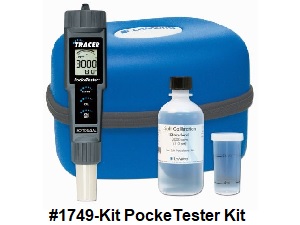
PockeTester Kit is a convenient
way to monitor the salt level.
|
|
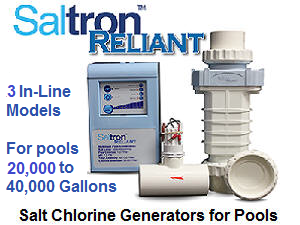
Salt Chlorine Generators - 3
models |
Testing The Salt Level |
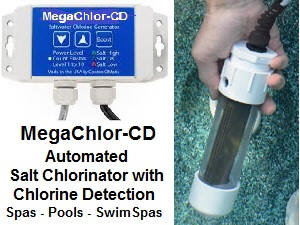
Salt Chlorine Generator - No
Installation |
 |
 |
 |
|
Product and Ordering Information |
Product and Ordering Information |
Product and Ordering Information |
If you have a pool or spa water
testing need, we should have the
product.
►
Scroll down to read through some
Question & Answer information.
◄
|
|
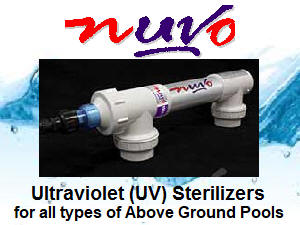
An
Ultraviolet Pool Sterilizer
can help control the growth of
microorganisms, reducing the need to shock as often.
UV kills virtually everything passing through the cell,
but does not replace chlorine or other persistent
sanitizers. A
NatureChlor Sprayer makes a hard surface
sanitizing solution, uswing a few simple household
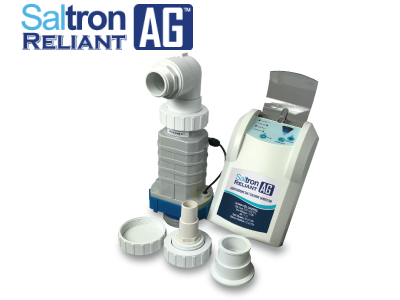
items. The
model
Saltron AG
Salt Chlorine Generator
is
designed for above-ground pools. |
|
Above-Ground UV Sterilizer |
Electrolyzed Water Spray |
Above-Ground Salt Chlorine
Generator |
 |
 |
 |
|
Product and Ordering Information |
Product and Ordering Information |
Product and Ordering Information |
If you have a pool or spa water
testing need, we should have the
product.
►
Scroll down to read through some
Question & Answer information.
◄ |
|
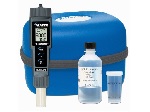
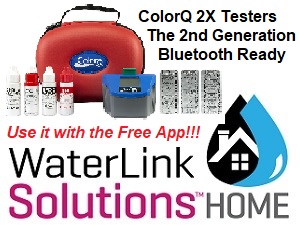
Water testing determine the
extent of the need to shock or
superchlorinate pool water. A
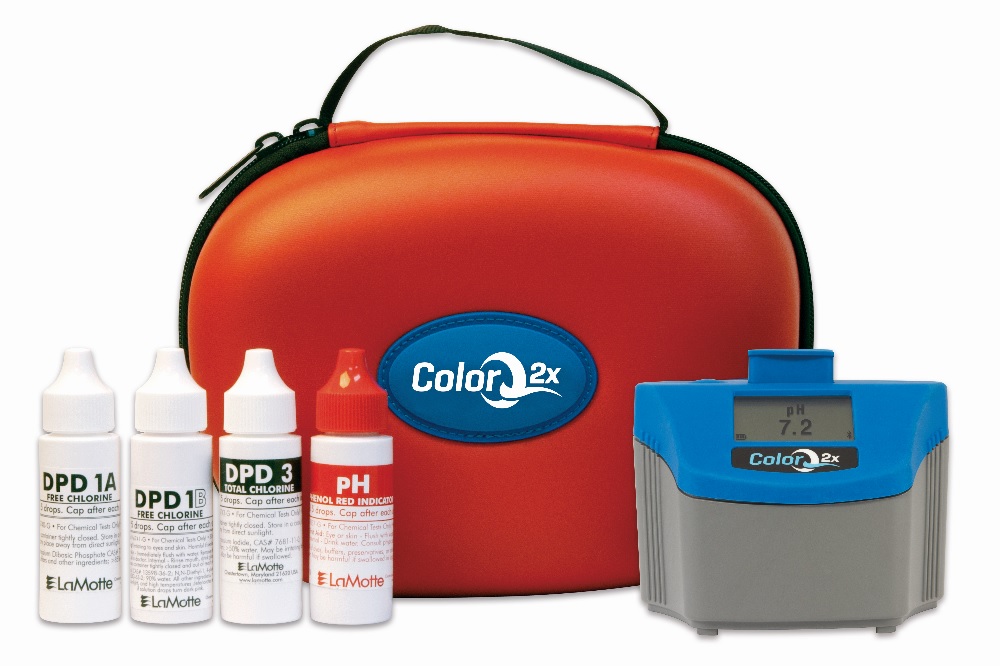
ColorQ 2X is a 2nd generation,
Bluetooth, Waterproof, all-digital tester
can perform all of the common pool water
tests, while eliminating the
color-matching and guesswork.
There is a model, for every pool testing
need.
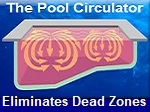
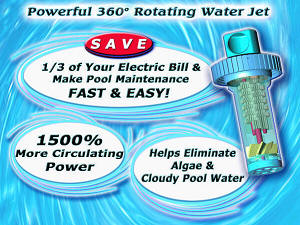
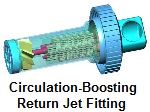
The
Circulator is a
replacement return jet fitting,
that creates a spiraling return
flow, which aids in dispersing
the shock treatment, to all
areas of the pool.
The
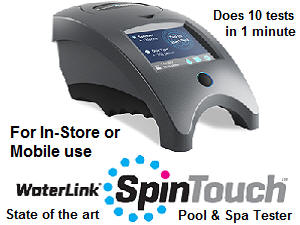
WaterLink SpinTouch Labs are the
ultimate, doing up to 10 different water
test factors, in just 1 minute.
Voted product of the year, by
the industry trade association. |
|
ColorQ All-Digital Water Testers |
Circulation Boosting Return Jet
Fittings |
WaterLink SpinTouch Labs |
 |
 |
 |
|
Product and Ordering Information |
Product and Ordering Information |
Product and Ordering Information |
If you have a pool or spa water
testing need, we should have the
product.
►
Scroll down to read through some
Question & Answer information.
◄
|
|
|
How to
properly shock treat a swimming pool? |
Shocking
or super-chlorinating a
swimming pool refers to the application of large
quantities of chlorine,
non-chlorine shock or hydrogen peroxide.
If a
salt chlorine generator is being used, most
models have a boost mode, which raises the
chlorine output, to perform a shock treatment.
Typically 5-10 times the normal dose is used,
based upon actual conditions and needs. The
purpose of this large dose is to break down the
combined chlorine, organic waste, algae and
contamination and re-establish a positive level
of Free Chlorine. Shocking must be repeated,
until such time as a stable Free Chlorine
reading can be achieved, for at least a few
hours. Make sure that a Free Chlorine capable
test kit is being used, in order to know when
breakpoint chlorination has been achieved.
Dragging out this process will only serve to
increase the amounts of chemicals required.
Products such as liquid chlorine, sodium
dichlor, lithium and calcium hypochlorite and
non-chlorine shock are used for this purpose.
None of these products can be used in a
biguanide-maintained pool. Only concentrated
hydrogen peroxide can be used to shock biguanide pools. A pool should be shock
treated at the first signs of algae, after heavy
rainfall, after periods of heavy bather usage
and at the onset of a loss of water clarity or
quality. Another common practice is to shock
treat the pool every Sunday evening. Typically,
this is after a period of high bather demand and
will help to re-establish the sanitizer level. A
periodic shock treatment helps to prevent the
development of sanitizer-resistant
microorganisms. If problems arise, refer
to the Pool
Problems Page, as a source of
problem-solving information, broken down into
various categories. Scroll down the page
and click on the linked
keywords,
catch phrases
or images, in the archived answers below, to access additional information, on that topic or product.
Do you know what's in
your water? If you're having problems, with algae,
sanitation or water clarity, testing allows you to better
understand the chemistry and determine the cause of the
problem. Once understood, you can select the best
treatment option. Understanding the nature of the
problem, should be step one. For information about
our full selection of testing options, visit our
Test Equipment Store.
 |
Join our E-Letter Mailing List.
You'll receive 1-3 E-Letters a
month, featuring helpful pool
and spa advice, new product
information and sale
announcements. All we
require is your e-mail address
and you can opt out anytime you
wish.
Your information
will never be shared or sold. |
|
▼
Helpful,
Problem-Solving Information, in a question and
answer format.
▼ |
► Which Shock
Treatment To Use?
I see many different types of shock
available, is there a best choice?
Jeff B, 5/11/2018
The purpose of using a shock treatment, is to quickly boost
the free chlorine level, usually because of algae problems
or high combined chlorine readings. Trichlor granular should
not be used, other than to treat a specific small area in a
gunite pool. Liquid chlorine or lithium hypochlorite are the
most universal, as neither contributes any unwanted
byproducts. The liquid product, which is cost effective is
bulky. Lithium hypochlorite is a convenient,
quick-dissolving granular product, but will cost more to
use. Both, liquid chlorine and lithium hypochlorite will
tend to raise the pH. Sodium dichlor is very convenient and
has minimal effects on the pH. However, it contributes
cyanuric acid to the water, with each addition. It should
not be used, as a shock treatment, if trichlor is being used
as a sanitizer or if the cyanuric acid level is 100 PPM or
higher. Calcium hypochlorite is cost effective, but will
increase the calcium hardness of the pool water, with each
application. It would not be a good choice, if the pool
water hardness is 250 PPM or higher. Potassium
monopersulfate or non-chlorine shock does not add unwanted
byproducts, but is the least cost effective. However, when
used in conjunction with other chlorine shock products, it
seems to produce better reductions in the combined chlorine
level. As you can see there is no one best product, for all
pools. Your pool's water chemistry and how the pool is
sanitized, will play a role in deciding which product is
best and/or most cost effective. Use the label
recommendation, as a dosage guide. Your pool could use more,
as it will depend on the condition of your particular pool.
Wait a few hours and retest. Keep adding until, you get a
free chlorine level that lasts through the night. If the
pool is equipped with a
salt chlorine generator
and the chlorine level needs to be raised, the same
guidelines apply. I hope that I have
provided the solution. product, which is cost effective is
bulky. Lithium hypochlorite is a convenient,
quick-dissolving granular product, but will cost more to
use. Both, liquid chlorine and lithium hypochlorite will
tend to raise the pH. Sodium dichlor is very convenient and
has minimal effects on the pH. However, it contributes
cyanuric acid to the water, with each addition. It should
not be used, as a shock treatment, if trichlor is being used
as a sanitizer or if the cyanuric acid level is 100 PPM or
higher. Calcium hypochlorite is cost effective, but will
increase the calcium hardness of the pool water, with each
application. It would not be a good choice, if the pool
water hardness is 250 PPM or higher. Potassium
monopersulfate or non-chlorine shock does not add unwanted
byproducts, but is the least cost effective. However, when
used in conjunction with other chlorine shock products, it
seems to produce better reductions in the combined chlorine
level. As you can see there is no one best product, for all
pools. Your pool's water chemistry and how the pool is
sanitized, will play a role in deciding which product is
best and/or most cost effective. Use the label
recommendation, as a dosage guide. Your pool could use more,
as it will depend on the condition of your particular pool.
Wait a few hours and retest. Keep adding until, you get a
free chlorine level that lasts through the night. If the
pool is equipped with a
salt chlorine generator
and the chlorine level needs to be raised, the same
guidelines apply. I hope that I have
provided the solution.
Sincerely. Alan Schuster, 5/11/2018
► Needing A
Bit More?
Our pool has an automatic chlorinator
and it doesn't always seem to provide enough chlorine. I
have opened the settings all the way. A few times the water
started to cloud. Any advice will be helpful.
Hank A. Columbus, OH, 3/13/2016
Try and keep the chlorinator filled with the tablets. Don't
wait for them to dissolve half way or more. The more
chlorine in the
chlorinator, the more that will dissolve. Try shocking the
swimming pool every Sunday evening. The weekend is usually
the most active period and the shock treatment will help
re-establish the Free Chlorine level. That way the
chlorinator does not have to play catch up. Adding a
Salt Chlorine Generator will
replace your existing chlorinator, with something much
better. A good unit should provide most of the
oxidation, that your pool requires, and enable the chlorine to act as a sanitizer.
It allows you to shock the pool, by simply raising the
setting to boost mode. You'll
get better and more consistent water quality and avoid the
buildup problems due elevated levels of cyanuric acid. These
suggestions should help. Just make sure that you test for
Free Chlorine regularly and often. Enjoy the summer.
Sincerely. Alan Schuster, 3/13/2016
► How Long To
Wait?
I have seen and heard a lot of
different times on how long to wait after shocking a pool
before swimming. Specifically with non-chlorine shock I've
heard from 15-min.to 1-hr. If you would tell me what you've
been advised about this. If my pools free chlorine is 0.5ppm
lower than the total chlorine, then I add a 1/2 pound of
chlorine shock to the 20,000 gallon pool to equalize them.
This is my usual protocol. This usually raises the total
chlorine about 1 ppm and the free chlorine about 1.5 ppm
(which gets them back to the "balanced" state, which is
normally both at 2 ppm), even though the chlorine is still
really low should I stay out of the pool for long period or
just what would you say to be safe. I have heard anywhere
from 3-12 hours after adding chlorine shock. The chlorine
shock is always added into the skimmer when needed and the
non-chlorine shock is evenly dispersed into pool by hand (2
lbs. weekly regardless). In case I have confused you the
question would be how long to wait before swimming after
using both of the different shocks (they wouldn't
necessarily be done at same time either). I just wanted to
tell you where I kept the chlorine level and dosages to give
you a better idea.
Tony C., NC, 6/20/2015
What you are doing is merely bumping up the level - going
from the low side to mid range. All you need do is wait
until the chemical has dissolved and dispersed. 15 minutes
should be OK. On the other hand, when shocking eliminate an
algae problem, you might have to wait until the chlorine
level has dropped into a more comfortable range. You never
want to jump into a cloud of chemicals that have not
dispersed. A product like The
Pool Circulator helps boost
circulation by as much as 1500% and assures the quick
dispersion of the chemicals. It also helps eliminate the
dead spots that lead to algae growth. I hope this
information is helpful.
Sincerely. Alan Schuster, 6/21/2015
► A Shocking
Story?
I have a 10,000 gallon Marcite pool,
everything was fine and clear. pH = 7.4, Alk = 100. Chlorine
= 3.0, Free Chlorine = 0.5, Hardness = 250, Stab = 45. I
noticed the free chlorine was low and I shocked the pool 4
days ago, tying to burn out everything, and it did not bring
it up from 0.5. So I gave it a double shock last night and
now the pool is very cloudy white, and the free chlorine is
2.0. I added 2 oz. of an algaecide product, 24 hours after I
shocked it 4 days earlier before the double dose of shock.
Could the clarifier or algaecide have reacted with the extra
dose of shock? If so, what should I do? I am keeping the
pump going and I washed it out 2 times already since last
night. Should I just wait it out, or should I add a
Clarifier to it to help? Will it just make it worse?
Mathew K., 5/9/2012
The reason that the Free Chlorine level failed to rise was
probably due to the presence of a film of algae or bacteria
on the underwater surfaces. It also explains the
unacceptably high difference between the Free and Total
Chlorine readings. A maximum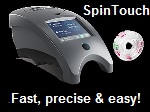 of 1 PPM is preferred. The
water may have looked clear, but there was a biofilm on the
underwater surfaces. That being the case, it is necessary to
keep adding shock treatment, until the difference narrows or
the water clears up. The cloudy water is the result of the
dead algae and debris, as opposed to poor water chemistry.
Adding a clarifier will help deal with the fine particles of
dead algae and debris. The water should clear up once the
chlorine has destroyed all of the biofilm and a suitable
Free Chlorine level is being maintained. From that point on,
maintenance should be easier. For free chlorine testing, I
suggest using one of the
ColorQ
all-digital, electronic water analyzers, as they provide
the right kind of information, without color-matching or
doubt. To help assure proper overall pool water chemistry,
go to a pool
store that has a very capable, professional lab such as a
WaterLink SpinTouch Lab,
rather than a less accurate test kit or strip reader. I hope this
helps to clear thing up. of 1 PPM is preferred. The
water may have looked clear, but there was a biofilm on the
underwater surfaces. That being the case, it is necessary to
keep adding shock treatment, until the difference narrows or
the water clears up. The cloudy water is the result of the
dead algae and debris, as opposed to poor water chemistry.
Adding a clarifier will help deal with the fine particles of
dead algae and debris. The water should clear up once the
chlorine has destroyed all of the biofilm and a suitable
Free Chlorine level is being maintained. From that point on,
maintenance should be easier. For free chlorine testing, I
suggest using one of the
ColorQ
all-digital, electronic water analyzers, as they provide
the right kind of information, without color-matching or
doubt. To help assure proper overall pool water chemistry,
go to a pool
store that has a very capable, professional lab such as a
WaterLink SpinTouch Lab,
rather than a less accurate test kit or strip reader. I hope this
helps to clear thing up.
Sincerely. Alan Schuster, 5/9/2012
► Turning
Milky?
Every time I add pool shock to my pool
it turns my crystal clear water a milky color and it stays
milky for 4 or 5 days. The pH and Chlorine levels are good
and the filter (cartridge) is clean. My pool is in ground
and approx. 13000 gallons. The pool store is no help and
just wants to sell me clarifier. Any ideas in what I should
be doing? Thank You Very Much.
ED G., 4/16/2013
Most likely the pool shock is calcium hypochlorite. and the
directions call for you to broadcast it into the pool. This
raises the pH and TA Because the product contains calcium,
the hardness levels rises each tome the product is added to
the water. This may not present a problem, if the water is
soft - low hardness. However, if your calcium hardness is
above 200 PPM, it could be a problem and result in exactly
the problems that you are experiencing. If this is the case,
stop the use of calcium hypochlorite for shocking or daily
sanitizing. For shock treatment, use liquid chlorine,
lithium hypochlorite, non-chlorine or dichlor, if the
stabilizer level is not too high. Adding a calcium
sequestering product is a good idea, if you calcium hardness
level is above 200 PPM. Want a way to virtually eliminate
the need to shock a pool and eliminate the daily chlorine
additions? Look into a
salt chlorinator. I hope that I have
been helpful. Enjoy the season. and TA Because the product contains calcium,
the hardness levels rises each tome the product is added to
the water. This may not present a problem, if the water is
soft - low hardness. However, if your calcium hardness is
above 200 PPM, it could be a problem and result in exactly
the problems that you are experiencing. If this is the case,
stop the use of calcium hypochlorite for shocking or daily
sanitizing. For shock treatment, use liquid chlorine,
lithium hypochlorite, non-chlorine or dichlor, if the
stabilizer level is not too high. Adding a calcium
sequestering product is a good idea, if you calcium hardness
level is above 200 PPM. Want a way to virtually eliminate
the need to shock a pool and eliminate the daily chlorine
additions? Look into a
salt chlorinator. I hope that I have
been helpful. Enjoy the season.
Sincerely. Alan Schuster, 4/16/2013
► Too Much
Shock?
Hello, here are my current readings:
Hardness: 500, Free Chlorine 10, Total Chlorine 10, pH 7.2,
Alkalinity 80 and CYA 30. The problem is that after I
shocked my pool on Sunday night the Chlorine residual has
not come down to below 10 yet. My pool is 16x32 with a
shallow end of 3' and a deep end of 7.5' and the deep end is
cove shaped which means the walls are sloped. According to
my reading the calculation is: length x width x av. depth x
7.5 x 0.85 (for sloped walls). So I calculated 17,136
gallons. I am the new owner of the house with the pool and
this is only the second week the pool has been open. When I
shocked (superchlorinated) my pool on Sunday night I thought
I had a 20,000 gallon pool because that is what the previous
owner told me. However, as the measurements show above, the
pool is closer to a 15,000 gallon pool. The instructions on
my chlorine bucket say to use 5oz per 5,000 gallons so I
added 20 oz. of chlorine granules into the skimmer. I also
left the 2-3" chlorine tablets in the skimmer that are
normally there. It is important to note that I have one of
those blower driven pool domes over the pool so the water
never gets hit by direct sunlight. However, I would expect
that by Wednesday morning the chlorine level should have
come down by now. Even if I accidentally miscounted and put
in one extra scoop to make it 25oz, should the chlorine
levels still be that high? Should I look into adding a
chemical that will lower the chlorine level for me or should
I just wait it out? Thanks for your help.
Peter H., 5/7/2017
You neglected to tell me the type of granular chlorine, so
I'll assume that it has about 60% available chlorine. Based
on the amount that you added, a reading of 10 PPM is not
unexpected. The problem isn't that you added an extra 5
ounces. The problem is that you didn't even need 20 ounces.
The 5 ounce/5,000 gallons dose is more than a normal
maintenance dose. In your case, the pool did not require a
major shock treatment. The fact that the Free Chlorine and
Total Chlorine readings are the same seems to bear this out.
The amount that you added was more appropriate for a pool
with visible algae. By the time, you get this email, I
suspect that the level will have dropped. There is a
chemical that can be used to quickly lower chlorine levels.
It is usually called Chlorine Neutralizer and many pool
dealers carry the product. Here's something to remember. You
can always add more - you can't take out. The shock dosages
on the chlorine packaging are guides: some pools will
require more or less based upon the actual conditions of the
pool water. I hope that I have been helpful Enjoy the pool.
Sincerely. Alan Schuster, 5/7/2017
Thanks for the info. A number of
places have been saying I should shock the pool once a
week. It would appear though that I should really only
shock the pool when the combined chlorine gets above zero
(to a measurable amount) or when there is an algae or other
issue. Does that seem right to you? Thanks for the quick
reply by the way.
Peter, 5/8/2006
It is uncommon to have the total and Free chlorine readings
the same. That implies zero combined chlorine and that is
not the real world. You should shock if the combined
chlorine is above 1 -2 PPM, at first signs of algae or loss
of water quality or anytime the Free Chlorine level bottoms
out. The absence of Free Chlorine can be the result of heavy
bather usage, heavy rainfall or insufficient chlorine being
added. The practice of shocking a swimming pool once a week,
does have a purpose: it helps to prevent the growth of
resistant microorganisms. Enjoy the season.
Alan, 5/8/2006
► What is
Non-Chlorine Shock?
What is potassium
peroxymonosulfate (32.18%)?
Is it effective when used alone?
With Chlorine?
With Bromine?
Are there advantages? Disadvantages?
Are there possible dangers when it is used in conjunction
with any of the common pool chemicals?
Thanking you in advance.
Timothy Bowen, 8/2/2005
This is the chemical that is typically marketed as
non-chlorine shock. Like chlorine and bromine , it is an
oxidizing agent that will destroy organic contamination and
decompose dead algae and debris. However, it is not
considered a sanitizer and must be used with an approved
sanitizer: all except biguanide.
If you add it alone, it will destroy contamination that
might, otherwise have consumed some of the chlorine and/or
shock. It will act as a shock treatment. If it is in excess,
it will convert into chlorine, by reacting with any salt
that might be present.
In a chlorine based pool, it will do exactly the same thing,
However, it may show up on the readings as a reduction in
the combined chlorine and an increase in the free chlorine.
It will destroy odorous chlorines, by converting them into
free chlorine.
In a bromine pool, it will work exactly the same as with
chlorine, except that it will convert the bromides (present
in the water) into bromine, if added in excess.
The advantages are that is very quick dissolving, gives the
chlorine or bromine level a boost, allows an automatic
feeder a better opportunity to keep pace with the bather
demand and contains no unwanted byproducts such as calcium
or cyanuric acid. Its cost is probably higher and there is
the only serious disadvantage. However, in most pools it
will have positive advantages.
Never mix with any chemicals in the dry state. Always add to
the add. The material is safe to use, as directed, in all
types of pools and with all sanitizers. It cannot be used in
biguanide pools as it will destroy the biguanide polymer.
This is actually a preferred method of switching from
biguanide to chlorine or bromine. I hope that this
information proves helpful.
Sincerely. Alan Schuster 8/2/2005
► Too Much
Stabilizer And Confused?
Hi Alan, I have a question about
shock. I am using a feeder with 3" chlorinating tabs. Last
year my pool was way high in stabilizer and I could not get
it lowered. Everyone tells me different types of shock and I
get confused. Can you just tell me the name of a shock I can
go buy and I don't have to worry about trying to figure out
what is in each type. Thanks.
Mary, 4/12/2009
A simple answer might not be best to solve your problem. You
need to read the labels! Being that you are using trichlor
tablets, do not use any shock product that contains sodium
dichlor, as it will only speed up the increase in the
stabilizer level. You should use liquid chlorine, lithium
hypochlorite or non-chlorine shock. If your calcium hardness
level is under 250 PPM, you could use calcium hypochlorite,
as well. Just monitor the calcium hardness level once a year
and discontinue, if the hardness rises above 300 PPM. The
only way to lower the stabilizer level is to replace water.
High levels can tend to make chlorine less effective. Adding
a Salt Chlorine Generator will
replace your existing chlorinator, with something much
better. A good unit should provide most of the
oxidation, that your pool requires, enabling chlorine to act as a sanitizer.
It allows you to shock the pool, by simply raising the
setting to boost mode. You'll
get better and more consistent water quality and avoid the
buildup problems due elevated levels of cyanuric acid,
caused by prolonged use of trichlor tablets. I hope
that this information will enable you to make a better
choice.
Sincerely. Alan Schuster, 4/12/2009
► Lithium Or
Calcium Hypochlorite?
Alan, I am preparing to open a vinyl
liner in ground pool installed last fall. The pool has an
in-line chlorinator and we use stabilized sticks. What is
the difference between Lithium Shock and Calcium
Hypochlorite Shock? Would you recommend one over the other?
We don't know which one to use? We live in Chicago and want
to protect our pool investment. Thanks.
Jim T., Chicago, IL, 3/7/2004
PS Your website is great, but I
couldn't find the answer to my question. Did I miss it?
You got me! Well sort of! There are references to the 2
products throughout various pages, but not all wrapped up,
nice and neat, in a question like yours. Lithium shock has
35% available chlorine, is completely soluble, dissolves
quickly, contributes no problematic byproducts and will
raise the pH. Calcium hypochlorite has 65-70% available
chlorine, is not completely soluble, dissolves slowly,
contributes calcium hardness to the water and will raise the
pH. If you have calcium hardness readings above 200 PPM, the
answer is simple - use lithium, liquid chlorine or
non-chlorine shock. If your calcium hardness is under 200
PPM, the choice is yours. However, from the perspective of
the vinyl liner, calcium hypochlorite is not best choice,
especially, if it is added by broadcasting across the
surface. The important thing to remember is to use a quick
dissolving shock and avoid allowing chlorine products to
remain in contact with the liner. While you might to able to
use a dichlor product, I would not recommend it in your
situation. You are already using a stabilized chlorine and
the use of dichlor will only accelerate the rise in the
cyanuric acid level, forcing a partial water replacement. I
hope that the question has been answered. I'll post it.
Sincerely. Alan Schuster, 3/7/2004
► Lithium Or
Monopersulfate Shock?
I have used lithium hypochlorite for
years successfully. I just read about potassium
monopersulfate. Is this something new and is it a good
choice for vinyl? It seems to be much cheaper.
Cindy, 3/2/2005
Hardly new. Misunderstood, perhaps? The product has been
around for about 25 years. It is very quick dissolving and,
as such, is well suited for use in vinyl liner pools. But,
so is lithium hypochlorite. The difference is the potassium
monopersulfate is not chlorine. It is a powerful oxidizer
and, after being added to pool water, it will destroy
organic contamination and convert the irritating odorous
forms of combined chlorine back into free chlorine. If added
in excess, it will convert the ordinary salt, present in the
pool water, into free chlorine. It can be used in
conjunction with all various chlorine products. Never
combine different products together! Always add different
products to the pool water and allow each to dissolve in
turn. I hope that I have explained the product.
Sincerely. Alan Schuster, 3/2/2005
► Needing
Help?
Alan, I opened my pool this year and I
have been battling the problem of algae. I have backwashed,
vacuumed and nothing seem to work. When I vacuum there is a
cloudy, dirty, slimy substance that appears on the top of
the water. I have used a algaecide and a shock plus product.
Please help me.
No Name, 6/13/2008
You most likely have algae. Vacuuming alone will not get rid
of the problem. Algaecide alone will not get rid of the
problem. It may help
kill some algae, but it will not solve the problem. The key
is adding enough shock treatment product to kill and
decompose the algae. Adding a single dose of pool shock may
not be enough. You may have to add repeated doses, until you
have established a Free Chlorine reading that lasts through
the night. At that point there should be improvement in the
water quality. Adding a liquid clarifier should help with the process. Filter continuously until
the water is clear. Thereafter, maintain normal operating
conditions. I hope that this information will prove helpful.
Sincerely. Alan Schuster, 6/13/2008
► When Should
I Shock My Pool?
I have been told differing things
about when or how often I should shock my pool. It is a
15,000 gallon above ground pool and is used by 2-3 kids all
week and 2 adults on weekends. What's your take?
Robert G., 3/21/2009
I have no doubt that you've heard differing recommendations.
The topic can be subjective. I suggest that you shock the
pool under the following circumstances: a problem with
visible algae seems to be developing, the Free Chlorine
level has bottomed out, heavy bather usage is depleting the
Free Chlorine level, the Combined Chlorine (chloramines)
level is too high, there is evidence of a slimy feeling on
the underwater surfaces or there is a loss of water quality
that is not attributable to the overall water balance. In
addition, you might consider shocking every Sunday Evening,
as this is after the most active period of use. This will
help destroy resistant organisms and allow normal chlorine
to satisfy the chlorine requirements. Periods of heavy
rainfall can bring contaminants and deplete the Free
Chlorine level. This is not black and white and how much
pool shock treatment needs to be added will depend upon the
particular situation. The type of pool shock treatment used
should be based upon the product best suited to the water
chemistry and the sanitizer being used. I hope that I have
helped to clarify the subject.
Sincerely. Alan Schuster, 3/21/2009
► How Much
Shock Is Enough?
I think that I understand the reason
why I might need to shock the pool occasionally. My pool is
about 9600 gallons and I find that, by following the label
dosages, I do not always get the desired result. I add 2
pounds at a time, but I seem to need another 2 pounds. Is it
just me or is the label wrong?
B. G., 7/12/2007
Adding 2 pounds at a time, to your size pool, seems
appropriate. The fact that you did not achieve the desired
results or obtain a satisfactory Free Chlorine reading,
indicates that the amount of algae (alive or dead), bather
wastes, debris and combined chlorine was more than 2 pounds
could destroy. Consider the 2 pounds as an application guide
and not as an amount that will always do the task. Remember,
you can always add more - you can't take out! Add 2 pounds,
allow a few hours to circulate and test for Free Chlorine.
If an adequate Free Chlorine level is found, hold off before
adding more product. Unless your pool looks like a swamp,
adding 4 pounds at a time could raise the Free Chlorine
level so high that you might not want to or be able to use
the pool, until the Free Chlorine level drops. And that is
something you want to avoid! And that is something you want
to avoid! Better circulation helps solve a host of
problems. The Pool Circulator will boost the circulation
dramatically and eliminate any algae-prone dead zones. I
hope that I have been helpful. satisfactory Free Chlorine reading,
indicates that the amount of algae (alive or dead), bather
wastes, debris and combined chlorine was more than 2 pounds
could destroy. Consider the 2 pounds as an application guide
and not as an amount that will always do the task. Remember,
you can always add more - you can't take out! Add 2 pounds,
allow a few hours to circulate and test for Free Chlorine.
If an adequate Free Chlorine level is found, hold off before
adding more product. Unless your pool looks like a swamp,
adding 4 pounds at a time could raise the Free Chlorine
level so high that you might not want to or be able to use
the pool, until the Free Chlorine level drops. And that is
something you want to avoid! And that is something you want
to avoid! Better circulation helps solve a host of
problems. The Pool Circulator will boost the circulation
dramatically and eliminate any algae-prone dead zones. I
hope that I have been helpful.
Sincerely. Alan Schuster, 7/12/2007
► No Chlorine
Reading?
Any idea why when lots of shock was
added to the pool and I know its there, I get no reading on
3 different test kits. Added through the skimmer and tested
immediately, I got a reading of 10 (extreme high). In 5
hours no reading at all (extreme low). I used shock from two
different sources. Also, I never had this problem in 30
years. Thanks.
Ian M., 5/1/2015
It's not the product and not the test kits. You simply have
not added enough chlorine to react with all of the organic
matter, algae (live and dead) and wastes in the pool, pipes
and filters. Until you get a free chlorine level to last
through an overnight period, you will probably not have
added enough. Adding shock through the skimmer is probably
contrary to package directions and the recommendations of
the pool equipment manufacturers. A lot of the product will
be consumed by the materials removed by the filter. No
explanation for why you never had the problem before. Really
bad closing or opening? I hope that I have been helpful.
Sincerely. Alan Schuster, 5/2/2015
► I've
Shocked and Shocked?
My pool developed algae because it was
neglected for a week or two. I brought a water sample into a
local pool store and the only thing wrong was that there was
no chlorine. They gave me 4 pounds of shock and a bottle of
algaecide. I was told to add 2 pounds of shock and some
algaecide. The next day I was supposed to add the other two
pounds. I did all that and there is still no chlorine
reading and the pool is cloudy. There is still some algae
left. I went back and bought another two pounds and still no
chlorine. It has been 4 days now and the water is cloudy and
there is no chlorine. The algae seems to be gone. I have
backwashed the sand filter 2 or 3 times. What should I try
next?
Jim G., 7/14/2010
From your description, it does seem that you have made
progress. You didn't tell me how big the pool is, so I can't
relate to the amount of shock added. However, it is clear
that you did not add enough! The addition of two pound
increments was probably reasonable for your size pool. You
must keep adding shock, at the same rate, until a 1-3 PPM
Free Chlorine Test Reading is established and lasts through
the night. It is important to do this quickly. The longer
you drag it out, the more the algae will grow, increasing
the total amount of shock required. Once a stable Free
Chlorine reading is achieved, normal chlorination should be
resumed. During this period operate the filter continuously.
The practice of frequent backwashing is wrong. Sand filters
should not be backwashed daily: usually only when the
pressure is too high or at periodic intervals. Frequent
backwashing lowers the filter efficiency and could be
responsible for the cloudy water. The dead algae and organic
debris could be passing through the filter. The next time
that you need to replace the filter sand, consider using
a zeolite sand filter replacement media instead. It can
produce much better water quality! Right now, try adding a
liquid clarifier, to improve filter efficiency and help
remove the suspended particles that cause cloudy water. It
can produce much better water quality and can last up to
6-months! Enjoy the summer. I hope that I have been helpful.
Sincerely. Alan Schuster, 7/14/2010
► Shocking A
Biguanide Pool?
Chlorine shock can't be
used in a biguanide pool, but hydrogen peroxide can? I would
like to eliminate the peroxide. Is it possible to use
non-chlorine shock? Thanks.
Frank M., Bloomfield, NJ, 6/1/2010
Non-chlorine shock is potassium peroxymonosulfate or potassium monopersulfate or monopersulfate
compound. In any case, you can't use it with
biguanide. Hydrogen peroxide is the product of choice.
Adding chlorine or non-chlorine shock will destroy the biguanide.
In fact, that is how you switch from biguanide to chlorine. Enjoy the pool season.
Sincerely. Alan Schuster, 6/1/2010
|
Visit The Website Stores . . . for
better informed shopping!!! |
|
|
Shipping is FREE* . . . within
the Continental U.S.
A $9.99
handling charge will apply
to Continental U.S. Orders,
under $75.00. Orders
outside of the Continental
U.S. may require some
additional charge, based on
quantity and destination.
Most products can be
shipped World-Wide. International
and orders outside of
Continental U.S. - see
comments on the ordering
pages. |
|
|
Major
Credit Cards and PayPal are accepted. |
|
▲
Return To Top Of Page
▲
Aqualab Systems, LLC does not
make any warranty or
representation, either expressed
or implied, regarding the
accuracy or completeness of the
information provided by this
website; nor does Aqualab
Systems., LLC. assume any
liability of any kind whatsoever
related to, or resulting from,
any use or reliance on this
information. The content of this
website should not be used, if
it is conflict with any
applicable federal, state or
local regulations or guidelines.
© Aqualab Systems, LLC. All
rights reserved
|
|