| |
|
Scroll
down to browse through some archived SWIMMING POOL
questions and answers. Please click the Pool
Problems Link, on top of every page, to access a complete
listing of Pool Problem subjects, an alphabetized
Website Table of Contents, Pool Equipment Information,
About Alan Biographic Material and a Pool Glossary. Use
the other links to access additional subject
information. More information about some new and unique
products, for pools and spas, can be found by visiting
The Website Store.
You'll never know what you'll find and that's always
fun. Be better prepared and avoid costly problems!
|
|
 |
Shipping is FREE* . . . within
the Continental U.S.
A $9.99
handling charge will apply
to Continental U.S. Orders,
under $75.00. Orders
outside of the Continental
U.S. may require some
additional charge, based on
quantity and destination.
Most products can be
shipped World-Wide. International
and orders outside of
Continental U.S. - see
comments on the ordering
pages. |
|
 |

Major
Credit Cards and PayPal are accepted. |
|
On-line
shopping since 2002 - Safe and Secure!!! |
|
Using an Ultraviolet pool
water sterilizer!!! |
|
An
ultraviolet (UV) Sterilizer uses UV rays
to kill virtually everything passing
through the cell. However, it has
no residual effect on water in the pool.
Although it does reduce algae and
bacterial populations, it must be used
to augment a traditional pool sanitizing
system and cannot be used alone.
Typically, it is used with chlorine,
salt chlorine generators or bromine.
It helps eliminate most of the negative
aspects of chlorine use and kills
pathogens that can be resistant to normal
levels of chlorine or bromine.
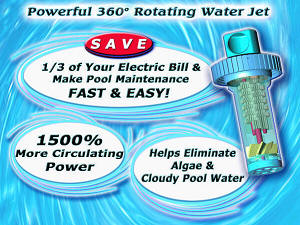
Better Circulation helps make everything
work more effectively. The
Circulator is a return jet
replacement fitting, that improves
filtration, eliminates the dead zones
that promote algae growth, improves
sanitizer distribution and improves heat
dispersion.
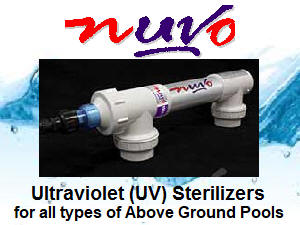
The
Precision UV model is an
Ultraviolet Sterilizer, for all
types of pools, up to 40,000 gallons. |
|
Above-Ground UV Sterilizer |
Circulation Boosting Return Jet
Fittings |
UV Sterilizer, for all types of
pools |
 |
 |
 |
|
Product and Ordering Information |
Product and Ordering Information |
Product and Ordering Information |
If you have a pool or spa water
testing need, we have a product
that suits your needs.
► ► ►
Scroll down to read through some
Question and Answer information.
◄ ◄ ◄ |
|
Chlorine
is the most popular pool water
sanitizer.
Sanitizing is a must, for proper pool
water management.
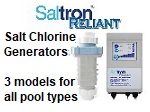
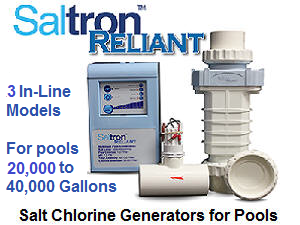
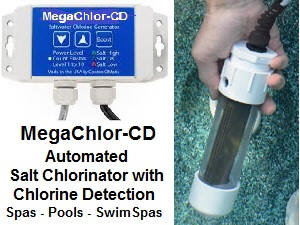
Salt Chlorine generators are a
better way to utilize chlorine, producing
more controllable results. They
eliminate the need to handle, measure or
store chlorine products, while reducing
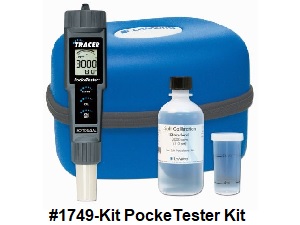
buildup problems. An
Electronic
PockeTester Kit is a convenient
way to monitor the salt level. |
|
Salt Chlorine Generators - 3
models |
Testing The Salt Level |
Salt Chlorine Generator - No
Installation |
 |
 |
 |
|
Product and Ordering Information |
Product and Ordering Information |
Product and Ordering Information |
If you have a pool or spa water testing
need, we should have the product.
►
Scroll down to read through some
Question & Answer information.
◄
|
|
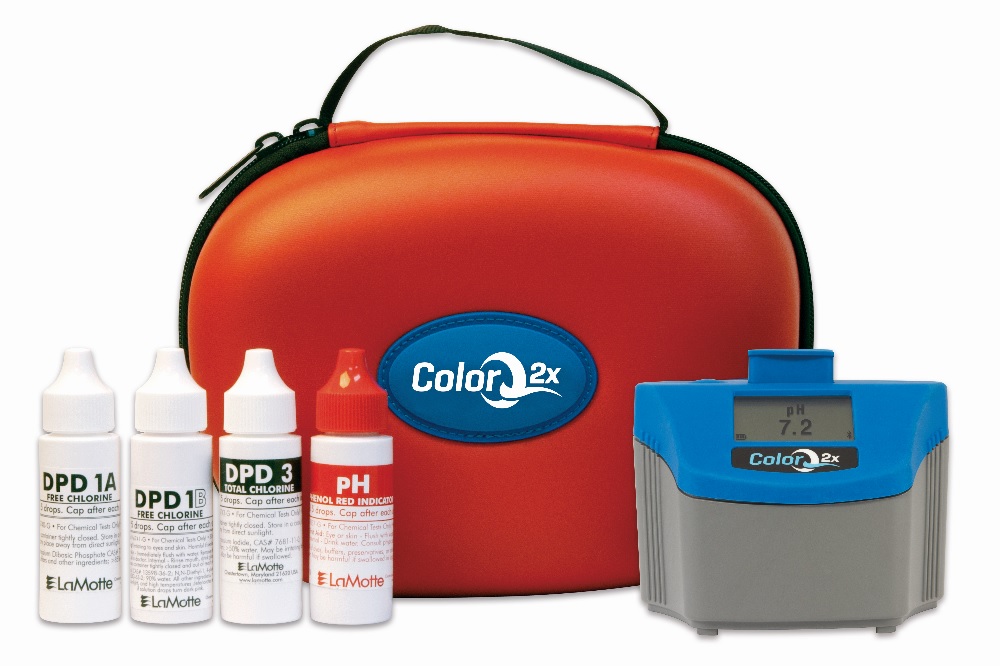
A
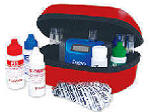
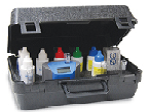
ColorQ 2X is a 2nd generation,
Bluetooth, Waterproof, all-digital tester,
that can
measure all the common test factors. There is a model, for every sanitizing
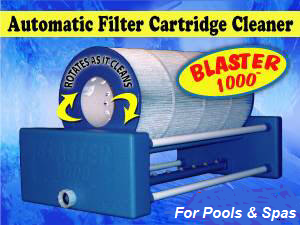
need. An
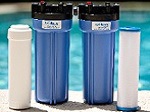
Automatic Filter Cartridge
Cleaner makes cartridge
cleaning easy.
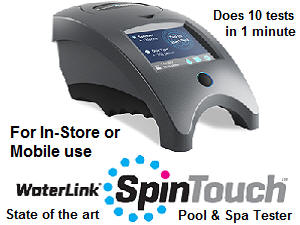
The
WaterLink SpinTouch Labs
are the ultimate tester, doing
up to 10 different water test
factors, in just 1 minute.
Voted product of the year. |
|
ColorQ All-Digital Water Testers |
Automatic Filter Cartridge
Cleaner |
WaterLink SpinTouch Labs |
 |
|
 |
|
Product and Ordering Information |
Product and Ordering Information |
Product and Ordering Information |
If you have a pool or spa water testing
need, we should have the product.
►
Scroll down to read through some
Question & Answer information.
◄
|
|
|
How to use ultraviolet (UV), as part of alternative
sanitizing? |
Ultraviolet (UV)
light can be used as an alternative sanitizing
method to very effectively destroy
microorganisms in swimming pool water. Up to
99.9% of the microorganisms can be destroyed, as
the pool water passes through the UV unit. This
dramatic reduction, in the microbial
populations, helps to better maintain proper
sanitary pool water conditions: reducing the
amount of chemical sanitizer needed to maintain
proper, sanitary water quality and keep the
underwater surfaces free of bacterial or algal
growth. A UV Sanitizer must be used in
conjunction with another sanitizing product:
chlorine, ionizers or mineral purifiers. In
addition, oxidation of waste products must be
accomplished with the use of chlorine, ozone,
shock or hydrogen peroxide. Most commonly a
UV Sterilizer is used with chlorine or bromine and
can reduce their usage by a considerable amount.
Typically, an Ultraviolet Sterilizer is plumbed
inline and operates with the filter pump cycle.
Water passing through the cell is efficiently
sanitized, as the UV light passes through the
microorganism's cell membrane. UV Sterilizers
are capable of killing resistant, pathogenic
microorganisms, such as Giardia and
Cryptosporidium. If problems arise, refer to the
Pool Problems
Page, as a source of problem-solving
information, broken down into various
categories. Scroll down the page and click on the linked
keywords,
catch phrases
or images, in the archived answers below, to access additional information, on that topic or product.
 |
Join our E-Letter Mailing List.
You'll receive 1-3 E-Letters a
month, featuring helpful pool
and spa advice, new product
information and sale
announcements. All we
require is your e-mail address
and you can opt out anytime you
wish.
Your information
will never be shared or sold. |
|
▼
Helpful,
Problem-Solving Information, in a question and
answer format.
▼ |
►
Ultraviolet, Ozone And A Salt Chlorine Generator?
I live in North Cyprus and we are really struggling to set
up our system because there are no other Ozone systems here
and the company doesn't have a clue what they are doing.
Initially we had the ozone installed on its own and were
told nothing else was necessary. A few days later the pool
was green with algae. We were told to sweep it and it would
disappear once the ozone system was established for a week.
Not true. We shocked the pool with chlorine and it was
better. Then the algae came back. After looking online we
saw that a UV light might be beneficial. The company told us
to install the UV before the ozone. Now after reading the
internet again I think that's wrong. After further research
we're thinking of installing a salt chlorine generator along
with the ozone and uv. Please can you give some advice about
the order of the three pieces of equipment within the
swimming pool system. I will be forever grateful for
any help. Thanks.
Julie, Cyprus, 5/21/2018
Ozone and UV are very effective, but there are limitations.
Ultraviolet Sterilizers
kill almost everything, passing
through the cell, but do not oxidiz e
wastes or have any effect, on what might be growing in the
pool. Ozone
generators also have a very high kill rate and it
oxidizes wastes. However, its time in the pool is very
short lived. It may not reach out to all areas of the
pool. Chlorine, on the other hand, is more persistent
and reaches all areas of the pool. It sanitizes and
oxidizes, but has negatives. It forms odorous and irritating
byproducts, called chloramines. The good news is that both
ozone and UV destroy chloramines, as water passes through
either of these units. With good turnover circulation, the
chloramine content should be kept low. So far as order
of installation, I would put the UV first, ozone second and
a salt chlorine generator last. The first two will allow you
to operate the
salt chlorine generator
at a very much lower setting, to
maintain any given level of free chlorine. This would
be my suggestion, but you should check with the individual
product manufacturers, as to the suitability of their units,
used in this manner. I hope that this will be helpful. e
wastes or have any effect, on what might be growing in the
pool. Ozone
generators also have a very high kill rate and it
oxidizes wastes. However, its time in the pool is very
short lived. It may not reach out to all areas of the
pool. Chlorine, on the other hand, is more persistent
and reaches all areas of the pool. It sanitizes and
oxidizes, but has negatives. It forms odorous and irritating
byproducts, called chloramines. The good news is that both
ozone and UV destroy chloramines, as water passes through
either of these units. With good turnover circulation, the
chloramine content should be kept low. So far as order
of installation, I would put the UV first, ozone second and
a salt chlorine generator last. The first two will allow you
to operate the
salt chlorine generator
at a very much lower setting, to
maintain any given level of free chlorine. This would
be my suggestion, but you should check with the individual
product manufacturers, as to the suitability of their units,
used in this manner. I hope that this will be helpful.
Sincerely. Alan Schuster, 5/21/2018
►
Ultraviolet Reducing Chlorine Requirements?
I have been
searching for a pool sanitizer system that can give me low
maintenance and reduce chemicals usage, have a crystal clear
water so I can give some maintenance myself, have a clean
and save water for my kids and family. I have a
screened pool, very little or no debris to the pool, salt
system and a pool heater so I want to know what would you
recommend to use in combination with the present equip that
can be affordable and relatively easy to install. By
reading on the internet I lean more towards a UV light
system. Please let me know if that is not the best option to
go for because I also read that UV system can stain the pool
and bring the copper to unhealthy levels to swimmers.
(I don't know if that is true). So, I will be grateful
if you can share your thoughts about it. Thank you.
Daniel F.,
Miami, FL 2/23/2016
An
ultraviolet
sterilizer will do exactly, what you are looking for. It
will reduce chlorine usage, eliminate odorous forms of
chlorine and not add anything else to the water. It will
have absolutely no effect on copper pipes or heaters. None!
Anyone telling you otherwise is mistaken. By adding a
variable speed you will not only save electrical costs, but
you'll get results. I hope that the information
provided was helpful.
Sincerely. Alan Schuster, 2/23//2016
Hello Alan and thank you again.
1-So just confirming, the nUVo 3000 has no restrictions to
work with pool heater and salt system correct?
2-I am switching to a conventional 2 speed motor that will
run high/low 3450/1750. I assume the UV system will turn on
only when pump turns on and will be efficient on long hours
in low speed. Does it make sense?
Daniel F.,
Miami, FL 2/24/2016
It will have no
effect on the pool heater or salt chlorine
generator.
It has to be wired
into the same electrical line, as the pump, so
that it only operates, when the pump is running.
It kills virtually everything passing though the
cell, including microorganisms, that normal
levels of chlorine might not kill. The
longer it runs, the better. I hope that
helps you make a better informed
decision.
Sincerely.
Alan Schuster, 2/24/2016
NOTE: Shortly after this last email
was send, Daniel placed the order.
►
UV And Reducing Chlorine Usage And Odors?
Good morning. We are working on a
municipal pool project where we are recommending a UV
sanitizer to improve indoor air quality. The pool consultant
is questioning the reduction of chlorine as a result of the
UV sanitizer. I was wondering if you had any articles or
studies with a quantitative analysis or comparison of
reduction of chlorine as a result of the sanitizer. I have
seen numbers of 50% -70% reduction but can't seem to find
anything to back this up. Any help in this matter is
appreciated. Sincerely.
Kathleen, 3/7/2014
Switching to bromine will improve air quality. It is
chloramines that cause the odor and, when bromine is used,
bromamines are formed and they are
odorless. Ultraviolet
(UV) Sterilizers will reduce
chlorine or bromine usage, by a considerable amount. The
microbial population, in the water passing through the cell,
will be close to zero. That means fewer bacterial and algae,
left to grow in the pool. UV Sanitizers won't eliminate
microorganisms growing on the underwater surfaces and that
is why some chlorine or bromine must be used. UV offers the
advantage of killing chlorine resistant pathogens such as
Cryptosporidium and Giardia. Both are heath hazards and
difficult to control without UV. In my opinion, every
commercial or municipal pools showed be UV equipped, because
it kills the worst of them and prevents runaway explosions
of algae and other microorganisms.
Sincerely. Alan Schuster, 3/8/2014
►
Cryptosporidium and Giardia?
I recently returned home, from a
Central American vacation and found out that I had a
cryptosporidium infection, as a result of swimming pool use.
I found out that cryptosporidium, unlike bacteria and algae,
is hard to kill and is resistant to chlorine. How do I
sanitize my pool? Would a UV unit be a good choice, as we do
travel often? Reducing chemical usage would be a pleasant
bonus. Thank you.
Jo B, 12/2/2011
Ultraviolet
(UV) sanitizers are one of the most effective ways to
eliminate of potential problems caused by protozoa, such as
Cry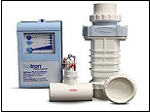 ptosporidium or Giardia. It is certainly one of the worst
offenders, all of which are usually killed by UV. Bacteria
and algae are generally inactivated, by chlorine
disinfectant, in properly maintained swimming pools and
spas, in less than an hour at a minimal concentration.
Protozoa, especially Cryptosporidium, are highly resistant
and can survive for up to 10 days at typical chlorine
concentrations in pools. You can't use UV alone, because it
does not oxidize, will not kill microorganisms on the walls
and is not persistent. Most often it is used with chlorine.
It kills virtually everything in the return flow and
chlorine eliminates the wastes and provides persistent
continuing sanitation. If reduced chemical usage is the
intent, UV sanitizing is the place to start! How much will
be required will depend upon actual bather demand. More
bather usage will require more chemicals. In order to assure
that adequate oxidation and sanitation exist at all times, I
suggest that you try and maintain a level of chlorine, at
about 1/2 the normal level. Using a
salt chlorine generator,
as the chlorine source, would provide convenience and help
you avoid the build up of calcium or cyanuric acid. The UV unit will help decrease
microbial populations and reduce the amount of chlorine,
necessary to maintain any given PPM level, by a considerable
amount. Over time, charting the amount of chemicals added,
the bather usage and the chlorine level will provide the
best indication of actual chemical requirements. I hope
that this information will be helpful. ptosporidium or Giardia. It is certainly one of the worst
offenders, all of which are usually killed by UV. Bacteria
and algae are generally inactivated, by chlorine
disinfectant, in properly maintained swimming pools and
spas, in less than an hour at a minimal concentration.
Protozoa, especially Cryptosporidium, are highly resistant
and can survive for up to 10 days at typical chlorine
concentrations in pools. You can't use UV alone, because it
does not oxidize, will not kill microorganisms on the walls
and is not persistent. Most often it is used with chlorine.
It kills virtually everything in the return flow and
chlorine eliminates the wastes and provides persistent
continuing sanitation. If reduced chemical usage is the
intent, UV sanitizing is the place to start! How much will
be required will depend upon actual bather demand. More
bather usage will require more chemicals. In order to assure
that adequate oxidation and sanitation exist at all times, I
suggest that you try and maintain a level of chlorine, at
about 1/2 the normal level. Using a
salt chlorine generator,
as the chlorine source, would provide convenience and help
you avoid the build up of calcium or cyanuric acid. The UV unit will help decrease
microbial populations and reduce the amount of chlorine,
necessary to maintain any given PPM level, by a considerable
amount. Over time, charting the amount of chemicals added,
the bather usage and the chlorine level will provide the
best indication of actual chemical requirements. I hope
that this information will be helpful.
Sincerely. Alan Schuster, 12/2/2011
► How Does UV
Sanitize?
I am interested in getting away from
all the chlorine and the odors associated with the product.
I know there are several types of alternative pool water
sanitizers available, which can reduce or eliminate chemical
usage. I've read up on some of them, but am not really clear
about Ultraviolet. Is this the same as Ozone? How does it
work? Thanks for the help.
Adam J., 11/2/2012
Ultraviolet (UV)
Sterilizers are not ozone generators. Some ozone generators utilize
UV to produce ozone, but not as a sanitizing agent. UV rays
destroy the microorganisms ability to survive and function,
after passing through the cell membrane. An ultraviolet
sanitizer unit is plumbed inline
and effectively sanitizes
the water, as it passes through the cell. This has the net
effect of reducing the overall microbial populations and
reducing the amount of sanitizer necessary to maintain
optimum water quality and to keep the pool algae-free. UV
will reduce the microbial population, but requires a
traditional sanitizer to help keep it that way and to help
the underwater surfaces free of algae. Chlorine is well
suited, in this role, and lower quantities of chemicals will
be required because of the lower microbial populations. Good
water circulation is important and a
automatic pool cleaner
would be a worthwhile addition, helping to keep the
underwater surfaces in algae-free condition. I hope that I
have been helpful.
Sincerely. Alan Schuster, 11/2/2012
► Wondering
About UV Sanitizers?
I have a salt water aquarium and use a
UV light to control bacteria. I have heard of UV units for
pools. Does it work the same way?
Bill E., Ramsey, NJ, 5/1/2009
Yes and No! In both cases the ultraviolet (UV) light is used
to destroy bacteria and keep the populations down. In an
aquarium, there must be a viable bacterial (beneficial types
- not pathogens) population, in order to decompose and
recycle the wastes from the fish and plants. In a swimming
pool, the best bacteria are dead ones. The UV light is used
to keep the bacterial populations as low as possible, so
that the task of pool water sanitizing is easier. Chlorine
or other sanitizers should be maintained, at the appropriate
levels, in order to provide ongoing sanitation. However, the
presence of an ultraviolet sanitizer
will allow for a reduction of as much as 70%, according to the manufacturer, in
the amount of chlorine or bromine required. The
Ultraviolet
Sterilizer unit will
make sanitizing easier and involve fewer chemicals and
there's nothing fishy about that. When used in conjunction
with a salt chlorine
generator, it will provide greater convenience and
eliminate the odors, handling, storage and buildup problems,
that are frequently associated with chlorine usage. I hope that I have been
helpful.
Sincerely. Alan Schuster, 5/13/2009
► Ultraviolet
(UV) Or Ozone?
My wife and I want to use something to
sanitize the pool that will reduce the chemicals needed. We
are considering ozone or UV, as neither adds chemicals to
the water. What are the advantages or disadvantages? Waiting
to hear.
Pete and Roberta, 6/12/2016
It is true that both systems do not, by themselves, add
chemicals to the pool water. However, both of these
sanitizing method s require that the overall pool water
chemistry - pH, total alkalinity, calcium hardness, etc. -
be maintained for bather comfort and to reduce possible
corrosive effects. Ozone will require that a sanitizer such
as, chlorine, Salt Chlorine Generator, or ionization, be used as a
sanitizer backup. The ozone
generator will reduce the amount of
chemicals used in this backup role.
Ultraviolet
Sterilizers, for most
consistent results, requires a backup sanitizer. Chlorine
seems to make the most sense, inasmuch as it, also, acts to
fill the needed oxidizer role. The
Ultraviolet
Sterilizer will greatly
reduce the amount of chlorine needed to act in this backup
role and will destroy irritating and odorous chloramines.
Both ozone and UV have the advantage of reducing sanitizing
chemical requirements. With proper pool water management,
there should be no disadvantages, as compared to a
traditional pool water sanitizer. I hope that I have helped
in the decision making. Good luck. s require that the overall pool water
chemistry - pH, total alkalinity, calcium hardness, etc. -
be maintained for bather comfort and to reduce possible
corrosive effects. Ozone will require that a sanitizer such
as, chlorine, Salt Chlorine Generator, or ionization, be used as a
sanitizer backup. The ozone
generator will reduce the amount of
chemicals used in this backup role.
Ultraviolet
Sterilizers, for most
consistent results, requires a backup sanitizer. Chlorine
seems to make the most sense, inasmuch as it, also, acts to
fill the needed oxidizer role. The
Ultraviolet
Sterilizer will greatly
reduce the amount of chlorine needed to act in this backup
role and will destroy irritating and odorous chloramines.
Both ozone and UV have the advantage of reducing sanitizing
chemical requirements. With proper pool water management,
there should be no disadvantages, as compared to a
traditional pool water sanitizer. I hope that I have helped
in the decision making. Good luck.
Sincerely. Alan Schuster, 6/12/2016
► UV And
Chlorine Destruction?
If the Sun's UV rays destroys chlorine
and bromine, what happens with a UV sanitizing unit? Where
should my chlorine feeder be placed? Thanks for the
opportunity to ask a question.
Ryan, 8/17/2005
Sunlight is UV-A and this wavelength does destroy chlorine
and bromine. All residential
UV sanitizers use UV-C
wavelength, (254 nm) which is
different than Sunlight. Thus,
the need to install all chemical feeding downstream of the
UV sanitizing unit. A small amount of chlorine or bromine
will be destroyed by UV-C. However, it is far less than UV-A
loss and the net result of the reduction of chlorine usage
is still far greater than the 2-5% chlorine loss to UV-C.
Install the chlorine feeder last in line. I hope this
information is helpful.
Sincerely. Alan Schuster, 8/17/2005
► Chlorine
Savings?
Do uv sanitizers save as much chlorine
as they say they do?
Gary B., 3/30/2013
It certainly seems that way. All of the water passing
through the cell has its microorganism population reduced to
nearly zero. All you need is some free chlorine to help keep
it that way and to destroy accumulations of organic wastes.
With the UV Sterilizer killing and controlling algae and
bacteria, about considerably less chlorine is required,
under proper circumstances. In a chlorine pool, odorous and
irritating combined chlorine (chloramines) forms and this
requires adding shock treatment. A UV sanitizer is not a
stand alone sanitizer and is frequently used with chlorine,
to great advantage. As the chlorine used up, chloramines are
formed and then are destroyed by the UV, without additions of chlorine.
The end result is a chlorine pool that looks and smells
better. I hope that this information is helpful.
Sincerely. Alan Schuster, 3/30/2013
► UV
Sanitizing And Ozone Together?
Is there any systems in which you can
use an ozonator and UV? So no need for Chlorine or Bromine.
Also what are your feelings on Steel vs. Concrete pools
under the vinyl? Thanks.
John S., 4/27/2008
The easy one first. I would choose concrete: it stronger,
doesn't rust and the walls will not bow or flex. You ca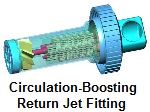 n add
UV Sanitizing and an
Ozone Generator, but as two separate
units. It will virtually assure you that the return flow
will be devoid of living algae and bacteria. However, the
pool walls and water can still support algae and bacteria.
Keeping a low level of chlorine, about 1 PPM, will prevent
growth in the pool and on the walls. The ozonator will carry
the burden of oxidizing wastes and very little chlorine will
actually be required. The odorous form of chlorine will be
destroyed, as the water returns to the pool. There should be
little or no sensation of chlorine. The fact that you will
be able to maintain this low level of free chlorine, with
only minimal amounts of chemicals, will act as conformation
that proper conditions exist and that everything is
functioning properly. If you add the relatively inexpensive
Pool Circulators, to your
returns, that will eliminate any dead zones that could
promote algal and bacterial growth. I hope
that you will find this information helpful. n add
UV Sanitizing and an
Ozone Generator, but as two separate
units. It will virtually assure you that the return flow
will be devoid of living algae and bacteria. However, the
pool walls and water can still support algae and bacteria.
Keeping a low level of chlorine, about 1 PPM, will prevent
growth in the pool and on the walls. The ozonator will carry
the burden of oxidizing wastes and very little chlorine will
actually be required. The odorous form of chlorine will be
destroyed, as the water returns to the pool. There should be
little or no sensation of chlorine. The fact that you will
be able to maintain this low level of free chlorine, with
only minimal amounts of chemicals, will act as conformation
that proper conditions exist and that everything is
functioning properly. If you add the relatively inexpensive
Pool Circulators, to your
returns, that will eliminate any dead zones that could
promote algal and bacterial growth. I hope
that you will find this information helpful.
Sincerely. Alan Schuster, 4/27/2008
|
Visit The Website Stores . . . for
better informed shopping!!! |
|
|
Shipping is FREE* . . . within
the Continental U.S.
A $9.99
handling charge will apply
to Continental U.S. Orders,
under $75.00. Orders
outside of the Continental
U.S. may require some
additional charge, based on
quantity and destination.
Most products can be
shipped World-Wide. International
and orders outside of
Continental U.S. - see
comments on the ordering
pages. |
|
|
Major
Credit Cards and PayPal are accepted. |
|
▲
Return To Top Of Page
▲
Aqualab Systems, LLC does not
make any warranty or
representation, either expressed
or implied, regarding the
accuracy or completeness of the
information provided by this
website; nor does Aqualab
Systems., LLC. assume any
liability of any kind whatsoever
related to, or resulting from,
any use or reliance on this
information. The content of this
website should not be used, if
it is conflict with any
applicable federal, state or
local regulations or guidelines.
© Aqualab Systems, LLC. All
rights reserved
|
|
|
|