| |
|
Scroll
down to browse through some archived SWIMMING POOL
questions and answers. Please click the Pool
Problems Link, on top of every page, to access a
complete listing of Pool Problem subjects, an
alphabetized Website Table of Contents, Pool Equipment
Information, About Alan Biographic Material and a Pool
Glossary. Use the other links to access additional
subject information. More information about some new and
unique products, for pools and spas, can be found by
visiting
The Website
Store. You'll never know what you'll find and
that's always fun. Be better prepared and avoid
costly problems!
|
|
 |
Shipping is FREE* . . . within
the Continental U.S.
A $9.99
handling charge will apply
to Continental U.S. Orders,
under $75.00. Orders
outside of the Continental
U.S. may require some
additional charge, based on
quantity and destination.
Most products can be
shipped World-Wide. International
and orders outside of
Continental U.S. - see
comments on the ordering
pages. |
|
 |

Major
Credit Cards and PayPal are accepted. |
|
On-line
shopping since 2002 - Safe and Secure!!! |
|
Optimizing water chemistry, improving
pool circulation and eliminating
phosphates!!! |
|
When the
water chemistry is out of balance, the
likelihood of algae growth increases and
the growth of sanitizer-resistant
strains, due to impaired sanitation, can
be the result. A
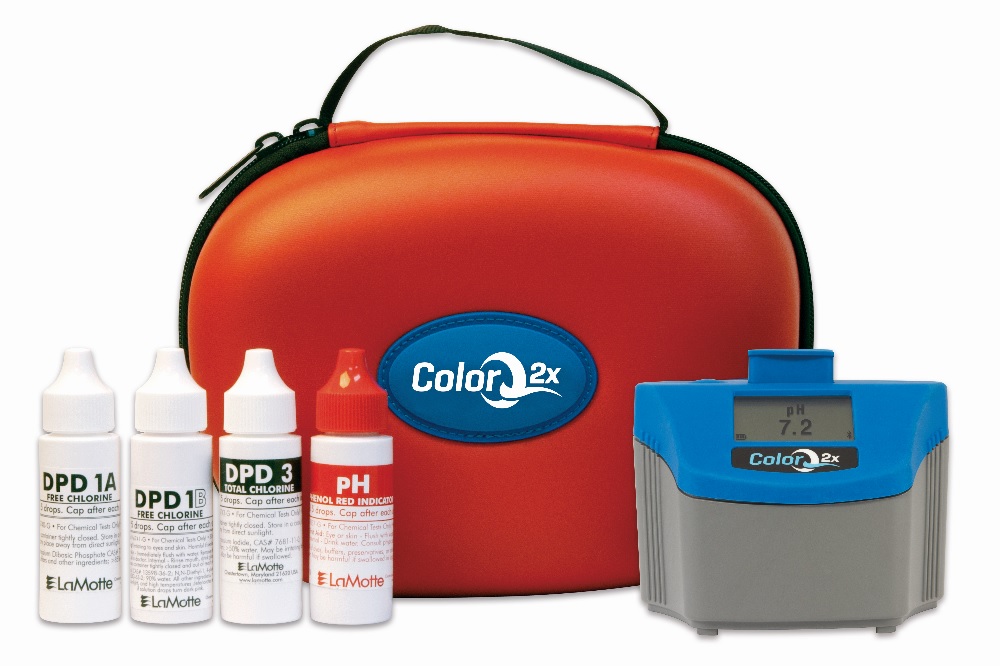
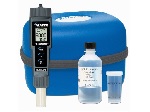
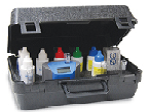
ColorQ, All-Digital Water Tester
can perform all of the common pool water
tests, eliminates the color-matching and
guesswork. There is a model, for
every pool testing need. Reliable
water testing will help solve and avoid problems. Better
Circulation helps make everything work
more effectively. The
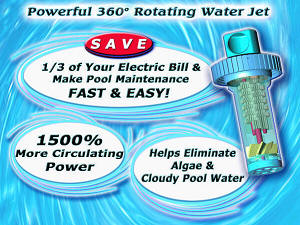
Circulator is a return jet
replacement fitting, that improves
filtration, eliminates the dead zones that
promote algae growth, improves sanitizer
distribution and improves heat
dispersion. Phosphates and Nitrates
can increase the growth of algae and
make treatment more difficult, as both
are vital plant nutrients. Nitrate
removal is not practical, but phosphate
removal is easy enough to do.
Adding Pool
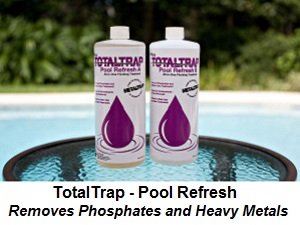
Refresh Total Trap will allow
you to vacuum and filter out phosphates
and should make algae control more
effective. These 3 products all
help improve the effectiveness of your
sanitizer and reduce costs and improve
the water quality. |
|
|
If you have a pool or spa water
testing need, we should have the
product.
►
Scroll down to read through some
Question & Answer information.
◄
|
|
Alternative Pool Water Sanitizers |
|
When algae
is a frequent problem, it is the result
of inadequate sanitation. as well as
other factors. Maintaining proper
sanitation is a must. Adding some
backup sanitizing is important, as
chlorine level rise and fall, based on
pool usage and chemicals being added. Most pools
use some sort of chlorine. A
Salt
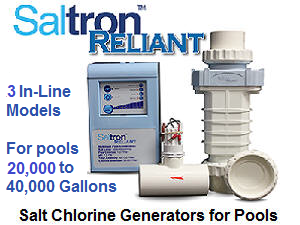
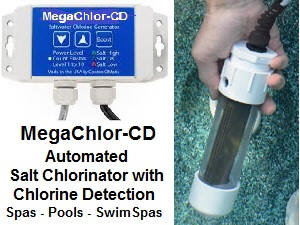
Chlorine Generator is definitely
a better way to do chlorine. Salt
chlorine generators are highly automated
and give you better control and results.
Proper chlorine levels are a must, when
dealing with resistant strains of algae.
The salt level is about that found in
human tears. In-Line and
no-installation-required models are
available. An
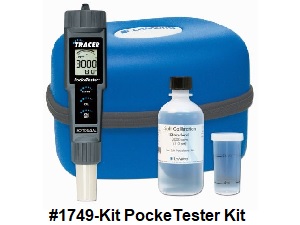
all-digital PockeTester is an
easy and convenient way to perform some
of the tests, required by the use of a
salt chlorine generator. |
|
|
If you have a pool or spa water
testing need, we should have the
product.
►
Scroll down to read through some
Question & Answer information.
◄
|
|
How to treat
Yellow Mustard Algae, a resistant form of swimming pool algae?
|
Mustard algae
usually appears as a yellowish-greenish-brownish
powdery deposit on the pool walls or bottom. It
seems almost "pollen-like" and can be easily
brushed off the walls. This troublesome algae
will respond to treatment, however, it may
require several steps to eliminate it
completely. In many cases, a regimen of
treatments is required to eliminate and control
this sanitizer-resistant algae. The algae
problem will frequently return, if the sanitizer
level, water chemistry and pool water
circulation are not properly maintained. In
addition to proper sanitation, good circulation
is a must to help prevent algae growth in areas
with stagnant water or dead zones. The use
of The Circulator, as a
replacement for standard return jet fittings,
can dramatically improve circulation, better
distributing sanitizer to all areas of the
pool. Should
problems arise, refer to the
Pool Problems
Page, as a source of problem-solving
information, broken down into various
categories. Scroll down the page and click on the linked
keywords,
catch phrases
or images, in the archived answers below, to access additional information,
on that topic or product.
Do you know what's in
your water? If you're having problems, with
sanitation or water clarity, testing allows you to better
understand the chemistry and determine the cause of the
problem. Once understood, you can select the best
treatment option. Understanding the nature of the
problem, should be step one. For information about
our full selection of testing options, visit our
Test Equipment Store.
 |
Join our E-Letter Mailing List.
You'll receive 1-3 E-Letters a
month, featuring helpful pool
and spa advice, new product
information and sale
announcements. All we
require is your e-mail address
and you can opt out anytime you
wish.
Your information
will never be shared or sold. |
|
▼
Helpful,
Problem-Solving Information, in a question and
answer format.
▼ |
►
Mustard Algae?
I am sure that I have mustard algae.
It is a yellowish-green color and does brush off the walls
easily. I can get rid of it by shocking heavily. A couple of
weeks go by and there it is again. I have heard the copper
algaecide will work, but I have a aggregate finished pool
and would rather not use copper. Any other suggestions.
Roberto O, Margate, FL, 5/2/2018
Your description can be that of mustard algae. It can be
treated with other than copper algaecides. You might have a
two-fold problem. One part is that your sanitizer level,
chlorine I assume, is probably not being maintained
adequately at all times. Make sure that you maintain a 1-3
PPM level of Free Chlorine, at all times. Do this and it is
unlikely that you will see the mustard algae return. If the
problems starts in certain areas, redirect the return flow
to improve the water flow, in that area. Adding a
circulation booster, such as "The
Pool Circulator",
will improve the dispersal of chemicals and dramatically
improve circulation. It's simple to install. For more
information, please click here. One of the best products to
use for mustard algae is one of those "Yellow" Products
containing sodium bromide. Used in conjunction with a shock
treatment, it will generate bromine, which seems to be
especially effective against mustard algae. It's important
to test for Free Chlorine, when shocking a pool. Make sure
that you add enough product and it is added frequently
enough to boost the Free Chlorine to 5-10 PPM. You want at
least 1-3 PPM persisting through the over night period. Do
that and there should a major reduction in the mustard
algae, by the morning. Keep the filter operating
continuously, until the problem is controlled. You didn't
mention if you have a
robotic pool cleaner. They are very effective at
cleaning and improving the water circulation on the bottom
and can help remove some of the powdery mustard algae.
Improving circulation, in the corners, will help prevent a
recurrence. If this website was helpful,
in solving your problem, please consider joining our
E-Letter Mailing List.
You'll receive E-Letters, with helpful
information, new product updates, suggestions and sale
announcements. I hope that I have
provided the solution. starts in certain areas, redirect the return flow
to improve the water flow, in that area. Adding a
circulation booster, such as "The
Pool Circulator",
will improve the dispersal of chemicals and dramatically
improve circulation. It's simple to install. For more
information, please click here. One of the best products to
use for mustard algae is one of those "Yellow" Products
containing sodium bromide. Used in conjunction with a shock
treatment, it will generate bromine, which seems to be
especially effective against mustard algae. It's important
to test for Free Chlorine, when shocking a pool. Make sure
that you add enough product and it is added frequently
enough to boost the Free Chlorine to 5-10 PPM. You want at
least 1-3 PPM persisting through the over night period. Do
that and there should a major reduction in the mustard
algae, by the morning. Keep the filter operating
continuously, until the problem is controlled. You didn't
mention if you have a
robotic pool cleaner. They are very effective at
cleaning and improving the water circulation on the bottom
and can help remove some of the powdery mustard algae.
Improving circulation, in the corners, will help prevent a
recurrence. If this website was helpful,
in solving your problem, please consider joining our
E-Letter Mailing List.
You'll receive E-Letters, with helpful
information, new product updates, suggestions and sale
announcements. I hope that I have
provided the solution.
Sincerely. Alan Schuster, 5/2/2018
► Coping With
Mustard Algae?
This is our second season in having a
20X40 inground vinyl liner pool. We are having extreme
difficulty this year with mustard algae. We got mustard
algae at the beginning of the season. Our pool professional
recommended we use the particular copper algaecide because
it had less copper than other products he carries. We
treated the pool once and realized that the shock we were
adding to the pool, was dissipating very quickly. Less than
24 hours later, it would test that it had no free chlorine.
Our pool professional came by and tested for nitrates and
found that we had nitrates in the pool. This problem was
easily remedied by renting a submergible pump and pumping
the pool down as far as possible (keeping the liner in
place) twice. We again tested for nitrates and it said we
had remedied this problem. We again were told to add the
algaecide, which we did. They also told us to put in 4 lbs
of shock. After 24 hours, we were told to vacuum to waste.
Which we did. Within 24 hours the mustard algae was back, so
we repeated the treatment. We were told to not add any more
shock, as this might combine with the copper in the
algaecide to discolor my liner. Again , I vacuumed to waste.
After this treatment (the third one) on the mustard algae,
I was still seeing the sand like material on the bottom of
the pool. I thought I had not vacuumed to waste very good,
and was told to go ahead and vacuum and add metal treatment
(4 quarts) to remove the copper (it was at 0.6 PPM) Before
adding the metal treatment , I once again vacuumed to waste
and added the metal treatment. I went back today (24 hours
later) and the copper was still at 0.6 PPM. I was still told
not to add shock, even though my free chlorine is at 0.9.
They gave me two more bottles of metal treatment and told me
to have it tested again in 48 hours. I also am still seeing
obvious signs of mustard algae. My question after all this
is twofold 1. Why isn't my algaecide working, 2. What do you
do about the copper. My pH tested today at 7.2. Please help.
Tina, Mamou, LA, 5/12/2016
Let's say that you do have mustard algae! Just because your
water tests positive for nitrates, doesn't mean that it is
inevitable that you will have mustard algae problems. The
testing for nitrates by dealers is not a common practice.
Granted, the nitrates in the water is not a benefit, but it
is not the end of the world, nor is it necessarily a reason
to pump the pool out twice. You may not be able to remove
nitrates, but you can remove phosphates, which is the next
best thing. Like nitrates, it is a vital plant nutrient.
POOL REFRESH makes it easy. The algaecide that you added is
used to control mustard algae. If the product contained less
copper, it was offset by requiring you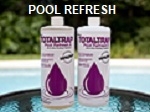 to add more product. There is no benefit, so far as the
copper dosage is concerned, if you followed the label. You
can add all the metal treatment that you want and the copper
reading will not decrease. The copper is in a chelated or
stabilized state and it will remain in the water
indefinitely. The addition of the metal treatment probably
has diminished the effectiveness of the copper to deal with
mustard algae. It seems apparent, in this instance, that
copper has not worked, so let's try something else. Try
using a sodium bromide product. It is sold under several
different names - check the ingredient statement. Use this
product in conjunction with a shock treatment. Make sure
that you keep the Free Chlorine in the 5-10 PPM range for at
least an overnight period. It may take more shock than you
think to accomplish this goal. The longer you take to build
up the Free Chlorine level - the longer the algae will
continue to grow. Keep the filter operating and use the
brush on the walls and bottom. A pH closer to 7.2 is a
benefit during this period. This regimen should work
quickly, if you keep the Free Chlorine level elevated. You
don't have to do anything about the copper - certainly don't
add any more metal treatment! Adding a dose of a Blue
Clarifier will help remove the dead algae. After the water
clears, backwash or clean the filter and resume normal pool
operation. Clarifiers can interfere with some filter media. The recurring
nature, of the problem, could be indicative of dead zones
and poor circulation. The Pool Circulator is a circulation
booster insert, that dramatically eliminates dead zones and
makes the water come alive. You'll get better distribution
of sanitizers and that should help minimize algae and other
related problems. I hope that I have been helpful.
to add more product. There is no benefit, so far as the
copper dosage is concerned, if you followed the label. You
can add all the metal treatment that you want and the copper
reading will not decrease. The copper is in a chelated or
stabilized state and it will remain in the water
indefinitely. The addition of the metal treatment probably
has diminished the effectiveness of the copper to deal with
mustard algae. It seems apparent, in this instance, that
copper has not worked, so let's try something else. Try
using a sodium bromide product. It is sold under several
different names - check the ingredient statement. Use this
product in conjunction with a shock treatment. Make sure
that you keep the Free Chlorine in the 5-10 PPM range for at
least an overnight period. It may take more shock than you
think to accomplish this goal. The longer you take to build
up the Free Chlorine level - the longer the algae will
continue to grow. Keep the filter operating and use the
brush on the walls and bottom. A pH closer to 7.2 is a
benefit during this period. This regimen should work
quickly, if you keep the Free Chlorine level elevated. You
don't have to do anything about the copper - certainly don't
add any more metal treatment! Adding a dose of a Blue
Clarifier will help remove the dead algae. After the water
clears, backwash or clean the filter and resume normal pool
operation. Clarifiers can interfere with some filter media. The recurring
nature, of the problem, could be indicative of dead zones
and poor circulation. The Pool Circulator is a circulation
booster insert, that dramatically eliminates dead zones and
makes the water come alive. You'll get better distribution
of sanitizers and that should help minimize algae and other
related problems. I hope that I have been helpful.
Sincerely. Alan Schuster, 5/12/2016
► Yellow
Algae Blues?
I service pools and have several that
are painted ( both rubberized & epoxy ). In our summer heat,
I notice much more problem with yellow algae in a painted
pool compared to plaster. I keep the alkalinity higher in a
painted surface but some chalking does exist with the heat
and chemicals. Is there any explanation as to why these
pools show yellow which seems to cling to the surface? Also,
any suggestion as to a product that will help? Thank you
very much.
Thad F. 9/27/2015
So far as I know there is no correlation between
yellow-mustard algae and the type of pool or pool finish. It
seems to be an equal opportunity problem, that appears when
conditions are favorable. High pH will reduce the
effectiveness of chlorine and could be associated with high
TA. This problem is one of resistance to normal chlorine
levels and even resistance to copper. The treatment that
seems to be most effective is the addition of a sodium
bromide product and shock treatment. This will convert the
chlorine to bromine, which seems to be more effective in
certain circumstances. For free chlorine testing, I suggest
using one of the ColorQ Water Analyzers, as they reliably, provide the right
kind of information. To confirm
proper overall pool water chemistry, visit a pool store that
has a very reliable, professional lab such as a
WaterLink SpinTouch Lab,
as opposed to a less accurate test kit or strip reader. I hope that this
information will prove helpful. to be an equal opportunity problem, that appears when
conditions are favorable. High pH will reduce the
effectiveness of chlorine and could be associated with high
TA. This problem is one of resistance to normal chlorine
levels and even resistance to copper. The treatment that
seems to be most effective is the addition of a sodium
bromide product and shock treatment. This will convert the
chlorine to bromine, which seems to be more effective in
certain circumstances. For free chlorine testing, I suggest
using one of the ColorQ Water Analyzers, as they reliably, provide the right
kind of information. To confirm
proper overall pool water chemistry, visit a pool store that
has a very reliable, professional lab such as a
WaterLink SpinTouch Lab,
as opposed to a less accurate test kit or strip reader. I hope that this
information will prove helpful.
Sincerely. Alan Schuster, 9/27/2015
►
Questionable Use Of Copper Algaecide?
My pool shop has given me a copper
algaecide, as I have noticed a small area of mustard algae
in one area of my pool. As part of my pool system I operate
a mineral purifier. Am I correct in thinking that these are
not compatible because the algaecide is copper based and
should I use another product?
Adair, 1/16/2017
That product is an appropriate and frequent choice for
mustard algae. However, it was wrong to recommend it in your
case. The particular mineral sanitizer system that you have
contributes copper ions to the water, as part of the
sanitizing process. Therefore, the mustard
algae was already
growing in the presence of copper ions and
another type of treatment should have been suggested. It is
not a compatibility issue. I
suggest that you shock the pool and add an initial dose of a
polymer algaecide, as this is chemically different and
compatible. Another type of mustard algae treatment, based
on sodium bromide, cannot be used, as it will shorten the
life of your particular mineral sanitizer cell. Another
possibility is that your mineral sanitizer cartridge is
exhausted and is no longer contributing copper ions to the
water. If that is the case, adding copper algaecide is
appropriate can help jump-start the treatment. BETTER CIRCULATION
CAN SOLVE A HOST OF PROBLEMS. The
Pool Circulator is the easiest way
to improve circulation and eliminate the dead zones, that
promote algae growth. I hope that this information proves
helpful.
Sincerely. Alan Schuster, 1/17/2017
► Through The
Wringer?
I e-mailed this question to another
web page and I have not heard back please help. Hi, my name
is Darin. I have a 35,000 gal. vinyl liner, inground pool. I
have a 300 lb. sand filter and an automatic chlorine feeder
( 3" stabilized trichlor tabs). My filter runs 12hrs. a day.
This is the 7th summer I have had my pool. Up until now I
have never had any real problems with my pool water
chemistry. I have what I believe is Mustard Algae and I
can't get rid of it. I maintain approx 3-5 ppm chlorine, 7.4
Ph, 180 TA. For 3 years I have been using a 4 in 1 Shock
that does contain a stabilizer. As a result my cyanuric acid
level is 240 ppm. I have been told by a few stores that
almost any level over 40 is o.k. and not to worry about it,
and that excessive stabilizer does not cause or promote the
growth of algae. Is this true?
History
On approx. Monday August 4th, 2003 we started to notice what
looked like it might be sand on the bottom of the pool. It
would lay in any depressions in the liner and on the steps,
again it would lay in the depressions. We started to vacuum
the pool daily only to find the next day it would look the
same. At this point the algae would vacuum up very easy and
would cloud up if you waved your hand near it. After several
days of this I ruled out sand or any other foreign debris in
the pool. On Friday August 8th, 2003 the pool got cloudy,
whitish colored, and still produced the same amount of algae
every 12 to 16 hrs. I shocked the pool with a 4 in 1 shock
according to product label for heavy algae growth, 2lbs per
10,000 gal. I put 6lbs in 35,000 gal. This raised my
chlorine level well above 10ppm. On Sunday August 10th I
added 32oz. of a copper based algaecide and had the pool
water tested. pH and TA were o.k. Calcium level was low, I
adjusted to a proper level. Copper level was 0.2 ppm.
Chlorine above 10ppm. The algae growth seemed to slow for a
couple of days. We continued to brush and vacuum daily. I
also cleaned and changed the sand in the filter. On Thursday
August 14th the algae still seemed to be growing steadily. I
was instructed, after testing my water( chlorine over 10ppm,
stabilizer 240 ppm, everything else o.k.) to shock the pool
with calcium based chlorine, circulate 1 hr. and add 2-32oz.
bottles of copper algaecide. I shocked the pool and 45 min.
later the power went out. We brushed the pool several times
that night and the next morning. 9am the next morning the
power was back on. I checked the chlorine level, above
10ppm, and added more copper algaecide. The calcium based
shock made the pool very cloudy, this took several days to
clear up. On Saturday August 16th the algae still seemed to
be growing at the same rate. I called the dealer. They told
me that because I didn't add the copper algaecide 1 hour
after shocking that it wouldn't work and I needed to do it
again. I shocked the pool again with a sodium based shock
and added 2-32oz bottles of copper algaecide. At this point
we are still vacuuming every day. And always the next day
the algae is back. As this problem has progressed the algae
has become more difficult to vacuum up and now grows on the
front of the steps and is much more wide spread in the pool.
I got in the pool with a mask to look at the algae. It still
will cloud up and it feels slimy between your fingers. When
then algae first starts to appear it looks yellow, like sand
on bottom and like a film on the front of the steps. As the
algae gets thicker on the bottom it seems to get a whitish
cloud over it. And then after about 24 hrs it looks like
sand again, only it looks brown. The pool store tells me that with my
copper level at 1.0ppm and my chlorine level above 10 ppm
that algae can't still be alive. That it must be dead and it
is just to fine for my sand filter to filter out. They tell
me to use a filter aid and vacuum algae to waste. Tuesday
August 26th.. The pool is quite clear, however the water has
a definite green cast to it. And after vacuuming to waste
for 3 days and using a filter aid the algae still forms on
the front of the steps like a yellow film. And collects on
the bottom in all the depressions. It is now suggested that
what may be in my pool is metals falling out of solution due
to the fact that my chlorine level is above 10ppm and has
been for 3 weeks. They are now suggesting that I neutralize
the chlorine down to 5ppm and stain and scale inhibitor to
remove the metals. Then after 48 hrs add filter aid to clear
up pool.
HELP!
Please tell me if there could be another cause for this
apparent algae growth. I'm not sure it is metals falling out
of solution mainly because it does not feel gritty. It feels
quite slimy. And it seems to grow in the exact same places
and in the same shape every time. It also seems to grow
evenly through out the shallow end out the pool regardless
of the amount of circulation in that area. The only place
that it seems not to grow is in the deep end, almost like
there could be a thermal layer and the algae doesn't like
the colder water. Thank you very much in advance for your
time and advice. I truly hope you can provide some
information on this issue.
Darin, 8/28/2012
Interesting letter. The slimy feeling is positively due to
algae or other microorganisms! Sand filters can fail to
remove dead algae effectively! Your cyanuric is way too high
and you need to replace water! The algae is probably
resistant to normal levels of chlorine, as high cyanuric
acid levels cause the chlorine to act as if the level is
much lower, than the test shows. The slime could be bacterial and
copper probably will not be effective! So where to you
begin?
First off, I suggest that you replace water in order to
lower the cyanuric acid to below 100 PPM. This will help
make the chlorine more effective and lower the concentration
of copper and other metals.
Once the water level is restored and the cyanuric acid level
is below 100 PPM, shock the pool water and boost the Free
Chlorine level to 10 PPM. At this point the chlorine should
be more effective.
DO NOT SHOCK WITH ANY PRODUCT CONTAINING A STABILIZED
CHLORINE: using
 such a product will only speed up the rise
in stabilizer levels. Use liquid chlorine, lithium or
calcium hypochlorites, as shocking agents. Keep the pH close
to 7.2 in order to make the more
effective. Going
forward, in order to avoid cyanuric acid buildup problems,
you should consider switching to a
salt chlorine
generator. It will provide more control, better
results and eliminate the buildup problems.
Backwash the filter to waste and add 1/2 pound of DE to the
skimmer with the filter running. This will help improve the
filter efficiency and make it better able to remove dead
algae. Adding a dose of a blue clarifier the day after
shocking is a good idea. It coagulates dead algae for easier
removal. Make sure that the Free Chlorine/Bromine remains high, until
the problem is solved. Redirect the returns to send more
water towards the areas that are most affected. Adding a
polymer algaecide, if necessary, might be another worthwhile
step. Give the filter a day or so, with the elevated levels
to make a difference. I hope that this all works out for
you. You seem to have gone through the wringer. BETTER
CIRCULATION CAN SOLVE A HOST OF PROBLEMS. You can instantly
get better circulation and chemical distribution, with
The
Pool Circulator. Simple to install. Let me know how it turns out! such a product will only speed up the rise
in stabilizer levels. Use liquid chlorine, lithium or
calcium hypochlorites, as shocking agents. Keep the pH close
to 7.2 in order to make the more
effective. Going
forward, in order to avoid cyanuric acid buildup problems,
you should consider switching to a
salt chlorine
generator. It will provide more control, better
results and eliminate the buildup problems.
Backwash the filter to waste and add 1/2 pound of DE to the
skimmer with the filter running. This will help improve the
filter efficiency and make it better able to remove dead
algae. Adding a dose of a blue clarifier the day after
shocking is a good idea. It coagulates dead algae for easier
removal. Make sure that the Free Chlorine/Bromine remains high, until
the problem is solved. Redirect the returns to send more
water towards the areas that are most affected. Adding a
polymer algaecide, if necessary, might be another worthwhile
step. Give the filter a day or so, with the elevated levels
to make a difference. I hope that this all works out for
you. You seem to have gone through the wringer. BETTER
CIRCULATION CAN SOLVE A HOST OF PROBLEMS. You can instantly
get better circulation and chemical distribution, with
The
Pool Circulator. Simple to install. Let me know how it turns out!
Sincerely. Alan Schuster, 8/28/2012
► Mustard
Pool Algae Woes?
I discovered your website last evening
and you have an array of information. Thanks for helping to
educate us. My situation is as follows: we had an in-ground
pool built last February. The pool was installed with a salt
chlorine generator and an automatic pool vacuum to make life
easier for my husband and I. Since the completion of the
pool, we have had a problem maintaining adequate chlorine
levels. It comes in spurts. We are aware that after rain, we
may have lower chlorine levels, but the inadequate levels
are also there when there hasn't been a lot of
rain. The other chemicals (pH, calcium, stabilizer, salt,
etc.) are being maintained correctly. My husband checks the
water weekly and brushes the pool and cleans the filter
weekly. My husband has tried the approach of cleaning
the generator's cell, but the pool still doesn't
maintain adequate levels of chlorine. We are usually putting
in chlorine on a bi-monthly basis. We even had a rep for the
generator company come out and he informed us our chlorine
generator is producing chlorine. The generator has
consistently been on 100% boost. Due to the chlorine
problem, we are continually battling an yellow-orange
powdery residue on the walls and stairs of our pool. I
believe it is mustard algae from lack of chlorine (when the
readings are low). I also notice the stairs and bottom of
pool feel slippery. When the generator company rep came out,
he informed us we have a high level of phosphates in our
pool. We weren't aware we were to check for phosphates. The
pool store that checks our water does not check for
phosphates either. We later found out the store will check
for phosphates if requested. Anyway, the rep told us to use
the phosphate treatment program he provided and this should
correct our problem with phosphates, chlorine and mustard
algae and then our pool should maintain adequate levels of
chlorine that are produced by the generator. We treated with
the phosphate treatment and after re-testing, we still had a
high level of phosphates. We did a second treatment and just
re-tested yesterday and the phosphate level is still at 500
ppb. I am losing hope with pool maintenance. We got the salt
generator so we wouldn't have to continually have to add
chlorine, but we still have to add chlorine. We treated for
phosphates, but it isn't going away. Our pool has mustard
algae. The bottom is slimy. Any suggestions?
Sharon G., 6/18/2017
The fact that you have mustard algae and slime on the walls,
implies that the demand for chlorine is very high. Under
these circumstances, it appears that your
salt chlorine
generator is not able to produce enough chlorine to maintain
a proper Free Chlorine level. It is a matter of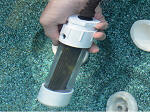 playing
catch up. The phosphates are not helping the situation
either: they act as a fertilizer and promote algae growth.
Adding a phosphate eliminator, such as
POOL REFRESH, was a
good thought. However, 500 PPB may still be too much. To be
effective you must lower the level closer to zero. Once you
level the playing field and get rid of this backlog of algae
and slime, it should be easier for the salt chlorine
generator to keep up with the chlorine requirements of the
pool. Step one should be to treat again for phosphates. Step
two, should be to add sufficient chlorine to boost the Free
Chlorine level to 5-10 PPM and keep it there long enough to
destroy the algae and slime. It may take a lot of chlorine
to do this and the longer it drags out the more chlorine
will be required. As long as it is not dead, it will
continue to grow. Step three should be to add a treatment
for mustard algae. You can use either a copper algaecide or
a sodium bromide product. Both seem effective. Check with
the salt chlorine generator dealer, as to their preferences
for a mustard algae treatment. For a salt chlorine generator
to function properly, the salt level must be maintained with
specified ranges. A
Salt PockeTester can be used to test the
salt level. It is easy to use and covers the broadest range
needed. I hope that this information will prove helpful.
Good luck. playing
catch up. The phosphates are not helping the situation
either: they act as a fertilizer and promote algae growth.
Adding a phosphate eliminator, such as
POOL REFRESH, was a
good thought. However, 500 PPB may still be too much. To be
effective you must lower the level closer to zero. Once you
level the playing field and get rid of this backlog of algae
and slime, it should be easier for the salt chlorine
generator to keep up with the chlorine requirements of the
pool. Step one should be to treat again for phosphates. Step
two, should be to add sufficient chlorine to boost the Free
Chlorine level to 5-10 PPM and keep it there long enough to
destroy the algae and slime. It may take a lot of chlorine
to do this and the longer it drags out the more chlorine
will be required. As long as it is not dead, it will
continue to grow. Step three should be to add a treatment
for mustard algae. You can use either a copper algaecide or
a sodium bromide product. Both seem effective. Check with
the salt chlorine generator dealer, as to their preferences
for a mustard algae treatment. For a salt chlorine generator
to function properly, the salt level must be maintained with
specified ranges. A
Salt PockeTester can be used to test the
salt level. It is easy to use and covers the broadest range
needed. I hope that this information will prove helpful.
Good luck.
Sincerely. Alan Schuster, 6/18/2017
► Is It
Mustard Pool Algae?
Alan, I have been told that I have
mustard algae. I first discovered it back in Dec. of last
year. The pool was installed in Oct. of the same year. It is
a 27 foot round above ground pool. Before I was told that It
was mustard algae, I would vacuum it up through the filter.
I did this several times before I was told to vacuum on
waste. Its looks like sand on the bottom of the pool, but
acts like a real fine powder when the vacuum gets close to
it. If I don't run the pump, then there isn't much on the
bottom of the pool. But when I turn the pump on it really
shows up. I have treated it with a bottle of Yellow product
and some copper algaecides. I also shocked the hell out of
it with chlorine. I have taken everything out of the pool
(including the steps) and it still comes back. I still have
it and don't know what to do. Help. I have read all your
letters concerning mustard algae and pretty much have tried
everything you suggested. Help. Thanks.
Sam, 4/24/2009
If you really have mustard algae it should respond. Make
sure the following is done. Boost the FREE CHLORINE reading
to 10 PPM an d keep it there until the problem is solved.
Make sure that you are testing for FREE CHLORINE! Keep the
filter operating continuously, until the problem is solved.
Try and direct the water flow into the most affected areas.
Add a dose of a Yellow Sodium Bromide product. Use the pool
vacuum and brush to clean the corners and pool bottom
perimeter. Drop the pH to 7.2. This will help increase the
effectiveness of the chlorine. This treatment should be
effective, if what you have is mustard algae. Let me know
how things turn out. BETTER CIRCULATION CAN HELP SOLVE AND
PREVENT THIS TYPE OF PROBLEM. The
Pool Circulator is a most
effective way to achieve better circulation and chemical
distribution. Good luck and I hope that this information
will prove helpful. d keep it there until the problem is solved.
Make sure that you are testing for FREE CHLORINE! Keep the
filter operating continuously, until the problem is solved.
Try and direct the water flow into the most affected areas.
Add a dose of a Yellow Sodium Bromide product. Use the pool
vacuum and brush to clean the corners and pool bottom
perimeter. Drop the pH to 7.2. This will help increase the
effectiveness of the chlorine. This treatment should be
effective, if what you have is mustard algae. Let me know
how things turn out. BETTER CIRCULATION CAN HELP SOLVE AND
PREVENT THIS TYPE OF PROBLEM. The
Pool Circulator is a most
effective way to achieve better circulation and chemical
distribution. Good luck and I hope that this information
will prove helpful.
Sincerely. Alan Schuster, 4/24/2009
► What Kind
Of Algae Is It?
After reading a lot of the problems
people are having with mustard algae, I'm not so sure if the
algae I have is mustard algae. My algae looks nothing like
sand. I called my local dealer and described the algae as a
green or a late green substance that seems to look puffy and
is very easy to vacuum up. The dealer informed me that I
have mustard algae and that I should treat it with a mustard
algae product. The algae in my pool does not look anything
like sand, that's for sure. If I approach it to quickly with
the vacuum cleaner head it will explode only to settle
later. How does one determine what kind of algae they are
battling?
Greg D., 4/27/2013
Mustard algae is simply a non-scientific term for variations
of the common blue-green algae. It is less important to
identify the
 algae than it is to eliminate the problem. The
fact that it is "powdery" is good enough for me. Boost the
FREE CHLORINE level to 10 PPM and keep it elevated, until
there is improvement. Add either an initial dose of a
chelated copper algaecide or a dose of a 60% polymer
algaecide. To avoid a recurrence make
sure that you test for FREE CHLORINE and maintain it within
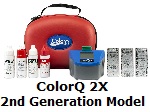
the 1-3 PPM range. Use a reliable tester, such as the
ColorQ PRO 7,
which eliminates all color-matching and guesswork. Try and maintain good circulation, as
lack of proper circulation aids the growth of algae.
Replacing your existing return jet fittings, with
The Circulator, will
dramatically improve circulation, by creating a spiraling
return flow, that reaches throughout the pool. The
addition of a automatic pool cleaner can help greatly in
improving bottom circulation and eliminating algae-prone
dead-zones.. Good luck and I hope that I
have been helpful. algae than it is to eliminate the problem. The
fact that it is "powdery" is good enough for me. Boost the
FREE CHLORINE level to 10 PPM and keep it elevated, until
there is improvement. Add either an initial dose of a
chelated copper algaecide or a dose of a 60% polymer
algaecide. To avoid a recurrence make
sure that you test for FREE CHLORINE and maintain it within
the 1-3 PPM range. Use a reliable tester, such as the
ColorQ PRO 7,
which eliminates all color-matching and guesswork. Try and maintain good circulation, as
lack of proper circulation aids the growth of algae.
Replacing your existing return jet fittings, with
The Circulator, will
dramatically improve circulation, by creating a spiraling
return flow, that reaches throughout the pool. The
addition of a automatic pool cleaner can help greatly in
improving bottom circulation and eliminating algae-prone
dead-zones.. Good luck and I hope that I
have been helpful.
Sincerely. Alan Schuster, 4/27/2013
► Mustard
Algae Not Green Algae?
A week or so ago, you helped me
identify a pool water problem that I had been fighting for
several months. You advised me that I should be killing
"mustard algae" (not the green algae that I thought was my
problem and so did several local "experts"). Thanks to your
expertise and following your instructions, I now have a
clear, algae free pool. You were absolutely correct, my
problem was mustard algae NOT green algae. You deserve more
than just a thank you, but that is about all I can pass
along to you. Thank you.
Bill T., Sun City, AZ, 9/13/2010
Thanks for the follow-up. Glad to hear that everything
cleared up. Yellow mustard algae can be a tough one,
especially, if you are not familiar with the problem. So
don't be too tough on the "locals." Enjoy the summer.
Sincerely. Alan Schuster, 9/13/2010
► Looks Like
Pollen?
Lately, my pool has developed a
powdery stuff that is yellowish and looks like pollen. Only
thing is I don't have any trees or plants near the pool.
Could this be algae? My pool is a 15' X 30" X 4' above
ground pool. What should I do?
Justin J., Danbury, CT, 7/23/2014
What you are describing could be mustard algae. The problem
can be treated easily enough and with some maintenance
shouldn't return. Brush
all the walls and the bottom and keep the filter operating
continuously, until the problem is eliminated. Add a quick
acting shock: liquid chlorine, calcium hypochlorite, sodium
dichlor or non-chlorine shock, at the rate of 2 pounds per
5000 gallons of water. After a few hours test for Free
Chlorine: make sure that you are using a Free Chlorine Test
Kit! Repeat the additions, at the rate of 1 pound per 5000
gallons, until you are able to maintain a Free Chlorine
level of at least 1-3 PPM, for an overnight period. At this
point all the algae should have been destroyed and normal
chlorination can be resumed. If the water is cloudy, add a
dose of a "Blue" Clarifier. Copper or Polymer-Formula can be
effective in controlling mustard algae. . These steps should
help keep your above ground pool algae free, but you must
maintain a proper chlorine level to keep it that way! I hope
that I have been of assistance. Enjoy the summer.
Sincerely. Alan Schuster, 7/23/2014
► Mustard
Algae Pool Problems?
How's it going. I've been in the
commercial pool industry for almost four years now and this
year by far has been the worst hit with a lot of companies
here in Atlanta with the Mustard Algae problem. We deal with
problems obviously all the time and would like to think we
know how to deal with all of them or at least know someone
that can. Mustard Algae remains a problem. Yeah, now we are
using a new product that specifically treats the Mustard
Algae, and proper water chemistry has always been maintained
throughout. My question is where is this form of Algae
originating and can it be totally wiped out or is it an
ongoing battle. It obviously becomes an expense issue over
and above set budgets. But also it's time consuming with the
cleanup and generally a pain in the proverbial, if you don't
mind me saying. Any insight towards the subject would be
appreciated. By using the yellow treatment every time a pool
is shocked, can that do any harm even if no algae is
present. Thanks for you time Alan, very interesting website.
Matt, Atlanta, GA, 8/27/2010
Mustard algae is a variety of the common green algae and is
present in the environment. The problem begins, when it
becomes resistant to the normal levels of chlorine. There
are two popular yellow treatments: one based on sodium
bromide and the other based on ammo nium sulfate. Both seem
to work, although in different ways. The sodium bromide
product does have a residual action - the generation of
bromine. The ammonium sulfate product has no continuing
effect, once the treatment has been completed. No harm can
be done to the pool or person, if little or no algae is
present. If the pool is vinyl, serious thought should be
given to using a chelated copper algaecide. It is not
popular in your neck of the woods, but it is very popular
across the country. The use of a
robotic pool cleaner can
help deal with the conditions that can lead to mustard algae
problems. Improving circulation and acting as a micro-filter
are some important advantages of this type of pool cleaning
product. The addition of
The Pool Circulator can help improve circulation and chemical
distribution and eliminate dead zones. I hope that I have been helpful. nium sulfate. Both seem
to work, although in different ways. The sodium bromide
product does have a residual action - the generation of
bromine. The ammonium sulfate product has no continuing
effect, once the treatment has been completed. No harm can
be done to the pool or person, if little or no algae is
present. If the pool is vinyl, serious thought should be
given to using a chelated copper algaecide. It is not
popular in your neck of the woods, but it is very popular
across the country. The use of a
robotic pool cleaner can
help deal with the conditions that can lead to mustard algae
problems. Improving circulation and acting as a micro-filter
are some important advantages of this type of pool cleaning
product. The addition of
The Pool Circulator can help improve circulation and chemical
distribution and eliminate dead zones. I hope that I have been helpful.
Sincerely. Alan Schuster, 8/27/2010
► Mustard
Algae And No Chlorine Level?
Your site is very helpful, thank you
so much. I have a question regarding mustard algae. I
treated the pool with 4 lbs. of Yellow Out and 4 lbs. of
shock. It did not clear so I added another 4 lbs of chlorine
8 hours later and another 4 lbs. 8 hours after that. The
pool is not holding the chlorine and the water is still
cloudy green. I haven't vacuumed yet or cleaned the filter.
Should I try these two steps or do I have to wait until the
pool is clear. The algae has diminished significantly
although traces of it does keep reappearing on the steps. I
am brushing throughout the process. Thank you.
Barbara in Apex, NC. 10/1/2006
The "Yellow" ammonium sulfate products work by converting
chlorine into chloramines, a form of combined chlorine. It
is not what I usually recommend, but it can work. The
problem. now, is that you need to add lots of chlorine - 10
PPM for each 1 PPM of chloramines - in order to destroy the
chloramines and decompose the algae. Once you get a stable
free chlorine level, the mustard algae should be eliminated.
I suggest that you add the liquid chlorine or quick
dissolving shock, about 2 pounds/gallons per 5,000 gallons,
until the free chlorine level is over 5 PPM. Don't drag it
out! The longer it takes, the more product will be required.
Keep it there until the problem is under control. Check the
overall water chemistry as well. Have the water tested for
phosphates and nitrates, as their presence could promote
algae growth and increase chlorine usage. If phosphates are
present, you can remove the phosphates, by treating the
water with Pool Refresh, which
is a 2-part system, that allows you to filter or vacuum the
phosphates out of the pool water. Make sure that you
are testing for FREE CHLORINE. A product, such as the
ColorQ
all-digital water analyzer, provides the right kind of
information and is ideal for this purpose. Adding a periodic
dose of a copper algaecide might help prevent a recurrence.
Otherwise, if it returns try adding a 60% polymer algaecide. Poor circulation
can make algae growth more likely. You might consider adding
THE POOL CIRCULATOR. The easy to install device will eliminate
the dead spots, that can promote algae growth, by creating a
spiraling return flow, that reaches throughout the pool.
Better circulation cures a lot of problems. I hope that I
have been helpful.
Sincerely. Alan Schuster, 10/2/2006
► Making No
Progress?
I have a 27' round above-ground pool.
I CANNOT seem to get rid of the mustard algae problem I
have. I had my water tested, and the metals were extremely
high (due to well water being combined with city water when
it was originally filled 2 years ago). To bring these levels
down to normal, I had to add a total of 5 bottles of metal
treatment over a one week period. The pool company suggested
taking care of this problem first. I have had this algae
problem since the pool was first set up, but have always had
good chlorine readings. Now, I have NO chlorine. I have used
a sodium bromide, with up to 5 lbs of shock (on 3
occasions), and still have the algae, and no chlorine. I
have a brand new cartridge filter. I brush and vacuum all
the time. All this time my water has always been crystal
clear. I use a chlorine floater with 3" slow tabs, AND add
the one a day fast dissolve tabs daily. Is there another way
to get my chlorine back? Did the metal treatment take it
away? I am in need of serious help with this continuing
problem. Thank you.
Maria G., 6/13/2009
Adding the metal treatment was the right thing to do.
Controlling the metals should come first. The metal
treatment did not inter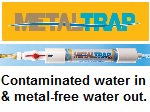 fere with your chlorine reading. I
would not suggest that you use a copper algaecide to treat
the mustard algae. You have enough of a metals problem and
the metal treatment could interfere with the copper
algaecide. If the source water contains iron and other
metals, you can avoid adding to the problem, when new water
is added. Simply attach a METALTRAP Filter to the garden
hose and it will remove metals, as water is being added to
the pool. The sodium bromide product that you added should
help control and eliminate the mustard algae, BUT, only if
you maintain a suitably high level of chlorine. Not having
any chlorine is indicative of the fact that the chlorine
being added is converting to bromine, by oxidizing the
sodium bromide. In turn, the bromide gets destroyed,
by the Sun's UV rays, so the level always appears low.
I suggest that you add some liquid chlorine, after the Sun
goes down, as that will allow the bromine generated to last
through the night and into the early part of the next day.
You might also consider using a 60% polymer algaecide, as it
is not copper-based and will provide some backup sanitation,
throughout the day. I hope that this information
will prove helpful. Good luck and enjoy the pool season. fere with your chlorine reading. I
would not suggest that you use a copper algaecide to treat
the mustard algae. You have enough of a metals problem and
the metal treatment could interfere with the copper
algaecide. If the source water contains iron and other
metals, you can avoid adding to the problem, when new water
is added. Simply attach a METALTRAP Filter to the garden
hose and it will remove metals, as water is being added to
the pool. The sodium bromide product that you added should
help control and eliminate the mustard algae, BUT, only if
you maintain a suitably high level of chlorine. Not having
any chlorine is indicative of the fact that the chlorine
being added is converting to bromine, by oxidizing the
sodium bromide. In turn, the bromide gets destroyed,
by the Sun's UV rays, so the level always appears low.
I suggest that you add some liquid chlorine, after the Sun
goes down, as that will allow the bromine generated to last
through the night and into the early part of the next day.
You might also consider using a 60% polymer algaecide, as it
is not copper-based and will provide some backup sanitation,
throughout the day. I hope that this information
will prove helpful. Good luck and enjoy the pool season.
Sincerely. Alan Schuster, 6/13/2009
► "Blue
Stuff"?
I have a question. We had a small
problem with mustard algae. We went to our pool supply and
brought a water sample and they sent us home with some
copper algaecide. Now our less than 1 year old pool has a
blue something all over the bottom and stairs. We went back
and they gave us a mineral remover. I don't know what to do
now. Help.
Steve, 3/7/2005
The "blue" something could be copper. If the copper
algaecide was a chelated copper formulation, it would be
unusual to cause staining, unless the pool water chemistry
was far from optimum. The product that you added is used to
help control heavy metal staining. I doubt that it will
remove the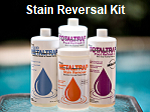 stains just by the simple addition of the product
to the pool water. It will probably be necessary for you to
drop the pH of the water to approximately
7.0 and add MetalTrap Stain Remover.
After the stains are removed, follow with the addition of
Pool Refresh, which will allow
you to filter or vacuum the stain-causing metals out of the
pool. Lastly, add a dose of
Liquid MetalTrap, to scavenge up ant lingering traces.
All 3 MetalTrap products are contained in the
MetalTrap Stain Reversal Kit,
which should be used, as directed. There are other means of controlling
mustard algae that do not involve a copper algaecide.
Judging from your experience, you might want to try a
60% polymer algaecide, which contains no metals. Better circulation will surely help and
you can easily and dramatically boost circulation. By installing
The Circulator, in place of
the standard return jet fittings, you create a spiraling
return flow, that reaches throughout the pool. I hope that this information will prove
helpful. stains just by the simple addition of the product
to the pool water. It will probably be necessary for you to
drop the pH of the water to approximately
7.0 and add MetalTrap Stain Remover.
After the stains are removed, follow with the addition of
Pool Refresh, which will allow
you to filter or vacuum the stain-causing metals out of the
pool. Lastly, add a dose of
Liquid MetalTrap, to scavenge up ant lingering traces.
All 3 MetalTrap products are contained in the
MetalTrap Stain Reversal Kit,
which should be used, as directed. There are other means of controlling
mustard algae that do not involve a copper algaecide.
Judging from your experience, you might want to try a
60% polymer algaecide, which contains no metals. Better circulation will surely help and
you can easily and dramatically boost circulation. By installing
The Circulator, in place of
the standard return jet fittings, you create a spiraling
return flow, that reaches throughout the pool. I hope that this information will prove
helpful.
Sincerely. Alan Schuster, 3/7/2005
► Recurring
Mustard Algae?
I think that I have a greenish mustard
algae. It can be vacuumed and brushed quite easily. Shocking
the pool does seem to help. The problem is that it comes
back again and again. My pool is an 18 X 36 foot vinyl lined
pool. What products are best to use so that I can avoid this
problem? Thanks.
Floyd D., Brunswick, GA, 7/23/2008
Mustard algae can be treated in two effective ways and, in
your vinyl pool, both are good. Chelated Copper Algaecides
are usually effective, in controlling this type of algae. The
chelated types of copper algaecide will require additions
every week or two and this will certainly help, in your
case. Your sanitizer level, chlorine I assume, is probably
not being maintained adequately at all times. Make sure that
you maintain a 1-3 PPM level of Free Chlorine, at all times.
Do this and it is unlikely that you will see the mustard
algae problem returning, with any regularity. If you don't
have an automatic pool cleaner, consider adding one. These
cleaners are quite affordable and are very effective at
cleaning and improving the water circulation on the bottom.
In the case of your above ground pool, it can act as a main
drain, while operating. Another effective treatment for
mustard algae is the use of a 60% polymer algaecide. When shocking a pool make sure that
you add enough product and it is added frequently enough to
boost the Free Chlorine level to 5-10 PPM. Make sure that
the pH is 7.2-7.6. Try to maintain at least 1-3 PPM, through
the overnight period. Keep the filter operating
continuously, until the problem is controlled. Once the
problem is controlled resume normal chlorination and
filtration. Poor circulation creates dead zones that promote
algae growth. Better circulation assures better distribution
of the sanitizing chemicals and makes algae problems less
likely. The Pool Circulator
is an easy-to-install device that will dramatically improve
circulation and eliminate any dead spots. Going forward, I
suggest switching to a
salt chlorine
generator. It provides better results and provide
more control, while eliminating the negative effects of
chlorine use. I hope that this information will prove helpful.
Sincerely. Alan Schuster, 7/23/2008
► Treating
The Accessories?
In treating mustard algae, is it also
recommended to treat pool toys, floats, vacuum, even bathing
suits? I've been told many different opinions and don't want
to have the mustard return.
The S. Family, 8/26/2005
Treating the pool accessories certainly can't hurt. But, by
itself it will not prevent a return of the problem. The pool
water and conditions must be maintained so that it is
unfavorable to mustard algae growth. Pay attention to the
Free Chlorine levels and the water filtration and
circulation. Stagnant water will cause problems. Redirect
the return flow into any area that seems to be prone to the
problem. I hope that I have been helpful.
Sincerely. Alan Schuster, 8/26/2005
► Yellow
Algae Stain or Metals Stain?
Alan, I have an inground pool with a
volume of 15000 gallons. I have treated what I believe to be
a yellow algae problem with twice, along with the
recommended steps necessary for this yellow product to work.
The algae still exists on the side of my pool and does not
scrub off with even a brush. Is there something else that I
can use to get rid of this problem?
Brian, Raleigh, NC, 3/25/2013
You didn't say if the product was helpful. Yellow mustard
algae brushes very easily. Either it is another type of
algae or it is a mineral stain, possibly iron. Try this. Put
1/2 pound of pH reducer powder in a white sock, tie on a
rope and hang over the side of the pool against the
stained area. Check after fifteen minutes. If there is
improvement, it is definitely a metal stain. To treat the
stain, I suggest that you use a
MetalTrap Stain Reversal Kit, which contains everything
required to dissolve the stains, eliminate the metals from
the water and help prevent a recurrence. If the
sock treatment did not work, I suggest that you try using a
60% polymer algaecide. Boost the Free Chlorine
reading to 10 PPM and use the scrub brush. Redirect the
returns to send more water towards the affected areas.
BETTER CIRCULATION CAN HELP SOLVE AND PREVENT THIS TYPE OF
PROBLEM. The Pool Circulator is a most effective way to achieve
better circulation and chemical distribution. I hope that
this will prove helpful.
Sincerely. Alan Schuster, 3/25/2013
► Mustard
Algae And Biguanide?
Alan, I have a 24 foot above ground
pool that is 3 years old and I am constantly fighting what I
am told is a mustard algae. It appears as a yellowish color
that almost looks like sand laying on the bottom and I also
get it on the sides and behind the ladder. I use biguanide
instead of chlorine because of my wife's skin allergies so
switching to chlorine is not really an option, but I can't
seem to get rid of this problem. Do you have any
suggestions? I have had the water tested and the levels all
look good and I use the premium algaecide. Thanks.
Jeff C., NJ, 6/11/2015
You may have a problem! I know that is not what you wanted
to hear, but the best products for use against mustard algae
cannot be used in a biguanide pool. So unless your dealer
comes up with a proven recommendation, I think that you will
have to switch to chlorine at least temporarily. In fact,
you should re-evaluate the situation and decide if you
really want to stay with biguanide. Based on the
emails I receive, you will have to switch, sooner or later,
and now seems lie the right time. Before trying chlorine, you might try adding a
polymer algaecide. This material will register on the test
kit, as biguanide. Make sure that the biguanide is raised to
50 PPM, before adding. Retest, after adding the algaecide.
This increase is due to the algaecide and should be
considered, when retesting over the next month or so. If
this fails, you should consider switching, away from
biguanide. Using
salt chlorine generator would be the best way to utilize
chlorine. It will provide better results and more
treatment options. The switch will become inevitable, so I
would not continue to throw money after the problem, by
trying to stay with biguanide. Good luck.
Sincerely. Alan Schuster, 6/11/2015
|
Visit The Website Stores . . . for
better informed shopping!!! |
|
|
Shipping is FREE* . . . within
the Continental U.S.
A $9.99
handling charge will apply
to Continental U.S. Orders,
under $75.00. Orders
outside of the Continental
U.S. may require some
additional charge, based on
quantity and destination.
Most products can be
shipped World-Wide. International
and orders outside of
Continental U.S. - see
comments on the ordering
pages. |
|
|
Major
Credit Cards and PayPal are accepted. |
|
▲
Return To Top Of Page
▲
Aqualab Systems, LLC does not
make any warranty or
representation, either expressed
or implied, regarding the
accuracy or completeness of the
information provided by this
website; nor does Aqualab
Systems., LLC. assume any
liability of any kind whatsoever
related to, or resulting from,
any use or reliance on this
information. The content of this
website should not be used, if
it is conflict with any
applicable federal, state or
local regulations or guidelines.
© Aqualab Systems, LLC. All
rights reserved
|
|