|
 |
Shipping is FREE* . . . within
the Continental U.S.
A $9.99
handling charge will apply
to Continental U.S. Orders,
under $75.00. Orders
outside of the Continental
U.S. may require some
additional charge, based on
quantity and destination.
Most products can be
shipped World-Wide. International
and orders outside of
Continental U.S. - see
comments on the ordering
pages. |
|
 |

Major
Credit Cards and PayPal are accepted. |
|
On-line
shopping since 2002 - Safe and Secure!!! |
|
Managing the use of Biguanide, in pool
water!!! |
|
Biguanide
(PHMB) is the generic name of some of
the more popular non-chlorine,
non-bromine chemical sanitizers used in
pools: products such as Baquacil,
Soft-Swim and Revacil. While it is
a popular alternative to traditional
chlorine sanitizers, it does have a host
of shortcomings. Conversion
requires the addition of chlorine.
Sanitizing
is a must, for proper pool water
management and biguanide use can lead to
the development of sanitizer-resistant
microorganisms.
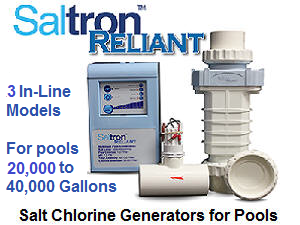
Salt Chlorine generators are a
better way to utilize chlorine, producing
more controllable results. They
eliminate the need to handle, measure or
store chlorine products, while reducing
buildup problems. An
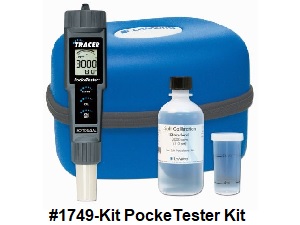
Electronic
PockeTester Kit is a convenient
way to monitor the salt level. |
|
Salt Chlorine Generators - 3 models |
Testing The Salt Level |
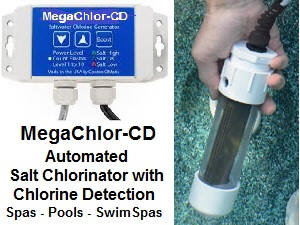
Salt Chlorine Generator - No
Installation |
 |
 |
 |
|
Product and Ordering Information |
Product and Ordering Information |
Product and Ordering Information |
If you have a pool or spa water
testing need, we should have the
product.
►
Scroll down to read through some
Question & Answer information.
◄
|
|
A
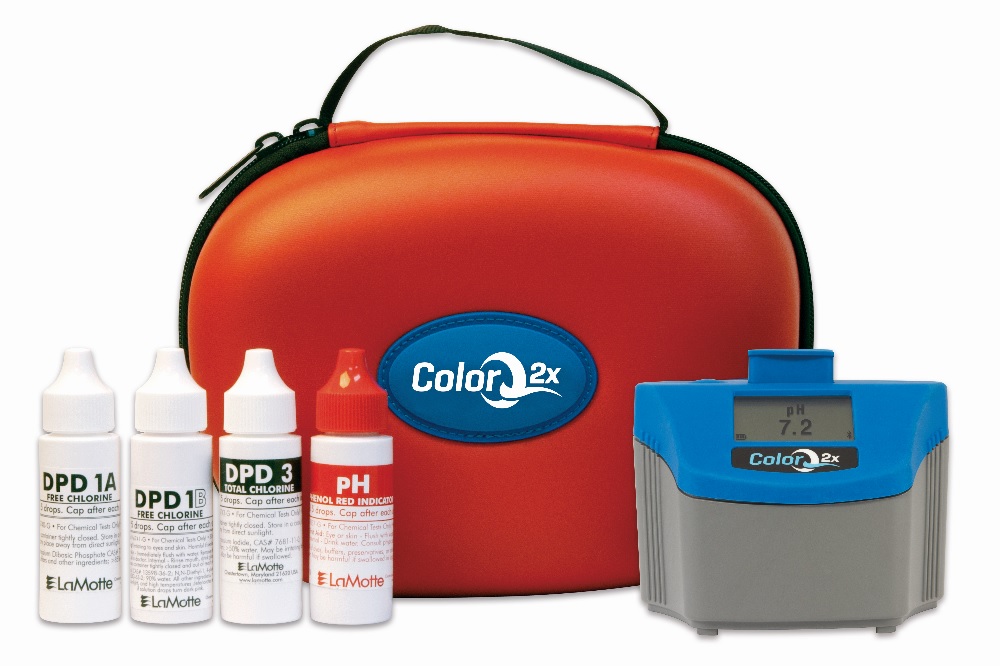
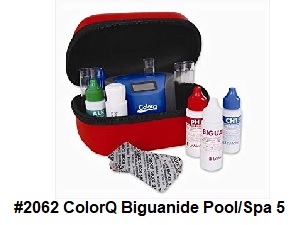
ColorQ, all digital Water Tester
can perform all of the common
tests, while eliminating the
color-matching and guesswork.
With 10 models, performing up to
11 different test factors, one
is right for every need.
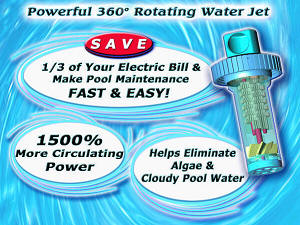
The Circulator is a
replacement return jet fitting,
that dramatically improves
circulation, by creating a
spiral return flow. Better
circulation helps sanitizers
work more effectively. The
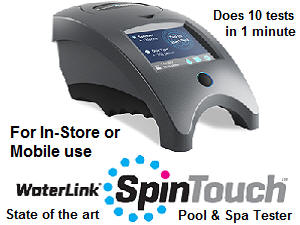
WaterLink SpinTouch Labs
are the ultimate tester, doing
up to 10 different water test
factors, in just 1 minute. |
|
ColorQ All-Digital Water Testers |
Circulation Boosting Return Jet
Fittings |
WaterLink SpinTouch Labs |
 |
 |
 |
|
Product and Ordering Information |
Product and Ordering Information |
Product and Ordering Information |
If you have a pool or spa water
testing need, we should have the
product.
►
Scroll down to read through some
Question & Answer information.
◄
|
|
|
How to
sanitize a pool without chlorine? |
Biguanide
(PHMB) is the generic name of some of the more
popular non-chlorine, non-bromine chemical
sanitizers used in swimming pools: products such
as Baquacil, Soft-Swim and Revacil. The main
advantage is that no chlorine or bromine is
required and there is little chemical odor.
Biguanide is an effective bactericide and can
replace chlorine or bromine, in that function.
However, chlorine or bromine are also oxidizing
agents that can destroy organic contamination:
biguanide cannot destroy organic contamination
and, therefore, concentrated hydrogen peroxide
must be added to the swimming pool on a regular
basis. A disadvantage of biguanide is the
development of biguanide-resistant
micro-organisms, after a few years of product
usage. This usually takes the form of a pink
slime or water mold and the only recommended
treatment is the application of large amounts of
chlorine and/or non-chlorine shock. This
treatment destroys all of the biguanide present
in the water. Restoration of the biguanide
regimen can risk a return of the problem and,
therefore, a permanent switch to chlorine or an
alternative form of sanitation should be
considered. The trick is in understanding that
recurring water quality issues are a clear
indication, that a switch to an
alternative
pool sanitizer is required, and not be talked into
staying, with what could become an expensive
course. If problems arise, refer to the
Pool Problems
Page, as a source of problem-solving
information, broken down into various
categories. Scroll down the page and click on the linked
keywords,
catch phrases
or images, in the archived answers below, to access additional information, on that topic or product.
Do you know what's in
your water? If you're having problems, with
sanitation or water clarity, testing allows you to better
understand the chemistry and determine the cause of the
problem. Once understood, you can select the best
treatment option. Understanding the nature of the
problem, should be step one. For information about
our full selection of testing options, visit our
Test Equipment Store.
 |
Join our E-Letter Mailing List.
You'll receive 1-3 E-Letters a
month, featuring helpful pool
and spa advice, new product
information and sale
announcements. All we
require is your e-mail address
and you can opt out anytime you
wish.
Your information
will never be shared or sold. |
|
▼
Helpful,
Problem-Solving Information, in a question and
answer format.
▼ |
► Biguanide
and Biguanide Shock
Testing Made Easy?
I have used a biguanide test kit with
the dropper bottles and test strips. I can't say that I like
or feel confident about having to match the colors. Is there
any other way to do the testing? Thanks for the help.
Brad M., Naples, FL, 11/26/2017
Good News!!! The
ColorQ Biguanide POOL 5 Water Analyzer is an
all-digital, hand-held tester that performs tests for
biguanide, pH, total alkalinity, calcium hardness and
biguanide shock. There are no colors to match and no look-up
charts. It is an ideal tester for anyone with color matching
difficulties. And it is affordably priced and easy to use.
Seems to be just what you are looking for. I hope that this
information will prove helpful.
Sincerely. Alan Schuster, 11/27/2017
►
Wrong Way To Treat White Mold?
I've read several posts related to
this issue and have tried the
solutions suggested, but it still
has not cleared up the problem.
Hoping you can help. I went away for
three weeks on vacation and came
back to white mold (white tissue
like substance) in my 43,000 gallon
biguanide pool. I have done the
following:
1. Cleaned the filter, sides, steps,
skimmer, pool equipment & anything
related to the pool.
2. Balanced pH, alkalinity, etc.
3. Shocked- 2 lbs per 5000 gallons
4. Tested with Free Chlorine Test
5. Repeated and repeated
I have put over 40 lbs, if not more
of Shock in the pool and it still
shows very little free chlorine. I'm
not sure what to do next to get rid
of the white mold. Should it really
take this much shock? I did add some
polymer algaecide and that stirred
up some more of the mold from the
bottom, but still didn't eradicate
it.
I'm frustrated and at a loss what to
do. Any suggestions on how to
totally get rid of this mess? Thank
you.
Kevin,
9/7/2018
People use biguanide, because they
don't want to use chlorine. You
should not add chlorine to a
biguanide pool, as it will destroy
the biguanide and not the mold. A
polymer algaecide's ingredient will
register on the biguanide test, so
you may not realize that you are
depleting the biguanide level. This
mold is typical, when the
microorganisms have become resistant
to the biguanide. It is almost
inevitable and the best option is to
switch to chlorine, on a permanent
basis. A temporary switch will only
leave the door open, for a
recurrence. In the end, you
depleted the biguanide level and did
not add enough chlorine to eliminate
the remaining biguanide and the
mold, as well. The only time,
that chlorine is used, in a
biguanide pool, is to convert to
chlorine or bromine.
Conversion is simple. Add 4 gallons
of liquid chlorine or 4 pounds of
chlorine shock, for every 5,000
gallons of water. The chlorine wi ll
react with the biguanide and start
to decompose it. As this happens the
pool will go through cloudy and
discolored states. This is normal.
Periodically test the FREE CHLORINE
level. You might have to repeat this
dosage. Only after enough chlorine
has been added, to register a stable
FREE CHLORINE level, will enough
have been added so as to destroy the
biguanide, algae and debris. From
this point on you should be able to
maintain the chlorine level with
normal product additions. During
this time, adjust the pH, total
alkalinity and add
chlorine stabilizer.
ll
react with the biguanide and start
to decompose it. As this happens the
pool will go through cloudy and
discolored states. This is normal.
Periodically test the FREE CHLORINE
level. You might have to repeat this
dosage. Only after enough chlorine
has been added, to register a stable
FREE CHLORINE level, will enough
have been added so as to destroy the
biguanide, algae and debris. From
this point on you should be able to
maintain the chlorine level with
normal product additions. During
this time, adjust the pH, total
alkalinity and add
chlorine stabilizer.
Instead of trying to avoid chlorine,
why not use it in a better and
easier way? If you are interested in
maintaining
the pool with chlorine and at the
same time getting better water
quality with less effort, you might
look into a
salt chlorine generator. It will
give you most everything that
biguanide could not.
I hope that I have been helpful. If
so, please tell your friends and
dealers about the website.
Sincerely. Alan Schuster,
9/8/2018
►
Using An Ultraviolet Sterilizer In A
Biguanide Pool?
Is an ultraviolet water sterilizer compatible
with a biguanide pool?
JQ, 4/23/2014
An
Ultraviolet (UV) Sterilizer does
not add chemicals to the water.
There is no reason to suspect that
it would have any negative effect on
biguanide. What it will do is reduce
the microbial populations, so that
it becomes easier for biguanide to
provide adequate sanitizing. You
should still
maintain the same chemistry, but you
should find that the amount of
biguanide required will be reduced.
I hope that this information is
helpful.
Sincerely. Alan Schuster,
4/23/2014
► Doing It Wrong?
I have a 24' above ground with an old
DE filter that was clear about a month ago, but has been
cloudy for the most part since. I used biguanide as the
previous owner had but, after a week away, shocked the
disgusting pool with chlorine-based shock treatment. It's
been a couple of weeks since, and it's still cloudy although
the readings for pH, biguanide and alkalinity seem to be in
line. I wonder how well the filter is working. I put a cup
of DE at the beginning of the day and backwash at the end.
There is green in the backwash, but the pool is still cloudy
overall. I need serious help.
Ilana G., 8/20/2013
You have to make a decision! You can use chlorine or you can
use biguanide - you can't use both. The effect of adding the
chlorine was to destroy some of the biguanide. This by
itself can cause the water to turn green. If you want to use
biguanide, you must use hydrogen peroxide to shock the pool.
If you want to use chlorine, you must add enough to
completely destroy all of the biguanide and enough to deal
with any algae. Conversion to chlorine will require about 4
gallons of liquid chlorine for each 5,000 gallons of water.
The water will discolor. Check to make sure that there is
free chlorine present and add additional shock, as might be
required. Once the free chlorine level is established. the
pool can be maintained in a typical manner. You seem to be
operating the DE filter, as if it were a sand filter. It is
not customary to add small amounts of DE to the skimmer.
Either the DE has to be completely replaced, after the
backwashing or the filter can be "bumped" and no additional
DE is required. Consult a local dealer about your particular
filter's requirements. Browse through the archives on
biguanide and filtration problems for additional
information. To better assure proper overall pool water
chemistry, visit a pool store that has a very reliable,
professional lab such as a
WaterLink SpinTouch Lab, rather
than a less accurate test kit or
strip reader. I hope that I have been helpful.
pool.
If you want to use chlorine, you must add enough to
completely destroy all of the biguanide and enough to deal
with any algae. Conversion to chlorine will require about 4
gallons of liquid chlorine for each 5,000 gallons of water.
The water will discolor. Check to make sure that there is
free chlorine present and add additional shock, as might be
required. Once the free chlorine level is established. the
pool can be maintained in a typical manner. You seem to be
operating the DE filter, as if it were a sand filter. It is
not customary to add small amounts of DE to the skimmer.
Either the DE has to be completely replaced, after the
backwashing or the filter can be "bumped" and no additional
DE is required. Consult a local dealer about your particular
filter's requirements. Browse through the archives on
biguanide and filtration problems for additional
information. To better assure proper overall pool water
chemistry, visit a pool store that has a very reliable,
professional lab such as a
WaterLink SpinTouch Lab, rather
than a less accurate test kit or
strip reader. I hope that I have been helpful.
Sincerely. Alan Schuster, 8/21/2013
► Pool Water
Mold?
I have been using biguanide for the
last 4-5 years with good results, at least until this year.
I had a battle with water mold - whatever that is - and
after spending a small fortune getting rid of it, it seems
to be coming back again. What would you suggest? Thank you.
Frustrated in Freehold.
Kelly E., Freehold NJ, 7/3/2009
Water mold is caused by a microorganism that has
unfortunately become resistant to the biguanide. In order to
treat the problem, various chemicals such as chlorine shock
or non-chlorine shock, have to be added to the water until a
Free Chlorine level of 5-10 PPM is achieved. The water will
go through various green-brown-cloudy stages, until finally
the water clears up. It takes a lot of shock, at least 2
pounds per 5000 gallons, in order to complete the treatment.
A consequence, of adding the shock, is the destruction of
all of the biguanide. Resuming maintenance on biguanide will
require that you start from scratch and this is why it has
become so expensive. Once a biguanide-resistant
microorganism has developed there is no guarantee that it
will not return, even after successful treatment. For this
reason, I suggest that an alternative sanitizer be
considered: chlorine, bromine,
ultraviolet sterilizers,
salt chlorine
generators, ionization or a combination. Otherwise, you just
might get the problem back, in spite of your best efforts. I
hope that I have been helpful. Good luck.
Sincerely. Alan Schuster, 7/3/2009
► Not A Happy
Camper?
I am tempted to put a sledge hammer to
the side of the pool and just start using a "cool" bathtub!
Hope you can help: first off Alan, I use and have used
biguanide in my pool for the past 5 years or so and have
never encountered a problem. This year however was nothing
short of a nightmare. When I pulled the cover off in May, I
had brown, green cloudy water, a few bags of non chlorine
shock and a week of filtering took care of the green brown
issue and slightly helped the cloudiness. I then balanced my
pool with 15 lbs. of calcium hardness, alkalinity increaser
etc. I also got my biguanide levels up to par. BUT, the pool
was still cloudy/hazy. I then changed the sand in the filter
and filtered another week (24/7) and the pool is still hazy.
I went to my pool gal (who's very knowledgeable) and she
sold me a " Filter Aid." basically it's a dry powder added
with water to make a "slurry" and poured into the skimmer. I
was told that within 8-12 hours the filter pressure will
rise by 10 points, my pool will be crystal clear and at that
time, I should backwash. I filtered for a week straight and
the pressure never rose more than a point. I backwashed
anyway and the backwashed water cleared within a few
seconds. But, still the water was cloudy. I decided to take
the cap off the filter and found this "slurried" solution I
poured in a week earlier had hardened into a 3 inch thick
shell. So I cleaned out the filter and changed the sand
AGAIN. I ran it another day or two and still no clearing up.
I poured into the skimmer, a flocculant (dry granules) and
the water got worse. I tried it again with the flocculant
the next day and now I can't see the bottom of the pool.
What can you tell me Alan? I'm ready for the nut house.
Again, I NEVER had problems like this before. Thanx much.
Steve M., Kunkletown. PA, 7/6/2006
You told me a lot but there are gaps. You cannot use
non-chlorine granular shock with biguanide, as it will
decompose the biguanide and will not solve the problem. Only
hydrogen peroxide can be used as a shock treatment. The
filter aid should not have caused that to happen. It is
either contains some other additives or there is something
that coagulated it in your pool. Biguanide can do that! But,
why would they recommend the product, if you are using
biguanide? Freshly filled sand filter can be very
inefficient and the dead algae and debris might be passing
right thru. Ordinarily, I would suggest adding some DE to
the skimmer. But DE will be coagulated by the biguanide.
Make sure that the biguanide level is OK. Add some more
hydrogen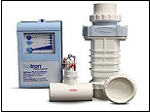 peroxide. LaMotte makes a
test strip that can test
for peroxide - maybe the dealer has the item. There is a
possibility that the floc - if it was aluminum sulfate - got
into the pool. This being the case, it could contribute to
the cloudiness, until it is completely removed. Raise the pH
to 8.0 and shut off the filter. The next morning vacuum the
bottom to waste. This should remove all of the flock and may
even give you clear water. Now for the bad part. It is not
unheard of for long time biguanide users to develop problems
with white water mold. This may be part of your problem.
However, it is difficult to say this with complete
certainty. The treatment for this problem is the complete
destruction of all the biguanide and the establishment of a
1-3 PPM level of Free Chlorine. At this point your pool is
on chlorine and it should destroy the water mold. Switching
back may bring a return of this problem. It takes about 4
pounds of non-chlorine shock or 4 gallons of liquid chlorine
per 5,000 gallons, to destroy the biguanide. Depending on
the condition of the water, even more could be required.
Thereafter, boost the Free Chlorine to about 5-10 PPM. The
decomposing biguanide will consume the chlorine and the pool
will go through a green-brown stage. There are lots of
alternatives that minimize the use of chlorine and you might
look into them:
Ozonators and
Salt Chlorine Generators. Some can be used
together, for even better results. I hope that this
information proves helpful.
peroxide. LaMotte makes a
test strip that can test
for peroxide - maybe the dealer has the item. There is a
possibility that the floc - if it was aluminum sulfate - got
into the pool. This being the case, it could contribute to
the cloudiness, until it is completely removed. Raise the pH
to 8.0 and shut off the filter. The next morning vacuum the
bottom to waste. This should remove all of the flock and may
even give you clear water. Now for the bad part. It is not
unheard of for long time biguanide users to develop problems
with white water mold. This may be part of your problem.
However, it is difficult to say this with complete
certainty. The treatment for this problem is the complete
destruction of all the biguanide and the establishment of a
1-3 PPM level of Free Chlorine. At this point your pool is
on chlorine and it should destroy the water mold. Switching
back may bring a return of this problem. It takes about 4
pounds of non-chlorine shock or 4 gallons of liquid chlorine
per 5,000 gallons, to destroy the biguanide. Depending on
the condition of the water, even more could be required.
Thereafter, boost the Free Chlorine to about 5-10 PPM. The
decomposing biguanide will consume the chlorine and the pool
will go through a green-brown stage. There are lots of
alternatives that minimize the use of chlorine and you might
look into them:
Ozonators and
Salt Chlorine Generators. Some can be used
together, for even better results. I hope that this
information proves helpful.
Sincerely. Alan Schuster, 7/7/2006
Thanx much Alan. I just returned from
my pool gal and she states that the problem is water mold.
My shock level was low even though I poured it 4 days ago.
I'll ask you though Alan, IS THIS the time to forget about
biguanide and just go with chlorine from this point forward?
After reading your email, I see that this may not be my last
battle with water mold. Also, the filter aids and
flocculants I used were both biguanide related products,
assumingly safe for biguanide pools. I will shut everything
down and see what the water looks like tomorrow. Alan,
thanks so much for your advise.
Steve, 7/7/2006
Tomorrow may bring clear water. BUT, the mold will still be
there, lurking and ready to start trouble all over again.
This is a biguanide-resistant organism and once it appears,
I think that a switch to another sanitizer is the best thing
to do. Sooner or later, you will switch. There are lots of alternatives to ordinary chlorine
to choose from:
Ozonators and
Salt Chlorine Generators. Many can be used
together, for even better results. I hope that is clears up
for you. Have a good summer.
Sincerely. Alan Schuster, 7/7/2006
► Bad
Conversion Advice?
You answered some questions right
after we first got our pool two years ago about balancing
the water and what's important. I have read about zeolite
on your web site. This is our current chemistry and the
water is not as sparkly or clear as desired. We can easily
see the bottom but its just not as clear as before. Our pool
is 50,000 gallons -its big. I do not want to use floc to try
and clear the water, its a real pain to use and hard to
vacuum all of it out. The pool chemistry tested OK. Would
a zeolite sand replacement media work in a biguanide pool or would it tend to clog?
The company we got our pool from also sells chemicals for
both biguanide, chlorine and salt generators. When I asked
about the white mold possibility, that is mentioned on your
website, they said that if we get it there is a
treatment that will get rid of it. They also said they are
recommending that instead of putting all 5 gallons of shock
in at one time per month, as recommended, that its better
to only put in 1.25 gallons a week. Would zeolite
help clear the pool and make it sparkle or should I get some
clarifier or use the floc, which I hate? What would you
recommend? Sincerely.
Tom B., Franklin, Ohio, 4/30/2007
You need a wake up call. You should switch from biguanide to
another sanitizer now! Do it before you waste hundreds of
dollars and part of the pool season. The dealer does not
want you to convert and seems to be making if difficult and
dragging it out. This 1.25 gallons a week is utter nonsense
and it not recommended by the principal manufacturer, so far
as I am aware. It is bad chemistry! It will reduce your
biguanide level, leaving you exposed to even more problems,
and there will be zero chlorine. It is almost a punishment
for converting! The 5 gallons figure is a drop in the
bucket, for a pool of your size. You will probably require
40 gallons!
 Sooner or later you will switch, as mold
problems seem to be almost inevitable. Switching for a
while, is only good for the dealer, because the problem is
caused by biguanide-resistant microorganism and will return.
Conversion is simple. Add 4 gallons of liquid chlorine for
every 5,000 gallons of water. The chlorine will react with
the biguanide and start to decompose it. As this happens,
the pool will go through cloudy and discolored states. This
is normal. Periodically test the FREE CHLORINE level! You
have to repeat this dosage. Only after enough chlorine has
been added to register a stable FREE CHLORINE level, will
enough have been added so as to destroy the biguanide, algae
and debris. From this point on you should be able to
maintain the chlorine level with normal product additions.
During this time, adjust the pH, total alkalinity and add
chlorine stabilizer. I would not count on zeolite
solving the mold problem. However, it works really well with
a salt chlorine generator, chlorine or bromine. Think about
what you are spending on biguanide and related problems and
compare that to a salt chlorine generator. If you are
interested in maintaining the pool with chlorine and at the
same time getting better water quality with less effort, you
might look into a salt chlorine generator. It will give you
control and results, that biguanide could not. I hope that this
information is helpful.
Sooner or later you will switch, as mold
problems seem to be almost inevitable. Switching for a
while, is only good for the dealer, because the problem is
caused by biguanide-resistant microorganism and will return.
Conversion is simple. Add 4 gallons of liquid chlorine for
every 5,000 gallons of water. The chlorine will react with
the biguanide and start to decompose it. As this happens,
the pool will go through cloudy and discolored states. This
is normal. Periodically test the FREE CHLORINE level! You
have to repeat this dosage. Only after enough chlorine has
been added to register a stable FREE CHLORINE level, will
enough have been added so as to destroy the biguanide, algae
and debris. From this point on you should be able to
maintain the chlorine level with normal product additions.
During this time, adjust the pH, total alkalinity and add
chlorine stabilizer. I would not count on zeolite
solving the mold problem. However, it works really well with
a salt chlorine generator, chlorine or bromine. Think about
what you are spending on biguanide and related problems and
compare that to a salt chlorine generator. If you are
interested in maintaining the pool with chlorine and at the
same time getting better water quality with less effort, you
might look into a salt chlorine generator. It will give you
control and results, that biguanide could not. I hope that this
information is helpful.
Sincerely. Alan Schuster, 4/30/2007
► Wild Shade
Of Pool Water Colors?
I was advised by my pool dealer to let
my biguanide level drop, slowly begin treating the pool with
chlorine via tablets in the skimmers, and finally use a
chlorine shock to "eat up" the biguanide. I did as told and
all went well until I added the shock. My water turned a
wild shade of green/yellow/brown. A day later it is now a
murky sea foam green color. I think I should have used a non
chlorine shock from what I have now researched via the
internet. My question is what do I do now that I'm in this
mess? Help Please? Thanks.
Ron, 6/3/2010
The preferred method to destroy all of the biguanide,
according to a leading biguanide manufacturer, is to add 4
pounds of non-chlorine shock per 5,000 gallons of water.
Chlorine will accomplish much the same end result. It is
normal for the water to undergo a color range, as you have
described. All of the biguanide will not be eliminated from
the water until you are able to maintain a stable Free
Chlorine level and the water clears up. At this point, I
would add 2 pounds of non-chlorine shock for each 5,000
gallons of water. How much shock will be required will
depend upon the
biguanide concentration and the
condition of the pool water. Algae
filled pools will require much more
shock! I believe that if you are
going to make a switch to chlorine,
the sooner and faster you add the
shock - the better. There's no point
in prolonging a period of discolored
water and inadequate sanitation. The
color will return to normal, as soon
as all of the biguanide has been
decomposed by the shock treatment.
Afterwards, resume normal
chlorination. I hope that I have been helpful.
Sincerely. Alan Schuster,
6/3/2010
► Happy
Except For The Costs?
Just happened upon your site and read
the questions in the biguanide section. We have used
biguanide for about 15 years. We have been nothing but
pleased with all aspects of it except the cost. Our water
stays crystal clear, no horrible chlorine smell, no worry
about the kids tracking and leaving bleach spots in the
house, etc, etc. And all of the questions I read are about
people having problems and switching back to chlorine. Are
we the only people pleased with Biguanide products or are
the only ones writing to you those that have problems? My
actual question is related to our one complaint of the
biguanide products - the cost. I notice as you are talking
about biguanide shock you are always saying to shock a
biguanide pool to use hydrogen peroxide. Is that the
ingredient in the biguanide shock (oxidizer)? What I am
really asking is - are there any other compatible, cheaper
shocks that can be used with Biguanide, and I am assuming
that you can't just add regular hydrogen peroxide? The other
question I have is just wanting you to affirm that we have
been correct in one thing we have been using with the
biguanide for years - muriatic acid. We fill the pool with
our well water which is very hard and our total alkalinity
is always off the chart in the beginning of the year. We
gradually reduce it with several gallons of muriatic acid
until it is in range. This is another reason we prefer the
Biguanide products, because they work equally well until we
get the alkalinity under control which usually takes a few
weeks, whereas chlorine is not nearly as effective until
that alkalinity is under control. Thanks for reading this
and answering/commenting to help us out.
Becky C., 6/29/2009
People write because they are having problems or need
information. Happy campers are less apt to write. 15 years
on biguanide is
a long time. If you don't mind the cost, you
have no reason to switch. However, if you start to
experience resistant mold and clarity issues, switching will
become necessary. There is no set timetable. Some people
have problems, within the first year or two. Your letter is
really an exception to the rule, so I'll probably add it to
the archives for some balance. The only oxidizer or shock
that you can used is hydrogen peroxide. The drug store
variety is far less concentrated and not cost effective.
Total alkalinity is usually not a problem. It is the pH that
is always more important and high TA can make pH adjustments
require more chemicals. Alternative sanitizers, such as
UV Sterilizers,
Ozonators and
Salt Chlorine Generators, are available
that provide quality water and pleasant conditions. I hope
that I have been helpful.
Sincerely. Alan Schuster, 6/29/2009
► Biguanide
Filtration Issues?
Can I use a zeolite sand replacement
media in my biguanide
pool?
A.G., 5/3/2007
The issue concerns biguanide, in general. It has been found
that the polymer gel that is created, during shocking,
interferes with filtration. This has long been a problem
with sand and it is almost impossible to use DE or
cartridge. However, this situation can be handled by
cleaning the media every 30 to 45 days with a quality filter
cleaner. The cleaners, in the biguanide product lines, work
fine. It is a matter of regular maintenance with biguanide
pools. Filters, with zeolites, have been running on
biguanide pools for several years. As long as the media is
cleaned on a regular basis, the results should be good. I
hope that this help clarify things.
Sincerely. Alan Schuster, 5/4/2007
► All Gummed
Up?
We are at the end of our rope! We have
owned our in-ground 20 x 40, 35,000 gal. pool for 14 years,
and have never had problems like we are having this year.
The filter system is literally going to 30 with in a few
minutes after we clean it. I have read the archived info.
regarding this problem and have done everything suggested
from blowing the lines with an air compressor, to cleaning
the "fingers" in the filter itself with an acid wash. We
have changed the DE., checked the pump and so on. We use
biguanide and have not had a problem before with that
product. However, after reading on another web site that
biguanide can gum up the filter, I was wondering if this
could be the problem. The only thing we can think of that
could be causing this problem, is about 3 weeks ago, our
pool supplier was out of our normal algaecide. They
recommended instead to use a product with the word "copper"
in it. Could combining this product with biguanide be the
cause of our frustrations? And if so, what can we do about
it. Also, the water feels different. I'm not sure if I can
describe it, but it feels kind of oily and sticky at the
same time. Any suggestions? Thanks for doing what you do!
Gena R., Spring Grove, PA, 8/5/2008
The reason that you could not find the answer on this
website, was that it was never addressed before - at least
not by me! It is well known that biguanide interferes with
the performance of DE filter, by coagulating the filter
media. It should have been equally well known that copper
algaecides cannot be used with biguanide. I suspect what has
happened is the polymeric biguanide has cross-linked with
the divalent copper. This results in a larger molecule with
different characteristics, apart from the anti-bacterial
performance. Clogging of the filter might easily be the
result. While it seems highly likely that this is what
happened, the solution is not something that I can be 100%
sure about. I would add a double dose of a metal treatment
and give it a day or two. If there is no improvement, I
would add sufficient chlorine to destroy all of the
biguanide and start from scratch. You will need about 4
pounds or gallons of chlorine shock, for every 10,000
gallons. More may be required. Once a stable free chlorine
level is detected and the water is clear, you are free to
resume normal operations. To resume biguanide sanitizing,
you will have to eliminate any residual chlorine. Otherwise,
you could remain on chlorine. You might want to discuss this
with the biguanide manufacturer. Please let me know how it
turns out. Good luck.
Sincerely. Alan Schuster, 8/5/2008
I hope you remember us. We had the
problem with the Copper algaecide being added to our
biguanide-maintained pool. We followed your advice to add
the metal treatment product. We also went back to the pool
supplier and they gave us a very nice supply of chemicals to
make up for their mistake. It was amazing when we put in the
first 4 quarts of the product. Within about 5 minutes, the
filter gauge went down to 15. We have since then added a
quart a day, because the copper is still gathering in the
skimmer basket. The pool is extremely clear and the water
again feels great. Thank you for your knowledge and I will
definitely recommend you to anyone with a problem.
Gena R., 8/12/2008
A happy ending! Glad to see that the pool dealer accepted
responsibility. Thanks for the feedback.
Sincerely. Alan Schuster, 2/12/2008
► Damage To
Plastic Components?
It recently came to my attention that
biguanide (or any biguanide based sanitizer) attacks clear
plastics, including Lexan. As I understand, over a short
period of exposure (e.g. months), the component will
typically fail. The example that was given to me was the
clear plastic top that is on most pool pumps. Do you have
any insight into this issue? Is this true? Any
insight/direction you can give me to get more information on
this issue would be appreciated. Best regards.
Chad S., 9/16/2009
This topic has not come for years. There was an association
between biguanide usage and a deterioration of polycarbonate
plastic components. Manufacturers that were affected by this
problem seem to have long since made changes to avoid this
breakdown. I am not sure that all products on the market are
problem-free, but it is a solvable problem. I would hazard a
guess that current products from leading manufacturers are
suitable for use in biguanide pools. I hope that I have been
of some help.
Sincerely. Alan Schuster, 9/16/2009
► Chlorine To
Biguanide?
Currently my pool is being maintained
on chlorine. I'm thinking of switching to biguanide. I heard
that there is no chlorine smell. Is there anything I have to
do before switching over? Thank you.
Phil H., Mt. Ephraim, NJ, 7/22/2004
In order to start using biguanide, it is necessary to
eliminate all of the chlorine in your pool. For that
purpose, the biguanide manufacturer provides a chlorine
neutralizer product. Copper and silver algaecides might,
also, present a problem. If you have ever used either
product, I suggest that you bring in a water sample for
analysis. The dealer should be able to determine, if any
additional steps, are required. Good luck with your
decision.
Sincerely. Alan Schuster, 7/22/2004
► Need To
Replace Sand For Conversion?
I will be changing from biguanide to
saltwater this spring, due to major
problems last summer. My question is
will I need to replace my filter
sand after conversion? It was
changed a few years ago. The pool is
an above ground type. Thanks.
Dean W., 1/26/2009
Switching from biguanide was a good move. By now it has
formed a gooey, snot in the filter. It can be eliminated, by
adding lots of chlorine. Or you
could replace the sand,
something that should be done every
3-5 years. The switch to a
salt chlorine generator will
provide better control over the
water quality and will reduce
chemical costs. The Model SR can be
used in pools up to 20,000 gallons
and requires no installation.
Add the required amount of salt,
plug into a GFI protected outlet and
you'll be producing chlorine. I hope that you will find this information
helpful.
Sincerely. Alan Schuster, 1/16/2009
► Is Draining
To Convert Necessary?
Can I use a cartridge filter pump with
a 16’ X 24’ above ground pool utilizing a biguanide system?
We want to convert to a chlorine system and we are draining
the pool, but I want to make sure that we have the right
type of pump for this system. Thanks!
Eileen, 5/26/2016
You don't have to drain the pool. Draining could result in
the liner shrinking or structural damage. Conversion is
simple. Add 4 gallons of liquid chlorine for every 10,000
gallons of water. The chlorine will react with the biguanide
and start to decompose it. As this happens the pool will go
through cloudy and discolored states. This is normal.
Periodically test the FREE CHLORINE level! You have to
repeat this dosage. Only after enough chlorine has been
added to register a stable FREE CHLORINE level, will enough
have been added so as to destroy the biguanide, algae and
debris. From this point on you should be able to maintain
the chlorine level with normal product additions. During
this time, adjust the pH, total alkalinity and add chlorine
stabilizer. If you are interested in maintaining the pool
with chlorine and at the same time getting better water
quality with less effort, you might look into a
salt
chlorine generator. It will give you everything that
biguanide could not. No more chlorine to buy, handle or
store! Enjoy the season and I hope that this information
proves helpful.
Sincerely. Alan Schuster, 5/26/2016
► Biguanide
To Chlorine?
I have been using biguanide for the
past several years. The results have been good, but I would
like to reduce my pool expenses, for the upcoming pool
season. I will be opening the pool in about 6 weeks and I
would to convert to a automatic chlorinator. What do I need
to do to keep it simple and inexpensive? I have a cartridge
filter. Thanks.
Pete S., Wilmington, DE, 4/23/2009
Remove the cover and get the water level up and the filter
operating. Add 4 pounds of a quick-dissolving chlorine shock
or a non-chlorine shock, for each 5000 gallons of water.
The water will discolor. Test the Free Chlorine level. It is
important to establish a 1-3 PPM level of Free
Chlorine. Add more shock, as
necessary, until this is
accomplished. Once this level has
been established, the discoloration
will disappear and all of the
biguanide should have been
destroyed. Normal chlorination
should be started, at this point. Of
course, the pH, TA and calcium
hardness may have to be adjusted.
The chlorine conditioner level
should be 20-30 PPM. Adding an
algaecide would be a good idea. It
is a good practice to clean your
filter thoroughly, in order to
remove decomposition products that
might be present. Just about the
easiest way to clean the filter
cartridge is with The Blaster.
Basically, your only extra costs
will be the shock and the
stabilizer. Good luck and enjoy the
season to be,
Sincerely. Alan Schuster, 4/23/2009
► Long Road
To A Successful Conversion?
Alan, I want to thank you for all of
your help. Please feel free to
let those people who are having
Biguanide problems, know my story. I
only wish that I had listened to you
last year and switched to chlorine
then. We figured that for the amount
of money we have spent on biguanide
products, especially since the water
mold and pink slime arrived, we
could have purchased a quality, salt chlorine generator. One thing
I think should be emphasized on your site, for those who
need to change over from Biguanide to chlorine: with a large
pool (50,000 gallons), it is a long and timely process and
will not happen overnight. We started with a biguanide level
of 20. But in the end, it took 30 gallons of liquid chlorine
shock. 40 pounds of non chlorine shock, and approximately 80
pounds of Calcium Hypo chlorite. We used this because the
pool company gave it to us. Finally after 3 weeks, I added
the last dose of chlorine shock and was able to obtain a 8.5
PPM free chlorine level. Then, it settled back to 2.0
overnight and is holding between 1.8 and 2.5 and am now
adjusting the automatic chlorine feeder. Maybe in the
future, we can afford a salt chlorine
generator. I want to thank you, for all of your help, and
constantly refer people to your site. After the last
super chlorination the water mold is, for all intents
and purposes, gone. The pink slime disappeared, early in the
process. The water is as clear and sparkly as the first day
we filled it up 3 seasons ago. Well worth the time and cost
to convert to chlorine. Once again, I cannot thank you
enough.
Tom, 9/17/2007
For some people, biguanide works to
their liking. For others, it can be
an expensive nightmare. The problem
is in not recognizing that it is
time to switch, as the problem mold
and slime have become resistant to
the biguanide. The chlorine added
not only had to decompose the
biguanide, but had to destroy the
slime and mold, as well. I am glad
it had a happy ending and a
Salt Chlorine Generator
would be a logical next step. Thanks for the feedback.
Sincerely. Alan Schuster, 9/17/2007
|
Visit The Website Stores . . . for
better informed shopping!!! |
|
|
Shipping is FREE* . . . within
the Continental U.S.
A $9.99
handling charge will apply
to Continental U.S. Orders,
under $75.00. Orders
outside of the Continental
U.S. may require some
additional charge, based on
quantity and destination.
Most products can be
shipped World-Wide. International
and orders outside of
Continental U.S. - see
comments on the ordering
pages. |
|
|
Major
Credit Cards and PayPal are accepted. |
|
▲
Return To Top Of Page
▲
Aqualab Systems, LLC does not
make any warranty or
representation, either expressed
or implied, regarding the
accuracy or completeness of the
information provided by this
website; nor does Aqualab
Systems., LLC. assume any
liability of any kind whatsoever
related to, or resulting from,
any use or reliance on this
information. The content of this
website should not be used, if
it is conflict with any
applicable federal, state or
local regulations or guidelines.
© Aqualab Systems, LLC. All
rights reserved