| |
|
Scroll
down to browse through some archived SWIMMING POOL
questions and answers. Please click the Pool
Problems Link, on top of every page, to access a complete
listing of Pool Problem subjects, an alphabetized
Website Table of Contents, Pool Equipment Information,
About Alan Biographic Material and a Pool Glossary. Use
the other links to access additional subject
information. More information about some new and unique
products, for pools and spas, can be found by visiting
The Website Store.
You'll never know what you'll find and that's always
fun. Be better prepared and avoid costly problems!
|
|
 |
Shipping is FREE* . . . within
the Continental U.S.
A $9.99
handling charge will apply
to Continental U.S. Orders,
under $75.00. Orders
outside of the Continental
U.S. may require some
additional charge, based on
quantity and destination.
Most products can be
shipped World-Wide. International
and orders outside of
Continental U.S. - see
comments on the ordering
pages. |
|
 |

Major
Credit Cards and PayPal are accepted. |
|
On-line
shopping since 2002 - Safe and Secure!!! |
|
Managing the Chlorine level, of pool
water!!! |
|
Chlorine
is the most popular pool water
sanitizer.
Sanitizing is a must, for proper pool
water management.
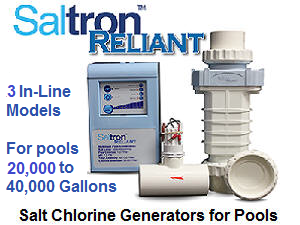
Salt Chlorine generators are a
better way to utilize chlorine, producing
more controllable results. They
eliminate the need to handle, measure or
store chlorine products, while reducing
buildup problems. An
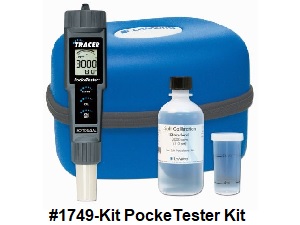
Electronic
PockeTester Kit is a convenient
way to monitor the salt level.
|
|
Salt Chlorine Generators - 3 models |
Testing The Salt Level |
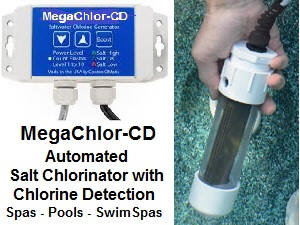
Salt Chlorine Generator - No
Installation |
 |
 |
 |
|
Product and Ordering Information |
Product and Ordering Information |
Product and Ordering Information |
If you have a pool or spa water
testing need, we should have the
product.
►
Scroll down to read through some
Question & Answer information.
◄
|
|
A
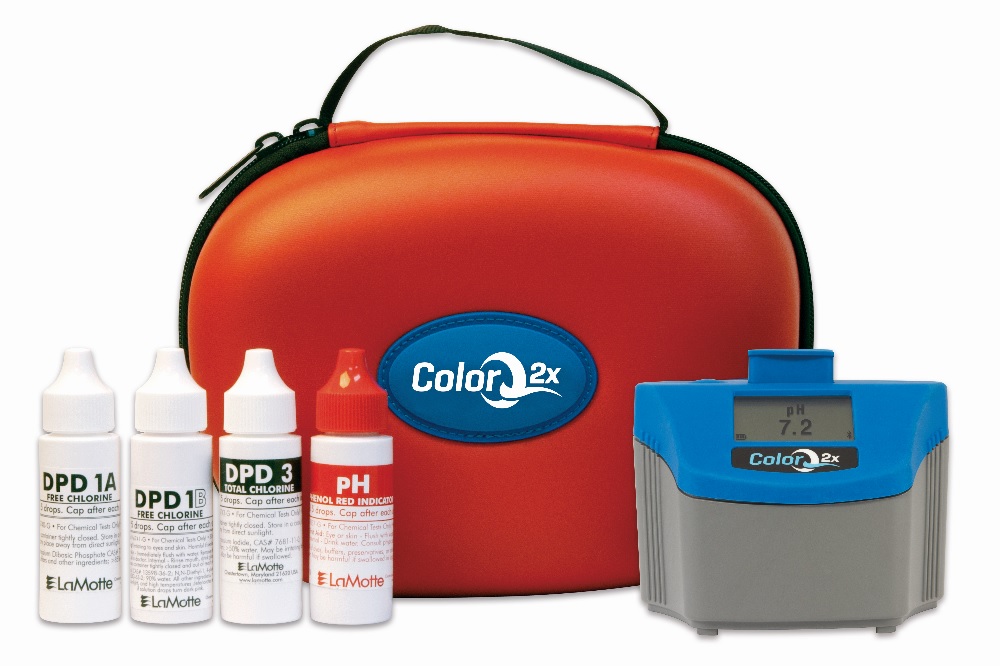
ColorQ 2X is a 2nd generation,
Bluetooth, Waterproof, all-digital tester,
that can
measure all the common test factors. There is a model, for every sanitizing
need.
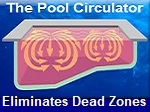
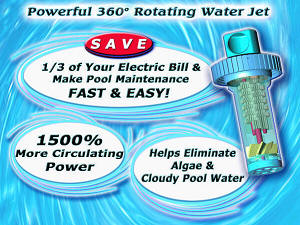
The Circulator is a
replacement return jet fitting,
that dramatically improves
circulation, by creating a
spiral return flow. Better
circulation helps sanitizers
work more effectively. The
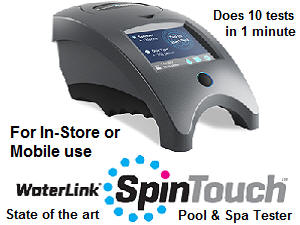
WaterLink SpinTouch Labs
are the ultimate tester, doing
up to 10 different water test
factors, in just 1 minute.
Voted product of the year. |
|
ColorQ All-Digital Water Testers |
Circulation Boosting Return Jet
Fittings |
WaterLink SpinTouch Labs |
 |
 |
 |
|
Product and Ordering Information |
Product and Ordering Information |
Product and Ordering Information |
If you have a pool or spa water
testing need, we should have the
product.
►
Scroll down to read through some
Question & Answer information.
◄
|
|
|
How to use chlorine, as
a pool sanitizer? |
Chlorine is the
most popular and cost effective pool water
sanitizer. It is available in variety of
chemical types including: calcium, sodium and
lithium hypochlorites, and the stabilized
Dichlor and TriChlor. Products are available in
liquid, granular or solid forms and can be added
by feeders or manual application. Which product
to use will depend upon pool usage conditions,
cost considerations, type of equipment, source
water chemistry, type and size of the pool.
Over the past few years, the industry has come
to recognize some of the negative aspects of cyanuric acid
build-up. Yes, cyanuric acid can help protect
chlorine, from being destroyed, by the Sun's UV rays.
However, that is not a major consideration, for pools that
are indoors. Cyanuric acid levels, over 50 PPM, have
been shown to lessen the effectiveness of chlorine and
increase the likelihood of negative consequences. The
regular use of stabilized chlorine will result in a
relatively rapid build-up of cyanuric acid, resulting in a
decrease in sanitizer effectiveness and overall water
quality. If you want to use chlorine and avoid the negative
effects of a rising cyanuric acid level, chlorine can used
in another entirely different and better way: a
salt
chlorine generator uses ordinary salt and
converts it into chlorine. This eliminates the build-up
problems, associated with rising levels of cyanuric acid,
and the need to handle, store or measure chlorine products.
Salt chlorine generators can used as a backup sanitizer or
oxidizer or in conjunction, with an
Ultraviolet Sterilizer or ozonator, to improve sanitizing and reduce
chlorine consumption. To get the most out of chlorine,
it is important to maintaining good pool water circulation
and test the water on a regular basis, with a reliable
tester. If problems
arise, refer to the Pool
Problems Page, as a source of problem-solving
information, broken down into various categories. Scroll
down the page and click on the linked
keywords,
catch phrases
or images, in the archived answers below, to access additional information, on that topic or product.
 |
Join our E-Letter Mailing List.
You'll receive 1-3 E-Letters a
month, featuring helpful pool
and spa advice, new product
information and sale
announcements. All we
require is your e-mail address
and you can opt out anytime you
wish.
Your information
will never be shared or sold. |
|
▼
Helpful,
Problem-Solving Information, in a question and
answer format.
▼ |
►
Chlorine Lock?
I have
a saltwater vinyl pool around 24k gallons. The past 3 years
when I open, I have had chlorine lock and gave to shock with
6 gallons of liquid chlorine. And, repeat if needed.
Any suggestions on how to break the lock a better way?
Thanks,
Tony B., 4/14/2018
"Chlorine
Lock" is a mythical term. All it means is that the demand,
for chlorine is so high, that a large amount of chlorine is
required, to establish a
persistent free chlorine level and destroy the combined
chlorine. This is typical at pool opening time. The
salt chlorine
generator, simply cannot produce enough chlorine, fast
enough to catch up. Adding supplemental chlorine, as you
have done, is the right thing to do. Once there is a free
chlorine level and the water clears, the salt chlorine
generator should be better able to maintain a suitable
level. We hope that the information provided was
helpful. If we were helpful, please return the favor and
tell your pool or spa owning friends, about our website.
Sincerely. Alan Schuster, 4/14/2018
► Chlorine In
A Small Pool?
We have an above ground pool: 15'
diameter X 4' deep. I have been told that the amount of
chlorine, that a pool requires, is more dependent upon the
bather usage that it is upon the actual gallons. Is that
true and what do you suggest? Thanks.
John G., Bloomfield, NJ, 6/29/2020
It is true that the amount of bather wastes is not just
dependent upon pool size. A small above ground pool will
require less chlorine than a big inground pool. The chlorine
requirements, of a pool, are not strictly based upon the
water volume. Actual
pool usage must be fac tored into the maintenance procedures.
Smaller pools can be depleted of chlorine more quickly than
larger pools, if the bather usage is similar. In order to
maintain a more uniform chlorine level, a chlorine feeder is
a worthwhile consideration. Smaller pools can get by with a
floating feeder, although there is a risk of vinyl liner
damage, if the floating chlorinator remains in prolonged
contact with the pool walls. An inline chlorinator is always
a better choice. To regulate the amount of chlorine, it is
important to test for Free Chlorine on a daily basis and
even more often during periods of high bather usage. In
addition, it may be necessary to supplement a chlorinator
with periodic additions of a quick dissolving chlorine or
shock, during or after periods of high bather demand. In
short, small pools do require more diligent attention, if
problems are to be avoided. New and
affordably priced ways
to chlorinate a pool include the Reliant
Salt Chlorine
Generators
or MegaChlor Salt
Chlorine Generator. They works well in most
above ground pools, installation is minimally simple and no
plumbing is required. It can make all the chlorine your pool
requires, without handling or storing chlorine. I hope that
I have been of assistance. tored into the maintenance procedures.
Smaller pools can be depleted of chlorine more quickly than
larger pools, if the bather usage is similar. In order to
maintain a more uniform chlorine level, a chlorine feeder is
a worthwhile consideration. Smaller pools can get by with a
floating feeder, although there is a risk of vinyl liner
damage, if the floating chlorinator remains in prolonged
contact with the pool walls. An inline chlorinator is always
a better choice. To regulate the amount of chlorine, it is
important to test for Free Chlorine on a daily basis and
even more often during periods of high bather usage. In
addition, it may be necessary to supplement a chlorinator
with periodic additions of a quick dissolving chlorine or
shock, during or after periods of high bather demand. In
short, small pools do require more diligent attention, if
problems are to be avoided. New and
affordably priced ways
to chlorinate a pool include the Reliant
Salt Chlorine
Generators
or MegaChlor Salt
Chlorine Generator. They works well in most
above ground pools, installation is minimally simple and no
plumbing is required. It can make all the chlorine your pool
requires, without handling or storing chlorine. I hope that
I have been of assistance.
Sincerely. Alan Schuster,
6/29/2020
► Trying To
Decide?
Dear Alan: We are considering a
salt
water chlorinator. Could you answer a few questions. Is this
a reliable pool water sanitizing method? Is it easy to use?
Will it save money? Do you favor a particular brand? Are
there any negatives? Thank you for the help.
M & L, Jupiter, FL,
2/4/2019
A salt chlorinator is as a reliable a sanitizing method as
any other form of chlorine. The big difference is that it
avoids a lot of the chemicals and makes the overall pool
water chemistry easier to maintain. So far as the economics
are concerned, I really don't have all the information
necessary to make that determination. However, I would
suspect that there is not a major difference over time, but
the convenience factor is significant. My long-term,
personal experience was very satisfactory and I know the
product category has been improved over the years. I hope
that I have been helpful.
Sincerely. Alan Schuster,
2/4/2019
► What To Use
In An Indoor Pool?
What's the best sanitizer to use in an
indoor pool (with little to no sunlight) with the use of an
inline chlorinator? Will Cal hypo dissolve too rapidly in a
chlorinator? Thanks in advance for your help.
Martha S., 2/10/2012
Glad that you asked which product would be best. The one you
are considering would be absolutely
the worst. You cannot
use calcium hypochlorite in any enclosed inline feeder, as
it will dissolve too rapidly and can result in an explosion.
If you want to use the inline feeder, the only chlorine
product that you should use are trichlor tablets. The
absence of Sunlight has nothing to do with this decision.
Being that the pool is indoors, there are better choices for
sanitizing. Bromine can be used with a bromine feeder and
will produce less odor than chlorine. Better yet would be a
salt chlorine generator. It is highly controllable and
reduces the chloramine odor that is sometimes associated
with chlorine, by destroying these odorous byproducts, as
water passes through the salt-cell. I hope that I have been helpful.
Sincerely. Alan Schuster, 2/11/2012
►
Hydrotherapy Pool?
I have just taken over the running of
a Hydrotherapy pool in London for a hospital. The sanitiser
they have always used here is sodium dichloroisocyanurate. I
have read recently that this is not suitable for shock
dosing as it is a weak oxidising agent or suitable for use
in indoor pools. The pool is indoor, with a glass roof. We
have to run it at 35 degrees centigrade to be warm enough
for our patients. I'm not convinced we need to use a
stabilised chlorine with the pool being indoors. Our water
supply is pH 7.7. We have sand filters. Dichlor granules are
mixed into a solution and dosed via automatic dosing system.
The pH minus we use is sodium bisulphate, dosed in the same
way. We shock regularly as our patients are incontinent plus
we have had issues with pseudomonas. In other pools, I've
always used calcium hypochlorite, but never had a water
supply with such a high pH. Our Langelier index usually
shows a balance of 0.3, so not too bad! What would you
recommend that we use? Bear in mind, we would not be able to
change any of the plant/dosing equipment. Kind Regards.
Julie C., Putney, London, England, 2/14/2015
Sodium dichlor is not a weak oxidizer! It is every bit
as strong as other chlorine products. The difference may be
in the concentration. It is not necessary to use a stabilized
chlorine in an indoor pool, as the stabilizer plays no role.
Sodium dichlor has the advantage of being co mpletely soluble
and essential pH neutral. Calcium hypochlorite on the other
hand is not completely soluble and contributes calcium
hardness to the water, which will cause the Langelier Index
to rise over time. As the stabilizer level builds up over
time, it may be necessary to replace some of the water.
Given the type of pool and it use, that would not be a bad
practice. Given the choice of calcium hypochlorite or sodium
dichlor, I would choose the latter. However, there are
better choices to consider, if not for the immediate time,
then for the future. I would give some serious thought to a
salt chlorine generator and or an
ozone generator. Another
excellent choice would be chlorine or bromine and an
ultraviolet sanitizer. This will allow you to maintain a
satisfactory chlorine or bromine level and cut chemical
usage by as much as 85%. In addition, ultraviolet can kill
microorganisms that might have built up some resistance to
chlorine or bromine. You'll have less odor and more control.
I hope that I have been helpful. mpletely soluble
and essential pH neutral. Calcium hypochlorite on the other
hand is not completely soluble and contributes calcium
hardness to the water, which will cause the Langelier Index
to rise over time. As the stabilizer level builds up over
time, it may be necessary to replace some of the water.
Given the type of pool and it use, that would not be a bad
practice. Given the choice of calcium hypochlorite or sodium
dichlor, I would choose the latter. However, there are
better choices to consider, if not for the immediate time,
then for the future. I would give some serious thought to a
salt chlorine generator and or an
ozone generator. Another
excellent choice would be chlorine or bromine and an
ultraviolet sanitizer. This will allow you to maintain a
satisfactory chlorine or bromine level and cut chemical
usage by as much as 85%. In addition, ultraviolet can kill
microorganisms that might have built up some resistance to
chlorine or bromine. You'll have less odor and more control.
I hope that I have been helpful.
Sincerely. Alan Schuster, 2/14/2015
► Testing
Free and Total Chlorine?
I just purchased a
ColorQ 2057, test
tabs model, from your store, and have a question about testing for chlorine
levels. The test unit has two tests one called "free
chlorine" and the other "total chlorine". I am currently
testing for "free chlorine", DPD1 tablet, because it is easy
to test . However, if I want to test for "total chlorine" I
have to loop through all the tests and insert the DPD3
tablet. The levels seem to double by the time I loop around.
What test should I use? If "total chlorine" is what I should
be testing for, should I just insert both tablets to perform
the test? Should the levels change or be more stable? Thanks
in advance for your help.
Al K., 10/14/2009
Each test has its purpose, with free chlorine being more
important, in most cases. Free chlorine measures the active,
germicidal form of chlorine, which is virtually odorless.
1.5-3 PPM is considered ideal. Total Chlorine is Free Chlorine
plus Combined Chlorine. Combined Chlorine is odorous,
irritating an largely ineffective, as a sanitizer. To
measure Combined Chlorine, you subtract the free for the
total. The goal is as little combined chlorine, as possible.
Under 0.3 PPM is great. Under 1.0 PPM is marginal and odor
might be noticeable. Higher levels are odorous and
potentially irritating. Combined chlorine
(chloramines) forms when free chlorine treats with
nitrogenous wastes, such as sweat or urine. High combined
chlorine level require treatment. Oddly enough, the
treatment is to add more chlorine or non-chlorine shock. To
destroy 1 PPM of Combined Chlorine will require the addition
of 10 PPM of Free chlorine. The free chlorine destroys the
chloramines and nitrogen gasses off. This illustrates why
urine in a pool can be such a problem. I suggest that you
run both tests daily, to get a feel. Thereafter, run the
total chlorine less often or at first signs of a loss of
water quality or signs of odor. When you think you are
smelling chlorine, it is actually chloramines that you are
smelling. It takes 30 PPM of chlorine to create a smell,
but only 0.1 PPM of chloramines. The
ColorQ 2X All-Digital
Analyzers are small enough to hold in the palm of your hand,
but are big in capability. No color-matching and no
guesswork. I hope that this clears the air and thank you for
the purchase. Combined Chlorine is odorous,
irritating an largely ineffective, as a sanitizer. To
measure Combined Chlorine, you subtract the free for the
total. The goal is as little combined chlorine, as possible.
Under 0.3 PPM is great. Under 1.0 PPM is marginal and odor
might be noticeable. Higher levels are odorous and
potentially irritating. Combined chlorine
(chloramines) forms when free chlorine treats with
nitrogenous wastes, such as sweat or urine. High combined
chlorine level require treatment. Oddly enough, the
treatment is to add more chlorine or non-chlorine shock. To
destroy 1 PPM of Combined Chlorine will require the addition
of 10 PPM of Free chlorine. The free chlorine destroys the
chloramines and nitrogen gasses off. This illustrates why
urine in a pool can be such a problem. I suggest that you
run both tests daily, to get a feel. Thereafter, run the
total chlorine less often or at first signs of a loss of
water quality or signs of odor. When you think you are
smelling chlorine, it is actually chloramines that you are
smelling. It takes 30 PPM of chlorine to create a smell,
but only 0.1 PPM of chloramines. The
ColorQ 2X All-Digital
Analyzers are small enough to hold in the palm of your hand,
but are big in capability. No color-matching and no
guesswork. I hope that this clears the air and thank you for
the purchase.
Sincerely. Alan Schuster, 10/14/2009
► A New Paint
Job And Chlorine Choice?
We just finished painting our pool
(fiberglass) with Ultra Poly One Coat and it looks great!
But, we do have a question. Does it matter what brand of
chemicals we use? Now that were looking at filling the pool,
we thought we should ask the question
Sara C., Knoxville TN, 4/17/2008
Ultra Poly One Coat is
a hybrid-epoxy coating and is quite resistant to chemicals and
chlorine should be no problem. Looking past the hype,
chlorine is chlorine, but there are differences in how
uniformly tablets will dissolve, as an example. There is a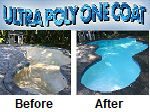 better way to do chlorine. A
salt chlorine generator! It is
chlorine without all the negatives. No chlorine odor, no
handling, storage or buying chlorine and much better water
quality. You'll have to buy some salt - common, non-iodized
food grade or water softener grade - inexpensive!
Thereafter, you need to add more salt only to replace that
lost through pump out, splash out, backwashing or overflow.
With a salt chlorine generator, all you need to do is add an
initial dose to stabilizer to bring the level up to 40-60
PPM. Thereafter, more stabilizer is needed only to replace
that lost through pump outs, backwashing and splash out. The
overall water chemistry should be maintained in the usual
manner. Because salt chlorinators destroy chloramines so
effectively, you will find the swimming conditions more
pleasant and easier to maintain. Proper salt level is
important. Too little and not enough chlorine will be
produced. Too much could shorten the life of the salt cell.
PockeTesters are the easy way to test the salt level. I hope
that you will find this information helpful and thank you
for the on-line purchase of the Ultra Poly One Coat.
better way to do chlorine. A
salt chlorine generator! It is
chlorine without all the negatives. No chlorine odor, no
handling, storage or buying chlorine and much better water
quality. You'll have to buy some salt - common, non-iodized
food grade or water softener grade - inexpensive!
Thereafter, you need to add more salt only to replace that
lost through pump out, splash out, backwashing or overflow.
With a salt chlorine generator, all you need to do is add an
initial dose to stabilizer to bring the level up to 40-60
PPM. Thereafter, more stabilizer is needed only to replace
that lost through pump outs, backwashing and splash out. The
overall water chemistry should be maintained in the usual
manner. Because salt chlorinators destroy chloramines so
effectively, you will find the swimming conditions more
pleasant and easier to maintain. Proper salt level is
important. Too little and not enough chlorine will be
produced. Too much could shorten the life of the salt cell.
PockeTesters are the easy way to test the salt level. I hope
that you will find this information helpful and thank you
for the on-line purchase of the Ultra Poly One Coat.
Sincerely. Alan Schuster, 4/17/2008
► No Chlorine
Readings?
I just opened my above ground pool
(18' X 4'). I added chlorine stabilizer and liquid chlorine.
I actually put in about 2-1/2 gallons of liquid chlorine and
still can't get a reading on my test strip. It is reading
the chlorine reading very low. Does liquid chlorine expire
over time? I bought several cases last year when I found a
good sale, but there is no expiration date on the bottles or
boxes. Thanks.
Joan M., Brookfield, IL 6/1/2007
Most liquid chlorine is labeled at a strength that is
probably lower than actual, in order to allow for loss
during storage.
 I doubt that the problem is the chlorine.
Instances of sub-potent product are rare. It is not unusual
for a just opened pool to require a lot of chlorine. I
suggest that you bring in a water sample for testing. This
will confirm your own test readings and uncover any other
water chemistry problems. Most likely you will have to add
more liquid chlorine, until you are able to maintain a 1.5-3
PPM level of Free Chlorine for an overnight period. This is
necessary in order to destroy all of the accumulations, that
have occurred since the pool was closed. Keep adding shock,
as needed, until this is achieved. The presence of
phosphates and nitrates can accelerate algae growth and
increase the chlorine demand. Some dealers can perform these
tests and it can be worthwhile. If phosphates or nitrates
are found, POOL REFRESH is a
convenient, 2-part way to solve the problem. I hope that this information
will prove helpful. I doubt that the problem is the chlorine.
Instances of sub-potent product are rare. It is not unusual
for a just opened pool to require a lot of chlorine. I
suggest that you bring in a water sample for testing. This
will confirm your own test readings and uncover any other
water chemistry problems. Most likely you will have to add
more liquid chlorine, until you are able to maintain a 1.5-3
PPM level of Free Chlorine for an overnight period. This is
necessary in order to destroy all of the accumulations, that
have occurred since the pool was closed. Keep adding shock,
as needed, until this is achieved. The presence of
phosphates and nitrates can accelerate algae growth and
increase the chlorine demand. Some dealers can perform these
tests and it can be worthwhile. If phosphates or nitrates
are found, POOL REFRESH is a
convenient, 2-part way to solve the problem. I hope that this information
will prove helpful.
Sincerely. Alan Schuster,
6/1/2007
► How Much
Shock Is Enough?
This is incredible! Four pounds of
shock, plus another pound of granular chlorine, plus 3
gallons of liquid chlorine, added to almost 20,000 gallons
of water and no chlorine readings at all. This is a first
for me. I even took one of the test strips and put it into
some straight bleach to see if it was any good. It turned
instantly dark purple. So I know they're working ok. Is this
the first time you have heard of this happening?
Dave, 4/18/2006
NO!!! A woman once told me that she had added 36 pounds of
shock, over time, and I told her it was not enough. It will
be enough only when you have a stable free chlorine reading.
Have your water tested for phosphates and nitrates. These
minerals can add to the chlorine demand by accelerating
algae growth. You can't do anything about the nitrates, but
you can deal with the phosphates. Removal of phosphates will
make nitrates less of a problem. For free chlorine testing,
I suggest using LaMotte Insta-Test strips, as they provide
the right kind of information. To better assure proper
overall pool water chemistry, visit a pool store that has a
very reliable, professional lab such as a
WaterLink SpinTouch Lab,
rather than a less accurate test kit or strip reader. I hope that I have been
helpful. enough only when you have a stable free chlorine reading.
Have your water tested for phosphates and nitrates. These
minerals can add to the chlorine demand by accelerating
algae growth. You can't do anything about the nitrates, but
you can deal with the phosphates. Removal of phosphates will
make nitrates less of a problem. For free chlorine testing,
I suggest using LaMotte Insta-Test strips, as they provide
the right kind of information. To better assure proper
overall pool water chemistry, visit a pool store that has a
very reliable, professional lab such as a
WaterLink SpinTouch Lab,
rather than a less accurate test kit or strip reader. I hope that I have been
helpful.
Sincerely. Alan Schuster, 4/18/2006
► High
Chlorine Reading?
How long might it take for a free
chlorine level of 15 to drop in a 18,000 gallon pool when it
is still cool and little sunlight? I superchlorinated when I
opened my pool due to green algae and now the chlorine level
is 15 ppm and not coming down. My pool is still very cloudy.
Any suggestions?
Donna, 5/22/2010
It is not likely that the test kit could have measured a
reading as high as 15 PPM with any reliability. The true
reading could
have been even higher.
That fact that water is still cloudy, could indicate that
the chlorine still has some more work to do. I suggest that
you add a dose of a "Blue" Clarifier and give it a little
more time. If the water clears up and
there is still a very high Free Chlorine level, it is
possible to add a chemical that will quickly lower the
level. But, first get the pool water clear. Many pool
professionals carry a chlorine neutralizer product, for use
in case of severe overdosing. Time is on your side. Refer to
the archives on cloudy water and filtration problems, for
additional information. I hope that I have been helpful.
Enjoy the pool season.
Sincerely. Alan Schuster, 5/22/2010
► In-Line
Chlorinator And Check Valve?
I have an in-line chlorine feeder. Do
I need to use a check valve if there is no heater?
Nameless, 2/10/2008
The purpose of the check valve is to protect the heater from
corrosive backflow from the chlorinator. No heater, means a
backflow valve is not required. This product helps keep the
water warmer, by reducing evaporation. I hope that this
answers the question.
Sincerely. Alan Schuster, 2/11/2008
► More Than
Mellow Yellow?
Hi Alan, Love your website, I couldn't
really find an answer to my question, can you help me? We
have had our new pool for 3 years (new home). We have a good
filter system, etc. and the water has been fine, but
recently the chlorine levels are really high. My husband
added shock a few times, because a friend said that would
help, but I actually think that is when the problem started.
We only do the "visual" test, don't know how to do all the
numbers. The color is bright orange, instead of mellow
yellow. We turned off our chlorinator, and waited over a
week, and it still is high. The pool gets very little use,
just us, about once a month. Any suggestions? Thanks.
Cheryl, St. Augustine, FL, 2/20/2020
Too much chlorine - plain and simple. The tester that you
are using provides a poor picture of the state of the
chlorine content. I suggest that you get a test strip such
as the LaMotte Insta-Test.
Better yet, order a
ColorQ 2X PRO 7
all-digital tester. Both measure free and total
chlorine. The free chlorine should be 1-3 PPM and the total
chlorine not more than 0.3 PPM higher, for ideal conditions.
A water analysis will help determine what the next step
should be. If the free chlorine is low, add more chlorine.
If the total chlorine is more than 1 PPM, try adding some
potassium monopersulfate shock. Hope that I have been
helpful.
Sincerely. Alan Schuster, 2/20/2020
►
Unstabilized Tablets And Reducing Cost?
Can you tell me who makes/sells
unstabilized chlorine in tablet or stick form. I generally
use 3" pucks but they seem to only be available with
stabilizer in my area (Tennessee). Some guy on a forum,
which I can't find again, said he had started using
unstabilized tablets because of stabilizer build up and
that's what I need to do. I have used liquid bleach and it's
good, but it has gotten as expensive as pool stuff and it's
heavy. Thank.
Mac, Gallatin, TN, 1/10/2008
So far as I know, the only chlorine tablets, for residential
home feeders, are stabilized trichlor tablets and sticks. It
is dangerous to use any other form of chlorine, in an
enclosed in-line feeder, as there is a risk of explosion or
serious damage. Have you ever considered a
salt chlorine
generator? No chlorine to buy, store or handle. No
buildup of stabilizer! I realize that you want to reduce
your chlorine costs and that can be done by reducing
consumption. I hope that this information is helpful.
Sincerely. Alan Schuster, 1/10/2008
► Why Test
Total Chlorine?
Found you site through the LaMotte
website. I recently bought a Pool Manager DPD test kit
(model DT-3, Code 7011). I am a new in ground pool owner in
the south of France. I am OK with the pH test (5 drops of
indicator) and the free Chlorine test (add tablet 1 to fresh
water), but it is unclear whether the total chlorine tablet
goes in the same water as the free chlorine test (i.e.
sequential) or whether I need to get some fresh water from
the pool. I am aiming for a target of 1.5 - 2.0 Free Chlorine
and 7.4 pH, are there any limits for the Total Chlorine and
why am I doing this test at all? Best regards.
Edward M., France, 8/27/2005
You should use the same water sample. The Free Chlorine test
measures the active sanitizer. Total Chlorine is Free
Chlorine plus Combined Chlorine. Ideally, you want the Total
Chlorine reading to be less than 0.3 PPM higher than the
Free Chlorine reading. Otherwise, a shock treatment may be
necessary. Combined chlorines are irritating and odorous and
you want to control their concentration. I hope this
explanation helps.
Sincerely. Alan Schuster, 8/27/2005
► Chemical To
Help Make Chlorine Last Longer In The Sun?
Can you please tell me a chemical I
can use to make chlorine last longer in the hot sun. Thanks.
Noeline T., New Zealand, 1/15/2010
Chlorine stabilizer is what you need to help make chlorine
last longer. Chemically, it is cyanuric acid. It is sold,
most wherever pool chemicals are sold. In most cases,
a maximum of 20-40
PPM is used. Chlorine depletion can also be due to algae
growth, high bather use, urine, phosphates and nitrates.
Poor circulation can make algae growth more likely. You
might consider adding THE CIRCULATOR,
because it will dramatically improve pool water circulation,
as well as chemical and heat distribution. I hope that this
information will prove helpful.
Sincerely. Alan Schuster, 1/16/2010
► Chlorine
Overproduction?
Our pool has a salt water chlorinator.
I don't actually add chlorine to my pool. We use test strips
which indicate high Free Chlorine. Can you give some
suggestions on what we should do to drop the chlorine level?
Josephine S., Australia, 4/18/2005
You are producing too much chlorine for the pool, at least
for this time of the year. Lower the setting on your
salt
chlorine generator or cut back on the hours of usage.
Chlorine neutralizer products are available that can quickly
lower very high levels. Otherwise, shut off the chlorine
generator, until the level drops into a comfortable range. I
hope that this information proves helpful.
Sincerely. Alan Schuster, 4/18/2005
► Dark Orange
Test Color?
We just opened our 24 foot round above
ground pool. I did not check the chemicals before adding 2
gallons chlorine and 18oz of algaecide. Now, 24 hours later,
when I check the chemicals, the chlorine reading is dark
orange and pH is very dark red. What do I have too much or
too little of?
Pam, 5/17/2004

Sounds like you are using an OTO test kit. The dark orange
color should indicate that the chlorine level is very high.
If you just opened the pool, it will drop as the chlorine
reacts with algae and debris. The very red color probably
indicates that the pH is too high. Add pH reducer, in order
to lower it into the 7.2-7.6 range. OTO test kits present a,
somewhat, misleading picture of the state of the pool water
chemistry. I suggest that you consider using a more modern
product such as
Insta-Test Test Strips. These test strips
function well at high ranges and test for the more important
Free Chlorine reading. OTO only test total chlorine. If you
would like to avoid guess about color-matching, a
ColorQ
all-digital water analyzer is just what you need. I hope
the information proves helpful.
Sincerely. Alan Schuster, 5/18/2004
► Why Does
The Chlorine Level Drop?
I’m using a salt water generator on a
34,000 gal indoor pool that I keep covered. I use the ColorQ
test kit for all testing. I keep the pH at 7.2, The
stabilizer is 68 ppm, so the alkalinity is 81 (alkalinity
tests at 109 ppm), free chlorine at 2 to 3 ppm, total
chlorine less than 2 ppm over the free chlorine. Recently,
the chlorine is being used up at a rate of about 1 ppm per
day, even if no one uses the pool. Why is the chlorine
getting used up do fast? Thanks.
Arthur K., Crystal Lake, 12/15/2008
Your combined chlorine (the difference between the free and
total chlorine readings) is too high. Ideally it should be
under 0.3 PPM - certainly under 1 PPM. In your case the
reading could be 2 PPM. Each 1 PPM of combined chlorine will
destroy 10 PPM of free chlorine, which is why the level is
dropping. When the combined chlorine gets under 0.3 PPM, the
free chlorine level should be more stable. In addition,, the
filter contains organic matter, which was previously
filtered out. As water passes through the filter, it reacts
with this organic debris. There could be a little or a lot.
When the filter is off, bacteria, in the filter are free to
grow, creating a new demand for chlorine. When the filter
and pipes are free from organic matter, the chlorine
stability should increase. I hope that this information has
been helpful.
Sincerely. Alan Schuster, 12/15/2008
► Chlorinator
Not Working Right?
I have a chlorinator unit located
right beside the pool filter, with an access lid at the top.
It has an open pvc pipe in the middle where water flows down
the pipe and out into the pool. I can’t see where the water
is being pumped or pushed into the unit. My problem is there
doesn’t seem to be adequate water being pushed up into the
unit to sufficiently erode the 3” chlorine tablets. The flow
of water leaving the unit and going into the pool is slower
than normal. Is there anything I can do to fix this? I use
to keep 3-4 tablets in the unit and maintained chlorine/free
chlorine levels at 3 and 3. Now, I put 6 or 7 tablets in and
I can barely keep a 1 PPM level. No algae in the pool yet!
Help!
Marie M., 8/11/2005
It sounds like the chlorinator has become clogged with scale
deposits or product residues, although I can't be certain. I
suggest that you refer to the troubleshooting guide that may
be present on the manufacturer's website. Before attempting
to clean this equipment, all chlorine must be removed. Good
luck and I hope that this information proves helpful.
Sincerely. Alan Schuster, 8/11/2005
Thanks for the quick response. You
were right. The inlet line was clogged. We’ve fixed it and
things are back to normal. I’ll definitely recommend your
site to others! Thanks again!
Marie M., 8/12/2005
► Chlorine: is it Free or Total?
I am going to a fitness club to swim in San Diego area. I am
unable to do any other exercise because of severe back
problems. Every time I go home after a swim and dip in the
hot tub, my skin burns and gets prickly hot and I can't get
the smell of chlorine out of my sinuses for 2 days. I talked
to the maintenance man who said the he keeps the pool at 3
PPM and the hot tub at 5 PPM with a pH of about 7-7.5. Is he
keeping the chlorine levels too high, especially in the spa?
I desperately need to get this resolved so I can continue my
only form of exercise without developing a skin problem on
top of my many other health problems. Thanks.
Lori B., San Diego, CA, 2/15/2008
There are two types of chlorine: free chlorine that is the
active germicidal form and combined chlorine which can be
odorous, irritating and ineffective. The combination of free
and combined chlorine is total chlorine. Most often the free
chlorine is maintained at 1.5-3 PPM and the total chlorine
should not be more than 0.3 PPM higher than the free
chlorine reading, for ideal conditions. There is no way for
me to know if the operator is testing for free or total
chlorine. I suggest that you ask some questions, as to what
is actually being tested, being maintained and what the
county health authorities require. Maintaining such a
facility solely on chlorine is fast becoming a thing of the
past. The U.S.
Center for Disease Control (CDC) even suggest that the
facility users bring their own test strips and do some
detective work. Today,
salt chlorinators,
ozonators,
uv sterilizers and
other alternative sanitizers are becoming the rule, rather
than the exception. Good luck and I hope that I have been of
some help.
Sincerely. Alan Schuster, 2/15/2008
► Combined
Chlorine In Tap Water?
Is there a test that can be done to
check for "Inorganic" vs. "Organic" combined chlorine. It is
my understanding that some combined chlorine may be present,
in the tap water, in the inorganic form. It is, also, my
understanding that this "Inorganic Chlorine" cannot be
broken down by superchlorination (10 x the combined chlorine
level). Is this true, and if so is there another way it can
be eliminated?
Mike C., 4/16/2004
Never been asked this before! It is true that there may be
some combined chlorine present in some municipal water
supplies: chloramine to be more precise. While chloramine is
much less effective as a sanitizer, than is chlorine
(hypochlorous acid), it is also unlikely to oxidize some
simple organic contaminants into chlorinated hydrocarbons
(chloroform for example). For this reason many water
authorities use chloramine instead of chlorine. In any
event, we are dealing with very low quantities, especially
as compared to the concentrations found in a swimming pool.
Chloramine can be destroyed by 10 times its concentration of
chlorine. Your question centers on inorganic vs. organic and
in that context there is a problem. An organic compound is
defined as one that contains both carbon and hydrogen.
Chloramine does not contain carbon and is not an organic
compound. If you are trying to read something sinister into
the presence of chloramine in your water supply, you are off
the mark, as its presence is likely intentional. I hope that
I have answered the question.
Sincerely. Alan Schuster, 4/16/2004
► Standard
For Chloramines?
What is the recommended chloramine
level for a pool? Some say 1 ppm and some say less than
0.2ppm. My tap water is approx 0.5ppm or less , I am
confused on this point. How much does it take to oxidize 1
ppm or the 0.2 ppm. I only oxidize with monopersulfate.
Pat C., Chattanooga, TN, 5/24/2007
You are taking things out of context. Some water systems are
sanitizing with higher levels of chloramines, in order to
prevent oxidation of unwanted waste products. Chlorine was
converting them into hazardous byproducts, such as
chloroform and chloramines do not. This has nothing to do
with a swimming pool. The generally agreed upon standard for
free chlorine is 1.5-3 PPM and the total chlorine should not
be more than 0.3 PPM higher, for the most ideal conditions.
That means 0.3 PPM of combined chlorine or chloramines is
maximum. It can be easier said than done, but that is the
goal. MPS helps destroy chloramines and generates free
chlorine. To destroy 1 PPM of chloramine, you need 10 PPM of
free chlorine. I always preferred the MPS. If you want this
to be less of a problem get a
salt chlorine generator. It
destroys chloramines, as the water passes thru the cell. It
is the future of chlorine, as it is chlorine without many of
the problems. I hope that this information is helpful.
Sincerely. Alan Schuster, 5/24/2007
► Stabilized
Chlorine And Indoor Pool?
My name is Josh of Hampstead, MD. I am
a lifeguard and certified pool operator at a local indoor
pool and have a question for you. We recently switched our
chlorine treatment from sodium hypochlorite (liquid
chlorine) to sodium Dichloro-S-Triaznetrione (dichlor). And
the other day read that you should not use this in indoor
pools. The reading did not give a reason why and I have been
searching the Internet, but cannot find an answer. Can you
help me?
Josh D., Hampstead, MD, 4/5/2009
Shouldn't, don't need to or can't! Provided that state laws
do not prevent the use of stabilized chlorine in commercial
pools, you can certainly use sodium dichlor in an indoor
pool. However, you are paying a premium price for a chlorine
that is stabilized against UV light from the Sun. This is
not an issue in a indoor pool. The better question would be,
should I use sodium dichlor? And the answer is no! The use
of sodium dichlor would cause the cyanuric acid level to
rise steadily over time, forcing at least a partial
replacement of the water on a regular basis and reducing the
effectiveness of the chlorine. The advantage
of dichlor is that it is essentially neutral and completely
soluble. Liquid chlorine can be metered in continuously and
provide more controllable sanitation. It will require the
regular addition of acid to maintain the pH. It is by far
and away the most popular chlorine for use in commercial
pools. The new trend for chlorine is towards the
Salt Chlorine Generator,
which is ideally suited for commercial pools, because of its
controllability. for I hope that this information will prove helpful.
Sincerely. Alan Schuster, 4/5/2009
► Stabilized
Vs. Unstabilized?
Hello, Alan. I have a 18' x 4' above
ground vinyl pool. I have been given different advice from
everybody about what type of chlorine I should use.
Stabilized vs. Non-Stabilized! Some say that stabilized will
"eat" away the vinyl. While others say that because I used
non-stabilized is the reason why I had so many problems last
year with high pH and mustard algae! I am confused on which
is best. Can you please help? I don't want to go through all
that again this year! Thanks.
Shannon, 5/8/2010
Stabilized chlorine will not "eat away" at vinyl liners. If
you leave any kind of chlorine in prolonged contact will
vinyl, it can affect the color or damage the surface. When
you use the unstabilized products, the chlorine level spikes
upward and slowly drops, due to bather action, debris and
the Sun's UV rays, until you add more. In addition,
unstabilized chlorine products are all high pH and will
raise the pH each time they are added. High pH values, tend
to make the chlorine less effective. The combination of high
pH and depleted chlorine levels can lead to algae problems,
such as you are describing. If you are using calcium
hypochlorite, the hardness levels will build up, over time,
and may result in cloudy water and/or scaling conditions.
Stabilized chlorines fall into two categories: a quick
dissolving, completely soluble and essentially pH neutral
granular dichlor and the slow dissolving solid forms of
trichlor. Trichlor is acidic and will require periodic
adjustment of the pH. The advantage is that this product can
be used in a feeder, providing a more consistent application
of chlorine to the pool. This, in turn, helps to reduce the
probability of algae growth and makes for more comfortable
swimming conditions. Stabilized chlorines are protected
against UV destruction and tend to last longer than
unstabilized types. The best defense against mustard algae
is maintain a consistent free chlorine level, of 2-4 PPM,
and use an effective algaecide, as additional protection. I
hope that I have answered your questions and provided some
assistance. Enjoy the pool season.
Sincerely, Alan Schuster, 5/8/2010
► Cyanuric
Acid Contribution?
Is there more cyanuric acid in sodium
dichlor shock treatment than in trichlor tablets? What is
and where do I get non-chlorine shock and lithium
hypochlorite? What do you mean when you say "standard
chlorine treatment is declining." And one last question,
what are and why are the support products for a "salt
chlorine generator" different? Thanks for all the good info
on your site.
Larry, Phoenix, AZ 3/15/2007
Yes, there is more cyanuric acid in a pound of dichlor than
in a pound of trichlor tablets. Both are chlorinated
cyanuric acid. Trichlor contains more chlorine, so that
leaves less cyanuric acid. Both products will cause the
cyanuric acid to rise, as they are added over time.
Potassium monopersulfate is non-chlorine shock and should be
widely available. Lithium hypochlorite is included in many
lines of chemicals and should be easy to find. The
popularity of regular chlorine is declining, as products
like salt chlorine generators continue to grow. It is still
chlorine but without the storage, handling and additions.
And no fear about cyanuric acid build up. Apart from the on
time addition of salt, the chemicals are the same as for any
chlorine pool. I hope that this helps clarify the subject.
Sincerely. Alan Schuster, 3/16/2007
► Lowering
Pool Chlorine Level?
The chlorine level in my pool is
through the roof and I can't figure out how to lower it, I
have heard that I should use muriatic acid to lower the
level? If that's true how should I go about it? Thank you
for your help.
Dalton, 3/9/2005
It is not true! It will make the chlorine more aggressive
and could fade the liner. Keep the pH at 7.2-7.6. Lowering
the level is simple. All you have to do is add a chlorine
neutralizer product, as directed. It will work quickly. In
the future remember that you can always add more chlorine -
you can't take out. Good luck and I hope that I have been
helpful.
Sincerely. Alan Schuster, 3/10/2005
►
Are The Tablets Still Good?
I have some 3" chlorine tablets that I
bought in bulk that are about a year old. Are they still
good? Also I live in Houston, TX where it get very hot (95 -
100 degrees) in the summer and my pool is exposed to the
western sun. I had problem maintaining a chlorine level of
1-3 as recommended. The chlorine seem to evaporate from the
water in a day due to the temperature. I have a 22,000
gallon gunite pool and the chlorinator dissolves my chlorine
tablets at about a rate of 7-8 tablets a week. Any thoughts
on that matter. Thanks.
Ken S, Houston, TX, 1/8/2004
It is possible that the chlorine has lost some of its
strength over time. Short of a chemical analysis, there is
no way to be sure. Your apparently high chlorine consumption
could be related to the biological demands of the water, the
high temperatures, sun exposure and possibly the pool water
chemistry. It may have nothing to do with the content of the
tablets. I suggest that you shock the pool to eliminate any
pent-up chlorine demand and start with a level playing
field. Unless the tablets are in a state of obvious
deterioration, I would certainly use up the tablets. In the
unlikely event that their potency is reduced, you should add
an extra tablet, monitor the chlorine readings and adjust
the chlorinator accordingly. I hope that I have been
helpful.
Sincerely. Alan Schuster, 1/9/2004
► Chlorine
Block?
Alan, is there such a thing as over
chlorinating a pool? Is it possible that I added too much
shock? My pool is extremely cloudy and I have been trying to
shock it and it does not seem to be working. the filter has
been running for four days now, and still cloudy. I have
backwashed it, added clearing chemical, and vacuumed it
twice. Is it possible I have a chlorine block going on? If
so, how do I treat it? Thank You.
Rod Nelson, 10/8/2008
Chlorine block is one of those swimming pool water problem
areas riddled with myth and misinformation. If the pool has
been over chlorinated, the test readings should be very
high. The catch is that very high chlorine levels can
destroy the testing chemicals and give false results. The
best method to use to test for high chlorine levels is
Syringaldazine: the chemical used in test strips such as the
Insta-Test products. Do you have high chlorine levels? My
guess is that you do not. I suggest that you confirm what
your free chlorine level is
and if it is below 5 PPM, you should add more shock. It
sounds like you have a sand filter and this type of filter
can be less effective after backwashing. Inadequate
filtration is probably part or all of the cause of the
cloudy pool water. Boost the free chlorine level to 10 PPM
and add 1/2 pound of DE to the skimmer with the filter
operating. Make sure that the pH is 7.2-7.6 and keep the
filter running. The next day add a dose of a quality blue
clarifier, to help coagulate fine, suspended particles. Once the water is clear, backwash to
waste and reapply the DE. Thereafter, backwash only when the
pressure is too high. The efficiency of a sand filter can be
greatly improved by the use of a zeolite sand
replacement filter media. It is convenient, longer-lasting
and modestly priced. Something to consider, whenever the
filter sand is replaced? A
salt chlorine generator
would be a better way to do chlorine! I hope that this information will
prove helpful.
Sincerely. Alan Schuster, 10/8/2008
► Needing A
Lifesaver?
Alan I am ready to throw in the towel.
I have a approx 24,000 gal. inground pool. I just had a new
pool liner put in and I used my well to fill up the pool. I
can not keep a chlorine reading for more than 2 days. I have
add chlorine stabilizer though I'm not sure I added enough.
I keep getting algae growth on a continuous bases. The pH is
within limits and so is the TA. I have to shock the pool
ever 3 days to keep a reading at all and it drops fast. I
also keep chlorine tablets in the skimmer this does not help
either. This is getting expensive. Another question how do I
test for calcium hardness I have never done this. Starting
from scratch with new (well) water what are all the
chemicals I have to add for the water to be correct. Maybe I
missed something? Any information would be a life saver.
Thanks.
Lori from Carolina, 9/13/2005
Not having enough stabilizer is not the problem! Your pool
has algae and you are not going to be able to maintain a
Free Chlorine level, that is adequate, without destroying
all of the algae. To do this you must add a quick dissolving
chlorine or shock, every few hours, until the algae is gone
and you are able to maintain a 1.5-3 PPM Free Chlorine level,
after an overnight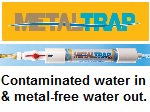 period. Keep the filter running and try
to redirect the returns to send more water towards the
problem areas. Your well water could contain materials that
consume chlorine or add to the problem. If possible. have
the water tested for phosphates and nitrates. Both are
possible, if the well is from an agricultural area.
ColorQ
electronic testers available that test for calcium
hardness, as well as other pool water parameters. I would suggest
that you add a quality mineral treatment, such as
Liquid MetalTrap, as soon as
possible, because well water can contain metals that can
color the water and stain underwater surfaces. The best
option would have been to use a MetalTrap Filter to remove all metals, as the pool was
being filled. Nothing beats keeping metals out.
It simply attaches to a garden hose and can be used, with a
small submersible pump, to recirculate the pool water.
As water passes through, the metals will get removed. Refer to the
archives on pool shocking, pool water testing and algae for
additional information. I hope that I have been helpful. period. Keep the filter running and try
to redirect the returns to send more water towards the
problem areas. Your well water could contain materials that
consume chlorine or add to the problem. If possible. have
the water tested for phosphates and nitrates. Both are
possible, if the well is from an agricultural area.
ColorQ
electronic testers available that test for calcium
hardness, as well as other pool water parameters. I would suggest
that you add a quality mineral treatment, such as
Liquid MetalTrap, as soon as
possible, because well water can contain metals that can
color the water and stain underwater surfaces. The best
option would have been to use a MetalTrap Filter to remove all metals, as the pool was
being filled. Nothing beats keeping metals out.
It simply attaches to a garden hose and can be used, with a
small submersible pump, to recirculate the pool water.
As water passes through, the metals will get removed. Refer to the
archives on pool shocking, pool water testing and algae for
additional information. I hope that I have been helpful.
Sincerely. Alan Schuster, 9/13/2005
► Needing A
Bit More Chlorine?
I have an automatic chlorinator and it
doesn't always seem to provide enough chlorine. I have
opened the settings all the way. A few times the water
started to cloud. Any advice will be helpful.
Hank A. Columbus, OH, 6/18/2008
Try and keep the chlorinator filled with the tablets. Don't
wait for them to dissolve half way or more. The more
chlorine in the chlorinator - the more that will dissolve.
Try shocking the pool every Sunday evening. The weekend is
usually the most active period and the shock treatment will
help re-establish the Free Chlorine level. That way the
chlorinator does not have to play catch up. These
suggestions should help, just make sure that you test for
Free Chlorine regularly and often. Enjoy the summer.
Sincerely. Alan Schuster, 6/18/2008
► Wanting To
Protect The Liner?
Just found your website. There is a
lot of good information here. I just had a new liner
installed (inground, 16'x32'). I want the liner to last as
long as possible. I have Pool Cleaning Granules that I use
to shock the pool (I use the Trichlor tabs in the feeder).
Even when I broadcast the granules, they end up on the pool
bottom. I am worried that this will damage the liner. I
would like to add the granules to a five gallon bucket of
pool water, mix well, and pour into the skimmer. I have been
told not to do this. But, I cannot find out why I should not
do this. Can I do this? What are the pros and cons? My
present readings are: Free and total Chlorine are 2.5ppm,
Temp is 80°F, Total Alkalinity is 110 ppm, pH is 7.5,
Calcium Hardness is 260 and Stabilizer is 45 ppm. Thanks.
Todd in Alabama, 4/25/2004
Chlorine should always be added in full accordance of the
label directions. Adding chlorine through the skimmer is not
something that filter manufacturers recommend or that I
would ever suggest. I assume that the product that you are
referring to contains sodium dichlor. Dissolving this
product in a bucket of water could prove dangerous and that
is the reason it is and should used in that manner. This
product is normally broadcast into the pool and is
relatively quick dissolving. Your concern about the liner is
well founded. Avoiding chlorine contact with the vinyl liner
is a good practice. Because you are using trichlor tablets,
in a feeder, I suggest that you use a product other than
dichlor, as a shock treatment. Otherwise the stabilizer
level will rise too rapidly, possibly requiring some water
replacement. This can be done by using liquid chlorine or a
non-chlorine shock, whenever a shock treatment is required.
Avoid ultra high free chlorine levels, especially coupled
with low pH conditions. A
salt chlorine generator
is a better way to add controllable amount of chlorine,
which helps preserve the liner's appearance. I hope that this information is
helpful.
Sincerely. Alan Schuster, 4/25/2004
► How To
Neutralize Chlorine?
Our pool building experience has been
unpleasant at best. The contractor finally "finished" the
pool last weekend. They plastered and filled it, and we were
reasonably pleased, but woke the next morning to half a
dozen serious cracks in it. Now after arguing with us, and
putting chlorine into it, they have agreed to drain and redo
it. However, they would like to pump the water into a runoff
canal on the property, but we are refusing because we are
concerned about putting chlorinated water into it. Is there
a way to neutralize the chlorine so that it can be pumped it
into the canal or do we have to insist that water trucks
remove it? Thanks for your help. Sincerely.
James T., 9/25/2008
Most pool dealers carry a chlorine neutralizer product. Used
as directed, it will drop the chlorine level very quickly.
The products, of its reaction with chlorine, are harmless. I
hope that this information is helpful.
Sincerely. Alan Schuster, 9/25/2008
► What Is
Stabilized Chlorine?
Can you explain to me what stabilized
chlorine is and what are the advantages and disadvantages?
Right now I am using calcium hypochlorite and I'd like to
switch. Thanks.
Jason F., Oakdale, NY, 5/11/2005
Stabilized chlorine refers to products that help protect
chlorine, in the water, from being destroyed by ultra-violet
rays from the Sun. This ability will help the chlorine last
longer and save on consumption of chlorine. Stabilized
chlorines are essentially chlorinated cyanuric acid. It is
the cyanuric acid portion that acts as a stabilizer or
conditioner and improves the performance of these types of
chlorine. Stabilized chlorine is available in two types.
Sodium dichlor is a granular material, completely soluble,
quick dissolving, essentially pH neutral and is used for
daily chlorination and shock treatment. Sodium dichlor
cannot be used in an enclosed chlorinator. Trichlor is
usually available in a solid form, tablets or sticks, and is
a slow-dissolving product, that is used in chlorinators and
floating feeders. A granular form of trichlor is available
for spot treatment of masonry pools only - not for use in
vinyl pools! Trichlor is acidic in nature and its use may
lower the pH over time. Stabilized chlorines offer
versatility and convenience. The only disadvantage is that
the stabilizer level can build up over time and can require
some replacement of pool water. A CYA level shoulkd be kept
under 50 PPM and that is quickly reached, when stabilized
chlorine products are used. If you want to avoid the
inevitable buildup and water replacement problems, a
salt chlorine generator
would be the ideal solution. Affordable and
controllable! I hope that I have been helpful. Enjoy the summer.
Sincerely. Alan Schuster, 5/11/2005
► Various
Names For Chlorine?
Everything I read has a different name
for chlorine and it's confusing. Free chlorine? Is that
something that you don't have to pay for? Just kidding, but
you can get the drift? Could you explain the differences in
really simple terms. Thanks.
Cliff L., Brockton, MA, 6/30/2005
Chlorine does have a variety of descriptive names, as
follows:
Free Chlorine is the active germicidal form of chlorine and
chemically known as hypochlorous acid. Also called Available
Chlorine. This is the good stuff, as far as sanitizing is
concerned.
Combined Chlorines are the products formed when Free
Chlorine reacts with waste materials and forms Chloramines
and other Combined Chlorines. These forms can cause odor
problems and are irritating and ineffective pool water
sanitizers.
Total Chlorine is the sum of the Free Chlorine plus the
Combined Chlorine. This value includes all the forms of
chlorine. Sometimes, called Chlorine Residual. This is not a
meaningful indicator of the sanitizer level, because you
never know how much is Free Chlorine.
Chloramines are irritating, odorous forms of combined
chlorine, formed by the reaction of chlorine with nitrogen
containing waste products. Ineffective as a pool or spa
sanitizer. High levels of chloramines can cause the problems
of "Red Eyes" or Stinging Eyes." Usually requires a shock
treatment to lower or destroy.
If you are only going to perform one test, do the Free
Chlorine Test. In ideal swimming pool water, the Total
Chlorine reading should not be more than 0.3 PPM higher than
the Free Chlorine reading. That can be difficult in the real
world, so be prepared for occasionally higher differences. I
tried to keep it simple. Hope I succeeded!
Sincerely. Alan Schuster, 6/30/2005
► Should I
Dissolve The Chlorine?
I have been dissolving granular
chlorine in a plastic bucket before adding to the pool. Is
that a good practice? My friends say no. Please settle the
question for us. Thank you.
Cynthia W., Pottstown, PA, 7/23/2006
I'll side with your friends! What you are doing, depending
upon the type of chlorine used, could be quite dangerous.
Please read the labels and follow the directions. Please!
Sincerely. Alan Schuster, 7/23/2006
► Protecting
The Vinyl Liner?
A friend of mine had a beautiful
looking above ground pool, just a few years ago. Now the
liner looks all bleached out. He adds a granular chlorine to
the pool and just dumps it into the water. I'm not sure, but
I think the chlorine is the problem. Can that be? I am doing
some research now because I plan on getting a pool next
spring and I would like to maintain the appearance. Thanks.
Jason A., Worcester, MA, 10/5/2004
It is normal for a vinyl liner to lose some of the color
over a long period of time. Ideally, it happens on an even,
overall basis and not in blotches. Vinyl liners can last for
10-20 years, depending upon vinyl quality and conditions,
before needing a replacement. The practice of "dumping"
chlo rine into the pool is not helping to preserve the
liner's appearance. Granular chlorine should be broadcast
across the surface, to allow for a more gentle addition to
the water. This will avoid clumping on the bottom, which
could result in some bleaching. Chemicals should be added
with the filter operating. If there is an
automatic pool
cleaner, it can help avoid products remaining on the bottom,
by improving circulation across the depths of the pool.
Typically, lithium hypochlorite and sodium dichlor are added
to the pool by broadcasting. Calcium hypochlorite is usually
added by forming a slurry and decanting the clear liquid
into the pool: away from the walls and in front of a return
flow. Always use all chlorine products in full accordance
with the label instructions! Built-in chlorinators, that use
solid forms of Trichlor are very popular and help avoid
liner fading, by applying a more uniform concentration of
chlorine over a period of time.
Salt Chlorinators avoid the
need to add any chlorine at all. The chlorine is made right
in the pool and it can maintain a much more consistent level
- something that's good for a vinyl liner. Or you could add
an Ozone Generator or an
Ultraviolet Sterilizer and it can drastically
reduce the amount of chlorine that you will have to add and
the liner will look all the better! Good luck with the pool.
I hope that I have been helpful. rine into the pool is not helping to preserve the
liner's appearance. Granular chlorine should be broadcast
across the surface, to allow for a more gentle addition to
the water. This will avoid clumping on the bottom, which
could result in some bleaching. Chemicals should be added
with the filter operating. If there is an
automatic pool
cleaner, it can help avoid products remaining on the bottom,
by improving circulation across the depths of the pool.
Typically, lithium hypochlorite and sodium dichlor are added
to the pool by broadcasting. Calcium hypochlorite is usually
added by forming a slurry and decanting the clear liquid
into the pool: away from the walls and in front of a return
flow. Always use all chlorine products in full accordance
with the label instructions! Built-in chlorinators, that use
solid forms of Trichlor are very popular and help avoid
liner fading, by applying a more uniform concentration of
chlorine over a period of time.
Salt Chlorinators avoid the
need to add any chlorine at all. The chlorine is made right
in the pool and it can maintain a much more consistent level
- something that's good for a vinyl liner. Or you could add
an Ozone Generator or an
Ultraviolet Sterilizer and it can drastically
reduce the amount of chlorine that you will have to add and
the liner will look all the better! Good luck with the pool.
I hope that I have been helpful.
Sincerely. Alan Schuster, 10/6/2004
► Gas
Chlorine?
Gas chlorine seems to getting more
popular. You don't have to handle any chlorine and the price
is right. Any thoughts on this topic?
Rob T., Lewisville, TX 6/23/2008
I don't like any method that adds all the chlorine, at one
time. Gas chlorine certainly can be effective and does not
contribute byproducts, but there is a downside, in my
opinion. The chlorine level spikes upward, because of how it
is added, and that can compromise bather comfort and bleach
bathing suits. In the case of vinyl pools, the color of the
vinyl liner could fade at an accelerated rate. I am a
believer in the type of prolonged or slower-release
chlorination that can be obtained by using an automatic
chlorinator or a salt chlorine generator. These methods are
better at keeping the Chlorine level within the 1-3 PPM
range, that is so important for comfortable and worry-free
enjoyment of the pool. I hope that I have been helpful.
Sincerely. Alan Schuster, 6/23/2008
► Tablets In
The Skimmer?
We had an 18X36 vinyl inground pool
installed this season. I have been using the "hockey puck"
tablets in the skimmer. I was familiar with the method
because of how my parents maintained their pool. A friend
mentioned, that this is not a good method, and suggested
that I get a chlorinator. Is that the case? Thank you.
Billy, 7/23/2006
It does sound like a case of like father like son! There are
a host of reasons that you should not be following this
practice. Some filter manufacturers will frown on this
chlorination method. If you have a heater, it can lead to
heater damage. At the very least you are exposing your vinyl
liner to fading. Picture this: after the pump shuts off the
chlorine tablets continue their slow dissolution and raise
the chlorine level in the skimmer. Convection and currents
can carry this higher chlorine content water out of the
skimmer and into contact with the liner. Given enough time,
there can be a degree of liner fading, especially in the
areas surrounding the skimmer containing the chlorine
tablets. If you add an automatic chlorinator, I'm sure that
you will find that your use of chlorine will decrease
because it is not being consumed in your filter and that you
will have more control over the chlorine level. And of
course your vinyl liner's appearance may be saved. Browse
through the archives for more information on chlorine,
filters, heaters and liners. I hope that I have been helpful
and convincing.
Sincerely. Alan Schuster, 7/23/2006
► Chlorine
Floats?
I have an in ground vinyl pool, 16 by
32 with a 6' deep end. I see all sorts of fancy devices for
sanitizing. I use 1" trichlor tablets in floating feeder and
shock the pool weekly. It all seems to work for me. What am
I missing?
Michael N., Penfield, NY, 8/2/2009
I suspect that you are someone that is taking the time to do
all the maintenance. Obviously you are doing a good job.
Unfortunately there are lots of pool owners that don't spend
the time to test the water, add the chemicals, vacuum the
bottom and clean the filter. Basically, you ar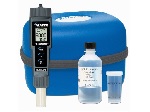 e satisfying
the pools requirement for chlorine. However, there are a few
limitations. The floater gives your less control over the
rate of chlorine additions and probably makes monitoring
more frequent. But, these are things that you can work to
control. However, there is something that you cannot correct
and that is the floater itself. The floater remains in the
water at all times and can be carried by currents or winds
to positions behind pool ladders or into corners. Here it
can remain in prolonged contact with the liner's surface and
this can result in a bleaching of the vinyl liner. Using a
floating chlorinator in a vinyl pool can entail a risk of
bleaching and can be avoided by using an inline chlorinator.
The inline chlorinator makes chlorine additions simpler,
more controllable, helps avoid liner damage and takes the
chlorine floater out of the pool and away from the bathers
and that is a good thing! Most new pools are using
salt
chlorine generators, because they reduce the time and effort
and produce better results, while avoiding buildup problems.
You can dial the chlorine production up or down. You can use
a convenient Salt PockeTester to measure the salt level, to
make sure that it is within the manufacturer's suggested
range. Add some acid, as needed, to lower the pH and you're
good to go. Enjoy the summer. e satisfying
the pools requirement for chlorine. However, there are a few
limitations. The floater gives your less control over the
rate of chlorine additions and probably makes monitoring
more frequent. But, these are things that you can work to
control. However, there is something that you cannot correct
and that is the floater itself. The floater remains in the
water at all times and can be carried by currents or winds
to positions behind pool ladders or into corners. Here it
can remain in prolonged contact with the liner's surface and
this can result in a bleaching of the vinyl liner. Using a
floating chlorinator in a vinyl pool can entail a risk of
bleaching and can be avoided by using an inline chlorinator.
The inline chlorinator makes chlorine additions simpler,
more controllable, helps avoid liner damage and takes the
chlorine floater out of the pool and away from the bathers
and that is a good thing! Most new pools are using
salt
chlorine generators, because they reduce the time and effort
and produce better results, while avoiding buildup problems.
You can dial the chlorine production up or down. You can use
a convenient Salt PockeTester to measure the salt level, to
make sure that it is within the manufacturer's suggested
range. Add some acid, as needed, to lower the pH and you're
good to go. Enjoy the summer.
Sincerely. Alan Schuster, 8/2/2009
|
Visit The Website Stores . . . for
better informed shopping!!! |
|
|
Shipping is FREE* . . . within
the Continental U.S.
A $9.99
handling charge will apply
to Continental U.S. Orders,
under $75.00. Orders
outside of the Continental
U.S. may require some
additional charge, based on
quantity and destination.
Most products can be
shipped World-Wide. International
and orders outside of
Continental U.S. - see
comments on the ordering
pages. |
|
|
Major
Credit Cards and PayPal are accepted. |
|
▲
Return To Top Of Page
▲
Aqualab Systems, LLC does not
make any warranty or
representation, either expressed
or implied, regarding the
accuracy or completeness of the
information provided by this
website; nor does Aqualab
Systems., LLC. assume any
liability of any kind whatsoever
related to, or resulting from,
any use or reliance on this
information. The content of this
website should not be used, if
it is conflict with any
applicable federal, state or
local regulations or guidelines.
© Aqualab Systems, LLC. All
rights reserved
|
|