| |
|
Scroll
down to browse through some archived Floatation Tank
questions and answers. Please click the Spa
Problems
Link, on top of every page, to access a complete listing
of Spa and Hot Tub Problem subjects, an alphabetized
Website Table of Contents, Spa and Hot Tub Equipment
Information, About Alan Biographic Material and a Spa
and Hot Tub Glossary. Use
the other links to access additional subject
information. More information about some new and unique
products, for Spas and Hot Tubs, can be found by visiting
The Website Store.
You'll never know what you'll find and that's always
fun. Be better prepared and avoid costly problems!
|
|
 |
Shipping is FREE* . . . within
the Continental U.S.
A $9.99
handling charge will apply
to Continental U.S. Orders,
under $75.00. Orders
outside of the Continental
U.S. may require some
additional charge, based on
quantity and destination.
Most products can be
shipped World-Wide. International
and orders outside of
Continental U.S. - see
comments on the ordering
pages. |
|
 |

Major
Credit Cards and PayPal are accepted. |
|
On-line
shopping since 2002 - Safe and Secure!!! |
|
Maintaining a Floatation Tank!!! |
|
Floatation Tanks fall into a gray zone, so far
as proper sanitizing requirements, especially,
if used commercially. In spite of the high
salt content, the water must be subjected to some
form of sanitizing and oxidation. The right
combination of products helps maintain proper
conditions. The regulations, concerning these
products, vary based on location and
use.
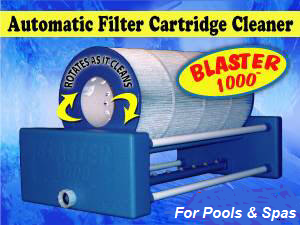
If you
have a cartridge filter,
The Blaster Automatic Filter Cartridge
Cleaner will make that chore
much easier.
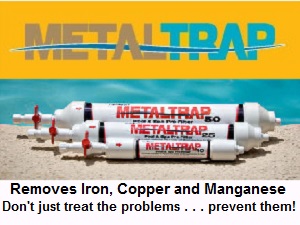
Attaching a
MetalTrap Filter, to the garden
hose, will remove dissolved heavy
metals, avoiding some potential staining
and discoloration problems. |
|
|
|
How to maintain a Floatation
Tank? |
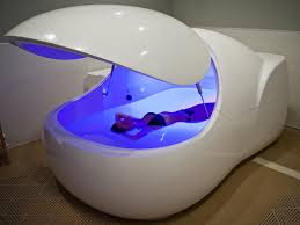
Floatation Chambers or Tanks, also known as Isolation
Tanks, Sensory Deprivation Tanks, Salt Water
Spas and Rest Chambers, are designed to separate
you from the distractions and stimuli of the
real world and take you a place of quiet, dark,
relaxing isolation, as you float buoyantly upon
a pleasurable body-temperature liquid. Instead
of ordinary water, a concentrated solution of
Epsom salts is used. Set your mind free!
Floatation tanks can be accessorized to suit
your needs. Maintenance of the water must be
done, so as to assure proper and sanitary
conditions. The requirements, for proper
sanitation and maintenance are in a state of frequent change
or revision. Requirements vary, by location and the
intended use, and should be researched for the latest
applicable regulations. The NSF, APSP and the
Floatation Tank Association are some of the resources to
check. If problems arise, refer to the
Spa Problems Page, as a
source of problem-solving information, broken down into
various categories. Scroll down the page and click on the linked
keywords,
catch phrases
or images, in the archived answers below, to access additional information,
on that topic or product.
 |
Join our E-Letter Mailing List.
You'll receive 1-3 E-Letters a
month, featuring helpful pool
and spa advice, new product
information and sale
announcements. All we
require is your e-mail address
and you can opt out anytime you
wish.
Your information
will never be shared or sold. |
|
▼
Helpful,
Problem-Solving Information, in a question and
answer format.
▼ |
►
How To Test Water, In A Floatation Tank?
What
would be the best way to test for pH, Bromine and
Peroxide, in a floatation tank? I have tried
some test kits, with confusing results.
Any help would be appreciated. Thank you.
Dale
C., 11/15/2020
The high concentration
of Epsom Salts does present interference problems,
with most of the typical pool and spa testers.
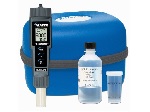
pH wo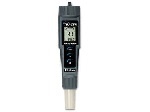 uld
be best tested, by using a pH Meter or a
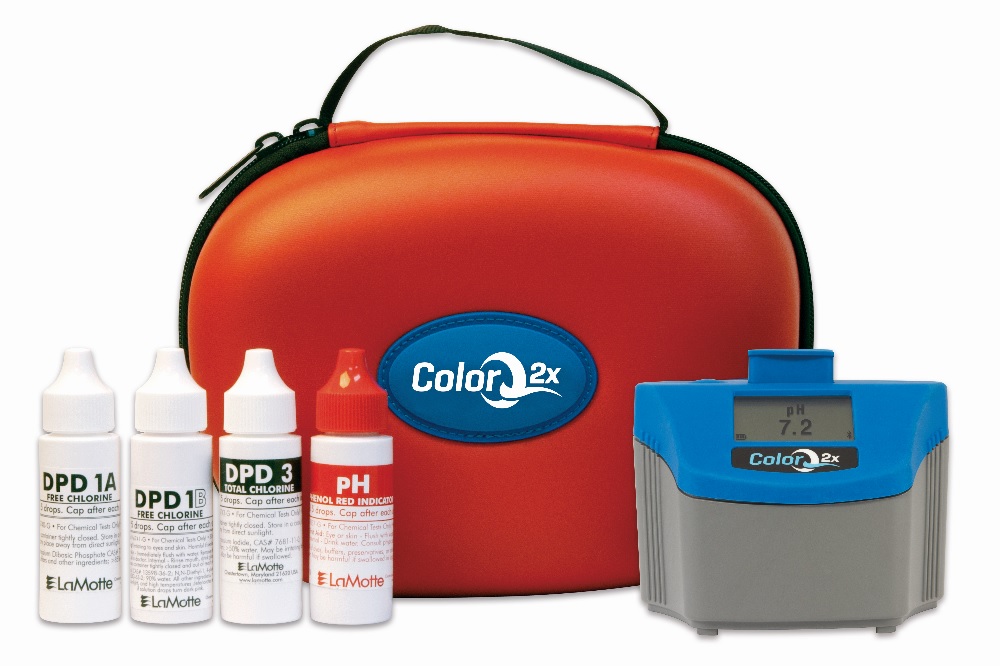
LaMotte
#1741 Electronic PockeTester. This same
PockeTester, when equipped with the optional Total
Chlorine Sensor, can test for Total Chlorine or
Bromine, if you multiply the Total Chlorine Reading
by 2.25, when bromine is being used. The
LaMotte
Electronic PockeTester #1741-KIT contains
everything necessary to do both the pH and either
Total Chlorine or Bromine tests. Hardness is
not relevant because of the high concentration of
Epsom Salts. Total Alkalinity should not be an
issue, so long as the pH is maintained, in the
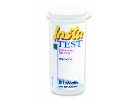
7.2-7.8 range. Many Float Tanks use Hydrogen
Peroxide, which can be tested, with the
LaMotte #2984 Insta-Test Peroxide Strips.
Some local jurisdictions may have other testing
requirements. I hope that this information is
helpful. uld
be best tested, by using a pH Meter or a
LaMotte
#1741 Electronic PockeTester. This same
PockeTester, when equipped with the optional Total
Chlorine Sensor, can test for Total Chlorine or
Bromine, if you multiply the Total Chlorine Reading
by 2.25, when bromine is being used. The
LaMotte
Electronic PockeTester #1741-KIT contains
everything necessary to do both the pH and either
Total Chlorine or Bromine tests. Hardness is
not relevant because of the high concentration of
Epsom Salts. Total Alkalinity should not be an
issue, so long as the pH is maintained, in the
7.2-7.8 range. Many Float Tanks use Hydrogen
Peroxide, which can be tested, with the
LaMotte #2984 Insta-Test Peroxide Strips.
Some local jurisdictions may have other testing
requirements. I hope that this information is
helpful.
Sincerely. Alan
Schuster, 11/15/2020
►
Pre-Filtering The New Water?
Hi
Alan, I didn't see on your site any water filters
for filtering fresh water as I'm adding it to my
float tank. If I overlooked it I'm sorry but can
your recommend one if not. I'm draining my float
tanks soon and would like to add a inline filter to
my water heater or some type of hose attachment
would work it it exists. Thank you.
Seth B., 3/29/2016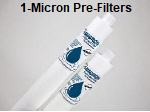
The only in-line filters, that we sell, are
sophisticate dual-cartridge ones, that remove
sediments and dissolved metals, such as iron, copper
and manganese. The MetalTrap
Dual-Cartridge Filter simply attaches to a
garden hose. Another model can be plumbed in. There
are two cartridges. The first removes sediments and
is washable and reusable. The second removes the
dissolved metals and should last for years. If
metals are not an issue, a
MetalTrap 1-Micron Pre-Filter is probably all
you need. I hope that the information provided
was helpful.
Sincerely. Alan Schuster, 3/29/2016
►
How Long To Run Filter And UV?
We have just bought a second hand float tank. It's
all set up and working well. We're leaving the
heater on all the time so tank is ready whenever we
want to use it, however I don't know how long the
filter pump and UV should be run for after each
float. Should they be run regularly for maintenance?
Forma time before a float? Guidance
appreciated. Best regards.
Tracy P, 4/2/2016
You definitely should operate the filter and UV, for
several hours a day. Your work does not stop there.
You must add an oxidizer, such as hydrogen peroxide
or bromine, to destroy the organic wastes. Most pool
and Spa stores sell a concentrated peroxide - use as
directed. I hope that the information provided
was helpful.
Sincerely. Alan Schuster, 4/2/2016
►
Filtration Choice And Ultraviolet?
I have a home made
flotation tank and need to get a better
filtration system. What would you
recommend for the Filter and Pump. do you
recommend UV? Do you sell these? Thank
you.
John P., 1/19/2014
Filtration is important, to remove dead skin, hair
and debris. A quality filter cartridge would seem
to the ideal choice: compact and easy to
clean and maintain.
Ultraviolet sterilizers are always a plus. It
kills virtually everything, as water passes through
the cell, including microorganisms that other common
pool and spa sanitizers cannot. We do offer UV
products, in our
website
store. You will also need to add oxidation and
hydrogen peroxide would seem the best choice. It is
what will oxidize and eliminate organic wastes and
byproducts, that cannot be removed by filtration.
It will help control slime buildup on the underwater
surfaces. A level of 30-50 PPM is typical and can
be measure with a test strip. We offer a
full line of test strips. I hope that this
information will prove helpful.
Sincerely. Alan Schuster, 1/19/2014
►
Floatation Tank pH Testing?
I am concerned
about the accuracy of the pH test, performed on my
floatation water. I was wondering, if the high Epson
Salt contents pays a role and what would be the best way to
test it. Thank you.
John
L. Durango, CO, 8/28/2013
According to
work done at LaMotte Company, no method is better than an
electronic pH meter or
LaMotte Digital PockeTester. I hope that is information is helpful.
Sincerely.
Alan Schuster, 8/28/2013
►
Adding Peroxide To A Tank?
I
noticed in your Q and A for float tank maintenance that you
recommend the use of H2O2
as an oxidizer in conjunction with a UV sanitizer unit.
The storage precautions for H2O2
recommend the exclusion of light from the storage container.
This seems to conflict with the concept of running the pump
whilst administering the dose of H2O2
at 40 PPM in order to mix it thoroughly. It would seem
that it might be advisable to further dilute the H2O2
solution and then disperse as widely as possible over the
surface of the tank (or run the pump with the sanitizer
switched off) and then wait for a longish period for the
oxidizer to do its job before starting a normal pump cycle
with the sanitizer on. Do you have any comments on
this?
Peter D., 12/21/2014
Just use as directed.
Concentrated hydrogen peroxide is a material that needs to
be handled properly and storing in a cool, dark place will
help preserve its longevity. Going through a dilution
step is asking for an accident to happen and will accomplish
nothing. Add it to the tank and avoid getting the full
strength material on your hands or clothing. Rinse and
dry the measuring cup. Happy Holidays.
Sincerely. Alan Schuster, 12/21/2014
►
Peroxide Level Not Lasting?
I use UV/H2O2
as the sanitation approach in my float tank. I've had fairly
stable levels of pH, TA, oxidizer and magnesium sulphate
levels. Lately, however, the solution seems to be
keeping stable ph readings, but the alkalinity has measured
zero or close to it, and I am no longer able to keep H202
levels beyond a single digit reading. I tried using a higher
concentration H2O2,
and was able to get the levels measured at 199 ppm one hour
after treating and circulating for about 3 turnovers, but
after zero uses and about four days, the H2O2
levels are back down to single digit ppm. Is this a signal I
need to change solution? I'm wondering if maybe the TDS
levels are somehow involved in the details, since there is
so much Epsom salt dissolved into the solution. At present,
the solution is clear, and there is no detectable odor or
other sanitation problems. Is there something else I'm not
considering, and/or do you have any advice on how to know
when it is time to change float tank solution using water
chemistry protocols? Thank you for your informative advice.
Sincerely.
James G, Windsor, CA
I don't
know of any protocols, that would be helpful. It is
recommended that the water in spas be replaced every three
months. I would think that every 3-6 months might work, for
a residential tank. Use this link, for some relevant
information:
www.floatation.org It is possible that due to the
high Epsom salt content, the TA test is not performing
properly. That is something to ask the maker of the tester.
Most likely there is a lot of organic matter, on the
underwater surfaces, which would account for the rise and
fall or the peroxide readings. Keep adding larger doses,
until you get a moderate level to persist, from day to day.
I hope that this information will be helpful.
Sincerely. Alan Schuster, 12/11/2014
► Floatation Tank pH
And Total Alkalinity?
Thanks for providing useful
information on your website. I have owned a floatation tank
for about 6 months with few problems maintaining the Epsom
salt solution. I recently tested the solution for pH which
came out low, so I added sodium carbonate from the local
pool supply store to raise it. It seemed to give a
closer-to-perfect reading on my color chart that came with
the test kit. I wasn't getting a perfect color match, so I
took the kit with solution after retesting to the pool
supply store. At the pool supply store they offered to test
the solution for pH and a few other things (alkalinity,
calcium, etc.) so I brought in a sample. The report (after I
treated) indicated that my pH was at 7.5 (very good) but my
calcium and alkalinity were low, with no unit of measurement
to help me, or you! I was given the impression that pH and
alkalinity are somehow related. Any explanation you have
would be helpful. With the readings from the pool supply
store, is there a reason for concern? Do I need to intervene
to raise the alkalinity and/or calcium? While unsure, the
rep at the pool supply store seemed to think that the pH
reading was probably more important to maintain and treat
than the alkalinity. Next, do you recommend a metal and
scale maintenance routine for a floatation tank solution?
Thanks for your time.
James G., 11/24/2012
Calcium is added to boost the hardness level or pool water.
Your water does not need any calcium, because magnesium
salts a ct to raise total hardness. The dealer is testing for
calcium hardness. If he better understood the chemistry or
could test for total harness, he would find it measuring off
the scale. Epsom salt solutions are slightly acidic. You
should raise the pH, by additions of sodium bicarbonate, as
opposed to sodium carbonate. This will help boost the TA and
help stabilize the pH. If progress raising the pH is slow,
then use sodium carbonate, instead of sodium bicarbonate.
Treating for metals could prove difficult, because of the
high magnesium content. If you suspect metals are present,
in your source water, use a METALTRAP Filter to remove them,
before the water is added to the tank. Magnesium sulfate is
extremely soluble in water and you are no where near the
limit. Calcium sulfate, on the other hand, is only minimally
soluble. Scaling, as seen in swimming pools, should not be
an issue. I hope that this information is helpful. ct to raise total hardness. The dealer is testing for
calcium hardness. If he better understood the chemistry or
could test for total harness, he would find it measuring off
the scale. Epsom salt solutions are slightly acidic. You
should raise the pH, by additions of sodium bicarbonate, as
opposed to sodium carbonate. This will help boost the TA and
help stabilize the pH. If progress raising the pH is slow,
then use sodium carbonate, instead of sodium bicarbonate.
Treating for metals could prove difficult, because of the
high magnesium content. If you suspect metals are present,
in your source water, use a METALTRAP Filter to remove them,
before the water is added to the tank. Magnesium sulfate is
extremely soluble in water and you are no where near the
limit. Calcium sulfate, on the other hand, is only minimally
soluble. Scaling, as seen in swimming pools, should not be
an issue. I hope that this information is helpful.
Sincerely. Alan
Schuster, 11/26/2012
► Floatation
Chamber Sanitizing?
I'm interested in installing a custom
made floatation chamber, which uses a very high
concentration of Epsom Salts (about 280 kgs/500 litres
water). Due to the extremely high concentration of salt,
water is 99% sterile, in order to achieve 100% it's required
an additional sanitizer. Which can be the best sanitizer
system? Ozonator? UV? Brominator? Keeping in mind the high
salt concentration, could there be any damage to the system?
Corrosion or rusting?
Jorge P., 7/9/2010
Ultraviolet will sanitize the water without chemicals and in an
enclosed space that is very important. Bromine will sanitize
the water and oxidize the wastes, but chemical odors might
present a problem in the enclosed space. An
Ozone Generator will allow Ozone
gas to accumulate, in the air space, and will require
special precautions, such as venting before use. While UV
will sanitize the water effectively, something must be added
to oxidize the waste products. Hydrogen peroxide can be used
for this purpose and would not create an obvious chemical
presence. Corrosion should not be
an issue, as the equipment is intended to be used in a high
salt situation. I hope that I have been helpful. Enjoy the
experience!
Sincerely. Alan Schuster, 7/9/2010
► Proper
Floatation?
Hello Alan, I am in Hendersonville
North Carolina. I am trying to figure out what type of
testing product I need in order to keep an eye on the level
of Epsom salts in my floatation tank. Can you help? Thank
you in advance for any assistance you can offer.
Bethanne, Hendersonville, NC, 4/27/2011
Several ways to do this. Test the amount of magnesium or the
amount of sulfate present. Because the concentration is so
high, you would have to dilute the water sample with
distilled water. In short, you would become an analytical
chemist. You could dilute a sample and use a dissolved
solids meter. Or you could simply drop a hydrometer in the
tank. A hydrometer is a bobbing glass cylinder that is
calibrated to read specific gravity or density. When the
specific gravity is too high, you add water. Too low - you
add Epsom salts. This would be the simplest water to it.
Possibly, the manufacturer has made a tester, similar to
what is used to test antifreeze levels. In any event, this
is doable. The manufacturer should be able to provide you
with details on testing. To use any of these methods, you
have to know what consists the optimum range. I hope that
this information was of some assistance.
Sincerely. Alan Schuster, 4/27/2011
► Brown Water
And Sediments?
The water, in my floatation tank is
coming out brownish. It appears to be coming from the out
flow or possibly the problem is in the tank water, as it
gets stirred up, it turns brown. 30 minutes, after the pump
stops the water is clear again. I'm baffled? Just not sure
why this is happening. It can't be rust, as it all looks to
be all plastic to me. Possibly something in the UV filter
canister? I look forward to your reply.
David, W., 8/26/2009
The sediments could be impurities, such as manganese, iron
and other metals, from the Epsom salts. Using technical or
industrial grades can increase this problem. I suggest using
a pharmaceutical or food grade of Epsom salt. Vacuum them up
or filter them out and the problem should not return, unless
you add more salt. There is nothing in the UV unit that
would cause this problem! While it is extremely unlikely
that algae, mold or bacterial will ever flourish in a
floatation tank and a
UV sanitizer will kill most anything
passing through the cell, it is not enough by itself.
Oxidation is required to decompose all of the debris, wastes
and dead microorganisms that pass right through the filter.
Hydrogen peroxide or potassium monopersulfate would be the
logical choices. An Ozonator could be used, if limited to
certain periods of user inactivity and the chamber is
vented before use. Better filtration could remove some of
this debris accumulation. Vigorous circulation and agitation
will help suspend the microscopic particles and allow for
more effective filtration. I hope this will help solve the
problem.
Sincerely. Alan Schuster, 8/28/2009
► Turning
Brown and Cloudy?
My problem doesn't related to a spa,
but to a floatation bed. Just as background, my colleague
and I have a business in which we use flotation beds. The
floatation beds are filled with nothing but Epsom Salts,
distilled water and chlorine. Over the past few days the
water in the beds has become not only cloudy but almost
rusty looking. Use of filter cleared the water previously,
but it is not working this time. I have four beds and if the
water isn't clear, people cannot float and the business
comes to a standstill. As background, "floating" is a
relaxation technique in which a person lays down in a bed of
water (and Epsom Salts) and floats. The beds are dark and
quiet, and the stillness induces a state of relaxation and
oftentimes sleep. The beds are specially manufactured for
this purpose. There are a few floatation centers in the US
and some spas here also have one bed, however it is not all
that common. Floatation centers are far more common in
Europe. Any information you could provide would be greatly
appreciated. Regards.
Katherine G. 8/22/2008
Most likely the Epsom salts contained iron and manganese and
their oxidized states are causing the discoloration. Try
vacuuming, first thing in the morning. Using chlorine, as a
sanitizer, has to be a realer downer. I would prefer to use
an ozonator, making sure to vent
the tank, for at least 30 minutes prior to use. In addition,
you could use a low level of bromine, perhaps 1-2 PPM. This
will help confirm that the bromine has done its job, if only
small amounts of bromine are required. The cloudiness could
be due to inadequate oxidation, caused by the limited use of
chlorine. Adding an ozonator will provide much better
oxidation of wastes products and microorganisms. For additional sanitizing, you might
consider using a
UV sanitizer. They might add a dose or two of a metal
treatment. Testing for iron and manganese should be done,
although I am not sure a reading will be gotten, with all that
magnesium sulfate present. I hope that this information is
helpful.
Sincerely. Alan Schuster, 8/23/2008
► Would Not
Be My Choice?
I am a floatation tank owner and have
recently run into some questions about the overall water
maintenance. I have had the tank for years and we have two
people using the tank twice a week on a regular basis. I
never really had any issues, as far as the clarity of the
water in the past. I do not have the UV option, so the water
purity is up to whatever I use as a chemical system and
filtration. In the past, I have simply added a little bleach
from time to time and everything stays pretty clean (in
appearance) for the most part. However the smell of the
bleach in the contained environment and a growing concern
about over all water balance leads me to look for
alternatives.
After a little research looking for non-chlorine and bromine
spa disinfects, I came across the biguanide product line. In
looking at their products, it appears to me that these might
be a good fit for my purposes. I purchased the startup kit
but I am experience the following issues.
1. The #3 product (sanitizer and scale) does not seem to be
able to reach and acceptable level of measure? I have added
much more then the recommended start up doses, but cannot
get near the 30-50 ppm range, as recommended by the test
kit? It just seems to eat this stuff without any increasing
effect? I do get a 15 ppm reading, but cannot get the level
to increase beyond this point.
2. The test kit shows calcium hardness off the scale. I
assumed this would be the case with 800 LBS of Epsom salts
in the water. Will the calcium levels or salt, in this type
of environment, cause any issues with this type of water
maintenance system? Should I be concerned about the high
levels of calcium? Is there anything that could feasibly
address this anyways with the salt solution?
3. I am assuming that I need to reach the right levels of
the sanitizer and use the oxidizer and scale line products
regularly as described by the product system to achieve a
safe and verifiable level of sanitation. In many of your
other replies about flotation tanks, they seem to address
only using a high percentage hydrogen peroxide mix as an
oxidation agent. Do I even need the sanitizer and oxidizer
in this product line or should I scrap all of this and
simply go with 35% Hydrogen Peroxide on some regular basis?
Will this work as both a sanitizer and an oxidizer?
4. Should I use standard products for pH balance? The test
kit shows by pH and total alkalinity to be high, can these
be addressed by the standard spa products and do they need
to maintained in a floatation tank environment like this?
The tank product documentation does not really address pH at
all and simply suggests a little bleach or peroxide from
time to time.
Your web site is great source of information and I
appreciate any specific information you can provide to me.
In summary, I guess I have all of these specific questions
which revolve around a central theme which is, in a tank
environment, do I need to be concerned about total water
balance like I would in a pool or spa? And does the
biguanide product line present any issue in a vary high
saltwater concentrated environment? Many thanks for your
continued information focus to shed light and solid
information in this area. Best regards.
Dean T., 9/17/2007
Firstly, chlorine is a very poor choice, even at low levels.
It may function as a sanitizer and as an oxidizer, but it
will produce chloramines: an odorous, irritating and largely
ineffective form of combined chlorine. As chlorine reacts,
with nitrogenous bather wastes, chloramines are formed.
Obviously, within the confirms of a floatation tank, this
cannot be pleasant.
UV sanitizers
require no chemicals, but can not sanitize the walls of the
vessel. Still it is a great place to start, as it virtually
destroys all of the microorganisms, in the return flow. The use of biguanide seems ill
conceived. It is usually not used in the presence of
divalent metals and you have lots of that present. The scale
product probably will not function in your magnesium rich
environment. Magnesium contributes to total hardness and
probably interferes with the calcium hardness test. In any
event, I would make an effort to fill the tank with low
calcium hardness water and not be concerned about the
calcium hardness, thereafter. Most likely, the calcium
readings are meaningless and probably are actually reacting
to the high level of magnesium, which is chemically close to
calcium. Biguanide does not provide the necessary oxidation
function. Hydrogen peroxide will provide the needed
oxidation, but may not sanitize. Your water has a very high
dissolved salts content and is not an ideal media for
microbial growth. You might not need anything else, but it
is not a given. Adding UV sanitizing will prevent a
microbial bloom, without chemicals and hydrogen peroxide
will provide the needed oxidation. An Ozone Generator could
be used, but it will require venting of the tub, for a
period after the ozonator is switched off and before the
tank is used. In the interest of bather comfort and
corrosion resistance, you should keep the pH at 7.2 - 7.8.
Lowering the pH, if high, will lower the total alkalinity.
You can use sodium bisulfate to lower the pH. There is
probably no compelling reason to worry about the TA, as
lowering the pH. will make scaling less likely, that it is
at the present. I hope that this information is helpful.
Sincerely. Alan Schuster, 9/17/2007
► Slimy Walls
Require Oxidation?
I have a floatation/relaxation tank
(containing a high concentration of Epsom Salt to provide
buoyancy) that I’ve been using UV to sanitize. I’ve been
having a problem with a slime buildup on the liner of my
tank. I’ve learned through your responses to other
questions, that this is due to the fact that UV is a
disinfectant, not an oxidizing agent. You had suggested to
someone else that they use hydrogen peroxide as a shock. I
did this using the only hydrogen peroxide I could find which
was the drug store 3% variety. I used this for a while, with
no negative effects to the water, but was concerned that the
solution needed a stronger shock than it was getting with 3%
H2O2. I decided to give Potassium MonoPerSulfate a try.
When I added the Potassium MonoPerSulfate to the tank water
with the circulator running, my water immediately changed
color to a murky chocolate brown. Over night it faded to a
light tea color. I figured one of three things were the
problem: Either 1. There was a reaction between the
monopersulfate and the Epsom Salts 2. I didn’t use enough
monopersulfate, and what I was seeing was half oxidized bio
matter. Or 3. There was a reaction between any residual H2O2
and the monopersulfate. To test this, I mixed up a fresh
batch of clean tank solution (about a pound of Epsom Salts
to 12 ounces of water) and added a tiny bit of
monopersulfate to it. – NO COLOR CHANGE. Next I added some
more MonoPerSulfate to it – STILL NO COLOR CHANGE. I then
cautiously added a little 3% H2O2 to it – STILL NO COLOR
CHANGE. I figured since I couldn’t get any color change
using my tests of clean solution, my problem must be half
oxidized bio matter. Acting on this assumption, I added more
monopersulfate to the tank. After about another hour or two
of running the tank circulator, I checked the water, and
found it to be lighter, but not clear. Being impatient, and
fairly confident that monopersulfate and H2O2 mixed OK
together, I added a little of the peroxide. Almost
instantaneously the water turned crystal clear. At this
point I figured I had applied enough shock, and the water
was happy again. Assuming that the cause of my problem was
un-oxidized bio matter, I decided to stay a step ahead of
things this time. With the water freshly shocked a couple of
days earlier, and no use of the tank since, I added about an
ounce of monopersulfate to the tank solution. Immediately
the brown color returned. I added some more monopersulfate
after a while, and still the brown color. I then added about
10 ounces of 3% H2O2 and instantly, the solution cleared
again. Could you answer the following questions?
What the heck is going on to create these sudden radical
color changes? Why did the monopersulfate turn the tank
water brown? Why did the peroxide return it to crystal
clear? Why couldn’t I duplicate this reaction in a fresh
glass of Epsom Salt Water?
Now that the water is clear, is it safe to float in?
What should I use going forward? Monopersulfate, Hydrogen
Peroxide, or both?
If the answer to #3 is Hydrogen Peroxide? Is the 3% drug
store variety appropriate (I can get a quart for about $1.25
so it’s pretty cheap), and if not where do I purchase a
stronger variety (from what I’ve read on the web 8%+
solutions are classified as hazardous. Not to mention
extremely expensive, mostly due to shipping)?
I’m using a small cartridge filter and a UV lamp in the
filtration system. Do either of these now need to be
serviced/cleaned as a result of this?
Thanks in advance for you help on this. Hopefully your
background in chemistry can shed some light on what’s going
on.
Dave, 12/19/2006
The decomposition products of peroxide and MPS are all
colorless. You could be dealing with less than a PPM of a
trace metal and that is nearly impossible to see in a small
sample. The Epson salt may have contained metals such as
manganese or iron and this led to a brow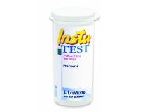 nish sediment.
Oxidation will cause many trace metals to darken in color
and precipitate, as the less-soluble, oxidized forms
develop. It should settle out and/or be removed by
filtration. Once removed, the problem should not recur,
unless more salts are added. The addition of the MPS
probably oxidized iron or other trace metals to a more
colored state. Adding some metal treatment might or might
not help, given the high magnesium concentration. I would
not use MPS, in this application, as I have received letters
about irritation, when excess amounts are present. Hydrogen
peroxide seems to make the most sense. Pool and spa dealers,
that sell biguanide sanitizers, will carry a concentrated
peroxide solution. This should prove more cost effective. To
provide oxidation, you might consider an
ozonator. However, it should be
used only when the unit is not being used and you should
vent the chamber before each use. It is possible to
test the peroxide level, with
LaMotte
Peroxide Test Strips. For the water to be pleasant and safe, you want
all traces of slime gone and water chemistry within the
reasonable range. I hope that this information will prove
helpful. nish sediment.
Oxidation will cause many trace metals to darken in color
and precipitate, as the less-soluble, oxidized forms
develop. It should settle out and/or be removed by
filtration. Once removed, the problem should not recur,
unless more salts are added. The addition of the MPS
probably oxidized iron or other trace metals to a more
colored state. Adding some metal treatment might or might
not help, given the high magnesium concentration. I would
not use MPS, in this application, as I have received letters
about irritation, when excess amounts are present. Hydrogen
peroxide seems to make the most sense. Pool and spa dealers,
that sell biguanide sanitizers, will carry a concentrated
peroxide solution. This should prove more cost effective. To
provide oxidation, you might consider an
ozonator. However, it should be
used only when the unit is not being used and you should
vent the chamber before each use. It is possible to
test the peroxide level, with
LaMotte
Peroxide Test Strips. For the water to be pleasant and safe, you want
all traces of slime gone and water chemistry within the
reasonable range. I hope that this information will prove
helpful.
Sincerely. Alan Schuster, 12/20/2006
► Unpleasant
Odors?
I have Epsom salt water that I am
using in my floating tank. At the moment the water has an
odor that I would like to get rid of. The water is filtered
with a 2 micron filter and a UV filter. It was after I added
more Epsom salt to the tank that the stink started. How much
hydrogen peroxide should I use to get rid of the smell? Can
Epsom Salt absorb odors, if it is stored next to other
smelly chemicals? I have 1600 pounds of salts in the water
so I would like to keep it. I am looking forward to hear
from you. Best regards.
John L., 6/12/2009
You really can't do this without testing. The odors are
probably from microorganisms and/or organic wastes and
byproducts and are not from the Epsom salts. Peroxide will
oxidize and destroy the contamination and eliminate the
odors. You have to add a few ounces of peroxide, at a
time, until you register a stable reading between 20-80 PPM.
For more about
Hydrogen
Peroxide Test Strips go to our Pool and Spa Test Strips
Store. Neither the UV sanitizer or microfilter will
solve this problem. You might give though to adding an
ozonator. It will do
the required oxidation. The only limitation is that you
cannot use the tank, while the ozonator is running and you
must vent the tank, to clear out the ozone from inside the
tank. I suggest venting for 1/2 hour, about 1 hour after the
ozonator is shut off. Enjoy the floatation experience.
Sincerely. Alan Schuster, 6/12/2009
► Too Many
Chemicals?
I am planning on buying a floatation
tank and am concerned about the sanitizing. One dealer says,
I don't need much and another says that I should use ozone
and a mineral sanitizer. I have been in spas and I don't
fancy being enclosed in that type of a situation. Is it
possible to do this without chemicals? Or as few as
possible. Thanks for any help you can provide.
Edward M., 5/12/2005
It is true that the presence of the high concentration of
Epsom salts will prevent most microorganisms from surviving.
Most is not necessarily good enough. You can sanitize the
water without any chemicals, if you use an
UltraViolet
Sanitizer. It will sanitize the water, as it passes through
the cell, using only UV rays. However, you will still need
to add something to oxidize waste products. In a pool or
spa, chlorine or bromine are used most often. In a
floatation chamber, these products will create an unpleasant
chemical presence. Adding some concentrated hydrogen peroxide
will destroy the wastes and avoid an overbearing chemical
signature and seems the better choice. The overall water
chemistry should be maintained according to the
manufacturer's recommendations. I hope that I have been of
some assistance.
Sincerely. Alan Schuster, 5/12/2005
|
Visit The Website Stores . . . for
better informed shopping!!! |
|
|
Shipping is FREE* . . . within
the Continental U.S.
A $9.99
handling charge will apply
to Continental U.S. Orders,
under $75.00. Orders
outside of the Continental
U.S. may require some
additional charge, based on
quantity and destination.
Most products can be
shipped World-Wide. International
and orders outside of
Continental U.S. - see
comments on the ordering
pages. |
|
|
Major
Credit Cards and PayPal are accepted. |
|
▲
Return To Top Of Page
▲
Aqualab Systems, LLC does not
make any warranty or
representation, either expressed
or implied, regarding the
accuracy or completeness of the
information provided by this
website; nor does Aqualab
Systems., LLC. assume any
liability of any kind whatsoever
related to, or resulting from,
any use or reliance on this
information. The content of this
website should not be used, if
it is conflict with any
applicable federal, state or
local regulations or guidelines.
© Aqualab Systems, LLC. All
rights reserved
|
|