| |
|
Scroll
down to browse through some archived SPA and Hot Tub
questions and answers. Please click the Spa
Problem
Link, on top of every page, to access a complete listing
of Spa and Hot Tub Problem subjects, an alphabetized
Website Table of Contents, Spa and Hot Tub Equipment
Information, About Alan Biographic Material and a Spa
and Hot Tub Glossary. Use
the other links to access additional subject
information. More information about some new and unique
products, for Spas and Hot Tubs, can be found by visiting
The Website Store.
You'll never know what you'll find and that's always
fun. Be better prepared and avoid costly problems!
|
|
 |
Shipping is FREE* . . . within
the Continental U.S.
A $9.99
handling charge will apply
to Continental U.S. Orders,
under $75.00. Orders
outside of the Continental
U.S. may require some
additional charge, based on
quantity and destination.
Most products can be
shipped World-Wide. International
and orders outside of
Continental U.S. - see
comments on the ordering
pages. |
|
 |

Major
Credit Cards and PayPal are accepted. |
|
On-line
shopping since 2002 - Safe and Secure!!! |
|
Using an ozonator, to improve spa or
swim-spa water
quality!!! |
|
Ozone
generators can be very useful in
maintaining spa and swim-spa water quality, but they
cannot be the only product being used to
sanitize and maintain the water.
Ozone leaves the water very quickly,
once the ozonator is turned off.
This requires that a persistent
sanitizer, such as chlorine or bromine
be present.
Sanitizing is a must, for proper spa
water management.
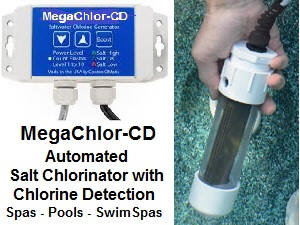
Salt Chlorine generators are a
better way to utilize chlorine, producing
more controllable results. They
eliminate the need to handle, measure or
store chlorine products, while reducing
buildup problems. An
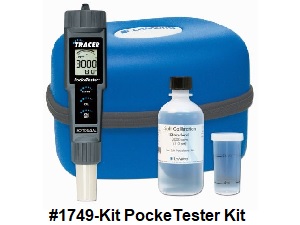
Electronic
PockeTester Kit is a convenient
way to monitor the salt level. |
|
Salt Chlorine Generators - 4
Models |
Testing The Salt Level |
Salt Chlorine Generators - 4
Models |
 |
 |
 |
|
Product and Ordering Information |
Product and Ordering Information |
Product and Ordering Information |
If you have a pool or spa water
testing need, we should have the
product.
►
Scroll down to read through some
Question & Answer information.
◄ |
|
A
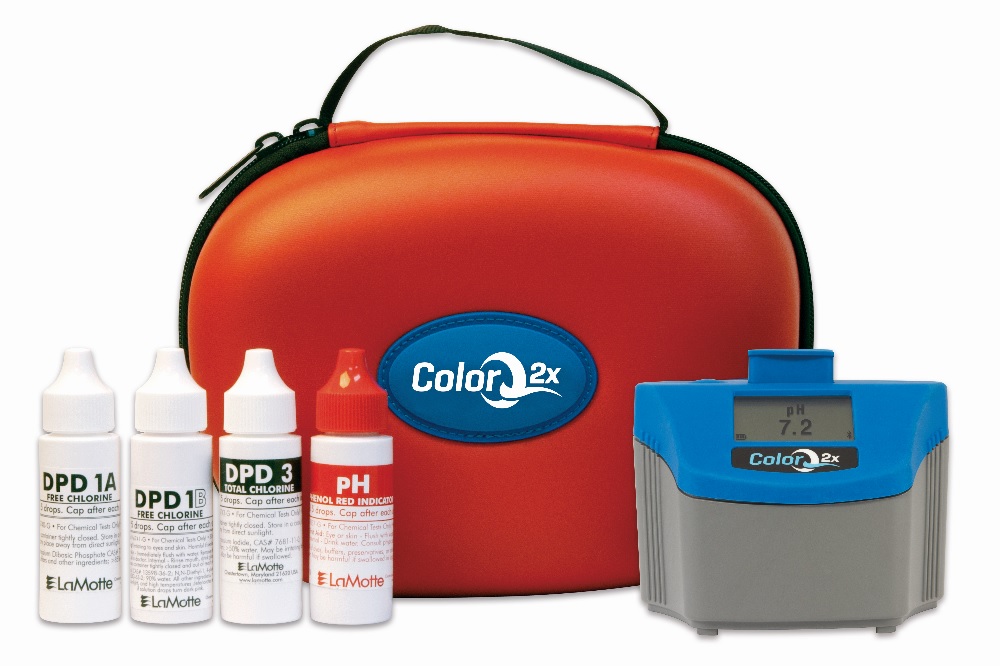
ColorQ 2X is a 2nd generation,
Bluetooth, Waterproof, all-digital tester,
that can
measure all the common test factors. There is a model, for every sanitizing
need.
An
Automatic
Filter Cartridge Cleaner
will save time and effort and
get your filter cartridge,
cleaner than ever. The
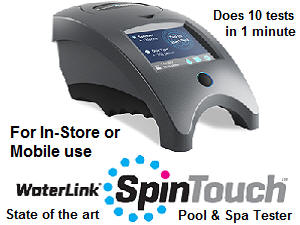
WaterLink SpinTouch Labs
are the ultimate tester, doing
up to 10 different water test
factors, in just 1 minute. |
|
ColorQ All-Digital Water Testers |
Automatic Filter Cartridge Cleaner |
WaterLink SpinTouch Labs |
 |
 |
 |
|
The ColorQ 2X line of all-digital
testers which are Bluetooth and
Waterproof, use a photometer to
test and measure combinations of
up to 11 different pool and spa
water parameters, including Free
and Total Chlorine, Bromine, pH,
Total Alkalinity, Calcium
Hardness, Cyanuric Acid, Iron,
Copper, Biguanide and Biguanide
Shock. Simple and easy to use,
with models for every need,
whether for home or professional
use. Instructions are
diagrammatic and trilingual. The
individual testers use
either liquid or tablet
reagents. Better control
of the water chemistry helps
control all aspects of pool or
spa water quality and
sanitation. |
Good spa maintenance demands a
clean filter and filter cartridge cleaning has never been easier or more
effective. Simple attach a garden hose, to the
Blaster, and place the pool or spa filter cartridge on
top of the rollers. Turn the water on and the
rollers start to rotate the filter cartridge. As
it rotates, a series of powerful water jets clean,
within the pleats, and wash the dirt away. A cleaner filter cartridge in less time
and the opportunity for better water
quality too. It's all done, in just a
few minutes. Suitable for use with Ceramic Spa
Filters, with at least a 6-inch (15 cm) diameter. Great for the Home Owner, Professional
or Aquatic Facility. |
The WaterLink SpinTouch Lab are
the most advanced testers ever
introduced, in the pool and spa
industry. They are the result of
7 years of R & D. Using a single
3-ml sample of water, you can
perform up to 10 different
tests, in just one minute, with
the press of a button. Tests
include: Free and Total
Chlorine, Bromine, pH, Total
Alkalinity, Calcium Hardness,
Cyanuric Acid, Iron, Copper,
Biguanide, Biguanide Shock,
Borates, Phosphates and Salt.
Four models for In-Store,
Mobile, Commercial or Drinking
water use. Read test results on
the TouchScreen, send them to a
computer, a tablet or to the
Cloud. So Easy!!! So fast!!! So
Precise!!! |
|
Product and Ordering Information |
Product and Ordering Information |
Product and Ordering Information |
If you have a pool or spa water
testing need, we should have the
product.
►
Scroll down to read through some
Question & Answer information.
◄
|
|
|
How to use an ozonator, to help sanitize a
spa? |
Ozone (O3)
is a form of oxygen (O2)
and is a very strong oxidizing agent that can
help control microorganisms, destroy organic
contamination, unwanted byproducts, dead algae
and organic debris. It is not a complete spa or
hot tub sanitizer, in the truest sense, because
ozone does not remain in water for long periods
of time. In a spa or hot tub, there must be a
backup sanitizer such as, chlorine or bromine,
usually at about 1/2 the normal level. Because
the ozonator does most of the oxidizing, an
Ozonator, also known as an Ozone Generator, will
reduce the quantity of the backup sanitizer
required for proper sanitation. This is
especially important in larger heavy bather
usage situations. The devices that generate
Ozone fall into two categories: UV or Corona
discharge. Commercial spas and other high bather
usage installations should utilize a unit, as it
is sized to be capable of producing the greater
quantities of ozone, that these situations
require. With ozonation, the water chemistry
should be maintained in the typical manner.
Ozone generators can be even more effective,
when used together with a
salt
chlorine generator. If problems arise, refer to the
Spa Problems
Page, as a source of problem-solving
information, broken down into various
categories. Scroll down the page and click on the linked
keywords,
catch phrases
or images, in the archived answers below, to access additional information, on that topic or product.
 |
Join our E-Letter Mailing List.
You'll receive 1-3 E-Letters a
month, featuring helpful pool
and spa advice, new product
information and sale
announcements. All we
require is your e-mail address
and you can opt out anytime you
wish.
Your information
will never be shared or sold. |
|
▼
Helpful,
Problem-Solving Information, in a question and
answer format.
▼ |
►
Ozone Needs Some Help?
Hello Alan, I just discovered your
website and am thrilled. My husband
and I just purchased a spa, about a
month ago. We were told that
maintaining the spa was easy But we
are having a very difficult time.
Our water has been cloudy from day
one and we have been unable to find
any clear direction on how to
maintain it. Help, please!
Dee N, 9/8/2018
Two
things must be done. Proper
sanitation and the correct
chemistry. And you must filter the
spa, for at least several hours a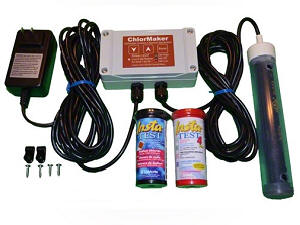 day. A
salt chlorine
generator and a
ColorQ digital tester can help
you achieve better sanitation and
chemistry. Salt chlorine
generators have a tendency to raise
the pH, as chlorine is being formed.
This has the benefit of avoiding low
pH conditions that might, otherwise,
allow chlorine to cause corrosion of
copper heater parts. The
ChlorMaker Salt Chlorine Generator
was designed for spas up to 1000
gallons and swim spas up to 2000
gallons. Other models treat up to
1000 gallons and require no
installation. Some are smart
enough, to only produce chlorine,
when it is actually needed, so
you'll never overchlorinate again. They can be used with
either 110 or 220 Volts and uses
less than 0.5 amps. For help
with chemistry go to this page:
calculating chemical additions. You
have to maintain proper chemistry
and the directions on the label may
not work in all cases. Based on
usage, your spa could require more
or less. I hope that this will
be helpful.
day. A
salt chlorine
generator and a
ColorQ digital tester can help
you achieve better sanitation and
chemistry. Salt chlorine
generators have a tendency to raise
the pH, as chlorine is being formed.
This has the benefit of avoiding low
pH conditions that might, otherwise,
allow chlorine to cause corrosion of
copper heater parts. The
ChlorMaker Salt Chlorine Generator
was designed for spas up to 1000
gallons and swim spas up to 2000
gallons. Other models treat up to
1000 gallons and require no
installation. Some are smart
enough, to only produce chlorine,
when it is actually needed, so
you'll never overchlorinate again. They can be used with
either 110 or 220 Volts and uses
less than 0.5 amps. For help
with chemistry go to this page:
calculating chemical additions. You
have to maintain proper chemistry
and the directions on the label may
not work in all cases. Based on
usage, your spa could require more
or less. I hope that this will
be helpful.
Sincerely. Alan Schuster,
9/8/2018
Thank you for your reply, Alan. Even
though our spa has an ozonator, we
should add a salt chlorine
generator? Why wasn't that mentioned
at time of purchase? Also, clarifier
came in the start up kit but we were
told that we didn't need it. They
said that all we needed to do was
run the filter, use test strips and
use the one shock tablet. So
frustrating!
Dee N., 9/9/2020
No spa
ozonator manufacturer claims that
all you need is an ozone generator.
NONE! ZERO! He may have tried not to
pump up the sale, out of fear of
losing it, or was plain ignorant of
the facts. The ozone concentration
drops to zero, within minutes, once
the unit is off. Ozone generators
are great, but they need to be used
with a persistent sanitizer. It is
hard to measure ozone and if the
unit fails, you won't know, until
things get gross. If you use a low level of chlorine,
its presence indicates that all is
well, so long as it only requires
minimal amounts of chlorine to
maintain 1-3 PPM of free chlorine. A
salt chlorine generator is an
ideal complement. By allowing the
ozonator to do most of the
oxidation, the salt chlorine
generator can be operated at a low
setting. This makes pH control
easier and extends the life of the
salt cell. The chlorine is available
to do the sanitizing and there
should be no appreciable chlorine
odor, because the ozone will destroy
any odorous forms of chlorine.
Chlorine gives you something to test
and measure. While you could use a
mineral sanitizer or bromine, a salt
chlorine generator provides the
means to maintain a satisfactory
level of a persistent sanitizer. You
don't have any way of testing for
ozone, do you? We offer
several affordably priced,
no-installation required salt
chlorine generators. Just add a few
pounds of salt and it is Plug and
Play ready. They include timers and
operate independently of the spa
pump. I don't know what is in that
"shock" tablet, but it obviously was
not enough. There is nothing
wrong with adding a clarifier on a
weekly basis or as needed. Spa
filters are not super efficient and
can use some help. Test strips are
not bad, but if you are
uncomfortable trying to match shades
of colors, then you should consider
a
ColorQ 2X all-digital water analyzer,
which eliminates all the
color-matching and guesswork.
I hope that this has been helpful.
If you use a low level of chlorine,
its presence indicates that all is
well, so long as it only requires
minimal amounts of chlorine to
maintain 1-3 PPM of free chlorine. A
salt chlorine generator is an
ideal complement. By allowing the
ozonator to do most of the
oxidation, the salt chlorine
generator can be operated at a low
setting. This makes pH control
easier and extends the life of the
salt cell. The chlorine is available
to do the sanitizing and there
should be no appreciable chlorine
odor, because the ozone will destroy
any odorous forms of chlorine.
Chlorine gives you something to test
and measure. While you could use a
mineral sanitizer or bromine, a salt
chlorine generator provides the
means to maintain a satisfactory
level of a persistent sanitizer. You
don't have any way of testing for
ozone, do you? We offer
several affordably priced,
no-installation required salt
chlorine generators. Just add a few
pounds of salt and it is Plug and
Play ready. They include timers and
operate independently of the spa
pump. I don't know what is in that
"shock" tablet, but it obviously was
not enough. There is nothing
wrong with adding a clarifier on a
weekly basis or as needed. Spa
filters are not super efficient and
can use some help. Test strips are
not bad, but if you are
uncomfortable trying to match shades
of colors, then you should consider
a
ColorQ 2X all-digital water analyzer,
which eliminates all the
color-matching and guesswork.
I hope that this has been helpful.
Sincerely. Alan Schuster,
9/9/2020
► What Is Ozone?
My wife and I have been looking at hot
tubs. Some of them seem to come equipped with an ozone
device or offer it as an option. How does this work? Is it
worth getting?
M & L, Rutherford, CA, 11/29/2014
Ozone is a highly reactive form of oxygen. Ozone (O3)
contains 3 atoms of oxygen. The oxygen (O2)
we breathe contains 2 atoms. It is this third atom of oxygen
that allows ozone to oxidize or destroy organic wastes and
contamination, bacteria, algae, etc. in spa or hot tub
water. It is effective, even at very low levels. The only
limitation is that once produced it quickly leaves the
water. If ozone is not continuously produced, there will be
periods where there may be little sanitizer present. For
this reason, in spas and hot tubs, ozone is used in
conjunction with a backup sanitizer, such as chlorine,
bromine, salt
chlorine generator, mineral sanitizers or ionization.
A salt chlorine generator should be
the best choice, in the long run. In spas and hot
tubs, ozone can be introduced in the water with the use of a
device called an Ozone Generator or Ozonator.
The use of ozone will not eliminate the need to add other
chemicals or maintain proper water chemistry, but it will
reduce the amount of chemicals required and should simplify
maintenance. It's worth having! I
hope that I have been helpful. Good luck with your choice. 2 atoms. It is this third atom of oxygen
that allows ozone to oxidize or destroy organic wastes and
contamination, bacteria, algae, etc. in spa or hot tub
water. It is effective, even at very low levels. The only
limitation is that once produced it quickly leaves the
water. If ozone is not continuously produced, there will be
periods where there may be little sanitizer present. For
this reason, in spas and hot tubs, ozone is used in
conjunction with a backup sanitizer, such as chlorine,
bromine, salt
chlorine generator, mineral sanitizers or ionization.
A salt chlorine generator should be
the best choice, in the long run. In spas and hot
tubs, ozone can be introduced in the water with the use of a
device called an Ozone Generator or Ozonator.
The use of ozone will not eliminate the need to add other
chemicals or maintain proper water chemistry, but it will
reduce the amount of chemicals required and should simplify
maintenance. It's worth having! I
hope that I have been helpful. Good luck with your choice.
Sincerely. Alan Schuster, 11/29/2014
► Ozone And
Bromine In A Spa?
I am a new spa owner of 4 months. We
have a spa with an ozonator and treat it with bromine. I run
the ozonator about 4 hrs twice a day. I had problems with a
rash using chlorine and find the bromine is also a problem,
no one else in my family has any trouble. My question is I
can not keep the bromine level down, we live in the northern
states so it is covered a high percentage of the time now in
winter. It can stay up around 10 plus on test strips after
15 seconds. Is there anything that can be done to lower
bromine levels?
Rick L., 12/15/2017
Ozone generators can do a very effective job of removing organic wastes
and byproducts that would. otherwise, react with the
bromine. While it necessary for ozonation to use a backup
sanitizer, such as bromine, the amount required should be
considerably less. You can instantly lower the bromine
levels by adding a small amount, as per label directions, of
a chlorine neutralizer. This product is only intended as a
solution for an occasional overdose and not as part of
routine treatment. Once the bromine level has been reduced -
you will probably only need 1-3 PPM as opposed to 3.5 PPM -
cut back on the amount of bromine being used. Inasmuch as
you are the only one suffering from a rash, you might be
sensitive to chlorine and bromine in the hot water
application. You can reduce the chlorine and bromine levels
dramatically, by supplementing the ozonator with a
mineral
sanitizer or ionization unit. This will provide the
necessary backup sanitation, for those periods when ozone is
not being produced or many not be available. Some mineral
sanitizers cannot be used in water that contains bromides. I hope that this information
will prove helpful. Enjoy the holidays.
Sincerely. Alan Schuster, 12/16/2017
►
Using A Salt Chlorine Generator With
An Ozonator?
Is it ok to use an ozonator with a
ACE Salt chlorine generator? I
bought a new Hot springs Spa with
the optional salt system and it
initially came with an Ozonator that
was removed because they said I
wouldn't need it and can't use it
with the salt system. Thanks.
Tom, 1/6/2017
You can use them together. With the
ozonator providing oxidation, you
will be able to operate the
salt chlorine generator at a
lower setting, to
maintain any given level of free
chlorine. This will help[ prolong
the life of the salt cell and make
pH control easier. I hope that this
is helpful.
Sincerely. Alan Schuster,
1/6/2017
► Getting
The Spa Set
Up?
Great web site Alan. I am in the
process of setting up a spa (approx 450 gal). I will be
installing an ozonator and probably using a mineral
purifier. I would like to minimize bromine and chlorine, and
minimize maintenance. Can you recommend a top of the line
ozonator? Secondly, are there any other devices I can
install that will automatically balance the water, so
maintenance is reduced? Lastly, can you recommend which
chemicals would be best suited, both type and brand. Thanks
again.
Steven, 4/20/2011
An ozone generator will provide the
oxidation required to destroy
organic wastes. Once the pump
is off, the ozone quickly leaves the
water, so it needs to be used with
some more persistent sanitizers.
The use of a mineral sanitizer will
add a backup sanitizer and should
help you to greatly reduce chlorine
or bromine usage. In
addition, this combination will minimize the frequency of pH
and total alkalinity adjustments. Having the water tested
and balanced, will get you off on the right foot.
Thereafter, some periodic adjustments will have to be made,
based upon the usage patterns of your spa and the nature of
your source water. There is nothing that will automatically
balance the water - at least nothing that you should get
involved with. I hope that I have been of assistance. Thanks
for visiting the website and enjoy the spa.
Sincerely. Alan Schuster, 4/21/2011
► Ozone Or No
Ozone?
Hello, hopefully you might be able to
help me. I have a question about Ozonators. I am buying a
spa and it has been recommended that I do not need an
ozonator, The dealer also mentioned with a 1 year old child
that might be in the spa with us, it is not recommended. It
seems everyone recommends getting one? I have a friend who
told me he lowers the temp of his spa in the summer time and
says he has to have an ozonator in order to keep it clean. I
haven't read anything to support that theory. What are your
thoughts, should I invest the extra $200 bucks or not.
Thanks for any feed back.
Mike, 8/30/2008
This is almost a no brainer. I can't think of a reason for
you not to put in an ozone purification system, aside from
the fact that you don't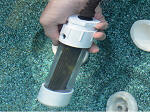 want ozone being produced while the
bathers, especially children, are using the spa. The
ozonator should shut off, if the pump is switched to high
speed. The ozonator will go a long way towards maintaining
optimum water quality. It is worth the extra money and will
pay for itself in terms of reduced chemical usage. However,
it is not all that you need to maintain water quality.
It leaves the water very quickly, so a persistent sanitizer,
such as a salt
chlorine generator, is needed to provide optimum
sanitation and more control over the water quality.
When an ozonator is in use, the salt chlorine generator can
be set to a lower output. I hope
that I have been helpful. want ozone being produced while the
bathers, especially children, are using the spa. The
ozonator should shut off, if the pump is switched to high
speed. The ozonator will go a long way towards maintaining
optimum water quality. It is worth the extra money and will
pay for itself in terms of reduced chemical usage. However,
it is not all that you need to maintain water quality.
It leaves the water very quickly, so a persistent sanitizer,
such as a salt
chlorine generator, is needed to provide optimum
sanitation and more control over the water quality.
When an ozonator is in use, the salt chlorine generator can
be set to a lower output. I hope
that I have been helpful.
Sincerely. Alan Schuster, 8/30/2008
► Drain And
Fill?
Hello Alan! G. B. the dj here! The
wife and I just traded one top of the line spa for another
top of the line spa, And boy do we love it. We now have 500
gallons of beautiful city water in our new tub and it costs
us 50 cents to fill'er up. For 4 years I struggled with
water issues with bromine and biguanide; never really happy
with our water clarity (OR LACK OF). Now for my question?
Can I forget most of the chemical stuff and simply drain all
or part of the water each week and not damage the spa or the
wife? We use our tub 4 or 5 times a week and LOVE IT.
Thanks, dude.
G. B., 1/24/2005
We certainly don't want to "damage" the wife! Many high end
spas come with an
salt chlorine generator or ozone generator. Newer units
probably have the ozonator on a separate low speed pump and
this allows for better performance, as ozonation takes place
throughout the day. Biguanide has a tendency to foam and
this can interfere with the action of the ozonator. In
addition, biguanide, after a period of time, can result in
the formation of resistant microorganisms and lead to
unsatisfactory conditions. Chlorine and ozone usually work
well together. Now for your question. The practice of "drain
and fill" is only practical for jetted tubs that have a
relatively small volume of water. Using your spa, in this
manner, will turn the water into old bath water within a few
days, at most. The conditions will get progressively worse
and could "damage" yourself and the wife. I suggest that you
go with a salt chlorine generator and an ozonator. We offer
several no installation required models and two of them are
smart enough to only product chlorine, when it is actually
needed, so you'll never over-chlorinate again. Test the water regularly and there should be few
problems. I hope that I have been helpful and that you keep
loving the spa.
Sincerely. Alan Schuster, 1/25/2005
► Knows What
Works?
I just happened to run across your
website and can't believe all the information you have.
Great site! Thanks! 10 years ago, I bought a new hot tub
(350 gal) and it was a horrible experience getting the water
right. It was green, it was milky, just about everything
others have described in their e-mails. I must have changed
the water 3 times before I just stopped putting all those
chemicals that the store got me to buy, $150.00 worth. My
water is so clear, no foaming, just right. I have an
ozonator and I have to assume it still works for the only
thing I put in my water is a little shock once in a while
and clean the filter. Well, I'm ready for a new one, one
with more jets and I fear I will have the same experience I
had 10 years ago. The hot tub manufacturer suggests I DON'T
get an ozonator. I called the store this morning and
requested one be installed anyway after reading all your
problems folks have here on your site. When I explained to
the store how old my tub is and how maintenance free it has
been, they just said I was very lucky. Can you give me any
advise on making the installation of my new hot tub a good
experience? Thanks again and I have given so many people
this website.
Gloria V., 6/6/2016
Yes. Have an ozone generator installed. Preferably one that
uses a second pump and can run 24/7. That way all you should
need is a periodic addition of chlorine or shock treatment.
To be on the safe side, try and keep a free chlorine level
of about 1 PPM. It should take very little chlorine because
of the ozonator. But, you already know this! You know what
works for you, so why change? You might consider adding a
salt chlorine
generator, as it will eliminate the measuring, handling
and storage of chlorine products. It adds persistent sanitizing
action, which is lacking after the ozone leaves the water. Good luck and enjoy the new spa.
Sincerely. Alan Schuster, 6/6/2016
► How Much
Ozone Is
Enough?
Thanks for your awesome website! It's
a great source of information. I recently started using a
silver ion purifier with my hot tub ozonator. As per the
manufacturer of the ion purifier, I've been adding shock
with each use. However, I'm having some turbidity issues. My
pH and alkalinity are within the recommended limits. Do you
have any thoughts on this? In addition, how do I know that
my ozonator is working? What is a typical ozone
concentration in water that my ozonator should be
maintaining in order to be effective? I'm considering
purchasing a LaMotte test kit to monitor the ozone levels.
Any information you can provide will be appreciated. Thanks.
Cathy, 3/18/2015
Ozone functions at very low levels and does not remain in
the water for long periods of time. It is best to operate
the ozonator for period throughout the day, instead of a
single long run. I suggest 3 or 4, 2-hour sessions spaced
apart. Ozonators must be used with persistent
sanitizers, such as chlorine or bromine. Ozonators do
not necessarily have to be used with shock, although a
salt chlorine
generator will do that, with the flick of a dial.
Ozone concentrations
are low, just a few hundredths of a PPM. You might be able
to smell it, when the cover is removed. There is no ready
explanation for your turbid water, other than inadequate
oxidation or filtration. Try maintaining a low level of
chlorine, about 1 PPM. With an ozonator functioning it
should require little chlorine. If that is not the case, the
ozonator might not be being used properly or outputting
enough ozone. I hope that you will find the information
helpful and thanks for your kind comments.
Sincerely. Alan Schuster, 3/18/2015
► Difference
Of Opinion?
My wife and I recently purchased a
spa. We have been thinking about adding a ozonator. Our spa
only has one pump for filtering and jets. Would we be
wasting our time buying a ozonator? We have heard so many
different stories from different spa dealers. Some say that
we wouldn't be gaining much without a separate circulating
pump. I would like your comment on the subject. Thanks!
Curt H., 2/28/2010
It is true that many higher end spas have a separate low
speed pump just for the ozonator. This allow ozone to
be produced throughout the day. Since ozone doesn't remain in
the water for extended periods of time, this is clearly the
better way to ozonate. Not all spas are equipped with two
pumps, but can still benefit from the improved water quality,
an ozonator can produce. All that is required is for the
timer to be set, so that the ozonator operates for 4 2-hour
periods, spaced throughout the day. That way the spa is
never more than a few hours from ozonation. This is not
something inflexible and individual requirements should
allow for differences. But, the theory is the same: ozonate
for periods spread out during the day and not in a single
continuous run. In either case, a backup sanitizer, such as
a salt chlorine
generator, chlorine or bromine, should be
employed. An ozonator will help enhance your spa experience
and make water quality simpler and more consistent. Go for
it and enjoy the spa.
Sincerely. Alan Schuster, 2/28/2010
► Sensitive
To Spa Water?
I wrote to you earlier this year about
a problem I am having with my spa. I will review the
problem. Two years ago I installed a spa. My wife and I
enjoyed its use almost very night for about three months.
Then my wife started to get an itch that would not go away.
She went to her doctor and then to a dermatologist. He said
my wife had eczema and advised her to have a warm bath after
using the hot tub and he prescribed some creams. My wife is
68 years old and has never had skin problems so I had some
doubts about his findings. She continued to use the hot tub
about once a week but the itchiness continued. So early this
year I thought that I would change from bromine to chlorine
and sought your advice on the change over. I have been using
chlorine for about six months and there is no improvement in
her condition. I still suspect that my wife is sensitive to
some chemical in the hot tub. I substituted baking soda for
the alkalinity control and now am wondering if it is the
chemical causing the itchiness. Would you please comment on
this? If you think it could be the problem, should I empty
my spa and start with a store bought alkalinity agent? Thank
you for your help.
Nelson D., Oberon, AR, 8/1/2009
I doubt that the baking soda is part of the problem. It is
amongst the most innocuous of chemicals. Bromine contributes
certain byproducts to the water and if you did not drain the
spa before switching, I suggest that you do so at this time.
Otherwise, even though you are adding chlorine, it is being
converted to bromine. My best suggestion are that you get an
Ozonator installed (unless the spa came with one already
installed). This will allow you to use far less chemicals to
maintain sanitation. In fact, you could use the Ozonator, in
conjunction with a Mineral Sanitizer and be
close to chlorine and bromine free.
Sincerely. Alan Schuster 8/2/2009
► Hydrogen
Peroxide?
We have a hot tub and would like to
use hydrogen peroxide instead of the normal chemicals. My
husband is allergic to the chlorine and bromides. How much
Hydrogen peroxide do we use and what %. We were told that it
should be a 10% concentration but we can't find any hydrogen
peroxide above 3%. I thought maybe you could help us. Also
do we nee to use any kind of a shock at the first? Hope you
can help! Thanks.
Jo, 7/10/2005
I am not sure that using just hydrogen peroxide will provide
adequate sanitation. In pools and spas, it is used as a
shock treatment
with biguanide. It is available in
concentrated form in many pool and spa outlets that offer
biguanide products. Have you considered the use of an
ozone
generator and a mineral sanitizer or ionizer. This
combination would come close to being chlorine and bromine
free. The ozonator could negate the need for hydrogen
peroxide and a mineral sanitizer or ionizer would release
metallic ions and act as a persistent sanitizer. Hydrogen
peroxide can be used as a shock treatment and a mineral
sanitizer or ionizer as the primary water sanitizer.
However, in most cases better results are obtained, if you
maintain a lower level of chlorine or bromine. I hope that
I've been helpful and given you some food for thought. Good
luck with your decision.
Sincerely. Alan Schuster, 7/10/2005
► To Backup
Or Not To Backup?
Alan, I appreciate your website and
the info you present on spa maintenance. It has been most
helpful to myself, a new spa owner in Minnesota. My
question is this: I have purchased a new spa with an
advanced water management system that has a continual low
speed circulating pump ozonator with no down time. In
addition, I run the circulating pump of the spa 4 cycles a
day for 1 hour. In reading your responses to questions
regarding ozonators you are concerned with a back up
sanitizer for down time. If my spa has no down time how
important is a backup sanitizer such as chlorine or bromine?
My other question-how necessary is shocking
with chlorine after each use or on a weekly basis as you
recommend with the continual ozonator my spa has? I look
forward to your response. Thanks for your time regarding
these concerns. Sincerely.
Keith R., 8/25/2008
Good questions. If ozone is being produced continuously, the
need for a backup sanitizer is diminished, but not
eliminated. It is probably
not a clear cut case of not being needed. More likely it is
a case of being safe or being even safer. Depending upon
bather load and other factors, a backup sanitizer is still a
good idea. These same factors can determine whether, or not,
periodic shocking is required. The purpose of the periodic
treatment is to prevent the development of resistant
microorganisms and not just to deal with bather wastes. You
could probably do without the shock treatment, but it would
be safer to do it once a month or a first signs of a loss of
water quality. Adding small amounts of chlorine or bromine
and being able to measure them, helps provide persistent
sanitation. If all that is needed is a small amount of
chlorine or bromine, it helps confirm that the ozonator
output is optimum. I hope that I have been helpful.
Sincerely. Alan Schuster, 8/25/2008
► Backup Spa
Sanitizer Choice?
I just received a 200 gallon spa from
our relatives about 5 years old. I plan on using bromine
along with an ozonator. The question I have is the
manufacturer recommend the use of lithium hypochlorite with
the ozonator. They say a part cupful can be added by hand as
needed. I am not sure of this, as bromine and lithium hypo
are two different chemicals. I think they mean to use
Lithium Hypo solely along with the ozonator. Could you
please clarify this for me?
Bob, 8/11/2005
For proper sanitation, an ozonator should be used with a
persistent sanitizer, such as bromine or chlorine. Bromine
is very popular in this application. It can be added in a
variety of ways and is essentially odorless. Lithium
hypochlorite is less popular, even amongst chlorine types,
and can produce some chlorine-related odors. I would use
bromine on a regular basis, along with the ozonator. You
could use the lithium hypochlorite, as a shock treatment to
quickly boost the bromine level, as it will convert to
bromine in a bromine-maintained spa. The choice is yours. I
think the manufacturer was merely trying to make sure that
you used a backup sanitizer with the ozonator. I hope that I
have been helpful.
Sincerely. Alan Schuster, 8/11/2005
► Ozone And
The Environment?
Will my spa's ozonator add to the
problem with the Earth's ozone layer?
John H., 1/5/2016
No! The small amount of ozone produced will quickly
decompose, back into oxygen, after leaving the spa. I hope
this puts your mind, at ease.
Sincerely. Alan Schuster, 1/5/2016
► Pool And
Spa Sanitizer Compatibility?
My wife and I recently purchased a hot
tub. Expecting delivery shortly. The salesman is pushing
biguanide like he owns stock in the company. Although he
talked us into the ozone generator, he suggested we “unplug”
it and use biguanide, as a sanitation regime. I am currently
leaning towards the ozonator coupled with a mineral purifier
and occasional shock as needed. Dichlor? Let me know! My
concern is, we currently have a pool treated with biguanide.
Our teenage kids will likely going between the hot tub and
pool. Should we be concerned with any chemical
incompatibility problems considering the two different
sanitation regimes with the pool and spa? Your expert advise
is welcome, as we are novices. Great web site! I also
recently ordered your spa/hot tub book and look forward to
reviewing its contents, so you are not bothered with more
annoying questions from us! Many thanks.
Edward S., San Clemente, CA, 3/31/2007
Use the ozone generator and forget about the biguanide!
You'll be happier in the long run, using the combination of
ozone and a mineral sanitizer. With biguanide, you'll have
foaming problems and a greater potential of resistant
microorganism problems. The issue of compatibility is a
really good question. Biguanide and any
mineral sanitizer
are incompatible. And yes, there will probably be cross
contamination between the pool and the spa. Want to know
what I would do under these circumstances? I would stop the
biguanide in the pool and add an ozone generator and a
mineral sanitizer. This eliminates any incompatibility and
you should have quality water in both places. It is almost
inevitable that sooner or later you will have to give up the
biguanide. Pools that are maintained on biguanide seem to
have a high probability, of the formation of a
sanitizer-resistant microorganism, after a few years of use.
Check the archives for biguanide in pools and spa to see
some examples. Dichlor is appropriate and the questions are
never annoying! I hope that you'll find this information
helpful.
Sincerely. Alan Schuster, 3/31/2007
► Ozone And
Monopersulfate?
After looking through your list of
Q&A, I did not see anything about monopersulfate. I have a
500 gallons spa and I use an ozonator and spa shock. Also,
because it is used frequently by many people, we were told
to use a sanitizer. My question is, when I use the strip
test it shows that the pH balance and alkalinity are good
but the mps (monopersulfate) is at the very low end. The
test strip shows a normal level would be purple in color and
mine show white. What should I do to remedy this problem,
and what happens if nothing is done to correct this. Thank
you.
Nicole, 7/10/2004
You should use a backup sanitizer, with an
ozone generator.
However, monopersulfate is not a sanitizer. It is an
oxidizing agent. I suggest that you use bromine, as the
backup. You can either use bromine tablets in a floater or
add a dose of sodium bromide monthly and continue with the
periodic additions of the monopersulfate. The sodium bromide
will be oxidized to bromine by the monopersulfate. With the
ozonator, you should be able to have excellent quality
water, by maintaining a bromine level of 1-2 PPM. Bromine
can be measured on most spa test strips. During peak bather
loads or whenever the bromine level is too low, just add
some more monopersulfate to boost the level. I hope that the
information proves helpful.
Sincerely. Alan Schuster, 7/10/2004
► pH And An
Ozonator?
My spa is equipped with an ozonator
and a Mineral Sanitizer. Does the ozonator affect
the pH?
Greg M., Fresno, CA, 12/12/2006
The ozonator produces ozone by combining 3 molecules of
Oxygen (O2) and forming two molecules of Ozone (O3).
There is no affect on the pH. During the reaction of ozone
with the organics wastes, by-products could be formed, that
affect pH. The effect, in a properly balanced spa, should be
minimal. A Mineral Sanitizer will help add
stability to the pH, as it does not appreciably affect
acidity or alkalinity. I
hope that this information is helpful.
Sincerely. Alan Schuster, 12/12/2007
► Why Do I
Need To Add Bromine?
My spa came equipped with an Ozonator.
I was told that ozone is a sanitizer. But, I was also told
that I should maintain a low level of bromine. Why? Thank
you.
Bill F., Kalamazoo, MI, 4/15/2012
Ozonators are, indeed, very popular in spas. The limitation
of ozone is that once production has ceased, the ozone does
not remain in the water for any length of time. There is no
residual. Fortunately, in a spa, you can set the timer and
pump to operate for periods throughout the day. This helps
keep the periods, without ozone, shorter and that helps in
the control of microorganisms. In order to assure that there
is always some sanitizer present in the spa water, it is
typically recommended that a backup sanitizer be used. In
your case, the dealer suggested that bromine be used: a very
popular choice as a backup. You will have to add much less
bromine because you have an Ozonator and you should be able
to keep it at a lower level(1-3 PPM, instead of 3-5 PPM).
Ozone and bromine are a really good combination and the
dealer made a good recommendation. Adding a
mineral
sanitizer will allow you to use less bromine to maintain
this low level and will provide persistent backup
sanitation. This product is a recognized spa water, that can
be used with bromine or chlorine. I hope that I have been of
assistance.
Sincerely. Alan Schuster, 4/15/2012
► Is The
Ozonator Working?
Hi Alan. How can you tell that the
ozone is working, I have a U.V. ozone generator approx. 2
years old. I am planning to use a mineral purifier and
ozone, because chlorine gives me a rash and biguanide keeps
clouding up within one week after filling. Should I buy a
new ozone generator to be safe? Thank you.
Tom, 1/29/2010
I can't tell whether or not you need an ozonator, but you
should check it out. Most ozone generators need a
replacement bulb or part, after 2-3 years, more or less
depending upon usage and conditions. Some
ozonators have indicators that
can determine, if they are producing ozone. You might be
able to smell ozone, after lifting the cover.
If you are not producing enough ozone, the mineral sanitizer
alone will not be able to keep the water clear because it
cannot destroy organic contamination and buildup: there
would be a noticeable loss of water quality! The combination
of ozone and a mineral sanitizer should work out very well
for you. Just make sure that you maintain the other spa
water parameters: pH, TA and calcium hardness. I hope that I
have been helpful.
Sincerely. Alan Schuster, 1/30/2010
► Ozone,
Mineral Sanitizer And More?
I emailed you a month or so ago about
mineral purifiers and ozonators. Since then I have tried
using dichlor for shock only to find out that it gives me a
rash for about 3 or 4 days. My pH and alkaline are in good
shape and I run my ozone for 12 hours a day, 6 on 6 off. I'm
going to go back to a non-chlorine shock. Do I still need to
use a sanitizer like bromine or can I get by with just the
shock, purifier, and ozone? Thanks Again.
Curt M., Hays, Kansas, 5/13/2009
You might just be sensitive to chlorinated cyanuric acid
(dichlor and trichlor) and not necessarily to other forms of
chlorine. It is hard to tell, from this limited information.
But, you do know how to avoid the problem! Your
ozonator
should be able to meet most of the sanitizing requirements.
Because ozone does not remain in the water for long periods
of time, I suggest that you continue to space out the
ozonation periods, throughout the day. The lack of
permanence is the reason for the need for backup sanitizing.
In this role, the mineral sanitizer works well. You should
only need to add the non-chlorine shock after periods of
heavy bather usage or upon signs of a loss of water quality.
Good luck and enjoy the spa.
Sincerely. Alan Schuster, 4/13/2009
► Ozone and
Ionization In A Spa?
An Ozonator was installed, in my spa,
as part of the original equipment. I have been using
chlorine as a backup. Would it make sense to add an Ionizer
as a backup? Will it eliminate chemicals? Thanks.
Phil, Sausalito, CA, 4/4/2010
Makes sense to me. Adding an Ionizer, as a backup sanitizer
will reduce the need for the chlorine. Inasmuch, as the
Ozonator eliminates most of the need for shock treatment or
other oxidizers, you should only have to control the pH and
total alkalinity. However, for best results, maintain a free
chlorine level of about 1 PPM, to act as a sanitizer backup.
If you're looking for convenience, this should fill the
bill. I hope that I have been helpful.
Sincerely. Alan Schuster, 4/4/2010
► Effects of
Ozone?
Alan, I have read about ozone in which
it is damaging to our lungs above ppm. I have a spa that
ozone is injected 24 hours a day and can be smelled when
entered. Is this dangerous in any way at all. If so what
can I do? If I sit in the spa for 15 minutes or more, I can
notice my chest getting tight. Is that from the heat or the
ozone. Thanks.
Scott H., 3/11/2011
Yes, it is true that ozone can be harmful, especially in
high concentrations. However, Ozonators do not produce high
levels of ozone and much of it reacts with the wastes in the
spa water. Elements of your question are clearly medical in
nature and I suggest that you seek appropriate medical
advice, as to the possible causes of your symptoms. There is
something that you can do to reduce the airborne
concentration. Have an exhaust fan controlled by a
humidistat: this will help reduce the concentration. It is
possible to have ozone production suspended during actual
use of the spa. My spa did not produce ozone, with the high
speed pump turned on. It only produced ozone with the low
speed setting, which was controlled by a timer. The timer
was set to avoid the most likely periods of use. I hope that
I have been of some assistance.
Sincerely. Alan Schuster, 3/12/2011
► Ozone And
Chlorine In A Spa?
I have been using a granular dichlor
in my spa. The results have been OK, but I would prefer less
chemical odor. Would adding an Ozonator help?
Bob C., CA, 12/15/2006
Definitely! Ozone will act as a backup sanitizer and allow
you to maintain a lower level of chlorine. In theory, all
you need is a trace amount of Free Chlorine. To play safe, I
would suggest a level of 0.5-1.0 PPM, as opposed to 1-3 PPM
without the ozonator. In addition, you should find much less
of the odors associated with the reduced chlorine use.
Bromine, mineral sanitizers or ionization units can, also,
be used in the back-up sanitizer role with ozone. I hope
that I have been helpful.
Sincerely. Alan Schuster, 12/16/2006
► Ozone And
How Much Chlorine?
Thanks for your website. I have a
question. I just learned that the spa that came with the
house I bought has an Ozonator in it. I don't know how old
it is. I read all the responses on Ozone and Chlorine and I
do not understand how I can know how much Chlorine to put in
my spa? "Keeping a level of 0.5-1.0 PPM" sounds like a
question of faith that the Ozonator is working and it is
clear that they become less effective with time. As they
become less effective, I would expect to be adding more
backup sanitizer. But how much? Thanks.
Greg, 4/2/2020
The addition of an ozonator is something that will make
maintenance easier and produce higher quality water. It will
reduce the chemical consumption. Using an ozone generator
helps reduce chlorine additions. However, how much chlorine
is required will depend on the ozone output, how it is
produced over time and bather activity. There is no set
amount that you can add. Test the water and make additions,
as needed. You can test for ozone, to confirm the unit is
working. Visit the website test equipment store, for more
information. For testing purposes, I suggest the LaMotte
ColorQ 2X all-digital Water Analyzers, as they provide the right kind of
information. Because ozone levels are fleeting, you might
add a mineral sanitizer, as well. The combination
of the two work well together. All you should need is a very
low level of chlorine, one half the usual level. Bromine
would be a better choice, than chlorine, as there is less
odor and it is less irritating. You would need 1-3 PPM, when
used with the appropriate mineral sanitizer. I hope that this information proves
helpful.
Sincerely. Alan Schuster, 4/2/2020
► Adding A
Floating Dispenser?
My spa (200 gallons with ozonator) is
being sanitized with chlorine. The tub is unattended for
sometimes as much as a week. Is there a Dispenser that can
chlorinate when we are not there? Thank You.
Al H., 9/8/2004
There are floating dispensers that could be used with
chlorine tablets, but it is not something that I would
recommend. The tablets are acidic and will dissolve too
rapidly at the temperature of a spa. You should be able to
get by with just boosting the free chlorine level to 3 PPM
before leaving. If the ozonator is on a timer and the water
was in good condition before, upon departure, the spa should
remain in good condition. If you want to leave a floating
dispensing in the spa, you can do it with bromine. The
bromine product is slow dissolving, even at spa
temperatures. You should be able to get by with the
dispenser set at the lowest level. I hope that this
information will prove helpful.
Sincerely. Alan Schuster, 9/8/2004
► Best Use Of
A Spa Ozonator?
My spa is equipped with an Ozonator
and I operate the pump (and the Ozonator) for 8 hours a day.
We have it set to switch on about 9 hours before we normally
use the spa. That way the water is warm and the conditions
should be ideal. Is it better to run the spa for 4- 2 hour
periods or 1-8 hour period?
J. D., 12/2//2006
I would prefer to operate the ozone generator for 4-2 hour
periods, instead of a single 8 hour period. Ozone sanitizes
best while it is operating. Having four runs per day will
sanitize the water four times daily and make microorganism
growth less likely. One 8 hour run will leave 16 hours
without effective ozonation. You should be using a sanitizer
backup such as: a
salt chlorine generator, chlorine, bromine or
mineral sanitizer. This helps assure sanitizer presence, during the
periods that ozone is not being produced. I hope that I have
been helpful.
Sincerely. Alan Schuster, 12/2/2006
|
Visit The Website Stores . . . for
better informed shopping!!! |
|
|
Shipping is FREE* . . . within
the Continental U.S.
A $9.99
handling charge will apply
to Continental U.S. Orders,
under $75.00. Orders
outside of the Continental
U.S. may require some
additional charge, based on
quantity and destination.
Most products can be
shipped World-Wide. International
and orders outside of
Continental U.S. - see
comments on the ordering
pages. |
|
|
Major
Credit Cards and PayPal are accepted. |
|
▲
Return To Top Of Page
▲
Aqualab Systems, LLC does not
make any warranty or
representation, either expressed
or implied, regarding the
accuracy or completeness of the
information provided by this
website; nor does Aqualab
Systems., LLC. assume any
liability of any kind whatsoever
related to, or resulting from,
any use or reliance on this
information. The content of this
website should not be used, if
it is conflict with any
applicable federal, state or
local regulations or guidelines.
© Aqualab Systems, LLC. All
rights reserved
|
|