| |
|
Scroll
down to browse through some archived SWIMMING POOL
questions and answers. Please click the Pool
Problems Link, on top of every page, to access a complete
listing of Pool Problem subjects, an alphabetized
Website Table of Contents, Pool Equipment Information,
About Alan Biographic Material and a Pool Glossary. Use
the other links to access additional subject
information. More information about some new and unique
products, for pools and spas, can be found by visiting
The Website Store.
You'll never know what you'll find and that's always
fun. Be better prepared and avoid costly problems!
|
|
 |
Shipping is FREE* . . . within
the Continental U.S.
A $9.99
handling charge will apply
to Continental U.S. Orders,
under $75.00. Orders
outside of the Continental
U.S. may require some
additional charge, based on
quantity and destination.
Most products can be
shipped World-Wide. International
and orders outside of
Continental U.S. - see
comments on the ordering
pages. |
|
 |

Major
Credit Cards and PayPal are accepted. |
|
On-line
shopping since 2002 - Safe and Secure!!! |
|
Caring for fiberglass inground pools. |
|
A pool
requires proper care, in order to
preserve its appearance and extend its
life. Water testing helps avoid
conditions that might damage the pool
equipment or make sanitizing less
effective.
A
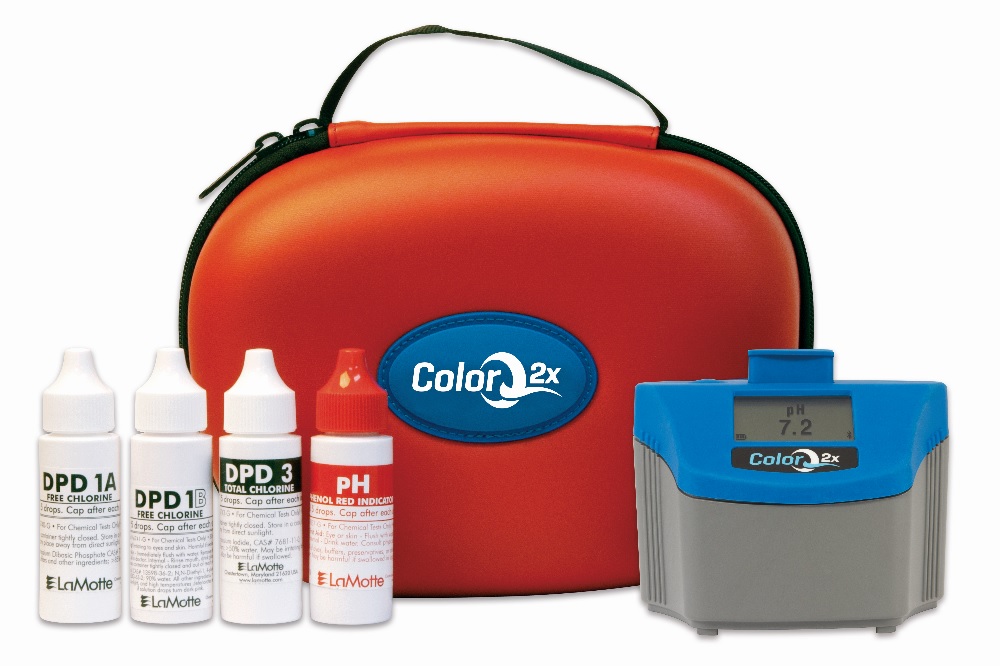
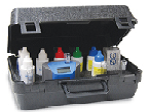
ColorQ 2X is a 2nd generation,
Bluetooth, Waterproof, all-digital tester,
that can
measure all the common test factors. There is a model, for every sanitizing
need.
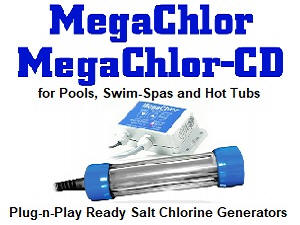
The
MegaChlor Salt Chlorine Generators
are ideal for many pools and require no
installation. Plug-n-Play ready.
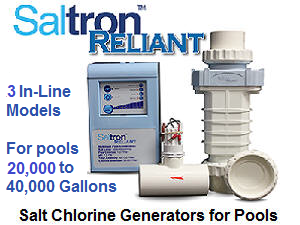
Salt chlorine generators are a
better way to do chlorine, providing
more control and helping to avoid algae
and sanitation problems. |
|
ColorQ All-Digital Water Testers |
Swim-Spa and Pool Salt Chlorinator |
Salt Chlorine Generators |
 |
 |
 |
|
Product and Ordering Information |
Product and Ordering Information |
Product and Ordering Information |
If you have a pool or spa water
testing need, we should have the
product.
►
Scroll down to read through some
Question & Answer information.
◄ |
|
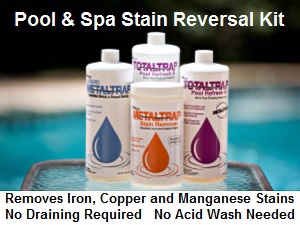
Stains can
be removed with a
MetalTrap Stain
Reversal Kit and heavy metals
can be eliminated, at the source, with a
MetalTrap
Filter. Add a drop-in,
Premium Pool
Graphic Mosaic Mat your pool
will take on a great new look. Get
better circulation, by replacing
standard return jet fittings, with
The
Circulator. Better
circulation helps everything
work better.
|
|
Stain Reversal Kit, for Pools
and Spas |
Premium Graphic Mosaic Pool Mats |
Circulation Boosting Return Jet
Fittings |
 |
 |
 |
|
Product
and Ordering Information |
Product and Ordering Information |
Product and Ordering Information |
If you have a pool or spa water
testing need, we should have the
product.
►
Scroll down to read through some
Question & Answer information.
◄
|
|
Magnetic Water Conditioners
help solve scaling problems, due
to high levels of calcium
hardness and are available in 4
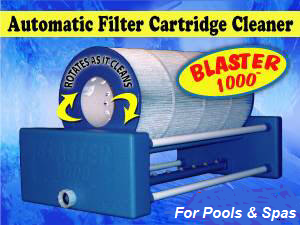
models. An
Automatic Filter Cartridge Cleaner
makes cleaning easier.
Choose from a variety of pool
and spa models.
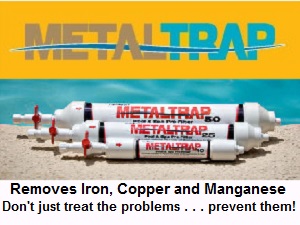
MetalTrap Filters are an
effective and easy way to deal
with source water, that contains
heavy metals, and avoid creating
a problem, every time new water
is added. |
|
Magnetic Water Conditioners |
Automatic Filter Cartridge
Cleaners |
Metals Removing Filters - 3 Sizes |
 |
 |
 |
|
Product and Ordering Information |
Product and Ordering Information |
Product and Ordering Information |
|
If you have a pool or spa water testing
need, we should have the product.
►
Scroll down to read through some
Question & Answer information.
◄
|
|
How to maintain a Fiberglass Pool and avoid common problems? |
Fiberglass
pools are available in a variety of shapes,
sizes, depths and configurations and can be
accessorized with a full range of convenience
features. Different geographic locations and
water source qualities can produce varying
maintenance requirements. Generally speaking
fiberglass pools are more chemically inert and
have less interaction with the water chemistry
than gunite pools. For your sanitizing
needs, for can consider a
salt chlorine
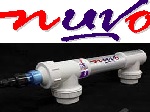
generator, an
Ultraviolet Sterilizer or a combination of methods, for
even better results. The periodic addition of a
metal treatment can help protect the appearance
of the fiberglass. If problems arise, refer to
the Pool Problems Page,
as a source of problem-solving information, broken down into
various categories. Scroll down the page and click on the linked
keywords,
catch phrases
or images, in the archived answers below, to access additional information, on that topic or product.
Do you know what's in your
water? Optimizing the water chemistry helps
maintain proper swimming conditions and allows sanitizers,
to work more effectively, If you would like to avoid problems, with stains and
discoloration, due to the presence of metals, you should be
testing for iron, copper and, possibly, manganese. Understanding,
if the potential for a problem exists, allows for
appropriate, preventative treatment to be taken. This helps select
the best treatment option, to avoid stains and discoloration. For
information about our full selection of testing options,
visit our Test
Equipment Store. For information about
discoloration and stain treatment
options, visit our Stain Treatments
Store. Understanding the nature
of the problem, should be step one.
 |
Join our E-Letter Mailing List.
You'll receive 1-3 E-Letters a
month, featuring helpful pool
and spa advice, new product
information and sale
announcements. All we
require is your e-mail address
and you can opt out anytime you
wish.
Your information
will never be shared or sold. |
|
▼
Helpful,
Problem-Solving Information, in a question and
answer format.
▼ |
►
Something More Than Algae Stains?
I just
found your website yesterday and was quite impressed.
Here is my problem. I have a fiberglass in ground pool,
which I love. This year the walls and side feel slimy
and have a yellow/brown film on them. I took my water to
be tested at 2 local pool supply stores and they both
said everything looked good. They suggested an algae
treatment and 3 bags of shock. I have done this twice
now and brush daily and cleaned the filter. Help
it won’t go away. I used a bath towel where I could
reach and rubbed and it seemed to help a little.
Please any suggestions would be helpful. Thanks.
You may
have had algae or a bacterial slime,
which made the walls slippery, but
the algae treatment probably took
care of that. Now you may
have a metal stain. Place a
dozen 500-mg Vitamin C (ascorbic
acid) tablets on a stained area. If
it removes or changes the film
(stain), the directions below will
treat the
whole pool. Heavy metal
stains, such as iron, copper and
manganese can come from natural
sources or corrosion of pool heaters
and equipment. In the vast majority
of cases, merely adding a metal
treatment will not remove the
stains., especially when covering
large areas. A reducing agent, such
as METALTRAP
Stain Remover must first be
applied, at the dosage rate of 1
pound per 10,000 gallons. Before
applying, the free chlorine, must be
allowed to drop to 0 PPM. otherwise,
the chlorine will destroy the stain
remover. Chlorine neutralizer can
be used to quickly drop the level
Allow the water, containing the METALTRAP Stain Remover to circulate 24/7. Brush the surface to help speed the process. Af ter the stains are gone., do one of the following. Either add 1 quart of Liquid METALTRAP, per 10,000 gallons of water, for each 1 PPM of metals present or use POOL REFRESH, to help you permanently remove the metals, by vacuuming and filtering them out. A MetalTrap Stain Reversal Kit contains everything needed. Wait 24 hours before adding chlorine or raising the pH. A lot of chlorine will have to be added, because it will react with the stain remover. Test your source water for iron, copper and manganese. A METALTRAP Filter uses garden hose connections and can remove up to 1 PPM of metals, based on its rated capacity. If you use the METALTRAP Filter, when adding all new water, you can keep more metals out of the pool. Because the process can get lengthy, it is a good idea to add a dose of a polymer algaecide, to help maintain water quality, in the interim period. If this website was helpful,
in solving your problem, please consider joining our
E-Letter Mailing List. You'll receive E-Letters, with helpful
information, new product updates, suggestions and sale
announcements. I hope that I have
provided the solution. ter the stains are gone., do one of the following. Either add 1 quart of Liquid METALTRAP, per 10,000 gallons of water, for each 1 PPM of metals present or use POOL REFRESH, to help you permanently remove the metals, by vacuuming and filtering them out. A MetalTrap Stain Reversal Kit contains everything needed. Wait 24 hours before adding chlorine or raising the pH. A lot of chlorine will have to be added, because it will react with the stain remover. Test your source water for iron, copper and manganese. A METALTRAP Filter uses garden hose connections and can remove up to 1 PPM of metals, based on its rated capacity. If you use the METALTRAP Filter, when adding all new water, you can keep more metals out of the pool. Because the process can get lengthy, it is a good idea to add a dose of a polymer algaecide, to help maintain water quality, in the interim period. If this website was helpful,
in solving your problem, please consider joining our
E-Letter Mailing List. You'll receive E-Letters, with helpful
information, new product updates, suggestions and sale
announcements. I hope that I have
provided the solution. Sincerely. Alan Schuster, 9/10/2018
►
Fiberglass Or
Gunite Pool?
Hi Alan, my wife and I bought a home
outside of Tampa, Florida this summer and we've been trying
to research which type of pool would be best. According to
the fiberglass Salesman, his pool will require less
chemicals and electricity (because the pump wouldn't run as
much). In addition he said that the shell would not break
down over time. He also stressed that a gunite pool would
require periodic acid washing (5-7 years) and other costly
but routine repairs. When we asked the gunite Salesman about
fiberglass pools all he did was laugh. Note: Even if we end
up buying a gunite pool, it will not be from THAT
salesman/company. Thank you for your assistance.
Lewis G., Tampa, FL, 1/2/2021
Great salesman! It is true that gunite pools will require
periodic refinishing or acid washing. In addition, there is
more interaction between
the water and the gunite pool surface, especially initially until an chemical
equilibrium is reached. Maintaining the chemistry in a
fiberglass pool should be
easier. The smooth surface should make algae control and
pool vacuuming easier. Gunite pools can stain or crack, but
these can be corrected or repaired. Refinishing can give the
gunite pool a whole new look, but it costs. A gunite pool
allows the benefit of infinite variation of size shape and
color. I wouldn't give much weight to the filtration
savings. Some of the newer alternative sanitizing systems
will require that the filter be operated for adequate or
minimum periods of time. This is a big decision. Over the
life of the pool, the cost of maintenance should be factored
in, as well. I suggest that you consider cost and
aesthetics, but go with the product that strikes your fancy. Good luck and I hope that I
have been helpful.
Sincerely. Alan Schuster, 1/2/2021
►
How To Calculate Pool Gallons?
We just closed
on a house with an inground fiberglass pool. What do I
need to measure and how do I calculate the number of gallons
of pool water? I want to do the pool maintenance
myself and need to be sure of its size. Thanks for any
help, you can offer.
Hank G.,
Alpharetta, GA, 5/23/2017
Basically,
you need to know the length, with and average depth. A
cubic foot of water equals 7.5 gallons. Go this this
website page: Calculating Pool Volume. It will provide all the
information, for pools of all sizes and shapes.
A ColorQ, all-digital pool water analyzer will help you et
off on the right track. Good luck with the house and
the pool.
Sincerely.
Alan Schuster, 5/23/2017
► Vinyl Or
Fiberglass Pool?
We are trying to decide on a vinyl or
a fiberglass pool. Size is no issue, as we are looking for
something relatively simple: about 14' X 28'. What concerns
us most is the appearance and the maintenance. We have ruled
out gunite - been there and done that! Thanks for the
opportunity to ask a question.
Bethany K., NJ, 3/20/2007
Both fiberglass pools and vinyl inground pools can look great and
provide many years of service. Both are relatively inert to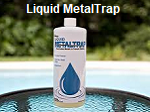 chemicals and have no effect upon the pH, total alkalinity
or calcium hardness level. Care must be taken avoid having
chlorine products contact vinyl liners. Fiberglass is less
prone to fading over time. To help preserve the appearance
of fiberglass, it is suggested that a metal treatment, such
as phosphate-free Liquid METALTRAP, be periodically added to
complex any metals present in the water. In areas where
minerals are a potential problem, this is good advice for
pools of all types. In the final analysis, the choice is
yours to make. You should go with the product that suits
your tastes and is within your budget. Expect to pay more
for a fiberglass pool. It is always a good idea to check the
dealer's track record and to see some completed pools. Good
luck with the pool.
chemicals and have no effect upon the pH, total alkalinity
or calcium hardness level. Care must be taken avoid having
chlorine products contact vinyl liners. Fiberglass is less
prone to fading over time. To help preserve the appearance
of fiberglass, it is suggested that a metal treatment, such
as phosphate-free Liquid METALTRAP, be periodically added to
complex any metals present in the water. In areas where
minerals are a potential problem, this is good advice for
pools of all types. In the final analysis, the choice is
yours to make. You should go with the product that suits
your tastes and is within your budget. Expect to pay more
for a fiberglass pool. It is always a good idea to check the
dealer's track record and to see some completed pools. Good
luck with the pool.
Sincerely. Alan Schuster, 3/21/2007
► Exposed
Aggregate or Fiberglass?
Dear Alan, could you give a little
insight and comparison between a fiberglass pool surface and
an exposed aggregate. So far, it seems like the most
reliable and smooth finish is the fiberglass. However I am
concerned about the fiberglass dust that will be generated
during the installation. How much of a problem is it and
can it be effectively eliminated after installation? Once
the fiberglass surface is installed, can erosion and
cracking occur causing particulates to be released? Also,
do you know what the best quality resins would be for the
fiberglass? The quartz/plaster composite seems also to be
durable but will porosity be a problem so that algae build
up will occur? Thank you for your time. I would greatly
appreciate any information you can provide. Sincerely.
Billie A., 4/22/2009
Fiberglass pools are very attractive and the surface is
smooth. That can make control of algae easier and vacuuming
less of a chore. On the other hand, exposed aggregate is
somewhat rough and can harbor algae. However, I am not sure
that the algae consideration is important, if the pool is
properly maintained. Do you want a smooth finish or a
textured look? There are pros and cons on both sides. Your
concern about fiberglass fibers is understandable, but the
fiberglass products, used today, have coatings that are
quite long lasting. There are some types of aggregate finish
that are smoother, less prone to chemical problems and
capable of being used to produce unique looking finishes. I
suggest that you discuss this with local contractors, as
they have the practical experience. Ask for the names of
people with recent installations. Do the same with exposed
aggregate.
Sincerely. Alan Schuster, 4/23/2009
► Never
Should Be Acid Washed?
I have a 12x24 fiberglass pool that I
just had acid washed and now it has spots. It looks kind of
like the finish is pitted. Could the acid wash have done
anything to the finish of the pool? if so is there any thing
I can do? the spots are a grey/green color and have moved
with the force of the jet and seem to be getting worse. any
help would be greatly appreciated. Thanks.
Denise, 8/6/2009
One of the benefits of owning a
fiberglass pool is that it
does not required acid washing. In fact, acid washing should
not be done, as it can damage the finish. This question
never was raised before, in my website, so I did verify the
facts. Your pool probably will have to be refinished or
painted.
Sincerely. Alan Schuster, 8/6/2009
► How Much
Calcium Hardness?
It seems like your are only one who
can answer my questions. I need to add calcium chloride to
my pool. My pool place says to mix it with water but on the
package it says not to mix with water just to broadcast it
over the pool, what do you recommend? Everyone says
something different. The man from the fiberglass pool
company said my hardness should be 350. I think this is
high. don't you?
Edith B., 4/24/2008
I have never heard of anyone recommending that it be
dissolved. Usually there are large amounts involved. It is
quite soluble and will not cause damage, if it should
contact the bottom. A gunite pool needs a hardness of
150-200 PPM and vinyl or fiberglass
pools only need 80 PPM as a
minimum and 150 PPM max. I suggest that you not add more
that this. At 350 PPM, you are close to scale forming
conditions. If your pH should rise above 7.8 or the TA above
150, scale formation could occur. I checked with a leading
manufacturer of fiberglass pools and their suggested range
is 120-150 PPM. I always felt the range for a vinyl lined
pool should be 80-200 PPM and there is no need to raise
something from the 80's anything higher. A fiberglass pool,
like a vinyl-lined pool, does not contain masonry materials
in the walls. Up to 400 PPM, usually does not cause clarity
or scaling, so long as the pH and TA are optimum. Metals
such as copper, which is used as an algaecide, added by some
mineral sanitizers and ionizers or results from heater
corrosion or natural sources, can form dark stains in any
type of pool, with high calcium hardness. That's another
reason to avoid calcium hardness levels, as high as 350 PPM.
You might want to check, with the pool manufacturer, as
their recommendations might be specific to their brand of
pools. I hope that this clears things up and keeps it that way.
Sincerely. Alan Schuster, 4/24/2008
► New Coping?
We have a fiberglass pool which is in
great shape, but what is outside is falling apart. We have a
wooden deck right up top the pool. There is only a frame of
wood around the pool. No coping!!! All the decking is coming
out and a new surface put down. Do you think it will be a
problem, if stone coping is used, in place of the wood?
Walter H., Toms River, NJ, 3/23/2009
This should not be a problem, as fiberglass pools are
commonly finished with a
stone coping, that can provide a higher degree of safety. I hope
that this information will prove helpful.
Sincerely. Alan Schuster, 3/23/2009
|
A Great Decorative Option |
|
 |
|
Use a Premium Pool Art Graphics Mat
to decorate your pool floor.
The image appears to be
tiled on your pool floor,
but that's just an illusion.
Actually, you simply set one
of these colorful graphics
on the water and push it to
the bottom, with a pool
brush. Its weight keeps it
there. Choose from 9
attractive designs, plus a
custom monogram model.
Most are available in 3
sizes: 47" diameter,
23" diameter or 10.5"
diameter. No adhesives needed
and installation is just
that simple. To remove or
place elsewhere, just lift
it off. |
|
Click
Here For Product and
Ordering Information |
► Painting Or
Refinishing The Pool?
Our fiberglass pool is showing its
age. The surface has become stained and is very dull. We are
either going to have it refinished or painted. Will painting
hold up? Will I still have stains to deal with, as we do
have well water? I want to make it easier for myself. Thanks
for the help.
George, Sanford, NC, 1/30/2006
Painting the fiberglass pool, with the right product and in
the proper manner, can make things easier down the road.
There should be less staining and the water chemistry should
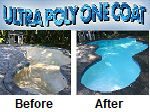
be easier to maintain. Ultra Poly One Coat is a long lasting, durable epoxy
hybrid coating that is available in several colors. It is
something worth considering. I hope that
information will help your with the decision making.
Sincerely. Alan Schuster, 1/31/2006
► Cleaned Up
Nicely?
We just bought a house with a
fiberglass in ground pool and are having a few problems that
I can't seem to get a straight answer for. When we bought
the house the previous owner told us it was easy
maintenance, just one chlorine tablet a week. We did that
for about 3 months, the pool looked beautiful we didn't
worry about it. My husband had some questions about the
filter system so we called out a pool service guy, and he
tested the water also. He said our chlorine was zero, as was
the pH. But, the pool still looked beautiful. He suggested
sodium bicarbonate to raise the pH and a shock treatment for
the chlorine. It is a small pool, about 10000 gallons or
less, so he said to add 10 lbs of the sodium bicarbonate,
which I did. It turned the pool water green, so I did the
shock treatment, which seemed to bring the color better, but
then I got a brown stain around the water line and the whole
rest of the pool. I tested the alkalinity which was very
high so I used muriatic acid to bring that down. Now all the
chemicals are stabilized, the chlorine is still a little
high from the shock treatment over a week ago. The pH and
alkalinity are fine and the stains seem to be gone. Does
this make sense? No pool store here in Hawaii sells the
ascorbic acid. What do you suggest? Thanks for your help.
Shelley F., Hawaii, 2/23/2014
If the stains are gone, you don't need any
stain treatment. What
you should add is a double dose of phosphate-free,
Liquid
METALTRAP, in order to complex any remaining dissolved metals. You
probably had a low level of iron. Add a maintenance dose
monthly and prior to adding new water and it will help keep
the fiberglass free of stains. The use of the
METALTRAP
Filter can remove metals from the pool water and lessen the
likelihood of metal stains. If you have a heater, you may
have exposed the copper components to corrosion and that
could have caused the staining and discoloration. The
previous pool owner probably over simplified the pool
maintenance. He neglected to tell you that the chlorine
tablets are acidic and will require the occasional addition
of chemicals to maintain the pH and total alkalinity. He
also failed to tell you that shock treatment may be
required, in order to maintain a free chlorine level of 1-3
PPM. The fact that the water was clear was due to the low
pH: it makes dissolved minerals more soluble, but creates
corrosive and irritating conditions. The fact that you have
a fiberglass pool helped avoid corrosion and surface
etching, that might have added to the problem. Now that you
are on the right track, keep the free chlorine at 1-3 PPM,
the pH at 7.2-7.6 and the TA at about 100 PPM. Want to make
chlorine maintenance easier? Check out salt chlorinating
systems. I hope that you have found this information
helpful.
Sincerely. Alan Schuster, 2/24/2014
► Pool
Sanitizer Choice?
We are planning to have a fiberglass
pool installed in late spring. There seems to be many ways
to sanitize the pool. Is there a "best" way for a fiberglass
pool or some that are not as good? Thanks for the
opportunity to ask a question.
Greg M. Mobile, AL, 4/2/2010
You're right there are a lot of choices! Because fiberglass
pools are so non-porous metal stains can show up, especially
if well water or water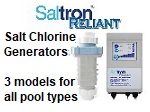 containing heavy metal is used. To
help avoid this possibility, it is always a good idea to add
a metal treatment, such as phosphate-free
Liquid MetalTrap, as the pool is being filled. This advice
applies to all types of pools, if metals are known to be
present. A maintenance dose of metal treatment should be
added monthly and prior to the addition of new water. The
addition of the metal treatment can interfere with the
performance of certain types of sanitizers such as,
ionizers, copper-oxidation,
and copper algaecide. Fortunately, there are lots of other
good choices. You can use chlorine, bromine, a
salt chlorine
generator, an ozonator or an
ultraviolet
sterilizer. Sometimes
using a combination produces even better results with less
effort. I hope that this information will help get you off
to a good start. Enjoy the pool! containing heavy metal is used. To
help avoid this possibility, it is always a good idea to add
a metal treatment, such as phosphate-free
Liquid MetalTrap, as the pool is being filled. This advice
applies to all types of pools, if metals are known to be
present. A maintenance dose of metal treatment should be
added monthly and prior to the addition of new water. The
addition of the metal treatment can interfere with the
performance of certain types of sanitizers such as,
ionizers, copper-oxidation,
and copper algaecide. Fortunately, there are lots of other
good choices. You can use chlorine, bromine, a
salt chlorine
generator, an ozonator or an
ultraviolet
sterilizer. Sometimes
using a combination produces even better results with less
effort. I hope that this information will help get you off
to a good start. Enjoy the pool!
Sincerely. Alan Schuster, 4/2/2010
► Stubborn
Stains?
I have a fiberglass pool, that is
about 10 years old. It still looks great, except for a few
spots in the shallow end. It have tried to use metal
removers, vitamin C and chorine shocking, but nothing helps
much, if at all. The dealer says it is "cobalt". whatever
that is. Do you have a solution?
John. L, Boca Grande, FL, 1/23/2010

Cobalt is something that usually only affects some older
fiberglass pool. A tiny hairline crack, in the gel coat, was
allowed water to reach
the underlying
fiberglass. While you might not be able to chemically
remove the problem, you might be able to cover it over with a
Premium Graphic Design Pool Mat.
They are available in various sizes and designs. Draining the pool is not necessary, because the Graphic Mats are simply dropped into place and
positioned. I
hope that this information will be helpful.
Sincerely. Alan Schuster, 3/27/2010
► Hiding The
Damage?
Alan, I have a bleached out spot,
right in the middle of the deep end. It is a fiberglass pool
and a 3" chlorine tablet must have been accidentally dropped
into the pool. Is there a simple solution? Do I have to
drain the pool? Thanks.
Harry L., Stuart, Florida, 1/16/2011
Actually, this is a simple no-drain solution. All you have
to do is add a Premium Pool Graphic
Mosaic Mat. It creates the illusion
of a mosaic tile decoration, but is really only a mat. Its
weight keeps it in place. All you have to do is position it
in place, using a pool brush and pole. It comes in a variety
of sizes and styles. No adhesive or installation is
required. It will give the pool a new look and hide the
damage. Even it there was no damage, it would be a welcome
addition, to the pool.
Sincerely. Alan Schuster, 1/12/2011
► What To
Anticipate?
Alan, I am relocating to Florida and I
am planning on having a house built with a pool. I have
never owned a pool before and don't know what to look for to
avoid future problems. Any suggestions? I would also like to
know what to expect as far as time and cost to maintain a
pool. Thanks.
Ben G., 12/9/2008
A lot will depend upon the pool and your budget. Your first
decision should be what kind of pool: gunite or fiberglass.
A pool is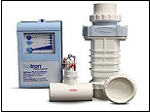 a long term investment, so choose carefully and
check out the builder. Assuming that it is an inground pool,
it may require a few hours a week to maintain the water
chemistry and make the proper adjustments. If it is within
your budget you could use a
salt chlorinator
and an
Ultraviolet Sterilizer,
as a means of eliminating most of the chemicals. Cleaning
the pool, depending upon location can involve work. This too
can be simplified with the addition of an automatic pool
vacuum. Reading up on water chemistry and proper filter
operation will help get you off on the right track. Browsing
through the archives will help educate you about pool
maintenance. Cost will depend upon pool size, location and
usage. A ballpark figure might be $1000-2000 per year, but
it is not etched in stone, as it can depend on size,
construction, Sun exposure, usage, sanitizer choice, etc.
This does not include electrical costs. I hope that I have
been helpful. a long term investment, so choose carefully and
check out the builder. Assuming that it is an inground pool,
it may require a few hours a week to maintain the water
chemistry and make the proper adjustments. If it is within
your budget you could use a
salt chlorinator
and an
Ultraviolet Sterilizer,
as a means of eliminating most of the chemicals. Cleaning
the pool, depending upon location can involve work. This too
can be simplified with the addition of an automatic pool
vacuum. Reading up on water chemistry and proper filter
operation will help get you off on the right track. Browsing
through the archives will help educate you about pool
maintenance. Cost will depend upon pool size, location and
usage. A ballpark figure might be $1000-2000 per year, but
it is not etched in stone, as it can depend on size,
construction, Sun exposure, usage, sanitizer choice, etc.
This does not include electrical costs. I hope that I have
been helpful.
Sincerely. Alan Schuster, 12/9/2008
► Tan And
Brown Stains?
We have a 5000 gal fiberglass pool
with heater, that slowly develops stains (brown or tan) on
walls, pH 7.4, TA 120. These stains can easily be removed by
a stain remover (concentrated ascorbic acid, together with a
metal treatment. After treatment, pump is run for 12 hours
then filter is backwashed and new DE added. We treat this
problem when it becomes unsightly, approx every 6 weeks. Are
you aware of any chemical/product that could be added on a
continuing basis that would prevent this staining. It would
be nice to have pool walls clean all the time. Could
corrosion from heater be causing problem? Any other possible
cause of problem? Thank you.
Tom K, 3/22/2009
The color, of the pool stains, are not consistent with
copper, so I would rule out the heater. However, it is
consistent with iron and so is the treatment that you have
used. I suggest that you have the pool and source water
tested for iron. Any level can be a problem. Iron can be
present, even if the test results are negative, due to
interference from other chemicals that might have been added
or from the fact that it is on the walls and no longer
present in the water. It sounds like iron, so I suggest that
it be treated like iron. The recurrence could be due to not
having added enough of the metal treatment or having added
makeup water. Add a dose of the metal treatment now and add
an additional dose monthly or whenever new water is added.
Fiberglass has a negative electrical charge and can attract
positively charged metallic ions, causing the development of
a stain. The periodic addition of a phosphate-free metal
treatment, such as Liquid METALTRAP, should help negate this
effect and help keep pool stain free. A
METALTRAP FILTER
can be used to help remove metals, from the pool water, and
prevent a recurrence of this type of problem. I hope that
the information will prove useful.
Sincerely. Alan Schuster, 3/22/2009
► Use Of
Muriatic Acid?
I'm new to owning a pool. I've just
purchased (two years ago) a house equipped with an in-ground
pool, lined with fiberglass. The previous owner advised me
that muriatic acid should never be used in the pool. He used
granulated chlorine only. During the summer months I was
going through chlorine like crazy and having problems with
cloudy water and algae. One year ago I had a salt system
installed. Since then the water has been crystal clear, but
there is now a slightly grayish /tan film accumulating on
the pool surface. Particularly in the areas of the returns
and the spa. The film is impossible to brush off, but will
leave a clean streak if you wipe your finger over it. The pH
level has been historically high (off the chart on my
tester/ dark pink). Is this the cause? Can I add muriatic
acid to the pool? If not, what can I do to correct/ bring
down the pH level? Sincerely.
Jerry W., 1/21/2007
There is a huge difference between adding muriatic acid to
lower the pH and pouring the full-strength acid on the
walls. The latter should not be done. But, you must get the
pH to 7.2-7.8 and you will need to acid to do that.
Salt
chlorine generators, do tend to cause the pH to rise. High
pH can cause scaling to occur and lead to metal stains. See
below. I suggest that you add a few doses of metal
treatment, as the pH is being lowered. Give it some time and
see if that helps. High pH will make the chlorine less
effective and that can lead to other problem, as well.
Three factors contribute to scaling conditions: high
calcium hardness (usually over 400 PPM), high pH (usually
over 7.8) and total alkalinity (usually over 200 PPM. All
three together make it even worse. You can lower the pH and
TA with acid. The calcium hardness might be controlled, but
not necessarily lowered, by adding a calcium sequestering
agent. I suggest that you test the water for pH, TA and
calcium hardness. The Langelier Index will tell you if the
water is scale forming and provide insight to help improve
the situation. If the stains persist, you might want to
treat with a METALTRAP Stain Reversal Kit. I hope that this information will
prove helpful.
Sincerely. Alan Schuster, 1/22/2007
► Indoor
Fiberglass Pool Sanitation?
Alan, I've almost gone through every
aspect of your website & have learned a great deal on what I
hope to be a fun filled future as a pool owner. I'm in the
process of building a new home with an inground, indoor
fiberglass pool. The pool will be in its own walled in
environment with a dehumidifying heating system. I've read
somewhere that chlorine shouldn't be used as a sanitizer for
an indoor pool because the byproducts can be carcinogenic.
Can you verify this for me? My hope was to use a salt
chlorine generator but now I'm having second thoughts. Are
there any other concerns I should have with an indoor pool
(i.e.. is a chlorine stabilizer needed). Thanking you in
advance.
Chev H., Ottawa, Canada, 11/15/2004
Read enough and everything seems to cause cancer. That odor
of chlorine, that you smell indoors, is not chlorine. It is
chloramines and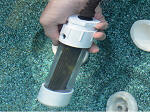 it is known as a bad actor. It is odorous,
irritating and ineffective. High cyanuric acid levels are
another potential problem. The good news is that chloramines
are completely destroyed, as the water passes through the
salt cell and there is no build up of cyanuric acid
(chlorine stabilizer). Your pool is indoors, so you do
not need any stabilizer! The fact that the pool is fiberglass
will simplify the maintenance of the pool water chemistry
because of the inert nature of the fiberglass. Basically all
you will have is salt, chlorine and some innocuous pH
adjustment chemicals. There is a long safe history of
chlorine being used in pools and drinking water. Bad press
about chlorine, usually refers to its manufacture and the
release of mercury. This has nothing to do with swimming
pools. A salt chlorinator will go a long way towards helping
to maintain the best appearance of the pool finish, because
it helps avoid ultra high chlorine levels and corrosive low
pH conditions. I hope that I have been of assistance.
it is known as a bad actor. It is odorous,
irritating and ineffective. High cyanuric acid levels are
another potential problem. The good news is that chloramines
are completely destroyed, as the water passes through the
salt cell and there is no build up of cyanuric acid
(chlorine stabilizer). Your pool is indoors, so you do
not need any stabilizer! The fact that the pool is fiberglass
will simplify the maintenance of the pool water chemistry
because of the inert nature of the fiberglass. Basically all
you will have is salt, chlorine and some innocuous pH
adjustment chemicals. There is a long safe history of
chlorine being used in pools and drinking water. Bad press
about chlorine, usually refers to its manufacture and the
release of mercury. This has nothing to do with swimming
pools. A salt chlorinator will go a long way towards helping
to maintain the best appearance of the pool finish, because
it helps avoid ultra high chlorine levels and corrosive low
pH conditions. I hope that I have been of assistance.
Sincerely. Alan Schuster, 11/15/2004
► Initial
Fill Up?
Can a fiberglass pool be installed without filling it with
water during the installation? In other words, how is the
pool supposed to be filled up?
Nelson S., 4/15/2005
A
fiberglass pool is designed to have internal and external
pressure. Unless a pool is structurally enhanced, at any
given time the pressure outside the pool and the pressure
inside the pool should be equal. A leading fiberglass pool
manufacturer
recommends that there be no more than a 6” difference
between the water and the backfill when the pool is being
filled. However, you should check your situation with
the pool manufacturer. A properly trained installer should be proceeding
on this basis. I hope that I have been helpful.
Sincerely. Alan Schuster, 4/15/2005
► Pool That
Has Settled?
My fiberglass pool, 3 years old, seems
to have settled slightly on one end near the steps. How can
this be fixed? I appreciate your help.
Kelly, H., 11/2/2007
In most situations, the only true way to fix a pool that has
settled is to pull it up out of the ground. On some
occasions the steps can be adjusted without removing the
entire pool. I suggest that you discuss this with the
builder, as to possible causes and remedies. Possible causes
include: erosion by ground water or springs, changes in the
water table, heavy rainfall or flooding, unstable ground and
installation techniques. I suggest that you discuss both
the cause and solution with the builder. Good luck and I
hope that this information will prove helpful.
Sincerely. Alan Schuster, 11/3/2007
► Possible
Chlorine Damage?
I have a fiberglass pool with a
floater to dissolve chlorine. the floater got stuck on the
steps and left brownish stains (bad ones). Is there a good
way to remove these? Can I scrub the fiberglass surface with
anything? Thanks.
Mike M., 3/9/2005
Having a chlorine feeder remain in prolonged contact with
any type of pool surface can result in damage. While the
color can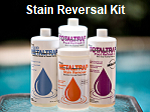 be consistent with iron staining, given the
circumstances, the harsh effects of direct chlorine contact
has to be considered. First I suggest that you try and
remove the stains with an acidic tile cleaner. This fails,
try a solution of ascorbic acid or a METALTRAP Stain Reversal
Kit. If that fails, chlorine damage to the gel coat seems
the most likely possibility. You could try using an
automotive compound product on the area and follow with an
application of automotive wax. This treatment should remove
the top surface and help restore the appearance and luster
of the gel coat. This method of adding chlorine is not one
that I recommend, for exactly this reason. You would be
better off with an inline chlorinator. Even better would be
a salt chlorine generator. Good luck and I hope that this
information proves helpful. be consistent with iron staining, given the
circumstances, the harsh effects of direct chlorine contact
has to be considered. First I suggest that you try and
remove the stains with an acidic tile cleaner. This fails,
try a solution of ascorbic acid or a METALTRAP Stain Reversal
Kit. If that fails, chlorine damage to the gel coat seems
the most likely possibility. You could try using an
automotive compound product on the area and follow with an
application of automotive wax. This treatment should remove
the top surface and help restore the appearance and luster
of the gel coat. This method of adding chlorine is not one
that I recommend, for exactly this reason. You would be
better off with an inline chlorinator. Even better would be
a salt chlorine generator. Good luck and I hope that this
information proves helpful.
Sincerely. Alan Schuster, 3/10/2005
|
Visit The Website Stores . . . for
better informed shopping!!! |
|
|
Shipping is FREE* . . . within
the Continental U.S.
A $9.99
handling charge will apply
to Continental U.S. Orders,
under $75.00. Orders
outside of the Continental
U.S. may require some
additional charge, based on
quantity and destination.
Most products can be
shipped World-Wide. International
and orders outside of
Continental U.S. - see
comments on the ordering
pages. |
|
|
Major
Credit Cards and PayPal are accepted. |
|
▲
Return To Top Of Page
▲
Aqualab Systems, LLC does not
make any warranty or
representation, either expressed
or implied, regarding the
accuracy or completeness of the
information provided by this
website; nor does Aqualab
Systems., LLC. assume any
liability of any kind whatsoever
related to, or resulting from,
any use or reliance on this
information. The content of this
website should not be used, if
it is conflict with any
applicable federal, state or
local regulations or guidelines.
© Aqualab Systems, LLC. All
rights reserved
|
|