|
 |
Shipping is FREE* . . . within
the Continental U.S.
A $9.99
handling charge will apply
to Continental U.S. Orders,
under $75.00. Orders
outside of the Continental
U.S. may require some
additional charge, based on
quantity and destination.
Most products can be
shipped World-Wide. International
and orders outside of
Continental U.S. - see
comments on the ordering
pages. |
|
 |

Major
Credit Cards and PayPal are accepted. |
|
On-line
shopping since 2002 - Safe and Secure!!! |
|
Using Ionization, to help sanitize spa
or swim-spa water!!! |
|
Ionization is the process, by which
metallic ions, such as copper, silver or
zinc, are utilized in helping to
sanitize spa, swim-spa or hot tub water.
Ionization is not a complete water
treatment system, as it lacks the
oxidizing function, required to oxidize
organic wastes and byproducts.
Sanitizing is a must, for proper spa
water management.
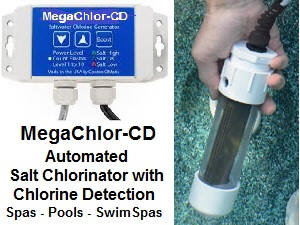
Salt Chlorine generators are a
better way to utilize chlorine, producing
more controllable results. They
eliminate the need to handle, measure or
store chlorine products, while reducing
buildup problems. An
Electronic
PockeTester Kit is a convenient
way to monitor the salt level. |
|
|
|
How to use
an Ionizer or Mineralizer, as an
alternative spa
sanitizer? |
Ionization is the process,
by which various
alternative spa sanitizing devices supply, a stream of copper, silver ions
or zinc ions, to the spa, swim-spa or hot tub water. The
copper ions function as an algaecide and the
silver and ions function as a bactericide. Used
properly, the ions are maintained at very low
levels, avoiding the possibility of staining or
discoloration. Ionization units use metallic
electrodes and electrical circuits to release
the ions into the water. Ionizers are not stand
alone water treatment products, but can reduce
the total amount of chemicals required for
proper spa or hot tub water maintenance. Copper
and silver ions will not destroy organic buildup
and contamination and will not oxidize dead
microorganisms and organic debris. This requires
spa water oxidation and the use of agents such
as: chlorine, bromine, non-chlorine shock or
ozone. All of these oxidizers can be used with a
Ionizers. Salt
chlorine generators can, also, be used with ionization,
to provide the necessary oxidation. If problems arise, refer to the
Spa Problems
Page, as a source of problem-solving
information, broken down into various
categories. Scroll down the page and click on the linked
keywords,
catch phrases
or images, in the archived answers below, to access additional information, on that topic or product.
 |
Join our E-Letter Mailing List.
You'll receive 1-3 E-Letters a
month, featuring helpful pool
and spa advice, new product
information and sale
announcements. All we
require is your e-mail address
and you can opt out anytime you
wish.
Your information
will never be shared or sold. |
|
▼
Helpful,
Problem-Solving Information, in a question and
answer format.
▼ |
► Ionization And
Oxidation?
I was just looking at some info on the
ionization process for hot tubs to look after algae and
such. I must admit it looks great and I bet smells better
with no bromine or chlorine odors. My question is to do with
the oxidation of the water. I have read where you suggest
ozonators to deal with this problem. But, are they enough to
keep the water fresh or do you need some non chlorine shock
as well? Also is there a test you can do to check, if you
have enough oxidation occurring to be safe? Thanks in
advance.
Darren H., 10/27/2019
For proper spa water quality, you
must have both sanitizing and
oxidation! An ionization unit or
mineral sanitizer can provide most,
if not all of the sanitizing action.
However, it must be used with
oxidizing agents such as ozone,
chlorine, bromine or non-chlorine
shock. Ozonators come close to
providing for all of the sanitizing
and oxidizing needs. Because the presence of ozone is
short-lived, after the unit is shut
off, a backup sanitizer is always
recommended: chlorine,
bromine or mineral sanitizers or
ionization units are most commonly
used in this backup role. Ozonators
provide the necessary oxidation and
greatly reduce the amount of
chlorine or bromine required to
maintain a level of about 1/2 the
customary amount. There should be no
overpowering sense of chlorine or
bromine. Use an ionization unit and
you can come close to eliminating
the chlorine or bromine. The only
time non-chlorine shock needs to be
used is if the water quality
suddenly deteriorates. If you
maintain a chlorine or bromine
residual, at a reduced level, the
ability to maintain this lower
concentration is confirmation that
the oxidation needs are being met by
the ozonator. When all is said and
done, chlorine or bromine are not
easy to replace or eliminate.
A
salt chlorine generator is a
better way to utilize chlorine,
eliminates most of the negatives and
is a complete sanitizing system.
We offer several no-installation
required models and two of them are
smart enough to only produce
chlorine, when it is actually
needed. So you'll never
overchlorinate again. I hope
that I have been helpful.
Because the presence of ozone is
short-lived, after the unit is shut
off, a backup sanitizer is always
recommended: chlorine,
bromine or mineral sanitizers or
ionization units are most commonly
used in this backup role. Ozonators
provide the necessary oxidation and
greatly reduce the amount of
chlorine or bromine required to
maintain a level of about 1/2 the
customary amount. There should be no
overpowering sense of chlorine or
bromine. Use an ionization unit and
you can come close to eliminating
the chlorine or bromine. The only
time non-chlorine shock needs to be
used is if the water quality
suddenly deteriorates. If you
maintain a chlorine or bromine
residual, at a reduced level, the
ability to maintain this lower
concentration is confirmation that
the oxidation needs are being met by
the ozonator. When all is said and
done, chlorine or bromine are not
easy to replace or eliminate.
A
salt chlorine generator is a
better way to utilize chlorine,
eliminates most of the negatives and
is a complete sanitizing system.
We offer several no-installation
required models and two of them are
smart enough to only produce
chlorine, when it is actually
needed. So you'll never
overchlorinate again. I hope
that I have been helpful.
Sincerely. Alan Schuster, 10/27/2019
► What is Spa
Ionization-Oxidation?
I recently used a pool and spa that
were being sanitized, with something called Ionization-Oxidation. I really
enjoyed not having the heavy odor of chlorine lingering
around. Is this something that I can use in my own spa?
Currently, I am using bromine, but this was better!
Chris N., Allentown, PA, 1/20/2021
Ionization-Oxidation is a hybrid method for purifying water.
The technology was actually developed for the Apollo space
program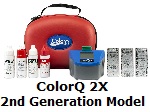 , to purify water on many manned space missions.
Electrodes release controllable amounts of copper and zinc
ions, to act as sanitizers, as another
set of electrodes produces forms of
active oxygen to destroy organic
matter, algae, bacteria and waste
products. You preferred the end
result because of the low chemical
presence. Sometimes, depending on
bather usage and actual spa
conditions, more consistent results
are gotten, by also maintaining a
very low level of chlorine. The
chlorine just helps bridge the gap
between the shutting off of the unit
and its restarting. Because of the
oxygenation, there are none of the
odorous and irritating forms of
chlorine. If you are interested in
maintaining an eco-friendlier spa
that uses a minimum of chemicals,
this is certainly something to
consider, but is has its
limitations: the active oxygen does
not last long, the copper ions must
be kept under 0.3 PPM and the pH
needs to be kept on the low end of
optimum. However, you could also
use a
salt chlorine generator and
ozonator, to achieve the same
or better results, at lower cost. No Matter what, the
copper content should be tested and monitored.
Ionization-Oxidation frequently
results in too much copper and that
leads to staining issues. The
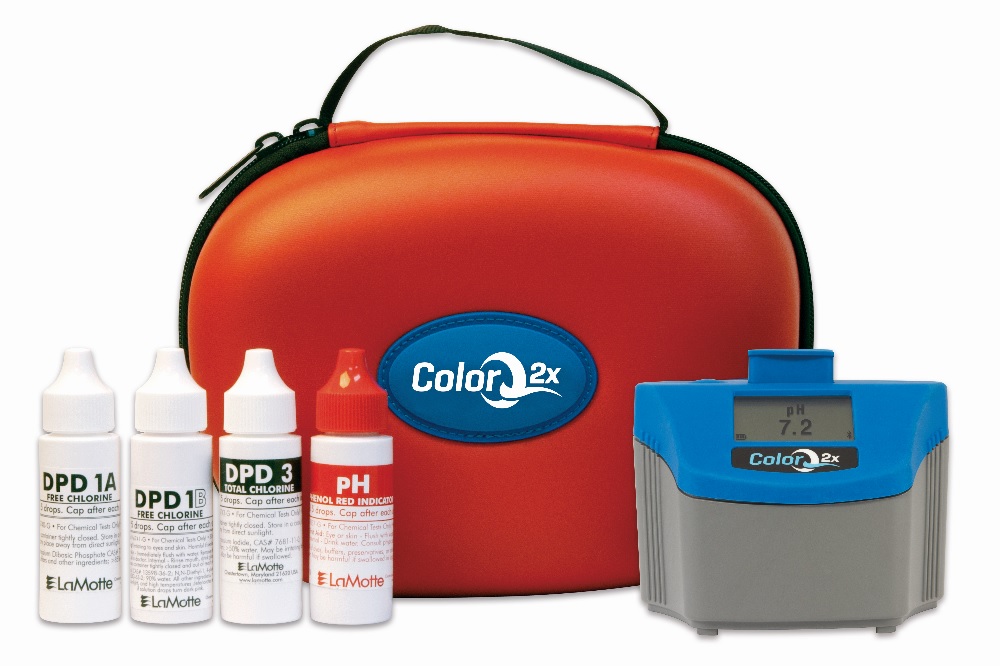
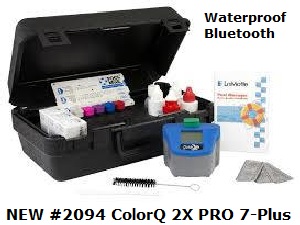
ColorQ
2X PRO 9 all-digital testers are the best ways
to do that. I hope that this information proves to be
helpful.
, to purify water on many manned space missions.
Electrodes release controllable amounts of copper and zinc
ions, to act as sanitizers, as another
set of electrodes produces forms of
active oxygen to destroy organic
matter, algae, bacteria and waste
products. You preferred the end
result because of the low chemical
presence. Sometimes, depending on
bather usage and actual spa
conditions, more consistent results
are gotten, by also maintaining a
very low level of chlorine. The
chlorine just helps bridge the gap
between the shutting off of the unit
and its restarting. Because of the
oxygenation, there are none of the
odorous and irritating forms of
chlorine. If you are interested in
maintaining an eco-friendlier spa
that uses a minimum of chemicals,
this is certainly something to
consider, but is has its
limitations: the active oxygen does
not last long, the copper ions must
be kept under 0.3 PPM and the pH
needs to be kept on the low end of
optimum. However, you could also
use a
salt chlorine generator and
ozonator, to achieve the same
or better results, at lower cost. No Matter what, the
copper content should be tested and monitored.
Ionization-Oxidation frequently
results in too much copper and that
leads to staining issues. The
ColorQ
2X PRO 9 all-digital testers are the best ways
to do that. I hope that this information proves to be
helpful.
Sincerely. Alan Schuster, 1/20/2021
► Hydrogen
Peroxide?
We have a hot tub and would like to
use hydrogen peroxide instead of the normal chemicals. My
husband is allergic to the chlorine and bromides. How much
Hydrogen peroxide do we use and what %. We were told that it
should be a 10% concentration but we can't find any hydrogen
peroxide above 3%. I thought maybe you could help us. Also,
do we need to use any kind of a shock at the first? Hope you
can help! Thanks.
Jo, 7/10/2018
I am not sure that using just hydrogen peroxide will provide
adequate sanitation. In pools and spas, it is used as a
shock
 treatment with biguanide. It is available in
concentrated form in many pool and spa outlets that offer
biguanide products. Have you considered the use of an
ozonator and a mineral sanitizer. This combination would
come close to being chlorine and bromine free. The ozonator
could negate the need for hydrogen peroxide and a
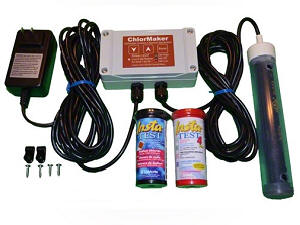
mineral
sanitizer would release metallic ions and act as a
persistent sanitizer. Hydrogen peroxide can be used as a
shock treatment and a mineral sanitizer or ionizer as the
primary water sanitizer. However, in most cases better
results are obtained, if you maintain a lower level of
chlorine or bromine. As long as chlorine or bromine are
required, going with a
salt chlorine generator makes
sense and can simplify operation and
sanitizing. We offer several
no-installation required models and
two of them are smart enough to only
produce chlorine, when it is
actually needed. You can
eliminate the measuring, storage and
handling of chlorine products. I hope that I've been helpful and given
you some food for thought. Good luck with your decision.
treatment with biguanide. It is available in
concentrated form in many pool and spa outlets that offer
biguanide products. Have you considered the use of an
ozonator and a mineral sanitizer. This combination would
come close to being chlorine and bromine free. The ozonator
could negate the need for hydrogen peroxide and a
mineral
sanitizer would release metallic ions and act as a
persistent sanitizer. Hydrogen peroxide can be used as a
shock treatment and a mineral sanitizer or ionizer as the
primary water sanitizer. However, in most cases better
results are obtained, if you maintain a lower level of
chlorine or bromine. As long as chlorine or bromine are
required, going with a
salt chlorine generator makes
sense and can simplify operation and
sanitizing. We offer several
no-installation required models and
two of them are smart enough to only
produce chlorine, when it is
actually needed. You can
eliminate the measuring, storage and
handling of chlorine products. I hope that I've been helpful and given
you some food for thought. Good luck with your decision.
Sincerely. Alan Schuster, 7/10/2018
►
Oxygenating Alone Is Not Working?
We purchased a fiberglass spa bath
with an oxygenator, and were told
that no chemicals would be needed.
This was a selling point. We did not
want to have to add chemicals, as I
have allergies to some chemicals, or
to keep changing the water. Another
alternative that we considered was a
salt chlorinator. After two
months we noticed slimy green
patches on the walls and seat, about
two feet from the water surface, so
drained the spa, cleaned it as
instructed, and refilled it. Within
a week they are back, and also
occasional bits of white foam. The
surface of the spa bath is also a
bit slippery. The water looks
sparklingly clean and the green
patches come off when rubbed, but
then it bothers me that the water
might contain harmful bacteria.
Thank you for your time.
Regards.
Sally S., 1/14/2017
Sounds
like you have an
Ionization-Oxidation system. It is
much easier to sell something, when
you promise the world. The
"oxygenator" is not a sanitizer! It
may help reduce the organics content
of the water, but it will not
control microorganisms - hence the
green deposits and slimy underwater
surfaces. And its residual action is
very short. You need to be using a
sanitizer, such as chlorine or
bromine. A
salt chlorine generator can be
added. When used together, the
"oxygenator" will be doing some of
the waste elimination and this will
allow you to operate the Salt
Chlorine Generator, at a lower
setting, to maintain any given
chlorine level. This will allow the
salt cell to last longer and make pH
control easier. With the
combination, there should be little
of the odor, associated with
chlorine use. We offer an affordable
selection of spa salt chlorine
generator and most require no
installation. Just plug-n-play. I
hope that this has been helpful.
Sincerely. Alan Schuster,
1/14/2017
► How Does An
Ionizer Work?
I am thinking of adding an ionization
unit to help reduce the amount of chlorine that is being
used. Is this possible? I have very hard water and want to
minimize chemicals.
Fred. H, Mesa, AZ, 5/12/2012
Yes, it will work to help reduce chemical usage, by
providing silver and copper sanitizing ions, as the water
passes over the copper and silver electrodes. The chlorine
will now have help and less will be required. It is easily
controlled and adds little to the water. You can further
reduce the chemicals required by adding an
ozonator. That
will allow you to cut the chlorine level back and even less
will be required, as the ozonator will do most of the
oxidizing. This sanitizing combination will reduce the
odor, as well. I hope that this information is helpful.
Sincerely. Alan Schuster, 5/12/2012
► What is
Ionization?
Exactly what is ionization? Is there a
benefit in using ionization in a spa?
T. T., Eugene, OR, 5/2/2008
Ionizers are a type of alternative water sanitizer and
operate on the principle of adding a low level of copper and
silver or zinc ions to the water. Ions are the electrically
charged soluble forms of these metals. These ions can
function as a spa water sanitizer. At low levels, staining
and precipitation can be avoided and the ions are able to
remain in solution. Ionization units contain electrodes and
t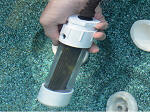 he regulation and control of the current between these
electrodes, will regulate the amount ions released into the
pool water. The device is plumbed in-line and operates with
the same cycle as the filter pump. Another type of device is
the Mineral Sanitizer, that releases ions with the
electrical circuits. In either, case the sanitizing
principle is similar. In addition to the sanitizing ions,
there must be oxidation. Without oxidation, there would be a
build up of organic wastes and byproducts in the spa water.
For this purpose, a non-chlorine shock, chlorine, bromine or
an ozonator are frequently used, in order to oxidize organic
contamination and debris. The overall
water chemistry must be maintained for bather comfort, water
quality and to protect the pool surfaces and equipment. If
you want to maintain a spa without chlorine or bromine,
Ozonators, Ionizers and Mineral Sanitizers are things to
consider. Unfortunately, it still requires some chemicals.
When considering everything,
chlorine or bromine are not easy to
replace or eliminate. However,
a
salt chlorine generator is a
complete sanitizing systems and can
provide better results and reduced
chemical usage. Something to
think about? I
hope that I have been of assistance.
he regulation and control of the current between these
electrodes, will regulate the amount ions released into the
pool water. The device is plumbed in-line and operates with
the same cycle as the filter pump. Another type of device is
the Mineral Sanitizer, that releases ions with the
electrical circuits. In either, case the sanitizing
principle is similar. In addition to the sanitizing ions,
there must be oxidation. Without oxidation, there would be a
build up of organic wastes and byproducts in the spa water.
For this purpose, a non-chlorine shock, chlorine, bromine or
an ozonator are frequently used, in order to oxidize organic
contamination and debris. The overall
water chemistry must be maintained for bather comfort, water
quality and to protect the pool surfaces and equipment. If
you want to maintain a spa without chlorine or bromine,
Ozonators, Ionizers and Mineral Sanitizers are things to
consider. Unfortunately, it still requires some chemicals.
When considering everything,
chlorine or bromine are not easy to
replace or eliminate. However,
a
salt chlorine generator is a
complete sanitizing systems and can
provide better results and reduced
chemical usage. Something to
think about? I
hope that I have been of assistance.
Sincerely. Alan Schuster, 5/2/2008
► Too Much
Copper?
I live in Santa Rosa, Ca and I have a
cedar hot tub. I have a copper
ionizer system which I apparently
left on too long, and the copper
reading is now too high (0.7). Is
this unsafe? Is there a way to lower
the copper level without draining
the tub? Thanks for your
time.
Kendra, Santa Rosa, CA, 1/2/2010
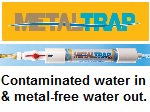
The Copper Test should not be more than 0.3 PPM, if an
ionizer is being used. Higher levels can cause staining,
green fingernails and hair. Replacing water is the easiest
way to lower the level. Otherwise, you can use a
METALTRAP
Filter and a small submersible pump to recirculate the
water. As the water passes through the METALTRAP filter, it
will remove copper. When the level gets under 0.3, you can
stop. Heater corrosion could be a source of copper, if the
pH was under 7.0 and chlorine or bromine was present. I
hope that this information will help solve the problem.
Sincerely. Alan Schuster, 1/2/2010
|
Visit The Website Stores . . . for
better informed shopping!!! |
|
|
Shipping is FREE* . . . within
the Continental U.S.
A $9.99
handling charge will apply
to Continental U.S. Orders,
under $75.00. Orders
outside of the Continental
U.S. may require some
additional charge, based on
quantity and destination.
Most products can be
shipped World-Wide. International
and orders outside of
Continental U.S. - see
comments on the ordering
pages. |
|
|
Major
Credit Cards and PayPal are accepted. |
|
▲
Return To Top Of Page
▲
Aqualab Systems, LLC does not
make any warranty or
representation, either expressed
or implied, regarding the
accuracy or completeness of the
information provided by this
website; nor does Aqualab
Systems., LLC. assume any
liability of any kind whatsoever
related to, or resulting from,
any use or reliance on this
information. The content of this
website should not be used, if
it is conflict with any
applicable federal, state or
local regulations or guidelines.
© Aqualab Systems, LLC. All
rights reserved